Tag: war

  • The Voyage

    The Voyage

    Pared back to a single word on an illustrated page The Voyage is a powerful story of immigration, of people forced to flee from their homes, their countries because of war and persecution; people who look at the challenges before them and take the most dangerous pathway of all, in the hope that they and their children will have a future free from war, destruction and devastation.

    Robert Vescio and Andrea Edmonds capture the huge challenge that a small family choose when they leave their home, board a small boat and cross the sea to what they hope, is a bright new future.

    Fear, calm, danger, memories and so many more emotions have been captured in the beautiful illustrations, which makes this a book suitable for a wide range of readers and ages, as in this instance, the picture is far more powerful than any word could ever be, at portraying the immensity of what people face when they feel this is their only choice in life.

    Over the past sixty years and more, Australia has taken in many refugees from a wide range of countries, as have many other countries of the world, adding a variety and diversity of culture to what back then was a very British country, still young, still growing, still adaptable to change.

    That there should be such a need in today’s world was something never foreseen, but is sadly still an ongoing issue, with people seeking a safe haven from the horror their country, their home, has become.

    The Voyage reaches out with compassion and understanding, offering a beautiful way to help educate people, regardless of their age, to the plight of these people from many different lands, as they try to make a new life for their families in a land that is very different to the land they left behind.

    As this is primarily aimed at children it will certainly make a very interesting topic for discussion, helping with understanding and forming the foundations of kindness towards those who may look and behave in a different manner to them.

    Beautifully done!

  • Fortune

    Fortune

    Lenny Bartulin has dipped into the grab bag that is history, pulling out an assortment of events, all well chronicled over the decades, beginning with Napoleon Bonaparte’s rampage through Europe reaching the 1806, when he and his army marched through the Brandenburg Gates, then segueing across the world to the misery that was white settlement in Tasmania, to return once again to the killing fields of Europe and the terrible days of World War I.

    A face seen through the window viewed in a moment of passion, liquorish, murder and calamity all co-inside to set young poet Johannes Meyer on a pathway into his future, as he gets pressganged into the life of a soldier in the French Army.

    Elizabeth, the face seen through the window on that fateful day when Bonaparte marched into Berlin, begins to lead her own life eloping with General Foures, a man many years her senior, as he takes up the position of governor in the Cayenne’s, an Island group off the coast of South America.

    Elizabeth and Johannes paths will begin to cross down through the years, leading to cruel and terrible times in South America, the penal colonies of Tasmania and the finality of war, yet again.

    Bouncing all over the pages of history, Fortune is a book that teases, tantalates and becomes somewhat addictive, in so far as the very many characters who populate the pages, beckon to see if they can be discovered somewhere else further along in the narrative. Unfortunately, they often turn up dead!

    Somewhat unusual in format and style, the work could be considered as challenging, with the lavish use of sex as one of the main drivers, but the skill that is required to keep all the various characters who populate the pages, and their lives, let alone the recorded facts of history, heading down through the Century without becoming a confused narrative, must be considered as either a damming admirable, or otherwise, the genius of a somewhat abstract mind.

    Perhaps Bartulin has tried a little bit too hard to create a novel that is vastly different to the accepted norm for alternate works.

    Yours to decide at the final word!

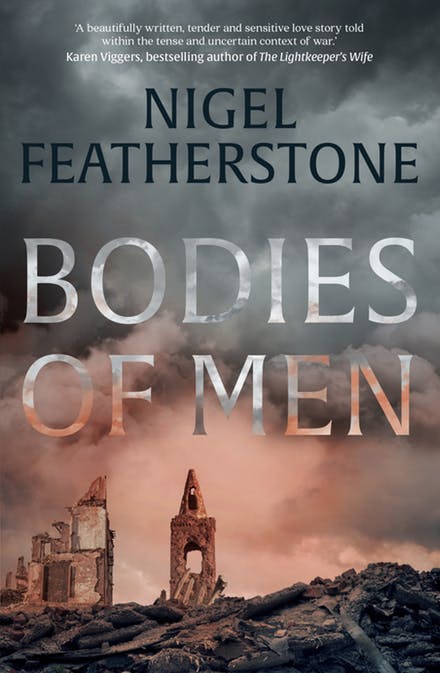
  • Bodies of Men

    Bodies of Men

    The header on the back cover of Bodies of Men from acclaimed Australian Author Nigel Featherstone states, ‘There is nothing more important than love and revenge’, or is there, is the question that is posed through this sensitive and delicately woven love story.

    Set in Egypt during the 1941 occupation of the country by Allied Forces, many the young men of the Australian Armed Forces, waiting out their time to see action in a War far from their homeland. William Marsh a newly fledge Corporal, lands in Alexandria and within hours finds himself in a skirmish with Italian troops.

    James Kelly, a childhood friend comes to his aid, saving his life, but before William can work out it really was James, he had gone again. It is not until William is given orders to establish a dessert training camp, and clandestinely keep an eye out for a possible deserter, one James Kelly, he realises that what he only through was a possibility, was true.

    On leave in Alexandria, William discovers a group of ‘Tommies’ harassing a young boy who is protecting a girl from their abuse. He and the girl want him to follow them to a small house, where the girl asks him to take away the soldier with the bad legs. The soldier turns out to be James, with badly broken legs, caused by a fall from the army motorbike he had been riding far too fast, across the desert sands.

    But there are secrets held within the caring family who have rescued and healed James, that must not be disturbed, secrets that only increase when William and James realise that what they had as a young boys is something more than just a lovely friendship, it is a love that is deep, binding and very, very dangerous.

    As the story unfolds the nefarious and darkly controlling nature of Williams father, the respect his mother has always been held in by family friend and his commanding officer Bradley-Allen, as well as the unconditional love James Kelly’s mother holds him in, are woven with great delicacy throughout the chapters, as is the deep concern and love shown by Yetta and Ernst as they nurse James back to health.

    Nigel Featherston has captured a rare moment in time, one that could and most probably often did occur in the stark, tragic and emotional days of War; a time when society rules often took precedence over humanity and a time that could never ever be spoken off, for fear of the horrific ramifications that would surely follow.

    Bodies of Men has a deeply interesting conclusion which, while tying up some loose ends, also leaves room for the imagination to create the next step in what is still an unfinished manuscript of life.


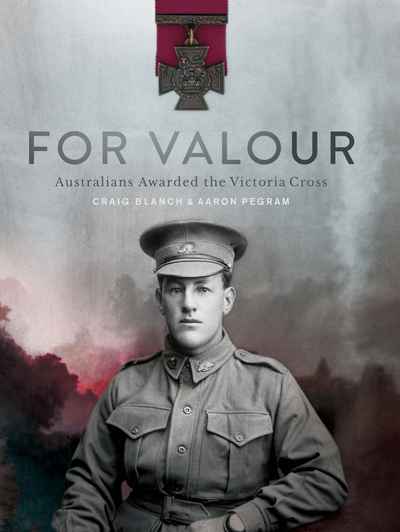
  • For Valour: Australians Awarded the Victoria Cross

    For Valour: Australians Awarded the Victoria Cross

    War is a singularly messy business that pushes good men and women to their absolute limits and sometimes beyond, to places they had never been and never wish to return to, allowing them to commit incredible act of bravery on the battlefields.

    In 1856 Queen Victoria required a medal be struck to honour these men who committed such acts of bravery and so a cross was designed, bearing her name and the words ‘for valour’, to be struck from the bronze of a cannon captured by the British at Sebastopol. Today the medal is still struck from bronze.

    Over the many years since its inception only 100 Australian men out of the more than two million who have served in action, have been the recipients of this medal.

    In ‘For Valour’ Craig Blanch and Aaron Pegram present these men and their back stories; the stories of ordinary men who went to war, beginning with the Boer War and more recently Afghanistan, bringing these almost accidental heroes’ to the forefront once again.

    Many of the medals were awarded during the First Word War to men who considered they were simply doing what needed to be done; humble men who although they received the honour, considered it was not just them, as all around them were the rest of the team doing equally as challenging things, in times of immense difficulty and horror.

    The stories unfold commencing with Capt. Neville Reginald HOWSE a member of the New South Wales Medical Corps serving at Vredefort, Orange Free State in 1900. On the 24 July 1900 he went out under heavy crossfire and picked up a wounded man, and carried him to shelter. (London Gazette, 4 June 1901).

    A brief involvement in Russia in 1918-19 saw two Australians awarded the Victoria Cross; one for Sheika River and the other for Emtsa, in a conflict barely registering on the grand scale of the much larger Australian personnel commitments.

    The Second World War saw bravery awarded but not to the same degree as the previous wars, with more specific details provided, painting a stark picture of the conditions many worked in day after day. Their stories are fascinating, as once again they were young men carrying out orders which did not always make sense, operating in seemingly impossible locations and doing whatever was required to be done at the time.

    Vietnam, that very controversial war, is represented in stark simplicity with only four medals being awarded, two posthumously and latterly Afghanistan with four VC’s awarded, one posthumously, which was awarded to the final man in this edition, Crpl. Cameron Stewart BAIRD (Posthumous) 2nd Commando Regiment, Australian Army for conspicuous acts of valour, extreme devotion to duty and ultimate self-sacrifice at Ghawchak Village, Urusgan Province, Afghanistan on 22 June 2013.

    For Valour is the carefully revised version of They Dared Mightily written by Lionel Wigmore with Bruce Harding in 1963, recounting the actions of each of Australia’s Victoria Cross recipients to that time.

    With fresh new information, along with a collection of photographs made available from the Australian War Memorial collection, the original work, They Dared Mightily, has benefitted immensely with considerably more detail as to the men, their lives and the consequences of their bravery serving in such theatres, which remained with them for the rest of their days. For some it made them, for others it destroyed them, but for all of them, War had and has a lasting and lifelong effect.

    As a book on Australian history it is magnificent, as a research/reference book on Australians at War For Valour is long overdue. Many of the stories presented do not fit with legend of the ANZAC, but show in raw detail the horror and immense bravery of all who served and still serve on the front line. It is also a tribute to them and their families.

    In the words of official Australian War Correspondent Charles Bean when writing about the Somme Offensive in 1916 – ‘They are not heroes” he said: They do not intend to be thought or spoken of as heroes. They are ordinary Australians doing their particular work as their country would wish them to do. And pray God, Australians in days to come will be worthy of them.’

     Lest We Forget.


  • Crossing Ebenezer Creek

    Crossing Ebenezer Creek

    When the American Civil war raged between the North and the South many slaves took the opportunity to leave their places of cruel bondage and join General Sherman’s march through Georgia. Many made the journey into a new life, many did not. History as is often the case records the journey and the men, many who were far from the status of the hero history now records them as having been.

    Crossing Ebenezer Creek is the tale of freedom, the high cost of leaving slavery and all that had been familiar, through the eyes of young slave girl Mariah as she grabs an opportunity to escape, taking with her two much younger children in Zeke and Dulcina, both struggling to comprehend the world of everyday, for vastly different reasons.

    As Mariah joins the caravan to freedom, she meets Caleb, a coloured man trusted by Captain Galloway, a true gentleman and believer in freedom and rights for all peoples, to drive the wagon and collect whatever supplies available as Sherman’s army moves steadily across the land.

    Caleb and Mariah find they have much in common and enjoy each other’s company so much so, they both begin to dream of journeys end with a new beginning on a piece of land where they could grow their own crops and raise their children.

    That is until the Army reaches Ebenezer Creek after days and days of torrential rain. The water in the creek is steadily rising requiring a pontoon bridge to be built to get wagons and troops across, but when it comes time for the huge army of coloureds to cross, the order is given for the bridge to be hauled up after the last wagon has crossed.

    Today all that remains of this tragedy is a marker at Ebenezer Creek which captures only a small remnant of the cruel history of the area, but the locals do say “when a driving rain drenches an early December day, bald cypresses seem to screech, tupelos to shriek, Ebenezer Creek to moan. They say it is the ghosts of Ebenezer Creek rising, reeling, wrestling with the wind. Remembering.”

    Tonya Bolden has captured brilliantly the hopes, dream and despair of the people who grabbed the chance to escape from slavery with dreams of a better future, only to discover more betrayal and tragedy lay waiting for them.

    A spare and clever use of language, almost in a style of poetic metre, allows this tragic but little-known time in American history to be rediscovered, offering to a new generation an understanding of the people who did create history, as well as the myth and often incorrect legendary stature that surrounds them.

    A brilliant walk through a small slice of history created from award winning author Tonya Bolden, designed to tell a tale which is suitable for both young readers and adults.

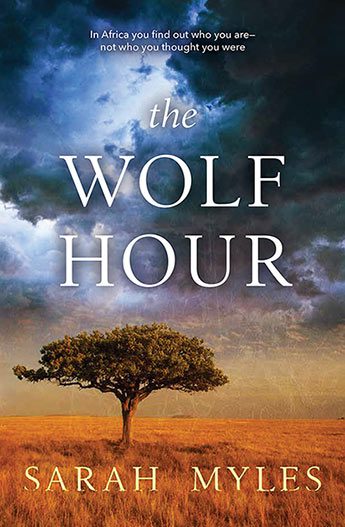
  • The Wolf Hour

    The Wolf Hour

    The cover of The Wolf Hour has the one liner ‘In Africa you find out who you are – not who you thought you were’, a line which perfectly sums up this riveting story from Sarah Miles, a story which redefines families and the cost to the family unit once it begins to fracture .

    Based around the ongoing Rebel and Military issues in Uganda and the Congo, Sarah Miles throws a different perspective on a volatile situation focusing on the cultural perspective, corruption and the never ending hope that one day peace will come to war torn Africa.

    Tessa Lowell is working in Uganda to try and research firsthand the effects of PTSD and war on children. She considers this work vital to a successful completion of her PhD. Her brother Stephen has been a resident of Cape Town for some time; a man on the up, a man with money to spend and an eye for a good opportunity; a man with few morals and less scruples.

    The story opens with Tessa in a compound watching, tensely observing a ceremony; a tribal reconciliation to welcome back Oraako, a former child soldier, into the tribe. She is cautious, ever mindful this is something far from normal, with unimaginably sad consequences should it fail.

    She has also becomes aware there are to be a talks between Joseph Kony, leader of the Lord’s Résistance Army and the International Crisis Group somewhere in the Congo, in an effort to try and bring long wanted peace to the area. She  talks her way into the group, accepted reluctantly by the Delegates; after days of traveling and hiking through dense and dangerous jungle, the team final reach the jungle camp; a place where she meets 13 year old child soldier Francis, a hardened veteran of war, a believer of Kony’s and eventually to become an unlikely friend.

    Her decision has far reaching effects as it plunges her parents, in their safe and comfortable life in Australia, into a situation that has horrific consequences as Tessa is kidnapped and held for ransom by Kony’s men.

    Distraught, her parents eventually enlist the reluctant help of their son Stephen to try and rescue Tessa: he eventually agrees but also has his own agenda for flying into Uganda; an agenda that will challenge their belief in family, their children and themselves.

    Tessa, her parents and Stephen all discover they need to come to terms about who they really are and the façade that they considered was who they were!

    Fast moving, fascinating and written with an very real understating of the issues that are an everyday component of modern life in Africa, Sarah Miles looks below the surface to the world to discover the real person that lies not so very far below the façade.

    Brilliant, timely and a must read.

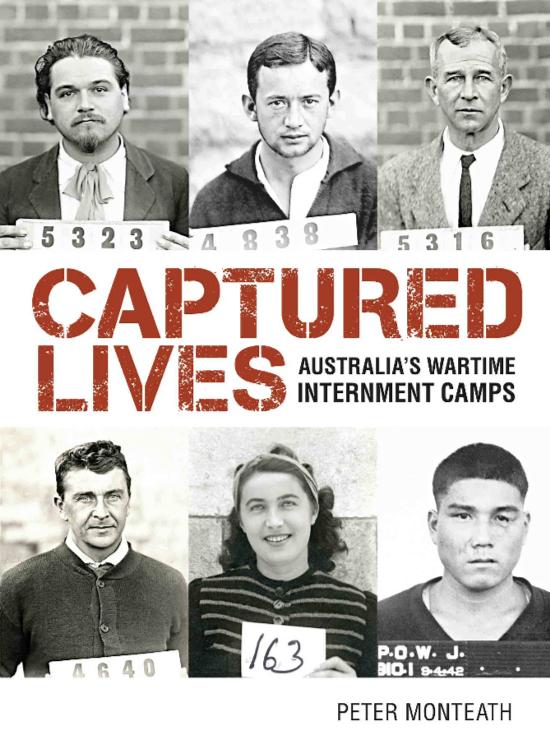
  • Captured Lives: Australia’s Wartime Internment Camps

    Captured Lives: Australia’s Wartime Internment Camps

    Looking backwards into history can be an enlightening experience, but it also is stark reminder that little changes in life, sometimes only the packaging of how anything that may seem like a threat to a way of life is presented.

    In Captured Lives, Peter Monteath looks at the lives and families of so many who were interned during World War I and World War II in the name of national security; many who had made Australia their homes for many, many years, contributing to the development and economy of a growing nation.

    The bewilderment of these people going about their daily lives, only to discover that they were being interned by the Australian Government, in the belief that they may in some way be able to influence the War raging across Europe, must have been immense.  Many were only guilty of being in the wrong place, at the wrong time, or simply a victim of circumstance, or even in some instances, a victim of racial or neighbourhood dislike.

    For those who supported the belief of Internship they considered their logic was impeccable and of course ‘foreigners’ would be supportive of their former countries political standpoint, those Countries considered enemies of the members of the Commonwealth!

    Over the War years more than 30 internment camps, many located in South Australia were established, some more lenient that others, some State Governments of the day considering it was pointless to lock up able bodied men at a time when the Country was seriously short of man-power in agriculture and other industries.

    Many other hapless internees where not so fortunate, being made to spend the war years in absolute boredom and misery, some were able to hone their skills as writers and artist, others to carry out their professions as Doctors and Dentists with limited or no resources.  Spare a thought for the German and other international sailors who, going about their normal trading business, called into Ports such as Fremantle, unaware of the War commencing, only to be arrested and interned!

    Reading the history of a time in Australia when in many ways as a Nation, Australia was not at its finest, as the far from rational in approach to people and their ethnic backgrounds was bewildering. Many of the personal stories detail incredible ironies, only one of them being, that many who did support the German or Nazi cause in Australia, were men and women considered as civilians, people born of British parents!

    The compilation of this knowledgeable, well researched work is long overdue and provides an in-depth look at what life was like for people who had done nothing wrong, discovering themselves caught up in a situation not of their making, one that caused great hardship, not just to the men interned but to their families trying to cope in a society gone mad!

    Stories from each of the men documented are personal, painting a stark portrait based in reality, portraying some of the many ironies that laced the rules and regulations of the times and the Camps, as well as the creativeness that many developed to try and make their lives more tolerable as they waited out the dictates of the Government and the War.

    The excellent selection of people, their backgrounds and what happened to them after their release from Internment, along with a comprehensive collection of photographs, reflects back on a political ‘absurdity’ which sadly is still reflected in today’s world of refugees seeking a new life, with lessons learned from history still to be accepted.

    Captured Lives has created a respectful and well-presented section of what is a social history of a young country pulled in so very many political directions.  History buffs, students and anyone interested in the history of Australia would do well to read this book, as well as following up on the recommended reading, to gain a fuller and richer understanding of how life for many was lived in Australia during the War years.


  • Mad Boy

    Mad Boy

    Set admits the turbulent times of what is billed as the largely forgotten war in America, the War of 1812, we met 10 year old Henry Phipps, a young man with much of which to cope in his young life. The death of his mother sets off a train of events which will prove as entertaining as they will conducive to what Henry hopes, will be the fulfilment of his mother’s final wish; to unite the family and be buried at sea.

    Easier said than done; but with the rich and beautifully constructed language used by Nick Arvin to bring to life the turbulent and troubled times in a period of American history, Mad Boy proves to be a rollicking good tale, as young Henry sets out to try and find is ne’er-do-well father, who it turns out has ended up in debtors prison and his brother Franklin, who is busy fighting the English on the battlefields of Maryland’s.

    Word has come to Henry that Franklin has been killed, but Henry considers this is nothing but a lie and while he trying to find out from his mother what she thinks, a cow falls through the roof, leaving her in a tangled heap on the floor, dead! She had always said to Henry that she wanted to be buried at sea, definitely not in the ground.

    About this very early point in the book, it is to be wondered at the machinations of the authors mind, but by then and as the pages turn, it is almost impossible not to keep turning the next page to find out what happens next.

    This, as it would begin to appear, is totally ‘black humour’ coupled with a sense of the ridiculous, couched in bona-fide American history, along with the love of good yearn, has created an addictive read.

    As the storyline unfolds, the adventures Henry has as he meets an incredible cast of characters, from the former slave Radnor, who decides his best bet of remaining a free man was to side with the Redcoats, Morley, a turncoat British soldier fighting for the Americans along with many others from prostitutes to pimps, is nothing but incredulous.

    Add ‘Mother’ and her wisdom from beyond the veil, as she journey’s in her pickle barrel to the coast, it is time to make a decision, to continue to read, tongue-in-cheek and enjoy the tale for what it is  or otherwise.

    Persevere as it is well worth reaching the final page because the ending is like the rest of the tale, unexpected and yet, somehow absolutely fitting.

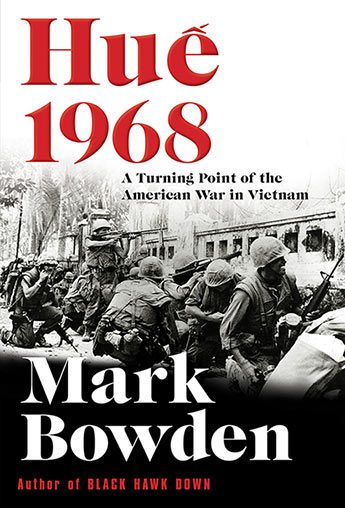
  • Hue 1968 A Turning Point of the American War in Vietnam

    Hue 1968 A Turning Point of the American War in Vietnam

    The Vietnam War seems so long ago but the long term effects of this war have, like many before, leaves a lasting legacy. Vietnam was a war that almost fifty years on is still a platform for conflict, regret, damaged lives and rebirth.

    Hue was a major battle that redefined so very much, for not only the American forces fighting what many considered a senseless war, but the turning point in the way the American public viewed their civic leaders, Presidents and leaders of the Military Services. The American age of innocence was over.

    In 1968 more than half a million American troops were engaged in combat in Vietnam but the war appeared to be at a stalemate. The American Generals refused to accept that it was time to begin withdrawing American forces and announced another ‘phase’ in the war against the spread of Communism.

    The pointers were there that things were not going according to plan but it was not until, the North Vietnamese launched a series of well-planned strategic attacks, now considered be part military intervention and part popular uprising across Vietnam, with the major coup the fall of the cultural capital of Hue falling into North Vietnam hands, that caused the most ferocious and deadly fighting of the ten year long war. In this battle that raged for more than twenty four days more than 10,000 people lost their lives, both civilians and soldiers. This battle was considered the most deadly since World War 11.

    Mark Bowden has spent many years researching the fine details of the horror and pointlessness of Vietnam, speaking with veterans, re-reading newspaper and press articles written at the time, visiting Vietnam and speaking with children and some of the survivors of Hue, as well as researching many of the records now available to the public.

    It is noted in this account of what could be considered the beginning of the end of the American engagement in Vietnam, that Bowden has presented a very clear picture of not only the Battle of Hue, but the double standards, wilful blindness, self-aggrandisement and poor strategies that finally, after seven long years after Hue, much needless waste of lives on both sides, saw the American withdrawal of troops.

    What did the war in Vietnam achieve is still, after so many years, open to debate. Communism changed to dictatorship, Vietnam settled into what is today a thriving country of people who live within the confines of system that while not perfect, is flawed as are so many countries political systems but continues on in its own style and culture.

    Well documented this is a read that while massive, is clearly and carefully written, presenting recent history through the long lens of time, in a manner that does go a long way to a better understanding of Vietnam and a war that changed so very much politically, in not only Vietnam but also America.

    Mark Bowden is the author of Black Hawk Down and Killing Pablo.

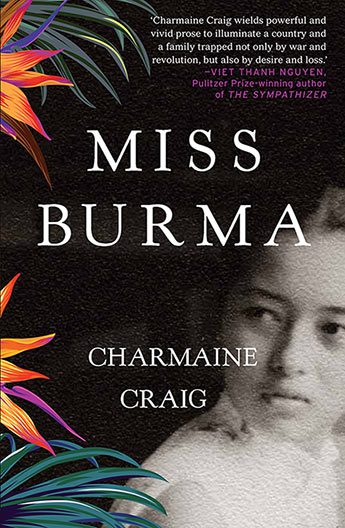
  • Miss Burma

    Miss Burma

    Emotional and enthralling, Miss Burma shines a light directly onto and into the political situation that is sadly all too relevant for many ethnic minorities trying to survive and find some form of peace and justice in their lives.

    Based on the lives of her grandparents and mother, Charmain Craig weaves a troubled story beginning in the times immediately prior to the Second World War, when two lonely young people meet and become married, before either of the fully understand the ramifications of what this means for the years to come. Benny, a young disengaged man of the Jewish faith, born in Rangoon, growing up in Calcutta; in Benny’s world not a lot of good happened.

    Khin, born into the Karen culture, young, beautiful, timid and working as a nanny to a Karen Judge saw Benny working in his job as a Customs’ officer at the local jetty. They meet, he admired her and she noticed two things, ‘his sticky out ears and an expression of meekness in his eyes’. He followed her home and asked to meet her, seeking permission to marry her.

    Through the many issues of youth, expectations and cultural differences the marriage produced their daughter Louise, a beautiful, intelligent child who went on the become Burma’s first beauty Queen, something which bought her great fame, but also many challenges over the years.

    Louise’s fame and youth is set among the years of the Japanese occupation, the rise and death of Aung San, a communist and social democrat politician, who was responsible for bringing about the end of British rule in Burma. His assassination set off the Civil War.

    Benny and Khin become entangled in the web of political lies and manipulations, all the while still trying to find understanding, love and acceptance amidst the chaos, a pathway which will have long term effects on Louise as she finds eventually that she too, will have to make choices.

    The work is detailed, dramatic and very, very real, laying out the angst of Charmain Craig’s grandparents as they struggle to find a safe passage thought the political minefield of not just Burma in changing times, but also being both Jewish and Karen, in a time when communism was the political driver of the country.

    Brilliant and intimate, Miss Burma portrays the real world of past, present and future and the choices that have to be made, with the consequences of these actions often times unexpected.

    Miss Burma was long-listed Women’s Prize for Fiction 2018 UK.