Tag: war

  • The Enigma Game

    The Enigma Game

    Growing up can be tough. That’s what makes that period of life such fertile ground for authors. This period of life is the setting of Elizabeth Wein’s book The Enigma Game which depicts the lives of three young people as they try to survive day by day while wanting to make a difference. However unlike contemporary teenage novels filled with the problems regarding social media, controlling parents and tough teachers the three young protagonists are living in Great Britain. Great Britain in 1940.

    The first of the characters we meet in Wein’s novel is James G. Beaufort-Stuart. A flight lieutenant with the Royal Air Force (RAF), Stuart has a few problems. First his boss dislikes him, really dislikes him. So much so he accuses Stuart of “lacking moral fibre”, a euphemism for cowardice and no small thing back in those days. Secondly, he is flying antiquated planes and being forced to use unsuitable tactics to sink German shipping. This in turn leads to Stuart’s third problem, that despite his best efforts his squadron is being used as target practice by the Germans.

    The second character introduced to the reader is Louisa Adair. She is a young 15 year old trying to live her life the best way she can. Unfortunately for her, mum got blown up from the air by Luftwaffe bombers and her dad got turned into fish food when the German Kriegsmarine sank the boat he was on. All in the course of a month. Adding to this inconvenience is the fact that Adair is half Jamaican and brown skinned. Race relationships in British society were undoubtedly much better than on the Nazi dominated continent but Adair still feels the brunt of being different. Instead of going to school, life finds the young Adair taking care of an elderly woman near a RAF base.

    The third character is a young Scot by the name of Ellen McEwen. A driver with the Auxiliary Territorial Services and billeted in a pub next to the same airfield as Stuart; McEwen is introduced to Adair during an errand. McEwen has her own problem, she is a Traveller, or what one would call a nomad. And apparently British society doesn’t like people who take up that life style (I don’t know why but I am starting to notice a pattern here).

    Brought together by the war the three protagonists are forced to work together when a German pilot defects and brings a gift in the form of the much vaunted Enigma machine. The three know that the famous coding machine (the same machine that is depicted in the movie The Imitation Game) could change the war. And it soon becomes clear that they aren’t the only one in the know.

    The book is written from the point of view of the three protagonists and is told in first person. Unlike the Song of Fire and Ice series which is also written from the perspective of multiple characters the book doesn’t create a separate chapter each time the reader switches character perspectives but can have multiple changes on the same page. This can be a little jarring to begin with (I felt the same experience that I had when I saw the film Dunkirk which also switches rapidly between different perspectives).  However it doesn’t take long to adjust.

    The events in the book surrounding the Enigma’s capture obviously are fictionalised (the actual Enigma machine was captured by British sailors off of a sinking German submarine in the middle of the Atlantic). However Wein’s fictional depiction is spun in a way that makes it believable. It is clear that throughout the book the author has taken inspiration from actual history.

    In conclusion The Enigma Game is an interesting take on a vital episode in the Second World War. Though not a book for adults the book is great for young teenagers.

  • Finding Eadie

    Finding Eadie

    Alice Cotton’s tiny baby daughter, Eadie is secretly given away by her grandmother; Alice is devastated.  Her desperate quest to be reunited with her missing daughter Eadie, takes her from police stations to the offices of child welfare oraganisations and finally to the dangerous places used by the baby farmers to sell their illegally acquired babies.  Alice uses her position as the rising star at Partridge Press to expose the horrors of baby farming and to find her tiny daughter.

    Intertwined with Alice’s search for her daughter, readers are given an insight into the publishing world of 1940’s where paper was in short supply but books were in high demand. Books were not only popular with civilians but also the troops, as they were seen as a distraction from the grim realities of war and its depravations. The author has included a list of popular books from this era.

    This well researched historical love story is set in London during World War II, where the Victorian criminal practice of baby farming was still well and truly alive; the war having delayed 1939 Adoption of Children Act. For readers wishing to further research the practice of baby farming, the author has included a comprehensive list of sources and references.

    Not only readers of historical novels, but also those who enjoy an enthralling mystery with a happy ending, will enjoy this page turning book.

  • The Viennese Girl

    The Viennese Girl

    To endure the German invasion of Jersey, islanders needed resilience, fortitude and ingenuity. However, to survive the five years of occupation, Hedy Bercu, a young Jewish woman needed more; the help of a courageous local woman. To further put her life at risk Hedy embarks on small acts of resistance, while Dorothea alienates her family by marrying an Austrian who later is forced into the enemy army. Added to this complication, while working as a translator for the invading army, Hedy falls in love with a German officer, Kurt.

    Author, Jenny Lecoat in her remarkable book ‘The Viennese Woman’ has created a wonderful fictional narrative based on the true events in the lives of the real heroines, Hedy Bercu and Dorothea Weber. In cramped conditions, with harsh food rations and in constant threat to life, these women developed a greater appreciation of each other and a true friendship. More about Hedy and Dorothea can be found in Dr Gilly Carr’s publication ‘Jews and Jerrybag; The Lives of Hedwig Bercu and Dorothea LeBroq’.

    This well researched book gives readers a real insight into the little known hardship of those enduring German occupation of the Channel Islands and in particular the island of Jersey from June 1940 to May 1945: not only the restrictions and deprivation experienced by the inhabitants, but also the lack of knowledge about their plight by mainland British citizens, who thought life was just proceeding as normal on Jersey.

    Not only readers of historical fiction (particularly those set during the war years), but also those who enjoy books with inspirational characters, will find this a most informative and enjoyable read. Readers will be left reflecting on this story long after they have read the last page.

  • The Paris Secret

    The Paris Secret

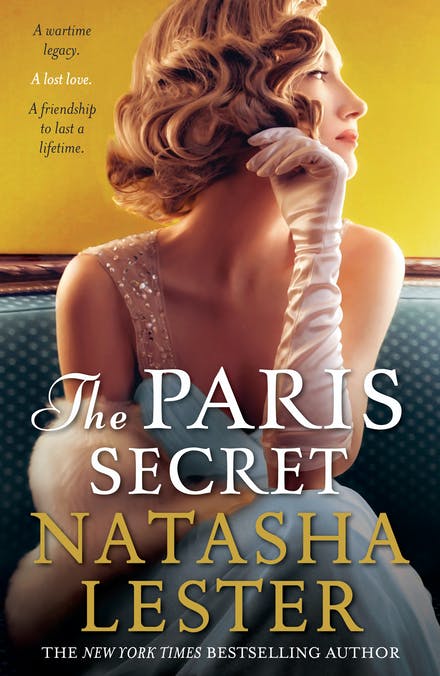
    The Paris Secret from Natasha Lester would have to be considered as one of the better historical fictions to date in 2020. The storyline is riveting, spaning the many years from 1939 to the present day effortlessly, as it portrays the lives of the Penrose family, a family with roots reaching deeply into the horrific times of World War II.

    Kat Jourdan, renown Australian fashion conservator is asked by her beloved grandmother to go to her cottage in Cornwall while she is in London on business. This come as a great surprise to Kat as she had no idea her grandmother owned anything at all in Cornwall, let alone a cottage.  On her return to Sydney, she has more questions than answers about what she discovered at the cottage; a rare and beautiful collection of Dior gowns, each labelled for the year of manufacture.

    Elliott Beaufort, historian and writer, is carrying out research on a Margaux Jourdan, a woman of mystery, a woman who could be her grandmother, a woman who had a very interesting and secret role in SOE, a division of British security during WWII. He contacts Kat in Australia and they arrange to meet when she in next in London, but in the meantime, Kat realises needs to ask her grandmother a few questions about her past.

    As Kat begins to ask her grandmother to explain some of the background to the Dior gowns and Cornwall, Margaux becomes very distressed refusing to tell her more than just a little about her life, mainly that of her settling in Australia after the War.

    Vanessa Penrose, mother of two daughters Skye and Liberty, is a bit of a bohemian type. Considered as a witch by the local villagers, she lives in a rather romantic Cornish cottage on the headlands. She also flew a tiger moth with aplomb, entertains lavishly, and is considered as bit of a fast woman.

    Skye meets Nicholas Crawford on her beloved beach when they are young children, and they develop a binding friendship. Liberty is a completely different character, clinging, demanding and highly temperamental.

    From this simple foundation a most compelling story evolves based around the history of the Air Transport Authority, a select group of female pilots who ferried aircraft about the skies of Britain during the War years without instruments or radio, unarmed and flying only on dead reckoning with visual navigation, often flying in appalling conditions.

    Many of the characters are based on real women, the female concentration camp at Ravenbruck, is an all to horrific reality, the French Resistance and the many brave British women who were sent in as agents is also factual,  as is the chauvinism the women pilots and many other female operatives   had to contend with throughout the war years. The Dior involvement is also based on fact, with a little poetic licence applied.

    Natasha Lester has created a story that captivates and one of which so many readers will be able to relate as so much of reality included in the storyline is an integral part of many, many family’s history.

  • The Battles for Kokoda Plateau: Three weeks of hell defending the gateway to the Owen Stanleys

    The Battles for Kokoda Plateau: Three weeks of hell defending the gateway to the Owen Stanleys

    Kokoda is a name known to many Australians as a place of great courage; of acts of selfless bravery, mud, brutality and now, more than almost 65 years after the end of the Second World War in the Pacific, Kokoda is a place of pilgrimage for many: a place to remember the sacrifice made by many young men as they were sent to do the almost impossible, forge a pathway across the Owen Stanley Ranges, sufficient to carry troops, ammunition and supplies to set up a forward base to defend the Kokoda airstrip from Japanese forces.

    Although the distance was not great the terrain was inhospitable, at the best a series of native tracks between villages, at the worst a quagmire of mud, rain, leaches and swamps. Small European settlements were located at various points; Plantations in some instances, Missions in others.

    Young men, some from the embattled Lark force, many others raw recruits facing battle for the first time, formed up as a formidable force to firstly carve a pathway through the jungle, men as young as 18 years old, plucked from their everyday lives, facing a challenge that was overwhelming, but needed to be complete if at all possible.

    Before the trail was complete, the Japanese Imperial Forces landed on the northern coast of Papua in 1942. The convoy bought with them a massive amount of equipment, down to thousands of bicycles, nothing left to chance.

    Over the three weeks this engagement was carried out, there was a secondary group of people made up of Australian soldiers, nurses, missionaries and downed US airmen trying to find their way to safety of the Australian lines. Sadly, theirs is a story of immense betrayal, with few surviving.

    David Cameron has gathered together the story of the Battle for the Kokoda Plateau, using  Military records and the treasured diaries of families, to weave a story of immense bravery, foolhardiness, tragedy and betrayal, against the horrific reality of the invasion and brutality of the Japanese troops who considered the capture of Port Moresby was the key to winning the war in the Pacific.

    The Kokoda legend is well known, and now the background of the many men and women who built the track, gave their lives and wrote history have been given a voice, and will long remain a lasting reminder of the reality, the tragedy that was ‘The Battles for Kokoda Plateau’.

  • The Lost Future of Pepperharrow

    The Lost Future of Pepperharrow

    This absorbing story follows on from “The Watchmaker of Filigree Street,” but can easily be read as a stand- alone. It is an Historical Fantasy, set mostly in Japan, in the 1880s. The timeline weaves back and forth but mostly over a ten- year period. This makes it easy to adjust to and is used as a back story to explain circumstances.

    The characters are absorbing and wonderfully portrayed. Mori is the wealthy Japanese clairvoyant who was a Samurai. He “Remembers the future.” Because he is heavily involved in International Politics, and has this gift, he needs to take some drastic actions, (organising murder, being one.)

    Thaniel is his English friend and lover. He works for the Foreign Office and is being posted to Tokyo. He, like Mori, has a huge intellect. Together, while in England, they adopt a young orphan girl from the Workhouse, and she is also incredibly gifted and unusual.

    The trio move to Japan and stay at Mori’s mansion where Thaniel is startled to meet Mori’s wife Ms Pepperharrow. What an amazing back story she has! Also, at the house is the Japanese Prime Minister, who has to negotiate a strategy for the flotilla of Russian ships off the coast. Danger from invasion is real, and Mori is seen to be an important cog in the decisions made to avoid war.

    Thaniel moves to the Foreign Office to begin his work, but strange forces are at play here. The servants complain about ghosts who appear when a fire is lit. They are terrified. Thaniel is sympathetic, but when he is startled awake and finds a sooty handprint on his shirt, he sees the need for immediate action. To complicate matters, all metal objects begin to heat up until material or skin burns when making contact. This is felt to be due to the proximity of Mt Fuji, which is quite active.

    If you enjoy a story with a complex plot, vibrant settings, elusive magic, supernatural overtones and a dynamic cast of characters, then you will relish this book. The prose is strong, direct and energetic, but often a wry twist will force a chuckle. This book is a keeper, one to be picked up again and again.


  • Anzac Girl: The War Diaries of Alice Ross-King

    Anzac Girl: The War Diaries of Alice Ross-King

    There is not a lot written about the many women who went to war, particularly those who went to World War 1, during a time in society when women were frowned upon for being different.

    Alice Ross-King was a woman who love Nursing: it was her passion, the one thing she had always wanted to do was to become a Nurse. In 1914 when War broke out, she felt she had to go as her country needed her to try and help the men wounded in battle.

    Her parents did not want her to go, but realised she was not going to be stopped and so bravely waved her off on the ship that was to eventually take her to Cairo, Egypt in 1915. She found out that no matter what she had thought, war and the injured soldiers was far worse than anything she could have ever imagined.

    Anzac Girl is her story; the story of a brave young woman who went to War to do what she could to help the wounded.

    She spent time in Egypt, before being moved with her hospital to Rouen, France, where she was told her young man, Harry Moffitt had been killed in action. This made her terribly sad, as they had talked of getting married after the War had ended. She then went to Armentieres, now known as the Battle of Fromelles, one of the bloodiest battles to be waged on French soil, before moving to Rouen in 1918, where she remained until the ceasefire in November 1918.

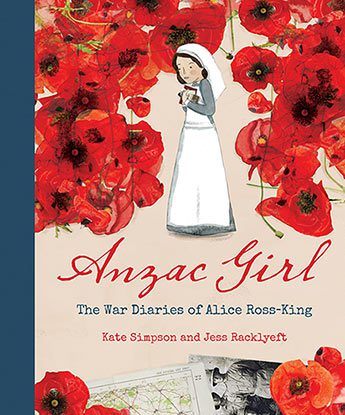
    Based on her diaries, her story has been wonderfully told, along with simple, powerful illustrations from Jess Racklyeft and photographs taken during her years away, which allows children of all ages a glimpse into what the world was once like more than one hundred years ago.

    Alice Ross-King died in 1968, a woman who was much lauded, and considered by the Australian Department of Defence to be the most decorated woman in Australia. It is fitting that Kate Simpson has told her great grandmothers’ story, the story of a woman who ‘marched to the beat’ of her own drum and by doing so helped to change the world for women.

    If you would like to know more about Alice Ross-King and her life during her War years, her diaries are available on the Australian War Memorial website.

  • House on Endless Waters

    House on Endless Waters

    Why does Yoel Blum, famous Israeli writer, break his promise to his deceased mother never to visit Amsterdam? First he travels to The Netherlands to promote his latest book, but while there he visits the Jewish Historical Museum in Amsterdam where he accidentally sees a film clip featuring his mother, father, sister and an infant, whom he doesn’t recognise; this causes him to return immediately to uncover the story of the infant. In Emuna Elon’s powerful tale ‘House on Endless Waters’, the story of Yoel and his family during the difficult times of the late 1930’s until the mid-1940’s evolves.

    As well as being a family saga it is also an historical novel, which highlights life for the Jews in The Netherlands during the Holocaust.  This novel set in Amsterdam is a story within a story, as Yoel unravels his own early history, while exploring his Jewish mother’s life in the challenging times of the Holocaust; a time when Jewish parents had to make the most difficult choices of their life.  By blending the past with the present, fact with fiction, the author immerses the reader in the present-day beauty of Amsterdam and Dutch culture, while at the same time exposing the reader to the horrors of life for Yoel’s Jewish mother during earlier times.

    Originally published in Hebrew, I highly recommend this brilliantly translated booked, which is not only incredibly moving, bitter and brutal, but also hopeful and optimistic. Readers with a Dutch background will particularly appreciate Elon’s vivid picture of Amsterdam, both present day and during World War 2.

  • RAAF Black Cats

    RAAF Black Cats

    Time creates history and time allows access to information kept tucked away, out of sight in various Nations Archives, information which when it was recorded was considered a necessity of the time, but in looking back, more than 60 years later tells a fascinating story.

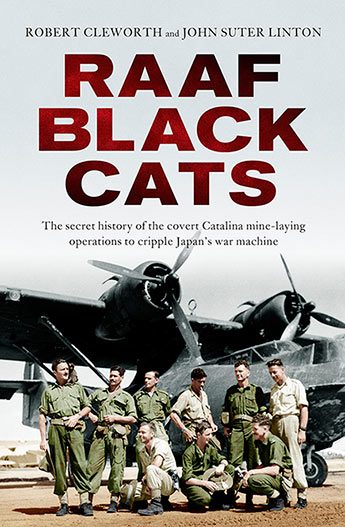
    In this instance the story is one of the almost unheralded PBY Catalina flying boats and the massive impact they and their crews had on the war raging in the Pacific.

    James Reginald (Reg) Cleworth was one of the crew of a PBY, better known as a Catalina; their navigator, a member of the 20 Squadron, a young man who enrolled in the Royal Australian Airforce, rising to the rank of Warrant Officer. He failed to return from a mission out of Darwin in 1945.

    RAAF Black Cats, is his story as well as the many men who flew dangerous missions, many of whom gave their lives, either by crashing or falling into the hands of the Japanese, but all contributed to the final, but slow defeat of the Imperial Japanese Army’s invasion of the Pacific region.

    After Reg’s mother Janet, who never recovered fully from the loss of her much-loved eldest child, passed away in 1986 his brother Robert (Bob) felt he could look further into the scant few details provided to the family on his brother’s death, so many years before. That Reg prophesied his death on his last visit home, always remained with Bob.

    The work of 20 Squadron was top secret, a situation that remained in place for many, many years which left scant information able to be discovered easily for research purposes.

    Bob began by seeking out Catalina crew members through the RSL, slowly earning their trust and slowly gleaning many of the stories that appear in the book, all of which helped him build a framework around a sector of the Pacific War kept so secretive, that their incredible role in MacArthur’s strategic plan for the South West Pacific may never have been told.

    A chance meeting during a visit to Ivor Collins, who was a member of the RAAF/US mine laying campaign, and with whom Bob had built a firm friendship over the years of researching the 20 Squadron history, provided the final details required to fill in the many gaps between the stories.

    Bob meet Steven Schafer, chief Archivist with National Archives and Administration (NARA) on a bus in a snow storm, a man who granted him access to archival records as long as ‘you catalogue the contents as you go’.

    This series of events provided more than enough information for this fascinating and absolutely absorbing story of a section of Australian and American history that is well overdue for recognition.

    RAAF Black Cats has been written in an almost laconic style, well known to be a trait of many men of the Australian Armed Forces during the war years, which has allowed their voices and their bravery to be recognised in a powerful, immensely readable style.

  • Once I Was Loved

    Once I Was Loved

    Told through the eyes of a rather travel worn toy rabbit called Tock, found in the Charity box, Tock tells his story about all the people who once loved him, but have grown up and moved on with their lives.

    There was Sam, who named him Tock, and loved him through the years, sharing her sadness when her dad went to war, her happiness at birthdays; they did everything together until once day, Sam’s mum, who was a Nurse, took her to visit Flynn, who was very sick with polio.

    Sam felt Flynn needed Tock far more than she did, as when she gave him Tock, he smiled and began to get better. They shared adventures until Flynn was strong enough to go home. When the celebrations for Victory Day where being held Tock slipped from Flynn’s hands, flying off the balcony and down into the crowd.

    Over many, many years Tock found his way into so many small hands and new homes, each one crammed with new adventures until he found himself discarded, left in the Charity Box, sad, forlorn and homeless until………

    Once, I Was Loved is set gracefully set against the background of history spaning almost ninety years, from the beginning of the Second World War, to the lunar landing and then into the internet age of today, where toys are left on the shelf in pursuit of the instant pleasure of the internet.

    As the story evolves there are many discussion points to have with children such as what polio was, war, the first lunar landing, and the Rock and Roll craze, all important aspects of the years long gone.

    Charming and crammed full of love, Belinda Landsbury’s beguiling illustrations along with the gentle storyline have created a book to be treasured and one that will leave a happy little tear in the eye at the end of the story.