Tag: war

  • The Nurses’ War

    The Nurses’ War

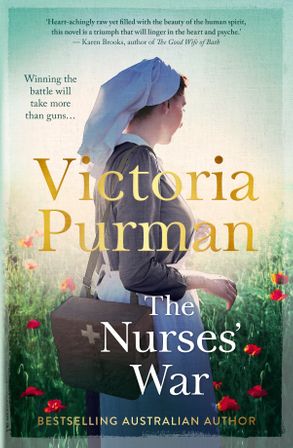
    The Nurses’ War is a powerhouse of a story in many ways. What makes it a special Historical Fiction is that Victoria Purman has connections with some of the characters. Matron Ethel Gray was a real character and awarded many Honours. Sister Ruby Dickson was also a real nurse and buried in the St Mary’s Church yard. The City of Adelaide features in the story and many references are made to local places such as Rundle Street.

    The story begins in May 1915, when Cora Barker, an Australian nurse, arrived in England to help care for Australian troops injured in the war. She and a small team have been given the task of converting a mansion, donated by a wealthy family, into a hospital. They have help from some of the locals, and deliveries of beds, bedding and surgical equipment needs to be unpacked and readied. The magnificent grounds around the house have also been covered by emergency accommodation for the wounded.

    As we begin to know the characters and their stories, we realise that no one has an idea of the extent of the devastation and wounded that will soon overwhelm them. As the first Australian soldiers begin to arrive the reader also cringes at the lack of basic pain relief, infection control, and suitable procedures. However, everyone works hard to bring comfort and relief to the wounded neglecting their own needs.

    For three years we share Cora’s life and desperate attempt to improve the outcomes for the soldiers. She has firm bonds with the women she began this job with and has befriended one of the locals. The war news comes to them in patches and is quite different to the media versions.

    The details in this book are superb. So many references are made to locations in Adelaide, the families, and the customs that each page is precious.

  • THE LITTLE WARTIME LIBRARY

    THE LITTLE WARTIME LIBRARY

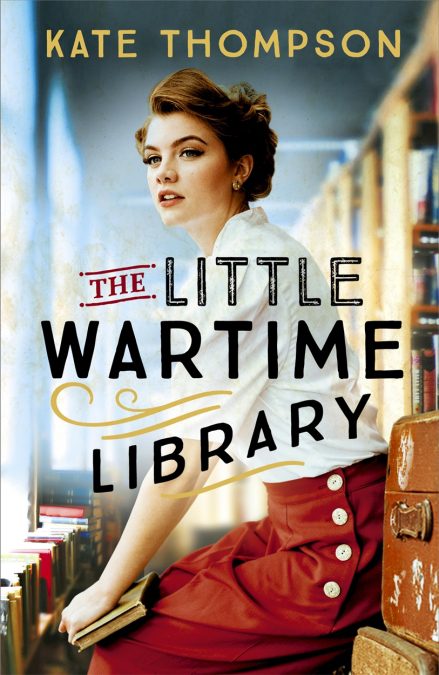
    If you have a book you have a friend. For the 15 thousand plus Londoners in 1944, who were living in the Bethnal Green tube station through the mayhem and carnage of the terrible years of the blitz, this was certainly true; reading helped members of this community escape from the world of rubble and rations.

    No ordinary librarian Clara Button, a war widow needing something worthwhile to do, and her larger than life, glamourous and best friend library assistant Ruby Munroe run an extraordinary library in the half completed underground stop at Bethnal Green. It is a vital haven for the resilient community where everyone is welcome, where they can switch off for a short while and escape the realities of a city under siege.

     Together they devise many ingenious ways to bring books to the wider community; they deliver to factories to shift workers, who are unable to visit during library hours, hold nightly popular story times for children and also a boozy book club, which is equally well received, for their exhausted mothers. 

    However, not everyone wants Clara and Ruby’s help and there are those, who are determined to make their lives as difficult as possible. This is an era where generally men were the rulers and women the lesser species; reading gave women notions beyond their station in life.

    Author Kate Thompson’s inspirational book ‘The Little Wartime Library’ was motivated by the astonishing true story of an underground library and is based on the true events taking place in London during WWII. It transports readers to an entirely different world underground with its vibrant characters, who while the bombs are falling above them, are fighting wars of their own. This well researched, heartwarming story is about love, loss, forgiveness, acceptance and sacrifice.

    A book you’ll want to recommend to your friends. 

  • The Battle of the Bismarck Sea

    The Battle of the Bismarck Sea

    The Battle of the Bismarck Sea is Michael Veitch’s tenth book relating to pilots in World War Two. His writing is very well researched and clearly written. Even though there are many complexities within this book, they are dealt with separately until they are interwoven so the reader can easily follow the events. This is a great skill which involves the reader in the unfolding of an episode.

    Readers are also exposed to many stories retold from diaries and journals. A General arrived on a landing strip in New Guinea to find a shirtless man driving a bulldozer. The General approached him to enquire what he was doing. The driver replied that he was building up the soil around an unexploded bomb! There are many such stories with an index of the names of people mentioned at the back of the book. This makes it quite a personal experience.

    Michael Veitch plots the build up to the battle in the Bismarck Sea with great clarity and precision. He is able to give points of view and discussions from the Australian, American and Japanese perspectives. This gives us a well rounded picture of planning, mistakes and decisions that were made. The consequences of this planning would have a vital outcome for Australia.

    Never straying from the factual information that he has gathered, Veitch notes the bravery of the men in all aspects of the battle, recounting the horrors that must be the outcomes from such a battle. For Australia, this battle was “One of the most significant times in our history.”

  • Underground

    Underground

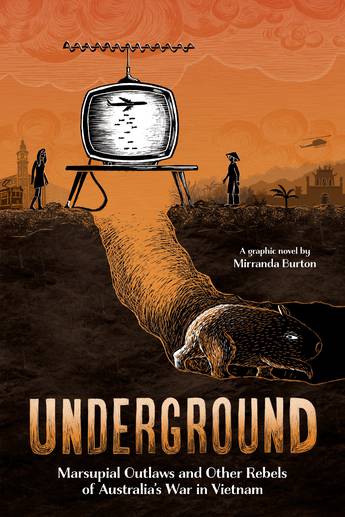
    Marsupial Outlaws and Other Rebels of Australia’s War in Vietnam

    Graphic novels are a fascinating way of getting a story across to a wide range of readers, as the ‘comic book’ style stretches across generations, the skill of the author paramount in both word and picture. Underground from Mirranda Burton has taken a slice of Australian history, seldom discussed or even remembered, but a slice of history that like so much of the social movement in the 1960’s and ‘70’s in Australia, had a long and lasting effect on the future of women and activism today.

    Jean McLean, Save Our Sons convener and much more, artists Clifton and Marlene Pugh, Viet Vet turned conscious objector Bill Cantwell, Mai Ho, the first woman major of Maribyrnong, stories all come together to reflect back on a time in Australia when life was very different, when young men were conscripted to serve in a War that Australia had not need to become involved with, that of Vietnam.

    But how does a wombat called Hooper Algernon Pugh, who became a conscious objector, get drafted to go to war, requested to turn up for his medical, is a story that highlights the strange times so many lived through, as young men’s lives were disrupted in a cause not of their own, to serve in a country far from home, in a war that was as senseless as it eventually proved to be, when the Americans eventually packed their Armies up, leaving Vietnam for good their legacy a country devastated by war, a people in poverty and the root cause, still remaining unsolved today.

    Released in time to celebrate the 50-year anniversary of the Moratorium Marches, Mirranda Burton has captured in her carefully constructed and telling style, presented in black and white, the story behind the protests that formed the later years of Australia’s involvement in Vietnam.

    That these very diverse people, from vastly differing walks of life have stories that come together many years later is more than co-incidence, it is the final word needed to tell a story which, a bit like Hopper the wombat, who discovered digging tunnels was his true a calling in life and that to be underground was the place he was destined to be, has been buried deep.

    Hooper’s enrollment in the Vietnam War in 1972 and his failure to turn up when called piqued Burtons curiosity. She started an investigation into Australia’s involvement in the Vietnam War which has led to her creating this telling slice of Australian history for a new generation of people, all of whom need to remember and understand the history of Australia in the years when social justice was but a fledgling thing.

  • Two Women in Rome

    Two Women in Rome

    Two Women in Rome from Elizabeth Buchan immediately transports into another world as the stories of two women, Nina and Lottie, destined never to meet, come together in the most intriguing manner, which has the capability to change the life of Lottie, if only she is brave enough.

    Known for her beautify crafted stories Two Women in Rome is an exceptional work that lays bare the emotionally challenging choices that were often made during and after the years of World War II.

    Lottie comes to Rome; a new bride whose husband Tom, has lived and worked in Rome for a very long time and knows what is what and how things work. Lottie is an historical archivist who has found work at the Archivio Espatriati. She discovers a 15th century painting she is drawn to and as she begins to try and trace the history of the painting, she discovers there is very little known about the woman, Nina Lawrence who gave the painting, along with several boxes of other materials, to the Museum.

    She decides to investigate Nina Lawrence further and in doing so discovers a tragedy of love and passion set again the turmoil of Italy during the second world war, at a time when various political factions were pitted against each other, adding to the horror of war already well entrenched. As more comes to light on Nina’s career in espionage, the more Lottie learns about her husband Tom, his real life and previous marriage. Nobody and nothing is as it seems. How very Italian!

    There are times when Lottie truly believes Nina is speaking directly with her, wanting her story to be told which causes her to begin to doubt everything is being told and when she gets a little too close to the truth, Tom has to ‘fix’ things to keep her out of danger.

    While it is unusual to find historic fiction set in the 1970’s during a period most would consider as the recent past, it works, as Italy, especially Rome, is timeless; history rubbing shoulders with the world of today with true aplomb.

    Told on many levels with more than one story intertwining, the tale of Two Women in Rome is a captivating look into a world that is and once was very, very real.

  • Nick

    Nick

    Nick Caraway came to fame as the narrator of what is considered as a literary masterpiece written by F. Scott Fitzgerald, The Great Gatsby. Michael Farris Smith has taken this fictional character one step further, bringing him out of the shadows of a work of passion and disillusionment, to made him a fully fledge character, probably reminiscent of many who returned from the horrors of the trenches in the First World War, changed men, hardened by the horrors of war, trying hopelessly to fit into a world also eternally changed.

     Young, naive and desperately struggling to survive in the trenches of France, Nick gets sent on furlough to Paris where he meet Elle, a French Parisienne struggling to survive in a world of tragedy. He falls in love, his first love, marvelling that so much wonderment can be found inside a tragedy. They spend their halcyon days in love and together.

    Returning to America Nick finds himself, lost, depressed and foundering in the debauchery of New Orleans, a place that is full of violence, tragedy and despair. Once again a chance meeting has him confronting bitter memories of war, Paris, his family and the absolute degradation of the people surrounding him; involved in the love hate tragedy of the relationship of Judah and brothel owner Colette: stuck, unable to move on.

    A pivotal moment sees him catching a train to Chicago, firmly shutting the door on the dissonance that was New Orleans, seeking his family, trying to put his life back together again. It was the day after Christmas.

    In the small hours of the morning when night has not given away to the light of a new day Nick began to write; to write what Judah had asked him to write, page after page. He wrote of Paris, he wrote about Judah and Collette, about life, about everything other than War.

    Who was Nick Carraway before he became the voice of F. Scott Fitzgerald in 1928!

    Deep, tragic and gripping Nick is the story of many who went to war to return changed men. Michael Farris Smith has captured the element of hopelessness, bordering on eternal despair that many would have experienced. Given a change to change, to leave the past behind, Nick chooses hope but in doing so becomes involved with Jay Gatsby, a man damaged beyond repair, hopelessly in love with Daisy: the wife of another man and the hedonistic days of the Roaring Twenties.

    Surprisingly charismatic Nick is a portrait of man carved in emotion that is unconventional, seductive, almost poetic in its narrative and beautifully crafted.

  • The French Gift

    The French Gift

    Kirsty Manning states,” It has long been my quest in Historical Fiction to draw attention to forgotten pockets of history.” something she has done an extraordinarily fine way. Her book “The Jade Lilly,” dealt with Jewish refugees who fled to Shanghai during World War 2. 

    The following book, “The Lost Jewels,” deals with a little-known discovery of a hoard of magnificent jewels found in a basement in Cheapside, England. Her latest book The French Gift deals with women in the French Resistance, during the invasion of Germany. Agnes Humbert was such a woman and the author has based this story on her exploits.

    The French Gift is a captivating novel set during the Second World War and in modern times. Kirsty moves easily through the time frames with her characters. The War heroine, Josephine, returned home after the war, developing a loving relationship with her nephew, his wife Evie and their son Hugo.

    Evie runs a shop in Paris as a preserver of Botanical Manuscripts. When Josephine dies the family is approached by a museum to display her memoirs as a memorial to all the Resistance Fighters.

    While in prison, and later in the rayon factory, Josephine befriends a French maid, Margot, who has been accused of murder. The injustice done to this young girl appals Josephine who desperately wants to clear Margot’s name.

    We have the two stories running parallel, yet cleverly entwined. With her careful research and eye for detail, Kirsty Manning has written a shocking account of the brutality metered out to these women, and the quest for Evie to find the truth to clear Margot’s name. Alongside the accurate retelling of war times, we have a murder mystery which is brilliant in its complexity.

    I can’t wait to see what “Pocket of history,” Kirsty Manning will reveal next.

  • The Last Reunion

    The Last Reunion

    Kayte Nunn has written an excellent story in The Last Reunion to bring to light an almost unknown group of women. Australian, English, and Indian women served in the Burma Campaign of World War 2, as WAS(B)s. Their Auxiliary Service was closest to the frontlines of fighting, and they suffered the same conditions as the soldiers. Their mission was to bring comfort to the soldiers by providing tea, sandwiches, cakes and company. They were constantly on the move and worked many hours a day and night to “alleviate the hardships of the campaign.” Many were mentioned for their bravery.

    This cleverly woven tale follows the young women who enrolled as volunteer WASbs. It tells their story and follows their journey throughout Burma. Alongside this story is the tale of Olivia, set in the 1990’s, an Australian woman who has come to England to pursue a career in fine arts. She is particularly interested in a Japanese netsuke, a small hand carved ivory figure, which was stolen from a museum many years previously.

    It is this figure which brings Olivia to Beatrix, one of the women serving in Burma many years before. The story moves easily between the past and the present giving the reader a clear understanding of the friendship, loyalty, and the courage these women had and still retained.

    Kayte Nunn has presented a wonderful story, which cannot help mention the horrors of Burma, but does so in a way that is not upsetting or graphic. The courage, resilience and determination of the men and women are shown, while the crazy laughter and humour are such a release. It is a shame that these women have not received more open acknowledgment and congratulations must go to the author for bringing their exploits to light. The Last Reunion is such a diverse and entertaining read.

  • The Imitator

    The Imitator

    Adopting the manners and attitudes of those around her, was something that Evelyn had done since she became a scholarship girl at Raheen, a prestigious private school. These qualities make Evelyn Varely the ideal woman to be recruited by MI5 as a counter intelligence spy.   In the historical fiction “The Imitator”, author Rebecca Starford has created a wonderful female spy fiction in which Evelyn, the main protagonist, is loosely based on the career of a real spy, Joan Miller, who was involved in wartime espionage which occurred in London between 1939 and 1940.

    After Evelyn, a bright student, the daughter of a Lewes working class couple won a scholarship to Raheen, she realised that in order to fit into the social circles at this boarding school and university she needed to hide her real self.  Having studied German at Oxford, Evelyn through her association with the well to do family of her friend Sally Wesley, obtained a position at the War Office, which soon led to her recruitment as spy.

    Her clandestine work as a member of the elite counter-intelligence department of Bennet White, involved infiltrating the Lion Society, a group of fascists; her ability to observe others and fit in with their way of living underlined her success. Having pretended to be something she wasn’t for most of her life, Evelyn had trouble understanding what was real; distinguishing friend from foe.

    I highly recommend this well research historical novel, which alternates between the late 1930s-1940s and 1948 to readers who enjoy a thought provoking book. With its plot twists and dramatic events, this fascinating fiction immerses the reader in the life of Evelyn in wartime London, keeping the reader reflecting on Evelyn’s dilemma long after the last page has been read.  

  • Eleven Bats A story of combat, cricket and the SAS

    Eleven Bats A story of combat, cricket and the SAS

    Cricket and the elite division of the Australian Defence Forces (ADF) SAS unit seem to be far apart, but in reality, thanks to Anthony ‘Harry’ Moffitt, joined forces in the streets of Bagdad, the mountains of East Timor, the former palaces of Saddam Hussein, the base at Tarin Kowt and on the green playing fields of his beloved Applecross Cricket Club, in Western Australia.

    A serving soldier of more than twenty years, most of it with the SAS, Harry, as he is known  tells eloquently of his life in the services and how his love of cricket often saved the sanity of the serving troops, providing at times valuable links to the locals in various theatres of War.

    Begun almost by accident, Harry’s first overseas mission, a 10 day reconnaissance patrol in Afghanistan during the chill of an Afghani winter, turned out to be not as busy as first anticipated. Intense training, high stress levels and overnight patrols, saw everyone feeling the need to relax a little, when a game of cricket was proposed; a bat was acquired and a game was held on the base with a mixture of SAS, Americans and locals making up the teams.

    Harry’s eleven bats have a chapter each in which to tell their story, offering a rare insight into the reality of placement into high stress, volatile locations, and the effect it has on the men, their families at home and the theatre of war they served in, often with a great cost in lives.

    Told with confidence and pride in his years with the SAS and the men he worked with so closely, he tells of growing up as a young boy whose father served in the Royal Australian Navy for many years, his dream of becoming a soldier and then his passion to serve in the SAS, all building a picture of exactly what it takes in pride, determination and skill to serve in a theatre of war.

    Fascinatingly told is his journey into Afghanistan in 2002; a married man in his thirties, with two small children, who had stepped out of active service life some years before; recalled to fill a role in the elite division of the SAS once again, this time in a difficult conflict, Afghanistan.

    In many ways confronting, Eleven Bats is about War and also about Cricket, often in some stories neither one nor the other but both; the richness in the telling comes from a man who served with honour during his time, could see that there were serious emotional issues facing people returning from torrid war zones, learning to adjust to civilian life, when many, many years have been spent living in a high adrenalin world.

    Harry decided to do something about it, even if it meant battling the establishment all the way and established a valuable retraining programme for men who wanted to further their education for a vastly different challenge, civilian life. Harry had been studying for his BA in Psychology while still serving in the SAS and realised how vitally important it was to coping with a dramatic and challenging lifestyle change on discharge.

    Each chapter is its own unique story, fascinating and informative, Eleven Bats also tells a story of how this elite division slowly changed over the twenty years of his service and sadly, as this review is written, the SAS is being investigated through the highest legal levels in Australia; a unit far changed from his days in the service of his Country.

    From a young man, proud in his achievements in the ADF to a mature man, saddened and tempered by warfare, Anthony ‘Harry’ Moffitt has painted a unique and very personal biography that shows the power of simple things, such as a how a game of cricket in a desolate and barren landscape, can often lead to the beginning of so much more in life, as well as providing an element of ‘normal’ in a world gone totally mad!