Tag: environment

  • Plastic Free

    Plastic Free

    Plastic Free July, like so many things was created in a moment of time and without any real thought as to the long term consequences of the simple little line said to a group of friends, ‘I’m going plastic free next month,’ which just happened to be July, back in 2011. With those simple words Rebecca Prince-Ruiz began what has become a world wide moment of people changing their lifestyle and helping to educated the world to the very tragic and real dangers of Plastic.

    During 2019, this cause was further helped buy the ABC series War On Waste in which Craig Reucassel created a very visual and confrontational look at just what plastic waste looks like, when only very small portions were gathered together then placed on public display.

    Over the years the Plastic Free July movement has expanded to become a global initiative that is gathering traction as more and more people are beginning to question how much plastic they use, some seen and much unseen and making a conscious decision to move to alternatives.

    Plastic Free tells the story of how the absolute enormity of a visit to a recycling plant in in Western Australia, the sheer volume of waste passing along the conveyor belts, the men in what seemed to be almost a continuous dance, shifting, extracting, unblocking the huge behemoth of machinery needed to process hundreds of tons urban waste, coupled with the almost deafening noise, was Prince-Ruiz ‘penny-dropping ’moment; the catalyst for going Plastic Free.

    Doted throughout the book are wonderful anecdotal stories of changes undertaken by communities, families and workplaces to reduce their waste footprint and make a difference to the world around them. Hot topics such as plastic straws, single use plastic bags and plastic disposable water bottles are addressed amongst other issues, as these are tangibles and very easy to understand.

    The subliminal aspect of microplastic, to name only one of the unseen killers which is now present in our waterways is not seen and is in many aspects, one the most dangerous of all, is discussed with solutions offered that take time to have a positive result, but need to be undertaken now.

    It has not taken just a few years to reach this crisis point, as is explained, as plastic has been around for more than 100 years, but was not a popular product until post World War II, when much changed; life was becoming faster, even then, with easy solutions being sought. Many will remember the introduction of the wonders of ‘plastic wrap’, which ultimately led to the issues now facing society on a global scale.

    If one little line in a conversation can set off a such a train of events, perhaps it is time to ask of yourself and others, what can you change to begin to make a difference. Already through Plastic Free July, much change has been undertaken, many fresh and new initiatives have been established and many, many more people are making informed choices when they shop, buy their morning coffee and pack their groceries into plastic free containers.

    Plastic Free and Plastic Free July reminds everyone that making a small difference can have a very positive impact on the environment, on your health and contribute to reducing the tons and tons of waste created by the destructive aspects of our throwaway society.

    Plastic Free is an inspiration, a reminder to us all to be conscious when purchasing, a guide as how to best begin in a way that will encourage plastic free as a lifestyle and also a challenge to make a difference to reducing your ‘waste-footprint’ on the environment.
     

  • Rachel Carson: Scientists Who Changed The World

    Rachel Carson: Scientists Who Changed The World

    Rachel Carson said early in her career as a Marine Biologist and Conservationist that, ‘the twentieth century was the only Century in history when a single species, Humans, had acquired significant power to change the nature of the whole world’.

    These words are incredibly powerful and when you consider they were spoken very early in a career that spaned from 1936 until her death in 1964, a career which still holds immense influence through her books and collections of letters, which were discovered and published in 1998.

    From an early age she was considered as a bright child, who always wanted to be a writer, who despite the Great Depression, immense family hardship and the fact that she was a female in what was considered as a man’s world, went on to become a strong voice against the use of pesticides such as the newly created chemical DDT. The damage this newly discovered chemical was causing even in the early stages of use within the farming communities of America and further afield, was polluting the waterway, damaging wildlife. Within the Scientific community a real concern about harmful side effects to humans was becoming apparent.

    Carson went on to publish many books on the subject, which are listed in the section Carson’s Key Works, and as the pages of her biography turn it is clear that warnings against environmental destruction and pollution damaging the environment have been around for a very long time.

    Rachel Carson is one of three books in the Scientists Who Changed the World series and makes fascinating reading regardless of age. Aimed at the young reader the book is set out in a comic book style, as are the other two, Sir Isaac Newton and Charles Darwin, which is the prefect design for any young child who is curious, interested in fact finding and offers children a carefully researched, well-presented pathway, to learn about scientists who have had such an impact on our lives.

  • How to Detox Your Home

    How to Detox Your Home

    There is very little new information that has not already been researched, reported, garnered and presented in beautiful books over many years, in an attempt to get the modern world to accept that we are killing ourselves and our wonderous Planet, with the blatant and totally unnecessary use of chemicals in our daily lives.

    Lisa Butterworth has, in How To Detox Your Home gathered together a mass of information on non-toxic products and solutions, enhanced by beautiful photography and layout, to help you make informed and informative decisions about the products chosen to be used on a daily basis in your home and on your skin.  In this room by room guide to a healthier home and a healthier lifestyle almost by default, lies the secret to a healthy, happy, nontoxic environment for your family.

    Set out in a clean, clear and easy to use style, Lisa Butterworth looks at what exactly is a toxin and how these unseen chemicals impact on our health in various ways such as irritants, carcinogens and neurotoxins, none of which are considered as a good health outcome, let alone the impact on the Planet.

    Non-toxic cleaning supplies suggested for use are many of the everyday products in your kitchen cupboards which include bicarb soda, olive oil, vinegar, lemon juice and cornflower; all cost effective and all used widely throughout history with great effect.  When combined with essential oils, which can be used for self-care and cleaning, you have begun the journey of detoxing your home and environment. Although you may think your little bit of change may not make a difference, small steps become big strides.

    Well set out, the book is more of a guide or reference book to be used as required once it has been read throughout, with each of the sections constructed with a fresh look, clear information and presented in an easy to use style.  By the end of the book you will certainly be convinced about the levels of toxicity in your homes and products in daily use, hopefully enough to be convinced to make some simple changes to detox your home, save dollars in your budget and lead a far healthier life.

    How To Detox Your Home could very easily be considered as the perfect and practical resource to create a healthy and environmentally friendly living space in your Home.

  • Do You Love Bugs?

    Do You Love Bugs?

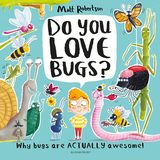
    While you may not think it ‘Bugs are truly brilliant’ is a totally, one hundred percent true statement, as without Bugs, life on earth would be very, very different to what it is today. Maybe we, the human race would no longer exist?

    But perhaps we have not always treated these slightly weird, often funny looking, sometimes very smelly, slimy and occasionally downright dangerous creatures with the respect they truly do deserve, as they go about their daily lives making things better for the humans and other species that inhabit planet earth.

    Do You Love Bugs from Matt Robertson takes a quirky, fun filled look at the importance of Bugs in daily life with the use of bright, intriguing illustrations and creative text, in a style even the most ‘sensitive’ of little people will enjoy.

    The educational value cannot be stressed enough, as children, like many of the bugs in the book, are very curious creatures who delight in discovering much about their world, which when presented in a format with great appeal, helps to open up a fresh new world.

    Each of the fourteen Bugs selected for this book have their own ’chapter’ filled scientific facts such as worms having up to five hearts, butterflies tasting with their feet and ants that can fire stinging acid at their enemies who want to eat them!

    It would seem some of the Bugs were none to happy about being left out, so they have been given their own Bonus chapter right at the very end, which creates the most amazing finale to a fascinating, very Buggy, read.

    Do You Love Bugs? is perfect for a wide range of readers and reading abilities and a wonderful introduction to the importance of a healthy environment to the planet.


  • Displaced: A Rural Life

    Displaced: A Rural Life

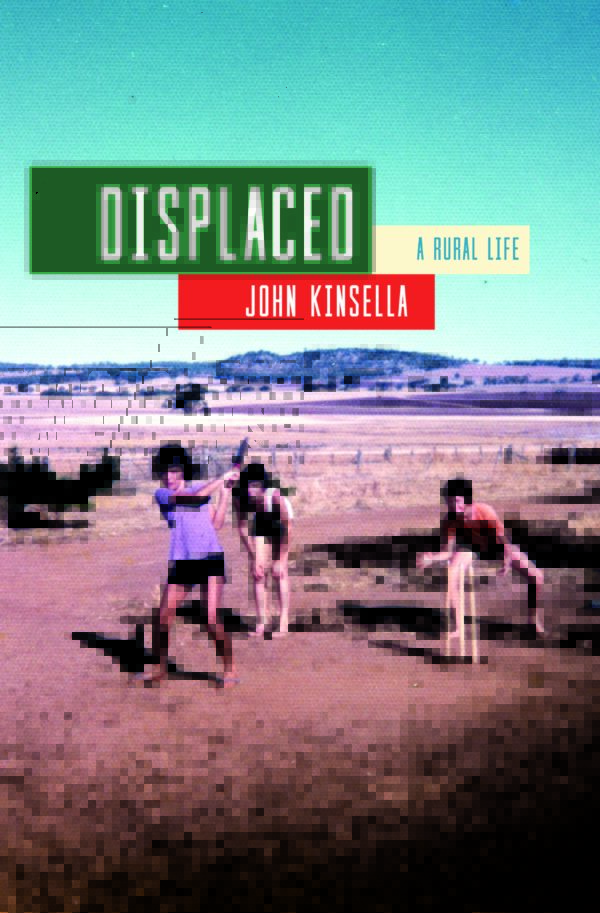
    John Kinsella’s latest book Displaced; A Rural Life begins on a somewhat whimsical note which is, to say the least, unusual. In the first pages of the monolog he advises that this a book like no other he has written; a most definite understatement.

    Growing up in a rural community, life was pretty good for this young boy; inquisitive and almost obsessed with stalking, hunting and killing things, his far gentler brother tried to help him develop a better understanding of the environment in which they spent their lives.

    Their parents separated with the boys moving with their mother to a Coastal town, an event which saw considerable change in both their lives. Bullying was rife in the town where teenage, not so intelligent, angry young men somehow seemed to find or create trouble.

    Here Kinsella was bullied and sexually harassed unmercifully as he was different; moving back to the wheatbelt area for summer work during his university years he ‘came of age’, working the silos and carting wheat during harvest in a tough, man’s world and one in which you either fitted, or did not. Life in the 1970’s in Australia in many rural sectors was still basic; rife with bullying and abuse at all levels.

    Now, at time in his life many would consider his ‘mature’ years, Kinsella looks back at the milestones and markers which while often brutal, saw him develop a keen, passionate and determined attitude to conservation, climate change and poetry.

    Set in and around his beloved Jam Tree Gully where he and his family have their home, we met Tim, his young son who is passionate about the environment and keenly watches the world around their home for seasonal changes in the birdlife of the area, Tracey, his wife who has been with him in his darkest of moments and so very gently, his daughter, wafting throughout the pages of his life.

    Living in Ohio, Shull and Cambridge for various amounts of time for work commitments, Kinsella includes vignettes from these years to balance, as well as illustrate, the damage to and beauty of this world, at the same time using this as an undeniable basis for the urgency of environmental change.

    Displaced; A Rural Life is a deep, thoughtful multilayered reading experience which is best ‘supped slowly’, as in typical Kinsella style the words are powerful, soaked in passion, a wealth of understanding and more than a soupçon of grief woven throughout.

    Poetry does as always, play an important part in his works with various pieces being used sparsely in the first sector of the work, but increasing in quantity as the work progresses to a delightful pause, where selected pieces are included as an end note to this section of his life journey.

    Wry, cathartic without a doubt, laced with a sense of humour, frustration and deep understanding of the human psyche, Displaced: A Rural Life  could be considered as confrontational, upending so many of the myths about life being better back years ago, but also presenting a strong case for a better, more comprehensive understating of the world in which we all live.

  • Fantastically Great Women Who Saved the Planet

    Fantastically Great Women Who Saved the Planet

    In a world that is frantically trying to cope with climate change, forest devastation, pollution and so much damage to the natural environment, it is wonderful to see Kate Pankhurst create another in her series of Fantastically Great Women, with Fantastically Great Women Who Saved the Planet, which tells the stories of twelve women who spent their lives making a difference to the world in which we live.

    These twelve women began as pioneers in their field, passionate about the cause they were devoting their life to and in doing so, raised awareness of the  world as never before, particularly women such as Ingeborg Beling, who in 1920 helped to reveal that all creatures, no matter how small, have a special place in evolution and that should this change, many problems will be created, as we are now seeing in the world in 2020.

    Jane Goodall is well known for her work with the chimpanzees and the flow on effect that deforestation is having on their lives. Studying them for many years in their natural habitat she discovered the amazing amount if similarities between chimpanzees and humans; The Jane Goodall Trust was established in 1977 to carry out research and protect these intelligent creatures and their environment.

    Eileen Kampakuta Brown and Eileen Wani Wingfield, Aboriginal elders took on the might of the Australian Government when they wanted to create a Uranium Dump on their country, Woomera in South Australia.

    Maria Telkes developed technology using solar power The Dover House, an experimental house was the first of its kind to be heated using only solar technology. Back then, in 1948 Scientists understood that in the future fossil fuels would run out and an alternate source of fuels and heat needed to be discovered.

    Every woman in this book has left a legacy that is important for the future well-being of our planet and a legacy everyone should strive towards: making a better world better.

    These were exceptional women who in many cases were well ahead of their male counterparts, definitely before their time, all pose the same question, “What can you do to make the world a better place and help save the planet?”

    Fantastically Great Women Who Saved The Planet is a must read for every young girl who refuses to set barriers to what they can achieve in their lives, or is seeking inspiration for their future career.

  • Working with Nature Saving and Using the World’s Wild Places

    Working with Nature Saving and Using the World’s Wild Places

    Even if you know very little about conservation and the environment, which would be hard to believe in today’s world, Jeremey Purseglove, in his latest book Working with Nature has created a surprisingly interesting and informative book spelling out just what is happening and why some sort of brakes need to be applied to what appears to be reckless devastation of the world’s forests, oceans, rivers and plains, before there is very little left to be concerned about.

    Purseglove has spent his life working as an environmentalist in the water industry and speaks from a platform of firsthand knowledge in regard to the blatant and careless use of natural resources. He now, through his own consultancy, works with other engineers to create practical developments of wetlands, forests and flower rich meadows, to ensure that there is something left for the future.

    Using his travels and work-based knowledge gained from extensive experience worldwide, and although this book tends to focus on the Northern hemisphere, the basics are the same. Regardless of where the situation occurs which requires land to be ‘developed’ for agricultural purposes, that should the careless and destructive practices continue occurring, nature in its inevitability will overpower and when it does, nothing but devastation will result.

    Campaigning with passion, he clearly explains that moderation can be applied to development with better results, and offers solutions that are insightful, workable and environmentally sound. In many ways this is a style of biography, in others a massive shout out to seeking a better, more environmental way forward for agriculture and natural resource usage.

    With the devastation taking place in Australia due to unprecedented fires, Greta Thunberg and the youth of the world campaigning vigorously for better environmental practices, to ensure there is still something left of the natural world for their generation and the generations to come, it is very hard to ignore the destruction of Mother Earth which been taking place openly on a global scale.

    Working With Nature speaks out loud and clear, offering practical solutions to what can now be classed as devastation on a major scale. The solutions offered should be considered as profoundly important.


  • World Heritage Sites of Australia

    World Heritage Sites of Australia

    Peter Garrett has written the forward for this magnificent book created by Peter Valentine and in it he has stressed how very important it is to understand our history, especially the majestic and awe inspiring natural wonders Australia has in abundance, compared to so many other countries, and the need for the public to keep the Government of the of day, committed to protecting these special and significant locations.

    In World Heritage Sites of Australia, Peter Valentine has presented a comprehensive and significant book that details the work carried out by UNESCO, the process of having sites considered in jeopardy listed and the reasons behind the listings put on, and occasionally removed, from locations, buildings and so much more, considered as treasures of the World. Each of the sections also contain his personal perspective and opinion for each of the listed Australian sites.

    Visitors to Australia are overwhelmed by the magnificence of the Great Barrier Reef, now endangered by climate change, the wonders of Kakadu National Park, home to the earliest peoples of Australia and still home to their descendants, the stunning, raw, pristine beauty of the Tasmanian Wilderness, the Greater Blue Mountains and the Sydney Opera House, to name just a few of the UNESCO Sites.

    We who live here, often take them for granted and therefor, as Garrett says in his Introduction, ‘If there is meagre understanding by current generations of the natural wonders or significant human accomplishments that make up our world, then their fate is uncertain’, which is sadly very true.

    Valentine has drawn together the nineteen Australian World Heritage sites listed by UNESCO and with some absolutely superb photography, has captured the very essence of these incredibly special places, perhaps better than the words that accompany them.

    In the Kakadu National Park section there is a recorded conversation with Kakadu Elder, the late Bill Neidjie, which brings all the strands of life together as one force, as only the Elders can understand, and as people born ‘on country’ are trying in desperation to pass on, before this too has passed into time.

    As the first book to have ever recorded all nineteen of the sites as of 2019, it is a work of love, as well as a work of concern that the wonders of Australia are recorded for all time. It is also a wake-up call to the public of Australia to be informed, to strive to understand the treasures that are the children’s and future generations inheritance and to maintain the pressure on Governments to preserve the real treasure, the vibrant and majestic beauty of Australia.

    To the rear of this book there is a section listing Potential New World Heritage Sites in Australia; as if nineteen were not enough, there are now another thirteen more for consideration, and four existing sites seeking potential extensions to those listings.

    Thankfully, all is not bleak as Australia and the Australian public have long played a leading role in support of the World Heritage Convention, with suitable legislation being enacted over the years to allow the Australian Government, to operate effectively and within the terms of the UNESCO conventions.

    By the end of the book it is to be wondered why it has taken so long to document, in such a stunning and accessible manner, the rich heritage of Australia, but thankfully it has been done, now recording into time so many of Australia’s real treasures.

  • Quitting Plastic Easy and practical ways to cut down the plastic in your life

    Quitting Plastic Easy and practical ways to cut down the plastic in your life

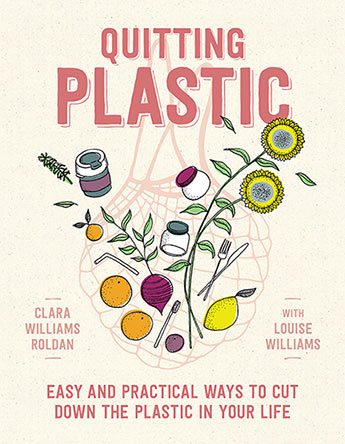
    Since the age of about seventeen, Clara has begun the process of cutting plastics out of her life. Her reason was for her own health and that of the environment. The Great Pacific Garbage patch, the size of Queensland, and the fact that plastic doesn’t break down but clogs up our waterways moved her to act. Clara has written the book with her mother who is a Walkley Award winning journalist.

    There are short letters from people who have come to the same conclusion as the Author, and they give their reasons why. One person lived near the coast in New Zealand and was dismayed by the waste that was washed up on the beaches. Another person was holidaying in Thailand and was horrified to see people throwing all their rubbish into the ocean.

    The first chapter begins with the ten things that you can do today. Using a metal water container, using reusable coffee cups, saying no to plastic straws and balloons and picking up a piece of plastic every day are just a few of the easy ways you can make a difference. “Plastics aren’t all bad or good, they are an integral part of life on the planet today.” However, the facts that are presented to the reader make for chilling thoughts. “In Australia, five billion plastic bags were handed out every year before new bans came into force.” Because many plastics are the single use kind, it would be logical to address our use of them first.

    There are many suggestions about how we get started to reduce our plastic consumption. Taking your own bag and buying ingredients loose is one way. Using paper wrapped butter kept in a china butter dish is another thing we could do. Stores selling bulk food which you can pack into a paper bag, are becoming more popular. Local farmer’s markets are also a good source of fresh food without the packaging, although the prices are generally higher.

    There are terrific tips given for using laundry products, and shampoos, as well as surface cleaners, toilet cleaners and disinfectants. The disposable wipes we use for many things clog up drains and cause “Fat Bergs.” Biodegradable written on plastic just means it breaks down, we need to find Compostable marked on a bag.

    This book is easy to read and interesting without being pedantic or superior. It is broken into chapters about cleaning and wardrobes and simple ways to begin quitting plastics. It is also informative about the harm that plastics are doing to our planet.

    Really every household should be aware of the results of research that Clara has done and make an effort to reduce our plastic consumption.


  • Bat

    Bat

    NSB


    Unloved, misunderstood, overlooked and considerably unlovely: No, it is not your average teenager in today’s world but the Bat, the most misunderstood, maligned and often feared species of animal imaginable, considering the amount of wildlife information available via the wonderful world of easily accessible technology.

    Somehow, Bats simply have not made it into the list of animals to get to know and love, as they are definitely not cute, at least not by the standards used to define cute in the human world, tend to move very rapidly, are found in the early evenings or in the dark of night going about their lawful business, and in many cases emit a high pitched noise. Some are tiny and some have a wing span as wide as an adult is high. Most species are dark in colour thought this may vary, with faces reminiscent of gargoyles. What is there not to love?

    As Tessa Laird goes on to explain there is actually a  lot to love and admire  about Bats; there is a huge amount to respect about the way they fill a massively important link in the ecology of the world and the environment, about the way they use their echolocation abilities to hunt, recycle and replant. They have a finely developed society which is unique to their species and environment.

    Sophisticated and defying what the scientist have always tried to understand, the Bat is a highly evolved creature, with many of its unique characteristics having been utilised in early efforts of flight by Leonardo da Vinci (1486-90) and then Frenchman Clement Adler, who created a steam powered, bat shaped aircraft in 1890.

    In 1938 Donald Griffin discovers Bats brilliant ability to echolocate and in 2014 bats were blamed for the outbreak of Ebola in West Africa, which was later debated. Sadly thousands of bats were killed before this took place.

    As you work through this very easy and entertaining read book about Bats, a much clearer understanding of their vitally important role in the environment becomes apparent.  It also becomes apparent that they feature heavily in the world of horror stories thanks to Bram Stoker and his story Dracula published in 1897. Batman followed in 1939 giving bats whole new persona.

    The Arts have also shown Bats off in various creations and from a scientific perspective, their droppings have been used to form gunpowder used during the American Civil War. The Chinese were already using the droppings from the caves to create gunpowder from the saltpetre for their fireworks.

    Revered, painted, abhorred, had poetry and prose written about them, and loved, Bats are incredibly unique creatures with still much to understand about their species, lifestyle and characteristics. Unfortunately, they like many other species are becoming challenged as more and more land is cleared globally, trees felled, with the smoke from the fires affecting their habitats.

    Next time you are fortunate enough to see a Bat colony living and working in their own environment, spend a little time to appreciate what it is about Bats that make them such an important aspect of our world, environmentally and ecologically.