Tag: environment

  • Department of the Vanishing

    Department of the Vanishing

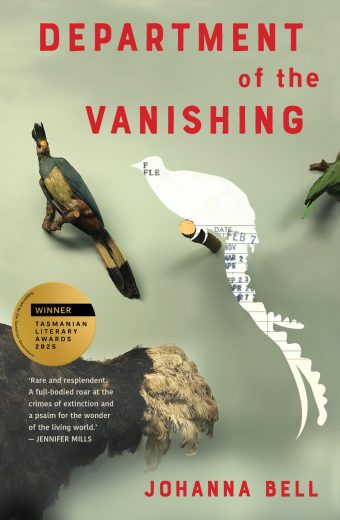
    In this stunning debut novel, Department of the Vanishing, blurs fact and fiction into a chilling and all too real reality. Johanna Bell roars from the highest pinnacle using the iconic Lyrebird to illustrate the tragedy that is environmental destitution.

    The Department of the Vanishing is a most intimate book ranging through the many nuances of the emotional experience of Ava Wilde, a young woman filled with hope and idealism.  In her desire to make an impact, Ava accepts a governmental role as an Archivist in the Department of the Vanishing, the department responsible for archiving the disappearing flora and fauna in this fictional world.

    As the years progress, she begins to realise that she is cataloguing nothing more than the end of everything; reasoning that no matter what she does it will not matter. Ava will not change the course of climate change that is destroying the planet, and specifically her beloved Lyrebird, with its soulful songs that Ava has a special affinity for. The Lyrebird, with its distinctive song, ability to mimic, survival instincts and mating habits is used to illustrate the sadness, the ultimate tragedy should  the final song be sung. Ava comes to realize through her work that perhaps the slow destruction of the earth is an analogy of the way her life has been moving forward.

    Through the introspection initiated by her work, the burning of the planet is much like the growing pressures of unresolved pain in her mind. Her father, a well-known naturalist, went missing more than 30 years ago; her mother holds secrets but is slowly slipping into dementia; her many lists, papers and cuttings that fill up her small home have become her obsession. Ava Wilde seeks normality and catharsis though sex; raw, brutal, and coarse.  She discovers that it is not; it is nothing more than another maladaptive coping mechanism in a life that is already in chaos.

    As the story progresses Ava presents as quiet and hesitant. She has moved past the point of caring, accepting her fate, refusing to admit that her actions were anything more than a woman mired in grief for her life, and the environment.

    The Department of the Vanishing is not your usual read. The book has been created with great thought: the words, poetry, illustrations, photos, Police Statements, lists, and quotes are reflective of the general chaos of her life.

    Fascinating, original, complex and yet beautiful, Department of the Vanishing created by Johanna Bell is already an award winner.  The book artfully articulates a clear environmental message. A list of References she has used are there should you choose to delve further into the many threads of the story.  Eco literature at its finest.
  • The Last Song of the Mistle Thrush 

    The Last Song of the Mistle Thrush 

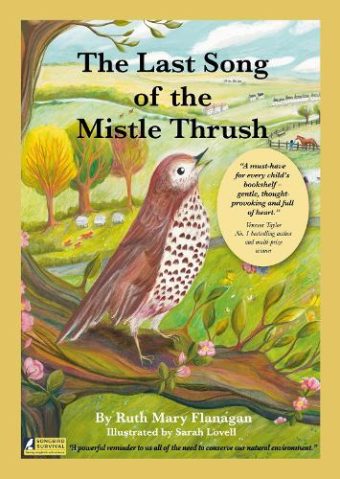
    In a gentle and heartfelt manner award winning poet Ruth Mary Flanagan draws attention to the changing environment in The Last Song of the Mistle Thrush presenting in delicate prose the need to change.

    The beautiful words of the poem reach across barriers to highlight the very real need to understand the role birds play in the ecosystem and the impact being wrought by climate change and poor land management on their environment.

    Each page captures the imagination, giving children time to understand the message of the words, ask questions and simply enjoy the timelessness of the Mistle Thrush, a bird that has been witness to an ever-changing environment for centuries.

     Every word in The Last Song of the Mistle Thrush remains long after the pages have closed to deliver the message of hope, of care, of understanding for the environment and that no matter how old or young you are, you can learn to appreciate the world around you.

     The Last Song of the Mistle Thrush is a book that will be much treasured by young and old as they enjoy the words of this timeless poem which is truly ‘a poem for our time’.

  • Nature

    Nature

    The format of this book is rather unusual as it resembles a Picture Book but has chapters and an instructional text. The chapters outline the story of a girl called Janet. In the first chapter the author talks about the interconnectedness in nature. She explains that “We are connected to the planet and what we give to it comes back to us.”

    Janet lives in a large house with the latest phone and clothes that she has bought but never worn. She didn’t have many friends but stayed up late at night talking online.

    One day Janet woke and didn’t want to get out of bed. She was exhausted. Janet was lacking clean air, sunlight clean water, quality foods and sleep. Our planet is suffering the same way.

    The next chapter deals with Land Conservation, followed by Ecological Footprints, and The Rainforest. Here we learn the rainforest is called the lungs of the planet and why they should be protected from logging and clearing.

     Our species used to live in harmony with nature, but now we seem to have lost our connection with nature. The author continues to discuss in short chapters the Coral Reefs and their plight as well as the disaster of commercial fishing.

    As each chapter unfolds young readers will learn much about the earth, the oceans and the reasons why they need to be kind to our earth, as well as understanding how they can also help to make a difference.

  • Walking the Rock Country in Kakadu

    Walking the Rock Country in Kakadu

    Karrire kundenge karribolknan kunwarddehwardde

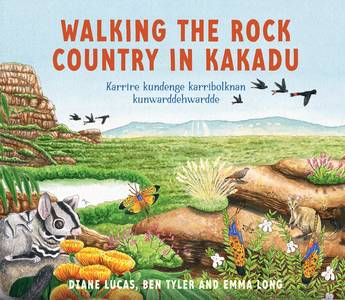
    The cover on this Picture Book, Walking the Rock Country in Kakadu hardly prepares the reader for the explosion of colour to be seen when the pages are opened. Vibrant and realistic, they show us the true nature of the Kakadu area both in its formations and its wildlife. The opening notes tell us that Kakadu is “Made up of many First Nations clans and languages.” There is a map of Kakadu National Park, and we are told that the Rock country is the Arnhem Land Plateau which extends into Kakadu.

    The story begins with a family who decide to walk the Rock Country. They drive to a favourite place and head off into the rocky area. The little boy is excited and begins to run. He is confronted by a very large kangaroo and his first lessons are learnt. Don’t run, don’t leave the group, and stand still when confronted by a male kangaroo.

    Most of the pages consist of a double page spread with a column of text to the side. This means the text is on a white background and easy to read. Meanwhile the splendid illustrations enlarge the understanding of the text.

    As the story is told, the Aboriginal words are given for many birds and plants. “There is a marrawuddi watching us.” This is a white bellied sea eagle. The family look at the frogs and tadpoles and remember stories they have been told about their arrival. Interspersed in the text are tiny pictures of the family as they enjoy their explorations. We also learn about the customs for conserving plant life.

    This magnificent book would be a brilliant resource for families or people wishing to learn more about First Nations People from Arnhem land. Because it is narrated by a child it is told simply, but the spiritual messages, the rituals and cultural responsibilities are addressed.

    At the back a Glossary of terms is presented and superbly set out, with tiny drawings of each animal or plant. A truly spectacular book in every way.

  • The Rewilding

    The Rewilding

    Becoming a corporate whistleblower by blowing the whistle on the Greengate Waste Removal scam his father’s business is running, didn’t come easily to entitled rich boy-man Jagger Eckerman.  The resulting police investigation will implicate him too, as he’d recklessly signed a number of the incriminating documents.

    With his life under threat not only from his father but also the law, Jagger seeks temporary refuge in a cave, with which he had become familiar during his childhood. He is horrified to find ‘The Feral’ (Nia), a self-proclaimed huldra, an ecoterrorist, already ensconced in his cave on the edge of the city, who is determined to save the world.    

    Soon it becomes evident that both main characters have their own reason to fear for their safety and hence need to leave the cave. Despite their different values and priorities, this unlikely pair set off together with a mystery friend of Nia’s in ‘The Feral’s beat-up Landcruiser for safer territory; a thrilling chase ensues.

    The thrust of this novel is extremely topical. Donna Cameron provides a wealth of information about the side effects of global warming and the lack of human care on the environment. It is evident that this Australian author is passionate about climate change and environmental degradation, which she has woven throughout this narrative.

  • FOOTPRINT

    FOOTPRINT

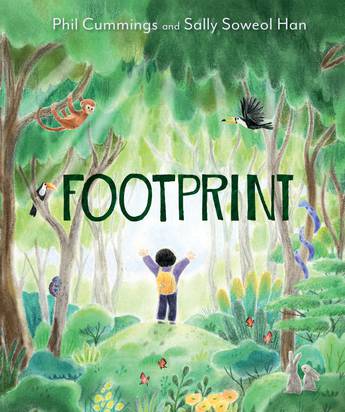
    The intention of the author and illustrator was to empower children to look and think about nature. They have certainly achieved that. The illustrations and wonderful winding words in Footprints encourage a sense of outdoors and deep breathing.

    The story follows children who have ventured outdoors and shows just what they can see and do. While in a canoe on the river one might see butterflies, snakes, birds, and trees.

    We are encouraged to BREATHE as we watch a child wander through a field of flowers, with a huge sky overhead. There are rocky climbs, ice water crossings, wild misty shadows in foggy fields. To perpetuate this wonderful environment we can plant seeds, feed animals, and move on and breathe.

    The wonderful minimal, intense, and lyrical language that the author uses compels the reader to slow down and immerse themselves in imagining. Looking at the sky, loosing oneself in nature, and being aware of the beauty around us is portrayed.

    However, we have a job to preserve that very nature and leave few footprints. To plant a tree, to tread lightly and to care for our animals is a way forward which we all can achieve.

  • Tree

    Tree

    Using marvellous illustrations and descriptive, lyrical language, the Clare Saxby has used this tree as the main character in this picture book, naturally titled Tree.

    The story begins with a view of the forest from above. It is a misty morning, but one tree stands taller than the rest. “The tree is older than those who find it, and younger than the land it grows from.” As the mist melts away, we see the tree in all its splendour.

    It breathes out oxygen and takes in carbon dioxide. The illustrations move to underneath the ground to show how the roots share the soil with other creatures. They send stories through the soil. At the base of the tree, we find lyrebirds, slaters and beetles.

    Now the pictures take us to the tree during a rainstorm. “Rain feeds the tree, feeds the forest.” We see the many creatures which inhabit the tree including possums, beetles, birds and insects. Once the daylight passes, “Close your eyes. Listen to the sounds of the night.” See the different animals which come to the tree. Gliders come to suck the sap, and possums’ flit and chew leaves. Wombats and rats scuffle on the ground below, and steadily the tree grows.

    The author’s note at the end of this story explains that this is a Mountain Ash tree, which has miraculously survived bushfires and clearing. “To protect this tree and others like it – is an investment in the health of our world. There is a fold out page in the book showing the tree in greater perspective. Altogether this is an informative and complete work not to be missed.

  • Footprint

    Footprint

    The intention of the author and illustrator was to empower children to look and think about nature. They have certainly achieved that. The illustrations and wonderful winding words in Footprint encourage a sense of outdoors and deep breathing.

    The story follows children who have ventured outdoors and shows just what they can see and do. While in a canoe on the river one might see butterflies, snakes, birds, and trees.

    We are encouraged to BREATHE as we watch a child wander through a field of flowers, with a huge sky overhead. There are rocky climbs, ice water crossings, wild misty shadows in foggy fields. To perpetuate this wonderful environment we can plant seeds, feed animals, and move on and breathe.

    The wonderful minimal, intense, and lyrical language that the author uses compels the reader to slow down and immerse themselves in imagining. Looking at the sky, loosing oneself in nature, and being aware of the beauty around us is portrayed.

    However, we have a job to preserve that very nature and leave few footprints. To plant a tree, to tread lightly and to care for our animals is a way forward which we all can achieve.

  • Granbad

    Granbad

    Some families are lucky enough to have a Grandfather who cares deeply about the environment and his grandchildren. So deeply does this Grandfather care that he is willing to be quite outrageous to bring attention to creatures such as the endangered sugar glider.

    He is named Grandbad and there are delightful pages where he asks the children about which words are too bad for him to use. “Is bum rumble rude too?” asks Grandbad……

    The story shows how the family and community gather to protest about the clearing of a forest. The sugar gliders which live there will lose their homes and their feeding ability without the trees. After several protests it seems that the voice of the people had gone unheard, and the trees are due to be cut down. Grandbad has a better idea and again is prepared to flout the law for a worthy cause.

    The family love shared by this group is great to see. It is interspersed with a love of the environment and the determination to protect vulnerable creatures. It shows how people working together can make a difference. It also shows that being passionate about the environment is not just left to the young but for all of us.

    The illustrations are colourful and add to the humour in the story. “Go Grandbad “we say! Information about Sugar Gliders can be found at the back of the book.

  • Baller Boys Vs The Bulldozers

    Baller Boys Vs The Bulldozers

    Venessa Taylor has created a terrific series in mid-grade readers with the Baller Boys series, based around soccer, team work and life in general, which has a strong appeal to any young person who is a little bit sport mad. The Baller Boys v’s The Bulldozers is the second book in the series.

    The All Cultures (AC) United team has faced their first game of the season after a very lazy summer. Shay and Frankie are feeling the effects of far too much video a game play and not enough exercise, as Stokey Town is out-running them and seems to be going to win the game!!!

    Somewhat shame faced, even though the game was a draw, the team realise they are going to have to improve, and fast, if they want to be the Cup holders at the end of the season.

    AC United are united in more than their name they take up the challenge to get fit with a very innovative school fitness programme, but things are not going so well for Frankie; he is very worried his parents are going to buy a new house and he may be moving away from his beloved house and team.

    As the team begins to come together, horror of horrors, a girl, is bought into the side and what’s more she is good: very good. Shay is worried she may be better than him and as he is going to work hard to get the coveted title of Baller Boy at the end of the season, he sees Ashleigh as nothing but a real threat.

    Oscar’s neighbour hears their Club and football field are to be sold to developers which is perhaps almost the worst thing that could happen, but during their new fitness regimen the team run through a wooded area and hear birds calling. These birds are nightingales which live in the woods and their habitat needs to be protected.

    Along with their parents and the Coaches, Shay, Frankie and the team decide to take up the challenge of trying to get the development stopped, as well as protect the nightingale’s habitat. Will they be successful is the big concern, but they feel they, just like when they play soccer, they must work hard and be united in their cause.

    The Baller Boys v’s The Bulldozers is a very entertaining and engaging read which looks at sportsmanship, teamwork, loyalty, friendship but most importantly, working hard and doing the best you can to win the game, and if you don’t win, accepting your loss with good grace.