Tag: Sydney

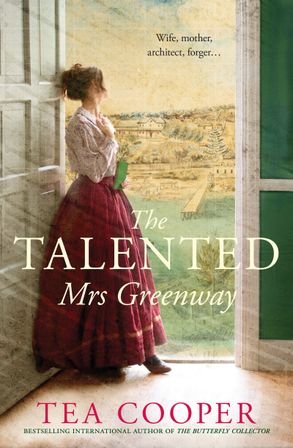
  • The Talented Mrs Greenway

    The Talented Mrs Greenway

    Tea Cooper has woven an engaging tale around the life story of Francis Greenaway and his wife Mary. Her research and understanding of the times past, in recently settled NSW, enriches our knowledge of those early days. 

    We meet many familiar characters in this story, such as Elizabeth and Lachlan Macquarie. It is also interesting to look at the architecture of NSW with fresh eyes, as Francis Greenaway was responsible for designing The Barracks, and the Government stables, now the Music Conservatory.

    The Talented Mrs Greenway begins in England. There is very little known about Francis’ wife Mary. Tea has painted her as being married to a sadistic man who fortunately died early on in their marriage. By then Mary had two children and had met Francis.

    As a crime of forgery had been committed, both Mary and Francis left England for the Australian colony. Governor Macquarie was desperate for an architect to begin new buildings and as Francis had a letter of recommendation, he was quickly employed. The setting for the Colony is wonderfully described by the author, and we get a sense of just what life was like in those days.

    It seems that Francis was rather arrogant and when Governor Macquarie retired, the architect’s work dried up. Mary was determined that her children be properly educated and to supplement their income, she began a small school.

    When she passed away a death notice in later papers of the time praise Mary for her kindness and dedication to children in her school. Francis however is buried in an unmarked grave. Strange, for a man whose face graced our $10 notes for some years. However, this is Mary’s story, and her strength and determination contributed to the foundation of our nation.

  • Late

    Late

    Late: always late for everything. She was known for it and even now in her reclusive retirement this pattern still holds. Somewhat lonely but not alone ‘Zelda Zonk’ once a silver screen icon now lives in a very modern apartment overlooking Sydney, two cats for company.

    Daniel comes into her life around the time an old typewriter and book arrive, which prompts the beginning of a friendship, changes to both their lives and intimate, intriguing discussions of times past and present.

    During the 1970’s and 1980’s the sandstone clifftops around Sydney were known as the haunts for gay men, many of whom were murdered there, their bodies thrown over the Cliffs. Daniel is known to visit this area.

    Daniels’ story is gentle, emotional and compliments the older woman’s; both discover they are orphan’s both have led very different lives, which is so many ways makes them the same but vastly different. Both never quite fitting, never quite reaching the much sought pinnacle of perfection.

    As the story unfolds, there is the tantalising prospect that perhaps the actress is an all-time favourite and that perhaps she never died, just simply relocated, the entire episode of suicided manufactured in true Hollywood style.

    A little confusing to begin with Late is a story that takes time to begin to resonate, to allow the mind to slip back into a time when Hollywood Screen icons were marketed as the characters they portrayed on the screen, frequently misrepresented, their real persona carefully removed from public viewing.

    Once this time slip occurs and it will, Late begins to fall into place. Quotes used lavishly join the pieces together, the tempting though that maybe you know who’s story it is, holds firm until the last page.

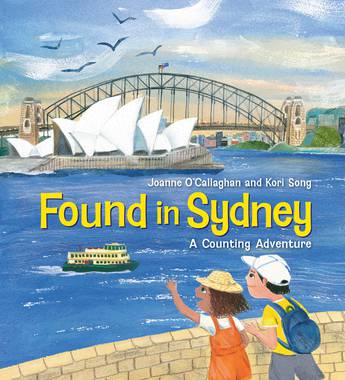
  • Found in Sydney

    Found in Sydney

    As the title suggests, Found in Sydney is a counting book set in Sydney. It would make a great gift for a child who lived overseas, a terrific addition to any school library, or for a family going to visit Sydney. The focus is not on the numerals, but the landscape, so to begin we have a harbour side scene with 1 aeroplane coming in to land.

    Each page shows a specific place in Sydney; Taronga Zoo, Manly Beach, Bondi Beach and the Art Gallery of New South Wales, are just some of the double page spreads captured here. For each number, animals or objects are shown and the rhyming lines encourage children to count the named koalas or buildings. Interestingly, after the number 12 comes the number 100, then 1000, then a million. Wow!

    Joanne O’Callaghan obviously has a great love of Sydney and Kori Song has once again added vibrant illustrations to keep small children entertained while they count all the things they find.

    There is a reference in the front to the Dharug People who were the original inhabitants of the area. A map shows where some of the clans lived, and we are asked to “Please tread softly on our ancient land because our dreaming is forever.”

    At the back of the book there is a map of Sydney and surrounds naming all the places illustrated. It would be a great guide for a family who wished to visit this capital city, or for the curious.

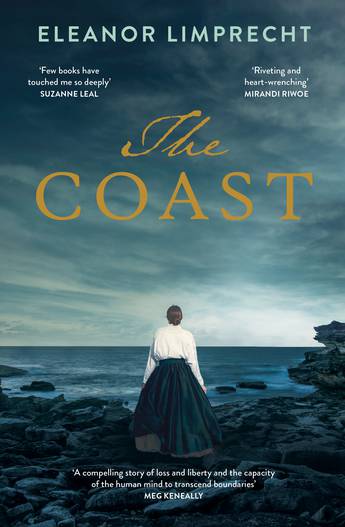
  • THE COAST

    THE COAST

    This well researched Historical Fiction, The Coast is set in Sydney, spanning the years from 1905 to 1926. These days we have so many areas of our history filled in, but this is quite a different view of the early times in Australia. A leper colony was established around Little Bay; this well presented, deeply moving story gives us many details of what life was like then, and how the lives of the affected people were managed.

    The compound consisted of individual buildings called Lazarets. The occupants lived there and were provided with substantial meals and medical attention. Their bread was freshly baked by prisoners in the Long Bay Gaol. Their milk came straight from a local dairy. The inmates would always be outcasts and separated from their families who could visit them, but most chose not to. The medical treatment the patients received was basic and bit by bit their bodies disintegrated.

    The Coast comes to life using four main characters. Alice, Clea, Jack and Will. Each plays a part in expanding the daily workings of the leper colony and the characters within. Alice was brought to the Lazaret when she was 9 years old. Her grandmother discovered she had the very early signs of Leprosy and took her to be with her mother, who was a resident there. She grew up in a very different world where she was able to go down to the beach and walk but would be forever isolated.

    Will developed a fascination of the human body at an early age and trained as a doctor. He worked tirelessly at the leper colony and was the kind face the patients knew well. Jack was Aboriginal and tells his story from a completely different angle.

    Eleanor Limprecht has shone a light on a very different aspect of Australian History and encapsulates the customs and thoughts of the times very well.

  • Black River

    Black River

    Over a long hot Sydney summer a killer is on the loose. He is so good at cleaning up the traces. His very distinctive, brutal style of murder is specific for a person with some serious mental health issues, which while it helps the detectives to try and understand what is going on, it is not helping them solve the murders of two young women living in the same suburb, but totally unknown to each other.

    When a third murder occurs at a prestigious Sydney boys school, there appears to be no real link to the BMK (Blue Moon Killer) murders, but in desperation, Riley and her boss O’Neil, decide that perhaps there could be a commonality here; O’Neil makes the decision to keep the case, even though the thread is fine.

    Bowman, a down on his luck night desk reporter at the ailing The National broadsheet, gets told to go cover the story as he was an old boy at the prestigious Prince Alfred College. Bowman is none too happy about this, as he is not the crime reporter and going back holds too many bad memories; memories he does not want to revisit.

    Fast paced with a skilfully-crafted plot, Dark River paints the profile of a man who is dangerously unstable. Because of his method of cleaning the site of his murders, he has an excellent knowledge of forensics, therefore could very easily be one of the Police force, and a family with secrets to hide, that keep the police guessing; in need of a small glimmer of hope.

    The logistics of the cases keep coming back to the river that runs past the previously murdered women’s homes and also runs through the campus of Prince Alfred Campus. Is this a link or is it simply a co-incidence?

    Making the decision to use Bowman as a strategic leek, O’Neil, Riley and new recruit to the division Patel, work well as a team, as they slowly uncover far more than they ever imagined over the long hot summer; where politics, the mafia, greed, tragedy, obsession and horror come together to form murder.

    Spencer has created characters who are very real, with flaws in their makeup which adds a dose of realism to the story, taking it from the world of fiction into the world of everyday, giving the story an edginess that draws you in and refuses to let go until the killer is caught.

    Former journalist Matthew Spencer has delivered a blockbuster of read with his first novel, Dark River and one, even though it is only six months into the year, could be considered as one of the best crime thrillers of 2022,

  • The Opera House

    The Opera House

    The Sydney Opera House which is listed on the UNESCO World Heritage List alongside the Taj Mahal, the ancient Pyramids of Egypt and the Great Wall of China is considered one of the most outstanding places on Earth.

    This multi-venue performing arts centre, located on the banks of Sydney Harbour at Bennelong Point, is widely regarded as one of the world’s most famous and distinctive buildings, and a masterpiece of 20th century architecture. However, had it not been for men with a vision, Australia’s first architectural work of genius may never have come to fruition.

    Although over the years many books have been written about the trials and tribulations surrounding the conception and construction of the Sydney Opera House, Peter Fitzsimons in his thoroughly researched, comprehensive book ‘The Opera House’, gives the reader a different and unique insight into the social and political history surrounding this iconic landmark.

    All the questions which the reader may have, plus some which she/he may not have even considered, surrounding this icon of architecture, the author has answered. Why was the Director of the New South Wales Conservatorium of Music Eugene Goossen, a strong early advocate for an opera house, almost written out of its history? How is Graham Thorne, the first kidnap victim in Australia, related to this magnificent architectural achievement? Why was Jorn Utzon, the designer and initial architect not even mentioned at its final opening, fourteen years after he’d won the design competition?

    Fitzsimons, with great humour, also gives the reader an insight into the views of not only the politicians of the day, but also the good folk of Sydney; many who considered the design ‘insane and (one which) would disfigure the point’; ‘the joke of the century’.

  • Dressed By Iris

    Dressed By Iris

    Mary–Anne O’Connor confirms that Dressed By Iris is an Historical-almost Fiction tale. The setting is Sydney and surrounds, beginning in the 1930’s. It is an accurate reflection of the times and a well-researched account of social attitudes. It is still quite shocking to read about the racial and religious animosity that existed then. The story of this Irish, Catholic family whose lives we follow, is loosely based on the lives of her grandparents and aunt.  

    The story of the Mitchell family begins in a very poor shanty town. The tiny house they inhabit has a dirt and straw floor, and hessian sacks as dividing walls. This is the time of the Great Depression and Bob Mitchell has lost his job. His wife Agnes is a tower of strength and positivity. Their five children have all been raised in a loving and happy environment despite their hardships. All are content to help each other and contribute to the family in any way they can.

    Iris, the daughter, is smitten by a handsome young man who happens to be a Protestant. This is a huge issue. The young couple will have to work out a way to appease their families. When John gives Iris a ribbon, she cleverly forms it into tiny roses with which she decorates her hat. Many people are impressed by her skills and ask for shawls and hats to be similarly treated. This begins a wonderful and creative future for Iris.

    As Bob begins to work on the Sydney Harbour Bridge, his income allows the family to move to Sydney. With the older children working, the family finances begin to improve. In following the lives of all the children in this vastly different era, we see their tenacity against hardships and poverty.

    Dressed by Iris is an excellent reflection of the times and politics that governed Australia then.

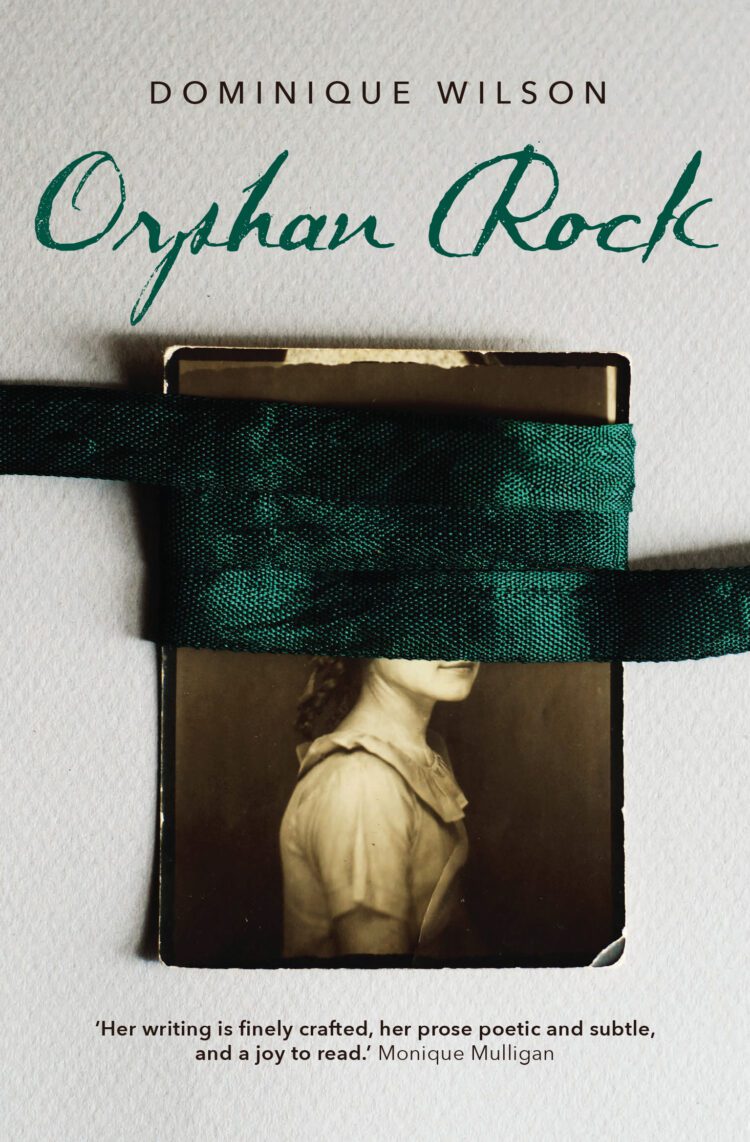
  • Orphan Rock

    Orphan Rock

    Australian History comes to life in this rich and complex saga, Orphan Rock. Set in Sydney in the late 1800’s we are introduced to the main character Bessie, as she gradually becomes aware that she has been left at an Orphanage.

    As a young girl, she can vaguely remember her mother, but Lottie is the orphan who guides her through the routines, keeps her safe, and sleeps with her at night. The poverty and hardship are tangible.

    Many topics are examined in this story and as a result of careful research, the Dominique Wilson brings forward many other social justice issues.

    For those Chinese who migrated to Australia for a better life, or for gold, life was unenviable. Trying to settle into a community who were mistrusting and suspicious was hard enough, but to try to work and support a family was a battle. If a Chinese man fell in love and married an Australian girl, she would be disgraced and extraneous to the community.

    A separate issue at that time was the rights of women. As an adult, Bessie began to work for a newspaper run by feminist Louisa Lawson, she saw the inequality and despair of women trying to make a stand for their rights. Bessie was fortunate as she was a companion to an old woman who had a pen pal living in France. The pen pal decided to come to Australia for a visit and the disparity between the cultures was huge.

    After surviving the death of her husband and family to smallpox, Bessie lived from hand to mouth. Eventually, she remarried and her daughter lived to benefit from all hardships that had gone before her. As Kathleen becomes an adult, she continued the French Connection formed when her mother was a young woman and was there when World War 1 broke out.

    It is the detail and characters in Orphan Rock which present such an impact on the reader. As we follow the story, Historical events slot into place and it is so easy to be transported to that time and location.

  • Fifty Shades of 50 A Really Reliable Memoir

    Fifty Shades of 50 A Really Reliable Memoir

    When one is about to turn fifty, there comes a time when reflection on past years becomes inevitable. When the author first thought about this, ideas of a midlife crisis occurred to him. His wife, Helen, said that it was no use getting a younger woman as he probably wouldn’t know what to do with her. This said, he thought the next best thing was to write the story of his life and thoughts thus far. The style of the book is as though you were sitting chatting to him. It is warm, witty and informative.

     Amanda Kelleher has written the foreword to this book. She has known “Jonesy” for twelve years, and working with him in a small room in the radio station, has managed to survive and enjoy his company with only the odd spat here and there. Amanda enjoys the fact that Brendan is the “real deal.” He lived in the suburbs, drank at the local pub, and went to the footy each week. Because he is so well known on air and such a friendly character, he still has his feet on the ground.  No doubt this has been helped by his wife and three children.

     Brendan grew up in the southern suburbs of Sydney. Like many of his contemporaries, he enjoyed a freedom kids don’t have today. He rode his bike, met his mates and scrounged junk piles on the streets for an abandoned lawn mower that could be converted into a go cart. Life was good, and everyone enjoyed cracker night. The author’s father was posted to London as a Qantas pilot, and boarding school was the next step he had to face. It wasn’t a happy experience. In fact, schooling and Brendan never managed to gel. He did begin a fine arts degree, but it was not an essential part of his life.

     As he was growing up, Brendan and his mates formed a band. He was a drummer, and was always listening to music, and later, he signed up for the Max Rowley Media Academy. His ambition by now was to work in radio. For a seasonal job, he worked at a ski resort in NSW and to be productive during the long nights, he and some mates began playing their instruments. This gradually became a regular thing and attracted some famous artists who were staying at the ski lodge.

     The author won a position within the radio station Triple M, and shortly after, was asked to take the breakfast show while the regulars were on holidays. This led to some hilarious scenes with Mick Molloy. This chatty and friendly story is one that will have you smiling, and relating to someone who has had an ordinary life, but has become one of Sydney’s most recognised voices.

     He and Amanda enjoy their day to day challenges, and certainly, the public never tire of their humour and style. This is a story about a delightful man who is a gifted entertainer, but still retains his boyhood quirkiness.

  • Sydney Noir: The Golden Years

    Sydney Noir: The Golden Years

    Sydney, What a place. What a history. It does not matter which way you look at it, the history is certainly colourful. The beginning of settlement in the new place to be eventually known as Australia was built on convicts, free settlers, and the men and women who were sent by the ‘mother country’ Britain to maintain law and order. They lay the foundations for what is now a huge, thriving metropolis, and in doing so established the parameters for what could be considered as societies double standards. Then known as Sydney Town, now simply Sydney!

    Crime, greed and corruption was the order of the day which went on to become a refined art in the 1960’s and early 1970’s, known almost colloquially as the ‘Golden Years’ in the underbelly of life in Sydney.

    Corruption was at it peak, with trails leading straight to the then Premier Robert Askin, although this is still open to conjecture, and the police force under the direction, or possibly control, of what was then termed as Sydney’s top cop, Ray Kelly, a man considered widely as the most powerful, corrupt policeman of his time. His protégées later became major figures in the underworld, carrying on and refining where their former boss had left off on his retirement. It is also considered that although he had retired from the police force, Kelly still remained a major player in the dark side of life in Sydney.

    It is very clear that in Australia, there were two sets of rules, that of the straight and narrow society dictated and then there was the other version; that well it might not be quite right but it’s always been like this, relating in particular to what is and was known as SP betting, or starting price betting on the horses; illegal but openly indulged in by a wide cross-section of the community, from the lowliest paid workers, to high flyers, pillars of the establishment and the ordinary working bloke.

    Prostitution is and always was a major player in corruption and crime and in the mix that was Sydney “noir’ often walking hand in glove with the police force, which was also the case in Sydney during this particular period. Shirley Brifman, a Madame of infamous repute joined forces with a man considered by many the epitome of pure evil, policeman Fred Krahe. As she had been an excellent intermediary for Ray Kelly with the Queensland Police, Krahe preferred to keep her on his side to ‘deal with criminals and collect bribes on his behalf’.

    Kings Cross was coming into its own and rapidly rising to the top of the heap as the most corrupt place to enjoy a night out in Australia, thanks to the influx of thousands of American Soldiers on R&R leave from the Vietnam War. Whilst they added to the background with plenty of money to spend in a short period of time, simply lubricated what was already there, laying themselves wide open to a short lived but lucrative scheme known as ‘Take a Yank’.

    Michael Duffy and Nick Horden, have by dragging this period out of the dark into the light, shown a side of Australian life that is not  lovely but fascinating in the depths of depravation that can be ‘hidden in clear view’ , accepted by the people of Sydney as not normal, but that’s life!

    The tale reads like a very bad saga full of the most deadly, colourful characters, high fliers and men and women on the make or take, in any way possible, who often admitted to what they were doing and why, which if it were not so terribly true, would leave you wondering on the plausibility of this time in the ‘colourful’ history of Sydney.

    The final debate put forward by Duffy and Horden is that there is a possibility that Robert Askin was not as corrupt as is lead to be believed, which, based on in various documents located in the archives, indicate that while he may, or may not have been complicit with what was going on in Sydney at that time, and that he may have possibly profited one way or another from these dealings, perhaps he was indeed the sacrificial lamb, when it became time to clean up the streets!

    Well worth the read if you are a history student, enjoy the darker side of life, are intrigued with crime and cover-ups or possibly interested in discovering, as are Duffy and Horden, whether Robert Askin is as guilty as is recorded.