Tag: love

  • The Dinner List

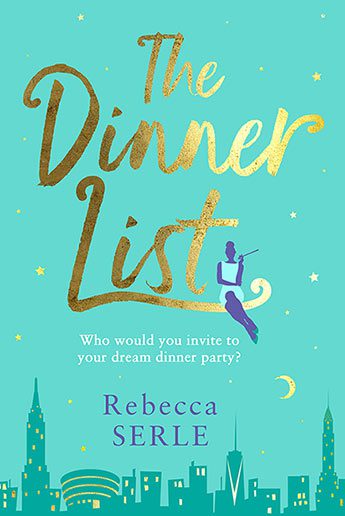
    The Dinner List

    What would you do if the people you most wanted to have dinner with when you were in University actually turned up at a dinner hosted for you by your still best friend on your 30th birthday?

    After the shock wore off Sabrina has to take stock; Yes that was Audrey Hepburn looking a little peeved as she was being kept waiting for dinner, her long dead father Robert is sitting there right next to Audrey, her friend Jessica is also there with the guests, very much alive and spearing choice morsels off Sabrina plate, something she has always done.

    In this reflective and wistful work, Rebecca Searle takes a long look at what really is important in a person’s life as they too grow up, adapt to change and learn to move on into tomorrow.

    Over dinner and as the wine flows she begins to realise that these people, four of whom are dead, have all had a major impact on her life and that being there at this time is not just a coincidence, it is something that has been in the planning for many years.

    Tobias her one and only  true love, dead only a short time, has not yet found peace in his new life, the same peace and acceptance as has Audrey and Robert. Her much admired University Professor of Philosophy Conrad, has designs on Audrey Hepburn and as the night slowly draws on, becomes somewhat interesting!

    But also as the night continues, Sabrina begin to realise that it really is about her learning to accept life’s realities without trying to fix them, something she has always tried to do, something that has held her back from moving on. She also realises that somewhere inside that strange, wonderful and totally quirky friend of hers, Jessica Bedi, there is a woman who truly believes in magic and considers “Anything is possible.”

    As each of the guests departs Tobias is the last to leave, the last to finally answer a question that is all important to Sabrina, ‘Why were you there that day?’

    A beautiful, poignant look at friendship, love, acceptance, family and moving on!
  • The Clockmaker’s Daughter

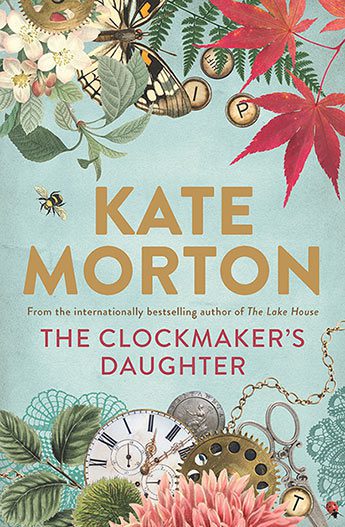
    The Clockmaker’s Daughter

    Kate Morton likens this story to a piece of cloth; the homes in it the thread to the weave. She has covered a large array of topics, covering such things as time, truth, beauty, relationships and home. In this engaging saga, the narrative is told over a period of time by many voices, including a spirit and a modern day archivist. The stories they tell and the way their lives inter twine is captivating.

    The focal point of The Clockmaker’s Daughter has to be the house, Birchwood Manor. Its story has been told for many generations. One night, in ancient times, three children arrived on the doorstep of the Manor with the couple who lived there taking them in and caring for them. Local people began to say that their crops had failed, and accidents had occurred because of the strange children. But the couple protected them from harm. Months later the Fairy Queen arrived at the house and thanked the couple for looking after her lost children. She took the children back but left a safety spell around the Manor.

    The beginning of this saga tells of a time long ago. Then we meet an Archivist named Elodie, who lives in 2017. She has come across a box at her workplace which has been hidden accidentally for many years. As she begins to expose the contents she discovers links to her own childhood, along with an artist’s sketch of the house (Birchwood Manor) of which her late mother had told her stories. Gradually information is gleaned and Elodie is drawn to visit the Manor. She discovers stories that help to clarify her Mother’s past.

    There are many other stories to be unravelled. Tip, who is Elodie’s Uncle, was raised by his mother in London until the war broke out. They moved to the country and stayed in Birchwood Manor. Their family story is fascinating and brings to light the struggle for displaced families. But the most passionate love affair took place in the 1700s in the Manor which was owned by an artist. Edward was a well to do young painter who fell deeply in love with his model Lilly. She was not only beautiful, but intelligent, kind and honest. Theirs was a true and deep love which pervaded the house for all time.

    This is an extraordinary saga which looks at features that make humans behave the way they do. It covers many people, places and times and takes us on a journey that shares in the lives and outcomes of the actions that people take.

  • Always with you: Messages from Beyond

    Always with you: Messages from Beyond

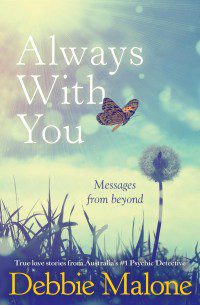
    Popular Psychic Debbie Malone in her latest book Always With You, looks into love beyond death with a collection of beautiful stories from her clients, along with personal experiences to bring comfort to those who have loved and lost friends precious members of their families.

    On the passing of a love one, everyone is affected in a different manner, with many spending a long time wondering if that gentle whisper, the special scent occasionally acknowledged, the gentle touch on the cheek in their time of sadness, is their loved one looking after them; is it real, is it a miracle or is it love sent and felt, that is timeless and wonderfully comforting.

    In the number of the stories selected for this book, Debbie Malone commences with personal account of being in fearful danger, being warned several times of this impending danger, treating the warning with a cynicism which almost saw her in terrible trouble. The warning related to an incident that was to take place in a supermarket car park on a wet and windy winter’s night; her guardian angel shouted at her, letting her know that he was there to protect her and all would be well.

    There is the lovely story of Tas Psarakis, a man who has an interest in the history and memorabilia of the American Civil War. At an auction he saw a tin-type of a Civil War soldier that remained in his memory.  Tas eventually returned to the auction house and purchased the tin-type to add to his collection. This led to a desire to find answers as to who was this solider; Debbie Malone did a reading for him only to discover that the soldier in the tin-type was a man maned McGlinchy: this was a reading that was to surprise everyone with a result that was totally unexpected.

    So many more delightful stories fill the pages culminating in the sharing of the life of Nanna, Mary Theresa Davidson, or ‘Nanna Duncan’ in Butterfly Kisses, which tells the story of Debbie’s grandmother, offering a peek into the life so many women led in the years when women had few rights and little in the way of support in difficult situations, and Nana’s friend of a life time ‘Nell’.

    As always with Debbie Malone’s books they are filled with love and the certainty that love remains for always, loved ones are always there, sharing their love and caring, helping in many cases to guide, to help, to heal. The beautiful words from Robert Malone say everything that needs to be said when a loved one passes:

    Remember me in your heart, your thoughts and your memories. The times we loved. The times we cried. The times we laughed and the times we shared together will always be remembered!” – Robert Warwick Malone (1926–2012)

  • I Love You Dino-Daddy

    I Love You Dino-Daddy

    This almost too cute book is the idea gift for Dad as it absolutely makes a book for giving and sharing between father and child. The illustrations are bold and of course in dinosaur colours with an uncomplicated storyline, easily read and understood by littles ones, preschool and early readers.

    The Dino children love their Dad because he can do all the things they love, like blowing up huge balloons until they POP, and swinging the swing nice and high, but not too high when they visit the park.

    He can always find time to play even though he is busy and builds the tallest tower out of blocks until, Crash, the blocks tumble down. Sometimes, when Dad takes a nap they dress him up in some of Mums clothes and make-up; he is not cross, but turns into a monster and chases them through the house.

    A delightful, fun read, with sound effects that can comfortably be built into the storytelling by an innovative Dad, which will turn this tale into a glorious romp about the house, and would make a great gift for Father’s Day, or for that special occasion to say thank you, Dad for being so very special and so much fun!

  • We Are Not Most People

    We Are Not Most People

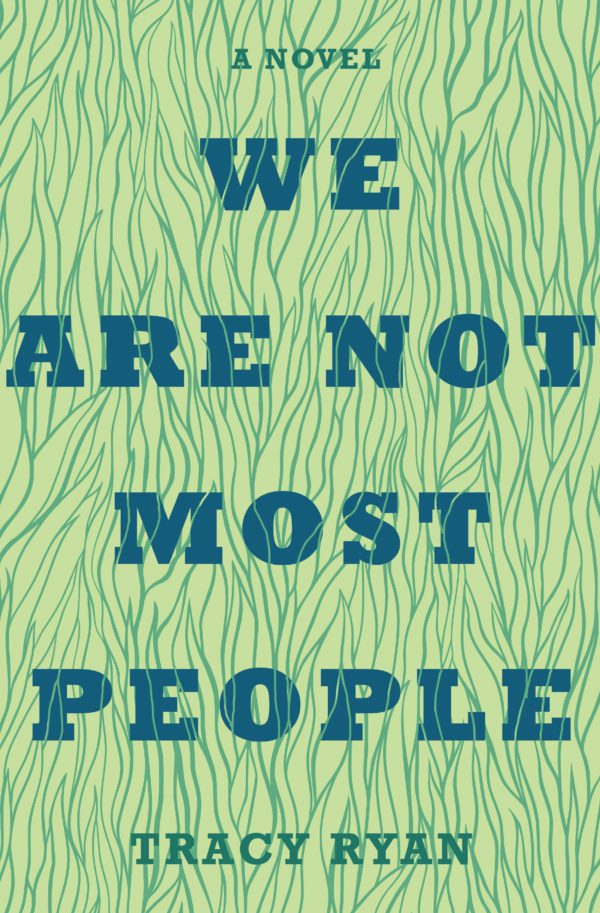
    In We Are Not most people poet and author Tracy Ryan draws an intriguing concept around the human psyche that captures the very beautiful, but also in its disturbing frankness, the delicate heart that lives within us all.

    Terry Riley is only a young girl when her father is killed in a traffic accident. He was an alcoholic who made the family life miserable every Saturday night with his violent outbursts, but also went to Mass on Sundays to teach the children the catechism. Damaged and missing her father, Terry discovers she is a loner, a girl who struggles to make friends that will last, with her one love, her one passion that of languages, and the teacher who, in a bumbling way attempts to teacher her in high school.

    Kurt Stocker was the youngest member of his family, a family deeply pious and god-fearing; a gentle soul who only wanted to please his parents, but discovered early in life that no matter what he did, he never quite achieved that desired state. At a young age he decides a change of schools is the solution and enters the Seminary for two reasons, one to escape the teacher who terrified him and the other to please his parents. Once again he simply did not fit.

    He eventually becomes a new emigre to Australia with a young wife Liesl, a woman who was out to make the best she could of this new beginning, but Kurt unfortunately struggles with so much.

    Terry also has had enough of trying to fit into life, making up her mind to enter the Church via the Carmelite Order, as this will rid her of people, unwanted trappings of life and everything will be simple once again. Once there she falls prey to a debilitating illness, eventually leaving the Order to begin life in the real world once again.

    We Are Not Most People is also a story of May to September love, a young damaged, intelligent woman and an older, far more experienced, damaged man and their love; a platonic, and yet deep love, overshadowed Kurt’s first wife, Liesl and her  ties to Kurt that go back far into the past.

    Delicate and carefully balanced, Tracy Ryan has gracefully woven a story about people who just simply do not fit into the normal parameters of everyday life, their angst, their brilliance and their love, carved slowly out of the despair that can and does change a life.

    Beautiful in it its language, this is a story that once read and enjoyed, as it is an immensely enjoyable read, will not easily be forgotten.

  • Miss Burma

    Miss Burma

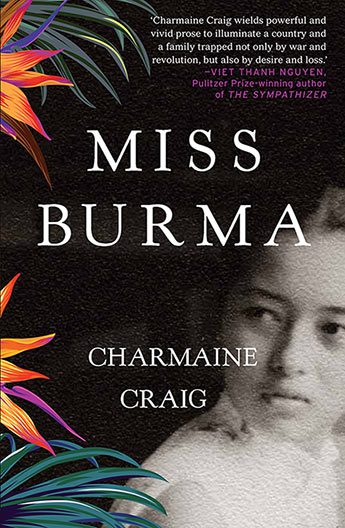
    Emotional and enthralling, Miss Burma shines a light directly onto and into the political situation that is sadly all too relevant for many ethnic minorities trying to survive and find some form of peace and justice in their lives.

    Based on the lives of her grandparents and mother, Charmain Craig weaves a troubled story beginning in the times immediately prior to the Second World War, when two lonely young people meet and become married, before either of the fully understand the ramifications of what this means for the years to come. Benny, a young disengaged man of the Jewish faith, born in Rangoon, growing up in Calcutta; in Benny’s world not a lot of good happened.

    Khin, born into the Karen culture, young, beautiful, timid and working as a nanny to a Karen Judge saw Benny working in his job as a Customs’ officer at the local jetty. They meet, he admired her and she noticed two things, ‘his sticky out ears and an expression of meekness in his eyes’. He followed her home and asked to meet her, seeking permission to marry her.

    Through the many issues of youth, expectations and cultural differences the marriage produced their daughter Louise, a beautiful, intelligent child who went on the become Burma’s first beauty Queen, something which bought her great fame, but also many challenges over the years.

    Louise’s fame and youth is set among the years of the Japanese occupation, the rise and death of Aung San, a communist and social democrat politician, who was responsible for bringing about the end of British rule in Burma. His assassination set off the Civil War.

    Benny and Khin become entangled in the web of political lies and manipulations, all the while still trying to find understanding, love and acceptance amidst the chaos, a pathway which will have long term effects on Louise as she finds eventually that she too, will have to make choices.

    The work is detailed, dramatic and very, very real, laying out the angst of Charmain Craig’s grandparents as they struggle to find a safe passage thought the political minefield of not just Burma in changing times, but also being both Jewish and Karen, in a time when communism was the political driver of the country.

    Brilliant and intimate, Miss Burma portrays the real world of past, present and future and the choices that have to be made, with the consequences of these actions often times unexpected.

    Miss Burma was long-listed Women’s Prize for Fiction 2018 UK.


  • Finn’s Feather

    Finn’s Feather

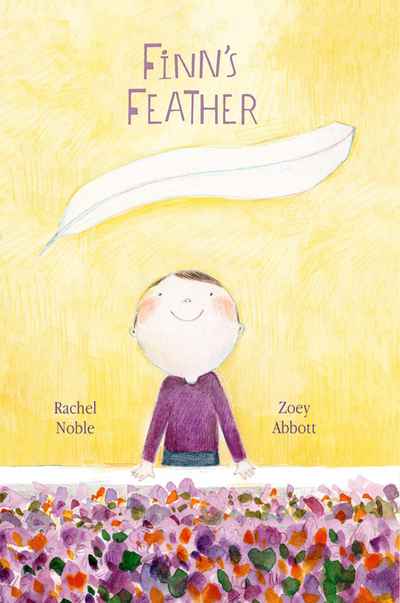
    In this delicately insightful story about love, loss and forever, Rachel Noble draws on personal experience to offer a gentle pathway forward for anyone who has lost a beloved child or parent, and the process of grieving; a pathway personal to everyone.

    Finn knows his brother Hamish has gone to heaven and is very sad. He misses him every day. Everyone around him that knew Hamish is also very sad, but it is not until Finn finds a white feather on his doorstep, that he learns to accept that while Hamish may not be there anymore, Hamish is still looking down from his very own rainbow.

    The problem is Finn simply cannot understand why his Mum and his teacher are not as excited as he is about finding this perfect, beautiful, white feather. He discusses this with his friend Lucas who asks him what he is going to do with the feather and why he thinks Hamish has given it to him.

    They come to the conclusion, as little people often do, that perhaps Hamish wanted Finn to have some fun with the feather and so they set out to do exactly that, building a BIG castle, chasing the feather all over the school grounds and finally having to climb a tree, with the help of his friends, to rescue the feather.

    At the end of the day Finns heart is so much lighter and he is more accepting of the fact that while Hamish may not be there anymore, as he is an Angel, he is still a big part of his life and in his heart forever.

    A beautiful letter at the conclusion of the book offers a precious insight into acceptance, love and healing. In writing Finn’s Feather, Rachel Nobles wish is ‘for it to fly into the hands of every child who needs the story of hope.’

    Easy to read words combined with graceful artwork from Zoey Abbott completes a work which is both significant and poignant and perfect for children struggling to understand the process of death and grieving.

  • Truly, Wildly, Deeply

    Truly, Wildly, Deeply

    For young people a first romance is an area of great mystery. For Annie, this is compounded by the fact that she has a mild form of Cerebral Palsy. She walks with toes pointed in and legs turned in, and arms swinging to compensate for that. However, she has been blessed with a mother who is not only loving and sensitive, but also extremely practical. Annie’s strength and attitude have been guided by her Mum, and her resilience is her foundation.

    Annie is confident and proactive. When she begins at Cliffe College, a whole new world is opening up for her. She looks around at lunch break and decides she will go over and chat to some friendly looking fellows. So she has made her first contact. The English teacher gives the students a copy of “Wuthering Heights” to study, and as Annie is a confirmed “Book Sniffer,” she is very excited. It is at this time that a young man comes into the classroom, a young Polish man named Fab, and he sits next to Annie. He is very up front and chatty in the most innocent way.

    Subtle reminders of Annie’s disability are present all the time. When Fab opens a door for her, he says that he is sorry that she is an invalid. She hotly declares that she is not, and says that word also spells invalid, (as not being valid.) When Fab asks her if it is difficult having a disability, she replies that society makes her appear disabled. She has a physical impairment. When getting on a bus, the disabled space for a wheelchair was taken up by two prams. It was easier for the bus driver to ignore this than address the mothers, so Annie had to politely insist on a space and a seat.

    Because of the need to stand up for herself, and be aware, Annie has developed an independence that even keeps her mother a little at bay. When she meets a special person, her Mother points out that she may lose some control, which will be scary, but may also be fun. Her Mother again gives the best advice when she tells Annie,    “You will never lose yourself, you know who you are.” Great reinforcing ideas of her self-worth.

    This is such a fun and entertaining story. The humour in the character is so real that you feel you know them. Fab is unaware of many customs and is always on the lookout to help. He brings his own homemade rolls to school as the canteen ones are dry. He and Annie exchange texts about Heathcliffe and some of the character’s  more bizarre behaviour. “ME: OMG Heathcliffe’s just dug up Cathy’s body, Sick”.  Fab, “Surely romantic.”

    Lovely characters, positive actions, and enough self-doubt to make this a terrific story.


  • My Grandfather’s War

    My Grandfather’s War

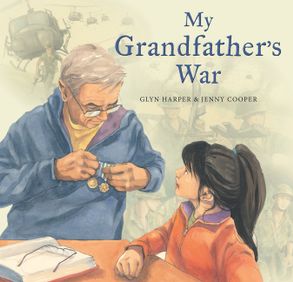
    It is unusual for war to be discussed in a Children’s Picture Book, but this gently told story is narrated by eight year old Sarah, with all of a child’s curiosity. It is a lovely way to inform children about their grandparents and what they may have experienced in life. Likewise, a subject (War) that was always taboo in their household became manageable once brought out into the open. Grandfather was the one to benefit from this as well.

    Sarah loves her Grandfather as he has been living in their house since she was born. He has the time to walk to school with her in the mornings and pick her up after lessons. He gives her a snack and helps her with her homework. Sarah knows that Grandfather has a bad leg, and at times he feels very sad. After talking with her Father, Sarah discovered that Grandfather hurt his leg in the Vietnam War, and that he doesn’t ever talk about it. Sarah wanted to find out about the war which made her Grandfather so sad. She researches in her Library but can find little information.

    Taking the plunge, Sarah asks her Grandpa “Why did you go to the war in Vietnam?”  After a while, they have a discussion, where because there is love and trust between them, honesty prevails. Tears are shared, but the story Grandpa tells is so factual and so open that Sarah understands why Grandpa is sad sometimes.

    This is such a topical issue, where many children today have no idea of the turmoil and sacrifices their Grandparents went through. It is beautifully and sensitively told. The soft colours of the illustrations reinforce the gentle story and give a safe and warm feeling to the book. The text is well placed on light coloured backgrounds, and set in small blocks. The story is a great way to introduce the notion of a family’s involvement in war.

  • Heart of Oneness – a little book of connection

    Heart of Oneness – a little book of connection

    The Heart of Oneness is a small book consisting of only ten chapters, which offers reflection upon what could be considered as the very many differences which seem to be growing daily as the world charges madly onwards, becoming a shattered and tragic place full of senseless hatred and violence.

    In this treatise, Kavanagh peels back the layers to look at poverty, injustice, love, hate and kindness, counterbalancing her findings with the natural beauty and unconditional love that is still to be founding in the most unlikely of places.

    Families find it difficult to live together, homelessness is on the rise; these are the aspect of life that have always been there, perhaps more noticeable in today’s world of apparent wealth and comfort. But what of the oneness that is said to be the quintessential component of spirituality, religion, humanity; is it still there, or is it another casualty of war, greed and selfishness that pervades today’s world.

    Perhaps it is, as she discovered when she volunteered to do the sandwich and tea run for the homeless more than 15 years ago, discovering that there is indeed ‘no such things as “the other”’, as each person she met that night was unique; unique in their needs, their caring and their personalities, which led her to contemplating just what is it that makes people assume that because you are one race or another, one level of society or another, you are not intrinsically ‘the same’. That night she found unexpected beauty in kindness amongst the seriously marginalised members of Western Society.

    As she looks at what it is that is considered as ‘oneness’, beginning each chapter with a quote or piece of poetry introducing the subject matter for the next pages, she also draws on her background as a Quaker, the words of many spiritual leaders, the science of DNA and science in general, to present  a deeply profound perspective on  the  diverse world in which we live, by looking at the very heart of our existence as humans, how we act and react and the values that we hold dear.

    What would be the result should the world turn to become a more gentle, understanding and accepting place, is also one of the threads offered for contemplation.  The immortal words of poet John Donne (1572-1631) written so many centuries ago, are perhaps words to be remembered, pondered, used as a benchmark towards a better  understanding and acceptance, perhaps adding a little traction towards helping the world turn just a little bit more.

    No man is an island,

    Entire of Itself,

    Every man is a piece of the continent,

     A part of the main.