Tag: love

  • The Wonder of Lost Causes

    The Wonder of Lost Causes

    The Wonder of Lost Causes is a truly heart wrenching story that involves a single mother, her much loved son who suffers from Cystic Fibrosis, and a dog. The story is written in a light style and is understated in the seriousness of all aspects of their life. The introduction of a gentle but pervasive humour lightens the tale, and we see that this family’s values never diminish even during difficult times. For animal lovers, the magic that exists between the boy and his dog will be a special feature.

    When the story begins, we find that single mum, Kate, is a vet, who works tirelessly at an animal shelter. For each dog that comes to the shelter, there is a time period when adoption is possible. After that time has elapsed, depending on space, the dog will be put down if it has not been taken by a family.

    When Whistler comes to the shelter, he is in a pretty poor condition. It is clear he has been illtreated, and bears scars, and sores on his body. Kate’s son, Jasper, comes to the shelter after school each day and knows all of the animals there. An instant connection forms between him and the big, black dog. When someone says, “I wonder what his name is?” Jasper looks at the dog and immediately replies, “Whistler.”

    No one believes that Jasper has communicated with the dog, and his mother explains to him why that can’t happen. However, the two develop a bond that grows all the time. Kate battles Jasper’s Cystic Fibrosis daily and supervises his doses of medication. Some of the medication affects his hearing and his growth, but the small family share so much love that mostly they cope well. There are some humorous moments when Kate and Jasper argue and Kate realises that he is arguing rationally as an adult, and she as the child.

    When the family hear that a reward for Whistler has been posted, they face a great dilemma. Kate knows it will break Jasper’s heart to part with the dog, but he was correct in knowing that Jasper has a special gift and was an invaluable support for a young girl. Things move quite quickly once the original owner is found, and a scenario evolves that suits all.

    Kate writes one chapter, and Jasper writes the next. This adds to the humour, especially when the Mother has a conversation and doesn’t know that Jasper is listening. In the next chapter, he reports that this is how his Mum is thinking and so he plans to change her thoughts. The reader will learn a lot about Cystic Fibrosis, and its devastating effects on the young, although at no time do the pair fall into despair or the story become melancholy.
  • Loving Sylvie

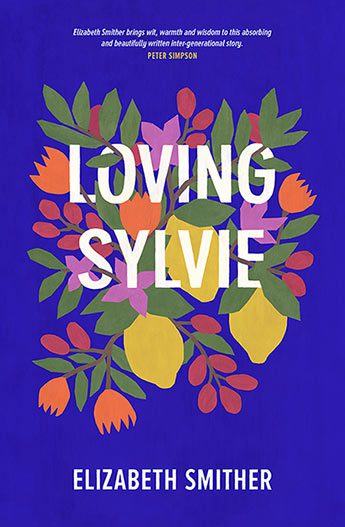
    Loving Sylvie

    It is easy to believe that Elizabeth Smither is a poet. She has the ability to expand on thoughts and scenes and possibilities, creating characters that you feel you have met. This narrative shifts between three women, Sylvie, her mother Madelaine, and grandmother Isobel. The story begins with Sylvie’s wedding, and gradually reveals the stories of her mother and her grandmother.

    The tale is set in several cities. Isobel lives with her husband Kit in Melbourne. Madelaine lived for some time in Paris, but later moved to Auckland with her new husband, with Sylvie being raised in Melbourne by her grandparents. To unravel the mesh of how this family became so disjointed, we need to look at the beginning when Kit and Isobel first had their baby, Madelaine.

    Loving Sylvie is written in four parts. Part one explains the character of Madelaine, who is a mystery to most people, and why she lived in Paris. The second part of the book tells of Sylvie’s wedding and how she copes with the change in her life. She and her husband live in a small flat above a fruit shop and each day find a piece of fruit on their window ledge. There is a great enmity between Sylvie and her Mother- in- Law, which evolves over time. The third part tells about Madelaine’s move to Auckland, and how she becomes more reflective to new relationships and places. The final fourth part of the book focusses on Isobel and how she eventually manages to bring the family together.

    The author is one of New Zealand’s finest, and it is her attention to detail, while expanding on characters and their innermost thoughts that is noticeable. The everyday details are noted, with the subtle humour relating to the characters, their actions and reasons, examined. This is a slow read to pore over and appreciate the language and descriptions.

  • Up Until Now

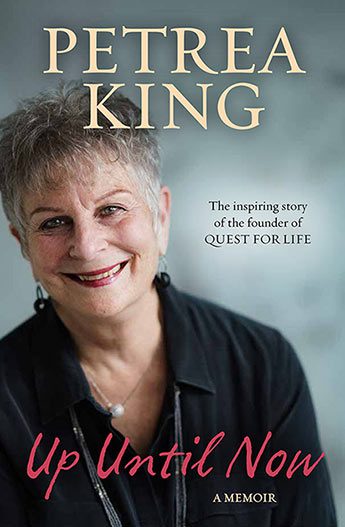
    Up Until Now

    This autobiography Up Until Now from Petrea King is certainly inspirational. She has had to overcome many physical and emotional hurdles to achieve her dream of helping people in distress. Petrea writes this narrative in the first person, using simple uncluttered language which makes the story immediate and personal. The story is a linear description of the author’s life, and she paints a picture in a reflective style. She shapes our perception of her situation but doesn’t allocate blame to anyone.

    As a child, there were factors which greatly influenced a young girl’s sense of worth and place. Her brother was always plagued by mental illness. Petrea loved him so much she always felt the need to shelter and protect him. She learnt in her early years that to be quiet, and unobserved was the way to survive in her family. Then it was discovered that this quiet young girl had a hormone disorder which affected her growth. She was operated on and her bones cut and re-joined; operations which were to affect the rest of her life.

    As she grew, Petrea studied and qualified as a naturopath, herbalist, homeopath, yoga instructor, and meditation teacher. She began to care for people facing the end of their days because of AIDS, or cancer, and as well, people with mental conditions. It was thought she could never conceive because of all the xrays she had as a child, but she had two children. Sadly, her husband became violent so she left him. But she herself was diagnosed with cancer and not given long to live.

    It was now crucial that Petrea find a way to heal herself. She flew to Italy and sat in a cave used by Francis of Assisi, meditating for several months. Returning home with the limiting notion that she couldn’t do much because her life time was uncertain, she eventually realized she could take a risk and do what she had always wanted, build a retreat, where people could come for healing.

    Petrea has written her story in a frank and unadorned style. Her purpose in writing her story seems to be that we all have trauma’s and tragedies in our lives, but we can adjust as she did. She is a great believer in meditation, and answering the questions, “Am I living the life I came here to live?” and “Does each of us have a preordained purpose, or do we choose it?”

    She knew that Love is in the detail and helps all of us. She has written books on meditation, and produced soundtracks to follow. Her Quest for Life foundation has helped thousands of sick and lost people.

  • On the Other Side

    On the Other Side

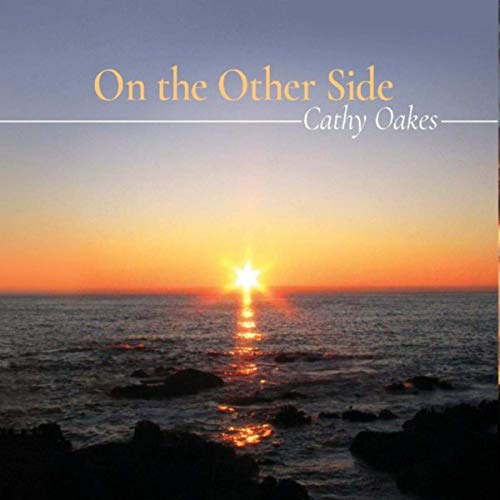
    Life is a journey best undertaken with a large dose of naiveite, as the pathway is not always as expected, with life’s twists and turns often containing bitter sweet moments of lessons learned, changes accepted and pure joy, all waiting to be discovered.

    Over the past five years pianist Cathy Oakes has experienced much of life’s emotion, now reflected in her new album On The Other Side.  Each of the pieces have been created in acceptance and respect to the many aspects of her journey over the past years and offer a wonderful, gentle, reflective perspective on a journey followed by all.

    Beginning with the heartfelt song Hymn for Peace, this track sets the standard for all the pieces to follow. The beautiful From This Day is in celebration of the marriage of her son. Kessia’s Waltz, a lovely jaunty little piece, is dedicated to her granddaughter Kessia, which comes with an inbuilt smile or two.

    The intriguing title Puddle Dance brings with it a range of images; from small children in galoshes jumping in puddles with joy and gay abandon, lost in the moment of time, to adults enjoying a special moment when they to do the same things, snatching a moment from their childhood. A lovely fun piece.

    In remembrance of friends who have lost loved ones in is the immensely beautiful Lullaby from Afar, a piece which delights and enchants with its simple melody; a dedication and offering of pure love to the small children, whose lives were all too short.

    A longer piece is the once again reflective Ripples On The Water, written in contemplation of the effect of throwing a rock in a still pool of water; the ripples continuing on long after the impact is felt. Used as a metaphor for the actions taken in life and the effect this can cause, this sombre and deeply mediative song this is a piece to be enjoyed slowly and at leisure.

    Be Still My Soul is a nicely presented medley of the hymn It Is Well With My Soul and Be Still My Soul, penned in memory of, and favourites of, her mother Trellis McIntyre and precious friend Rhonda Hanson.

    Concluding a journey of healing and acceptance is the title track On The Other Side created in homage to her mother’s last words shared, ‘Don’t worry baby. I’ll see you on the other side.’; a piece of acceptance, healing and reverence.

    Overall this solo piano work is an absolute delight, best enjoyed when the mood is right for reflection, acceptance, moving on and signing off on so many of the emotions felt and experienced on life’s most intriguing journey – yours!


  • Quiet Spaces: Flute Meditations For Mindfulness and Relaxation

    Quiet Spaces: Flute Meditations For Mindfulness and Relaxation

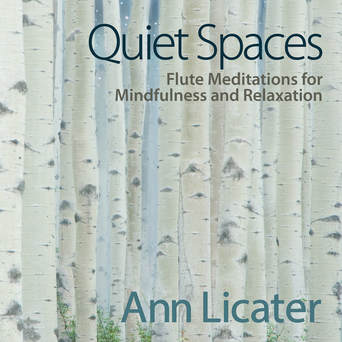
    The hauntingly sensual sound of the flute drifts in what would seem to be an effortless flow, wafting across the sounds of the mundane, offering a gentle and relaxing voyage into peace and tranquillity, creating the trademark of this latest release from world renown flautist Ann Licater, in her fifth solo album Quiet Spaces.

    Licater has selected a range of soothing songs to delight the heart and soul, and when played in her award-winning style on a selection of flutes, creates a seamless, 45-minute journey to take the listener anywhere they choose to follow.

    Subtle, haunting, mysterious notes float ever outward weaving a delightful soundscape that enchants, while encouraging meditation, mindfulness and well-being, beginning with the title track Quiet Spaces, a relaxing and soothing song to begin a true soul journey.

    Whist none of the pieces are overly long a distinct calmness descends on the space, bringing with it a rather unique vibration, very easy to tune into and enjoy for the time available.

    Ann Licater’s skill with the selection of flutes chosen to be used is very, very impressive. The range of instruments used for Quiet Spaces include a Mayan Temple flute replica to a Tennessee Butternut Native American flute, which takes her back to her first release Following the Call, more than ten years ago.

    Although the work is pure flute, with the very occasional addition of delicate wordless vocals and Peter Phippen on electric bass, the songs are not repetitious as the choice of instrument on each piece allows it to develop its own unique identity, while maintaining the original intent, to create a sonic journey of relaxation.

    Ideally suited for areas such as spas, meditation, yoga and mindfulness requirements, the work is also the perfect medium to encourage a good night’s sleep, sooth the restless child and settle the reluctant sleeper into a deep, healing and refreshing sleep.

    Gentle, beautiful and absolutely perfect for taking a little time out in today’s manic lifestyle.

  • Self Love: Finding peace and happiness

    Self Love: Finding peace and happiness

    The advice in Self Love: Finding peace and happiness is of a spiritual nature but captures many points which are relevant. The concept of self-love is not a new one, but viewing each experience we have from the point of view of a new beginning, is akin to a peaceful and thoughtful life. In the Aquarian age we rely more on our own moral compass than to blindly follow the authorities. By doing this we learn from our mistakes and move towards making a positive change.

    Akal Pritam suggests that when you are ready to listen and learn, knowledge will be revealed to you. Information travels through light and if we can tap into the power of the Universe we can heal from the past. We all have an inner lion and make choices about how we translate that animal energy and as each generation learns wisdom we must listen to the children of today and learn from their creativity.

    The navel is the first part of our existence to develop, therefor is considered as the root of the soul; energy radiates from this point and as we are educated using the brain only, we are missing out on linking into our true power. Knowledge needs true awareness to become powerful, which can and is experienced through exercise such as kundalini yoga.

    The following chapters explain why it is necessary to experience self-love with examples of practices from ancient peoples. Forgiveness for yourself first, then broadening out to examine the world using tolerance and service to others is an old Hawaiian belief and one that will resonate on the journey to self-love, peace and happiness.

    The positive nature of the practices outlined in the various chapters cannot help but lift and enlighten those who are mindful enough to accept the concepts.

  • You’re the One

    You’re the One

    You’re The One is a lovely, light and most enjoyable solo piano album from beginning to end presenting nothing more than a man sitting at his piano crafting out an album, setting off in one direction, which somehow changed into a tribute to love; the dark, the light all aspects which are love and the pure enjoyment of the way love effects people.

    Brian Hagen has blended an album of original compositions with those from the Masters such as Burgmuller, Mendelssohn, Bruckner and Beethoven amongst others, to create the perfect listening album for any time, season or reason.

    You’re The One is a lovely upbeat piece to introduce the work, which is immediately followed with By The Limpid Stream composed by Fredrick Burgmuller, a piece not as well known as Nocturne from Alexander Borodin, which is the third track, but absolutely enjoyable in its refreshingly gentle composition.

    An unexpected blues piece Lonesome Road, changes the tempo completely and adds a totally different texture to the collection which fits the concept perfectly, as it is devoted to love and all the myriad of emotion that create love.

    A gleeful little piece bounces into the mix in Afternoon Waltz, a piece which brings with it joy and fun in four, four time with the reflective, gentle and emotive Let it Flow following along in a complimentary style.

    Autumn Afternoon Homecoming is a reflective composition full of highs and lows, ably depicting the range of emotions often felt when coming home, family and friends present and their binding, unconditional love, especially felt after a long absence.

    Schumann’s lovely up-tempo Kleine Studie changes the pace once again which leads into the final piece Sunflower, a catchy little jazz composition which concludes the album on a happy, light and thoroughly enjoyable note.

    With You’re The One displays Hagen’s him immense expertise across a range of genres, as he slides effortlessly from classical into jazz and blues metres, crafting musical inspiration where something magical, lovely and beautiful has evolved.

    Great fun and such very enjoyable easy listening.

  • The Wrong Callahan

    The Wrong Callahan

    Just in time for the lazy days of summer comes the latest work, The Wrong Callahan from much loved Australian Author Karly Lane, as she explores the intimate aspects of family life, especially when one brother falls in love with the girl the other brother has been trying to invite out.

    Lincoln Callahan has finally, after far too long away, returned to the family property Stringybark Creek, in time to celebrate Christmas with his family and the celebrity studded wedding of his sister Hadley at New Years.

    Griffin was the dependable one in the family, who wanted nothing much more in life than to stay on the family farm, meet and marry a girl who wanted the same and do what he loved doing best, work and manage the land. Linc could not wait to leave, courting the edge of danger by joining the Army, doing three tours of Afghanistan, excelling at what he did best, until life stepped in.

    Cash Sullivan was a traveller in life, coming from a dysfunctional and tragic family background, she was having trouble accepting the Callahan’s, who lived on the neighbouring property were as a family, for real. Their care for each other was something she had only read about and was aware of in an abstract sort of manner. She had always looked out for herself from the age of 17, making a success of her life, but always seeming to be a magnet for totally the wrong man.

     She has given into her friend Savannah’s persuasion to come to Rankin Springs to run her beauty Spa while she and her husband are away on a long-planned holiday in Britain. But when Cash and Linc meet up at the Farm, the entire balance of the Christmas season changes dramatically – their attraction was swift, astonishing both of them and turning their life upside down in one short, stunning moment, when they recognised in each other something primal and magnetic.

    An uneasy triangle forms with an explosive result that forces out family grudges long held in between the brothers as they, as well as Cash have to face up to the results of their actions.

     Told with a warm, caring understanding of people, love, life and families, laced with a good dose of humour this summer romance makes a great excuse for lazing away a summer’s afternoon. As this is part one of The Callahan’s of Stringy Bark trilogy, there are of course a couple of teaser chapters at the end of the book just to whet the appetite.

    Nicely done once again, Karly Lane.


  • Paramedic : One woman’s 20 years on the front line

    Paramedic : One woman’s 20 years on the front line

    The world of a paramedic is one that is fast paced, challenging, emotional and lifesaving. Filled with adrenaline and a wide range of conflicting emotions, the everyday life of these wonderful people who have chosen to work in this very confrontational world is offered from a unique perspective, that of Sandy Macken, a paramedic of twenty years working at the forefront of trauma on a daily basis.

    Sandy Macken always wanted to be a paramedic. As fifteen-year-old she watched a team of ‘ambo’s’ as they were then called, treat an elderly gentleman who had fallen in the street treating him with the utmost respect as they picked him up, tending to his injuries and made sure he was OK.

    This incident Inspired her to become a paramedic, to be there to help treat victims, restore some sort of calm and order to the scene and to help people manage in an otherwise unreal situation. In Paramedic she invites everyone to ‘walk in her shoes’ with the love, hope, trauma and resilience of everyday, that is the human spirit.

    Sandy Macken gently presents a very personal view into world of the people and families who have called for help, offering a unique perspective of life and death through the eyes of a first respondent.

    As a young paramedic Sandy felt she was superwoman. She was excited to go on what is referred to as a ‘big one’; an event that will test the team, calling on all of their training to deal with whatever life and or death situation they have been called to. Often the details presented are limited, and to some degree they are called to the unknown, the location of the patient is not always in the easiest of places to access and the level of trauma only discovered once they have reached their destination.

    Over the years she has watched the toll of living at the very edge of emotion, take friends in the workplace, found herself facing her own life or death decision, discovering along the way the immense love and gratitude shown by people at their most vulnerable and the immense generosity of the human spirit to help bring some form of acceptance into terribly dark places.

    Each story is a wonderful moment in time when life is presented in its rawest possible formation, but in the darkest of moments love is always there, helping those present to begin to cope with the unthinkable.

    Paramedic shows the ‘coming of age’ of Sandy as she matures into a woman at peace with her work, having faced her own demons, offering aid in the Philippines after the devastating typhoon Yolanda in 2013,where she met what she considered as some of the most resilient people on earth and as a teacher of mediation and spiritually; the very modalities which help keep her grounded in a wold that frequently seems to have gone completely mad.

    In the words of Allen Saunders, ‘Life is what happens to us while we are making other plans’ and that life is something that often calls on the skill, exercise and courage of the paramedic, doing what they do best.

  • Where the River Runs

    Where the River Runs

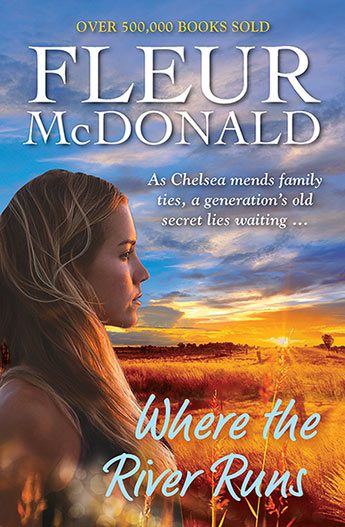
    If you are looking for the perfect excuse to take a lazy day out, the latest outback fiction from Fleur McDonald, Where the River Runs, is the prefect way to have a heart-warming hour or two to simply recharge before a new week begins.

    Family secrets have a way of eventually resurfacing to confront the present-day members of any family. When a skeleton of a male and small baby is discovered on the family property, Shandona, a property that had been farmed by Chelsea’s family for several generations, questions need to be asked about who they are and how they came to be buried there.

    Chelsea has returned to Shandona after a long absence, to spend the Christmas period with her estranged father, in an attempt to find out what went so terribly wrong after the death of her mother. Her daughter Aria is with her, the light of her life, her anchor when times have been difficult, but a child also needing a stable future, something that is causing Chelsea many worried moments.

    Dave Burrow’s, local copper, had been called in to investigate the cause of the death, or to try and discover at the very least, who these people where. He has just been informed his brother in Perth has been badly injured in a farming accident, a situation which brings a up many bitter memories of his past, which he eventually begins to realise will also need to be faced before time old rifts can be healed.

    Farmhand Cal, the man who her father has come to depend upon to run the property, seems to have already judged Chelsea on the small amount of information available to him, is brusque, unhelpful and remote.

    As Chelsea settles into the slower pace of rural life in a drought stricken, blistering hot South Australian summer, the wounds of the past begin to heal, but not without some serious, honest soul searching from Chelsea as to how her career as a world acclaimed concert pianist, could have crumble and failed so spectacularly.

    Several threads of the story come together to form a common theme and provide a pathway forward as truths, no matter how hurtful need to be faced, and the secrets of the past slowly begin to emerge from the diaries of her beloved grandfather.

    It is not until her father Tom fails to return home on Christmas night, after checking the water bores for the stock, clarity finally emerges to draw a line under the past and begin anew.

    Strong women, rural life and the social cohesiveness of small towns are integral components of Fleur McDonalds rural stories. In Where the River Runs people known and loved by her readers are meet again, continuing a connection with old friends and new.

    Once again, a fantastic, entertaining and enjoyable read.