Tag: culture

  • The Voyage

    The Voyage

    Pared back to a single word on an illustrated page The Voyage is a powerful story of immigration, of people forced to flee from their homes, their countries because of war and persecution; people who look at the challenges before them and take the most dangerous pathway of all, in the hope that they and their children will have a future free from war, destruction and devastation.

    Robert Vescio and Andrea Edmonds capture the huge challenge that a small family choose when they leave their home, board a small boat and cross the sea to what they hope, is a bright new future.

    Fear, calm, danger, memories and so many more emotions have been captured in the beautiful illustrations, which makes this a book suitable for a wide range of readers and ages, as in this instance, the picture is far more powerful than any word could ever be, at portraying the immensity of what people face when they feel this is their only choice in life.

    Over the past sixty years and more, Australia has taken in many refugees from a wide range of countries, as have many other countries of the world, adding a variety and diversity of culture to what back then was a very British country, still young, still growing, still adaptable to change.

    That there should be such a need in today’s world was something never foreseen, but is sadly still an ongoing issue, with people seeking a safe haven from the horror their country, their home, has become.

    The Voyage reaches out with compassion and understanding, offering a beautiful way to help educate people, regardless of their age, to the plight of these people from many different lands, as they try to make a new life for their families in a land that is very different to the land they left behind.

    As this is primarily aimed at children it will certainly make a very interesting topic for discussion, helping with understanding and forming the foundations of kindness towards those who may look and behave in a different manner to them.

    Beautifully done!
  • The Original Australians The story of the Aboriginal People

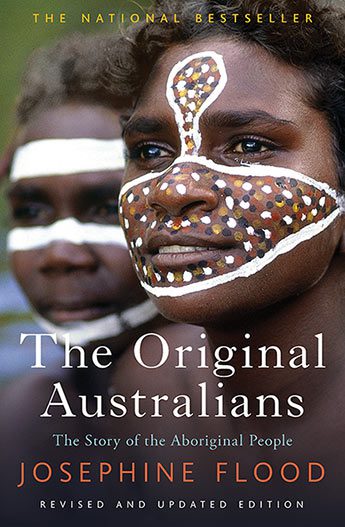
    The Original Australians The story of the Aboriginal People

    The Original Australians was released onto the market in 2006. This volume of work from respected archaeologist Josephine Flood soon became a best seller, purchased by many with a genuine desire to understand more about the indigenous peoples of Australia, the first people of Australia, the people who had long lived, nurtured and farmed the lands before the arrival of Captain James Cook and then the flood of white settlers.

    Comprehensive and detailed she investigates the history of the Aborigines, their distant beginnings in lands far away from the Australian subcontinent, their culture, spirituality, traditions, their lifestyle and the effect of white settlement on this race of ancient people.

    Now considered as the oldest surviving civilization in the world, Flood explores the many differences in the tribal groups, due to their location, food sources and climatic conditions. Asking some of the hard questions, she presents answers to many of the common questions asked, particularly in relation to modern day Indigenous peoples, how they are adapting, their resilience and their ability to transform, to be able to hold a place in of the demands of a far faster, more destructive way of life.

    Originally written in an attempt to evaluate a number of claims made by Henry Reynolds in his book The Other Side of the Frontier and Geoffrey Blainey’s Triumph of the Nomads, Flood eventually realised, after a request from friends visiting Australia about reading they could undertake before their visit, there was nothing available on Australian Aboriginal society for anyone to be able to read and enjoy.

    More information has become available since the first printing and now in the latest revised edition, the text and style used has made this a work very accessible to anyone with an interest in this topical subject matter, now wide open for discussion and debate within political and public circles.

    Much fresh information has been included, updating information which is based on the original questions sought and supplied by a range of people, who in their desire to understand fully, created the very basis of the storyline.

    The list is long, challenging and to date some of the 22 questions asked, many still do not have hard and fast answers, particularly in relation to the more recent 30 years or so, when the modern Australians, both aboriginal and white, have had to confront the reality of ‘The Stolen Generation’, Sorry Day, campaigning for representation in Parliament, and the right to be recognised as members of the Australian Constitution and so much more.

    Flood says there is still a long way to go, to close what is now referred to as ‘Closing the Gap’ and on that basis, probably this will not be the only revision of this work.

    Closing this comprehensive look at Australian Cultural history is an Appendix of places, festivals, tours to cultural experiences and culture that makes an ideal beginning point for anyone, visitor or permanent resident, to see and understand first-hand the history of an old and ancient culture, still thriving and striving in today’s world.

  • Real Differences

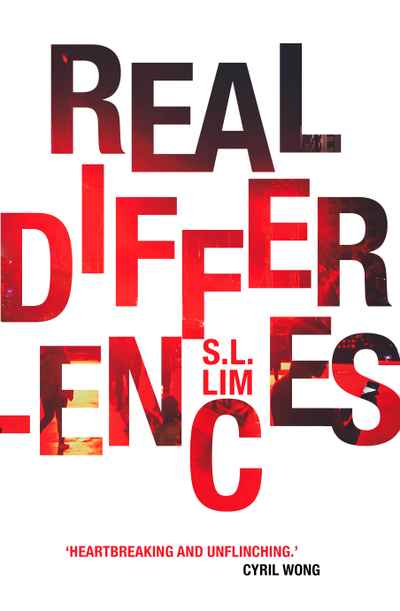
    Real Differences

    Real differences are the ones that most of us seek throughout life. There is a need to live our lives within a certain moral code and feeling as though somehow, we have made a difference in our world. Making a mark and leaving some kind of legacy for the following generation or just gaining total fulfillment within a cause is what many of us attempt to do. This story covers so many differences within a family and friendship setting.

    Nick comes from a white middle class family and narrates this tale. He is friends with Andie, a Chinese woman born in Indonesia. Her parents were forced to flee an uprising and arrived in Australia with very little. She and Nick study hard together and develop a strong bond which lasts all their lives. Both are determined to make a real difference in the world and spend many nights discussing how they will go about this. So many differences in choices and paths are highlighted and fall into being.

    Nick is offered a job in a progressive law firm, while Andie is proposed to by a wealthy man in the business world. Her Chinese family have survived by driving taxis and sewing for wealthy women. Having struggled so hard to achieve a level of financial security, they want their family to embrace the world they have access to through study. Andie’s nephew, Tony, has been driven so hard by his parents that he finds solace and peace of mind in joining a religious group. His difference is rebellion.

    We follow the struggles these outstanding characters have, to look intellectually at their world and their time while reaching adulthood. Tony’s mother realises as she sews for the local ladies, ‘Goodness is cheap over here,’ that these ladies have never had their sweetness tested. Depression is a reality for one of the characters who is frustrated by well-meaning friends who say the depression isn’t real, it’s only an imbalance of chemicals in the brain.

    So many issues are woven into this story in a seamless and plausible way. The characters are believable and the situations true. Nick gives us a gentle horror of what realities are to be faced in a thinking life.

  • Stranger Country

    Stranger Country

    Monica Tan is an ABC, (Australian Born Chinese) woman who grew up in a comfortable and loving family in a Sydney suburb. When she left university, she was employed as a journalist for The Guardian, interviewing and meeting many interesting people. Being raised in a middleclass community, she was sheltered from the worst aspects of racism, although she always felt she looked not quite Australian.

    Leaving her job, Monica decided to travel to China to meet her overseas family. She embraced their culture and traditions, as they still lived away from the big cities and worshipped the way they had for generations. After a year Monica arrived back in Australia – her country – and realised that she knew very little about the history of the Indigenous people, their land, traditions and customs. It was as though Australian History began with the white settlers and the land had no story to tell.

    With this thought in mind, Monica bought a 4-wheel drive and planned a 30,000 kilometre trip around Australia. She had a few contacts from her journalism days but hoped to learn and meet people as she travelled and camped in the outback. She had some issues regarding her Chinese/Australian background and wanted to see where she fitted into her country. Monica hoped that by understanding the History, cultures and stories of the outback she would gain a sense of identity more clearly.

    As she began her trip, it became apparent that the Indigenous people she sought were friendly and happy to share some of their belief systems. She walked the tourist trail and spent time in the North with a family. They fished and ate traditional food and included Monica in their stories. Beginning from Sydney the journalist travelled to Mildura on to Adelaide then to Alice Springs. From there she went to Pt Headland, Broome Darwin, Mt Isa, Cairns then back down the east coast of the continent. As she travelled, she showed great respect for people’s privacy and informed them she was writing a book and they were welcome to change or delete anything they wished.

    Among the many fascinating pieces of history that Monica confronted, were the Chinese/Indigenous people in the North West of the country. The Chinese had come for the Gold Rush and the pearling. They had intermarried and become market gardeners and merchants. She met some Indigenous people with Chinese names who told her many stories of hardship and death in a harsh land. These people were well settled by the time that Politicians decided Chinese and Asian people had too much influence in the country. It was at this time that the White Australia Policy was formed.

    By confronting the true History of the land and the people, Monica found her place in Australia and the belonging that she had always sought.

  • The Crystal Fix A modern guide to the healing power of crystals

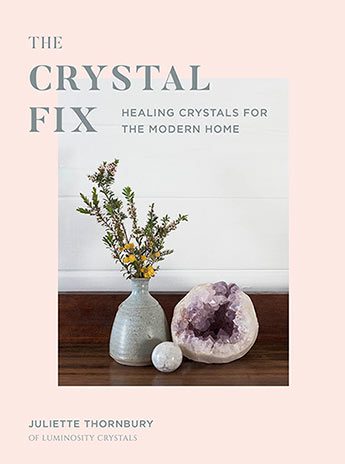
    The Crystal Fix A modern guide to the healing power of crystals

    Crystals and healing have been known about and have been an accepted feature of ancient and modern civilisations going as far back as the ancient Sumerians, who believed these beautiful rocks had healing and magical properties.

    Not only were they much prized to be worn as jewellery by so many of the ancient cultures, they were also used in cosmetics, for healing, ground down to be taken as powers to used in rituals and ceremonies, to connect with spirits and the earth.

    Minerals, Rocks, Crystals and Gemstones are still used in similar ways today, for healing, adornment, and connection. Julietta Thornbury has created a beautiful, modern guide to sourcing, understanding and using crystals in a modern context in The Crystal Fix, which could be considered as the beginners guide to working with and understanding these beautiful stones, but a work that can also be considered as more than beneficial to those familiar with crystals and their healing abilities.

    As the founder of Luminosity Crystals, she has spent many years resourcing and working with crystals, passing this knowledge on in a careful, well-constructed style that sets out with clarity living with crystals, how to select the right ones for you and where, when and how to use them.

    A comprehensive directory of each of the crystals provides a guide to their healing properties, colour, source, history, uses, and chakra use, with helpful tips included with each of the crystals.

    Each stone comes with a large clear photograph of shape and colour which is very helpful when selecting stones, particularly when first beginning to understand and work with crystals.

    Rituals, along with a comprehensive directory of Crystals By Need and then by Alphabet bring this easy to use, very informative, well presented guide to enhancing your life and surroundings with the magic of Crystals, to a delightful and informative close.


  • Teatimes: A World Tour

    Teatimes: A World Tour

    Helen Saberi takes us on a world tour with a delightful difference in Tea Times, as she invites us into the genteel pastime associated with not just supping a delicate brew of tea in a fine china cup, but the more basic and down to earth desire to eat something warm and delicious on a cold winters day, a delicate pastry or two with friends and the many, many layers that have traditionally gone to create the enjoyable and pleasant pastime of, taking Tea.

    Every culture, every country has its own version of Tea Time which stretches back to the Chinese, a race who had long cultivated and enjoyed tea. It came to British shores in 1650 via Dutch trading companies, but due to the high cost was only enjoyed by the wealthy. Eventually the cost decreased but not before much political debate had ensued. John Wesley in 1748 argued that it gave rise to ‘numerous disorders, particularly those of a nervous kind’, whereas Dr Johnson of Dictionary of the English Language fame celebrated drinking tea, by doing so, 25 times per day. The Scots declared it a greater evil than Whisky!

    Tea came to Russia in 1689 when the Treaty of Nerchinsk was signed between Russia and China; the Tea Road, or Great Tea Route was established and from there the custom spread into Iran, the Middle East and Turkey, countries that had long been accustomed to drinking coffee.

    As the drinking of tea became more popular and affordable, so too did the range of traditions and rituals associated with the ‘taking of tea’, each particular to the country and the culture. China, with a long history of taking tea, traced back to the Tang Dynasty (AD618-906), developed the custom of Dim Sum or Yum Cha. Japan refined the art to an elaborate tea ceremony with the associated meal known as cha kaiseki. The Koreans and Taiwanese developed their own specific ceremonies, which in the modern world of fast food, has led to the quirky Bubble Tea trend!

    The British took their tea culture on the road as far afield as Australia and New Zealand and into such far flung regions as Patagonia, courtesy of group of persecuted Welsh people who were looking for a country where they could practice their religion and speak their language. They founded a colony in the Chubut Valley with now more than 50,000 people claiming Welsh decent.

    But let us not forget India, where green tea had been well known since the early 17th century for its medicinal properties, a country which was eventually to become established as a tea growing nation, in an attempt to break the Chinese monopoly and lower the high cost of this popular drink.

    For purist who enjoy serving Tea in style there are a collection of some of the traditional  recipes that were often served with the hosts choice of brews such as Tea a la Russe (Russian Style),Masala Chai ( Indian) or if you like Qymaq Chai served in Afghanistan for very special occasions. A selection of sandwiches, cakes and pastries with delicious names such as Petticoat tails, Fat rascals, Tea Kisses and such like which can be served with plain black tea, tea with milk and sugar, tea with a slice of lemon or simply green tea, as you desire.

    Helen Saberi has created a wonderful collection of facts and fancies, as well as a few fantasies, covering all aspects of Tea and tea drinking that will be treasured by, not just lovers of tea, but anyone who has an interest in history and all the quirky bits and pieces that somehow end up becoming a tradition.

    TeaTimes is jammed packed full of the most fascinating and enjoyable facts about the what is today considered as a ‘humble brew’, so readily available to all and available to be consumed by lovers of tea on a daily basis, which make this a most enjoyable book to savour while enjoying a ‘cuppa’.


  • Headstrong Daughters

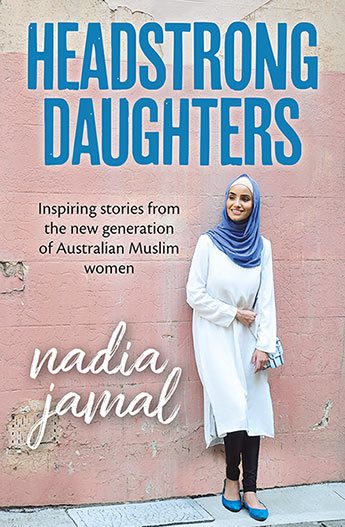
    Headstrong Daughters

    It seems the purpose of this book is to demystify and explain some of the customs and cultural differences that we are unaware of in young Muslim women. Telling their story, in a book of short stories, is a very clever way to do this. As each of the women was interviewed, we know that these stories are accurate and completely explain their thoughts and behaviours.

    There are so many issues which vary from Western thinking that one has to be open minded to read these stories, and accept the religious and historical context. The introduction explaining the history of the religion and the hostility between Sunnis and Shias is very helpful and adds to the understanding for some of the stories. The author explains how Islam gave women many rights over 1400 years ago. They could own property, seek a divorce and vote, as well as learn to read. The author also states, “That it is not safe to assume that these rights are actually part of the modern reality of many Muslim women.”

    Some of the issues raised deal with mixed marriages. The children of parents from Sunni and Shia parents in one story are just old enough to realise that their mother is different and prays differently from her father’s family. She has been teased about this by a cousin. Her mother is wonderfully accepting and explains to the children that she hopes in future, that things will change and there will be more religious acceptance.

    Each story is interesting to read. One tells of a woman who is unable to conceive but is told she will be unfaithful if she accepts sperm from an unknown donor. Another major issue shows a young woman questioning the Muslim inheritance laws, which favour sons over daughters, and another story deals with the racist behaviour and spite which many women face, especially on public transport. In modern times, divorce can still be a big problem for Muslim women. “Patriarchal cultural attitudes continue to disadvantage many, regardless of whether they live in a Muslim or non-Muslim culture.”

    Despite many difficulties that are faced by young Muslim women in Australia, they are admirable in their efforts to maintain a successful marriage, a loving family and religious traditions. Through these young women may come the slow changes to their society that mean a fairer system for women.


  • Happiness is a Red Teapot

    Happiness is a Red Teapot

    Happiness certainly can be a red teapot, as hundreds of thousands, indeed possibly billions and billions of people will agree.  Tea and its container the teapot have offered comfort and enjoyment for centuries appealing to everyone who enjoys a great brew. During feast or famine, high times and low, the humble teapot has been bought forth to offer warmth, comfort and refreshment to all. It also doubles as a status symbol of wealth or culture being created in many shapes and forms.

    The Victorians had a thing about silver and so created some magnificent works of art to serve the humble libation.  The Chinese, whom, let us never forget, refined the art of tea drinking, as did the Japanese, to a form of exquisite cultural significance, based within a ceremony performed each time tea was taken. The British took it to the wider population making it the national drink, with often the first word spoken when entering a café, ‘wanna cuppa, Guv’, and the Indian nations simple drank it whenever possible.

    In Happiness is a Little Red Teapot, Anouska Jones has captured words of wisdom, along with some glorious photographs, from an obviously supremely, totally refined selection of the worlds famous personages, who have all succumbed to the delicious sensation of enjoying a cup of well brewed tea, from their favourite teapot. Of course all the other people who enjoy tea, and also utter meaningful one liners, are quoted as Unknown, as they speak for tea drinkers of the world.

    Mick Jagger, of Rolling Stones fame says ‘I got nasty habits; I take tea at three’, whereas the beautiful Audrey Hepburn once a said in a reflective moment, ‘when you have nobody you can make a cup of tea for, when nobody needs you, that’s when I think life is over.’  Whereas Honore de Balzac captured the moment perfectly with the wonderful one liner, ‘great love affairs start with Champagne and end with a tisane.’

    Noel Coward suggested ‘Wouldn’t it be dreadful to live in a country where they didn’t have tea’, because as an Unknown person stated, ‘When life gets tough, the tough grab the kettle’.

    So while you are enjoying your freshly brewed cuppa, from your favourite teapot, red hopefully, thumbing through this delightfully presented and illustrated book, take a moment to reflect on the words of another Unknown once again, ‘Life is like a cup of tea; it is all in how you make it.’

    Amazing what can be discovered during a quiet visit with a little red teapot!

  • A HARD PLACE THE RISE OF STREET GANGS

    A HARD PLACE THE RISE OF STREET GANGS

    Gang Culture: Violent acts, drugs, drive by shootings, home invasions and rape! Brett Stevens has seen it all as part of his roles in the NSW Police Force: 13 years of working in Sydney’s infamous red-light district of King’s Cross followed by years in the Tactical Response Group.  In his book ‘A Hard Place’ Brett shares his firsthand knowledge of the spread of gang culture across the world.

    In order to enhance his knowledge of the culture of gangs, Brett spent several years gaining firsthand experience of gangs in Los Angeles, USA. To further develop his understanding, he went to work in a Californian group home facility, which allowed him the opportunity to study gang members more closely. Here discovered that not all gang members were evil, but many shared his values of respect, courage and duty.

    In ‘A Hard Place’ Brett explores not only the issues of migration on a country’s increasing gang violence but also the effects of lawless communities and the availability of guns.  By investigation the origins of the many gangs, he has encountered, he is able to explain their differences, both in membership and impact on their communities. His book documents the strong links between the drug trade and gangs. By the use of statistics he effectively supports his theories and conclusions.

    For those who have followed the current debate concerning “African Gangs” this book is an excellent resource for enhancing the understanding of the rise of gang related offences and the role of culture and racial heritage of the gang members. True Crime readers will also find this an interesting and compelling read.

  • A Timeline of Australian Food: From Mutton to Masterchef

    A Timeline of Australian Food: From Mutton to Masterchef

    The author is not a foodie, but came up with the idea of how food had changed over a period of time. Even in our own lifetimes we are aware of how food and food trends have changed. Where is that delicious prawn cocktail that used to grace each dinner table? More likely to be replaced by a tapas, or nibble food. Jan has chosen to look at interesting foods and trivia surrounding our tables over the last one hundred and fifty years. This rounds out our understanding of the early days in Australia and is fascinating in its details. The book consists of segments labelled by ten year periods.

     Aboriginal People survived very well on the supply of food that was present in their area. They moved from place to place following the food supplies, but they also were shown to grind seeds and trap and store fish. The First Fleet didn’t flourish and they began to trade with the local people for kangaroo and other native animals. Eventually farmlands opened up and the Blue Mountains were crossed. Explorers pushed inland followed by squatters with their sheep. Mutton chops were the order of the day and with the gold rush, sheep were driven over to the goldfields to sustain the diggers.

     Once the colonies were settled, some nostalgic people wanted to import European birds and plants and animals. Many of these such as rabbits and blackberries had disastrous effects. There are many interesting little facts and stories to support each decade. In the 1880’s as Australian identity was emerging, a pair of brothers from America settled here and began to brew Fosters Beer. This is a name that is familiar today. In 1895 Rosella preserving Company was founded, Packham pears were developed, and later Mrs Beeton’s first recipe book was published. In 1902 the first New Idea came out.

     With the war breaking out, various religious groups saw their opportunity to insist on pubs closing early, to respect the spirit of our fighting men. Food for the men in the trenches was mainly bully beef and a hard tack biscuit. War time recipes and books are looked at and a humorous piece is written about the meat that could be bought. The author moves through the 1920’s a time of cocktails and Anzac biscuits. South Australia’s famous frog cakes were introduced by Balfours, and have since been named a S.A. icon.

     Each decade that is covered describes a time in history, such as a political period and what was happening at that time. Kitchen conveniences such as the Breville sandwich toaster, and the kitchen whizz fitted into our lives just at the time that colour TV made food preparation appealing.

     The conclusion looks at the society of people who enjoy their food, but not necessarily in a healthy way. Although we may not be eating crispy lichen soon, we need to move towards a healthier way of eating. This is a fantastic book to have. You can open it at any page and have your memory jogged, or laugh at the story which is a wonderful way to combine history and food.