Tag: Children

  • Past Life

    Past Life

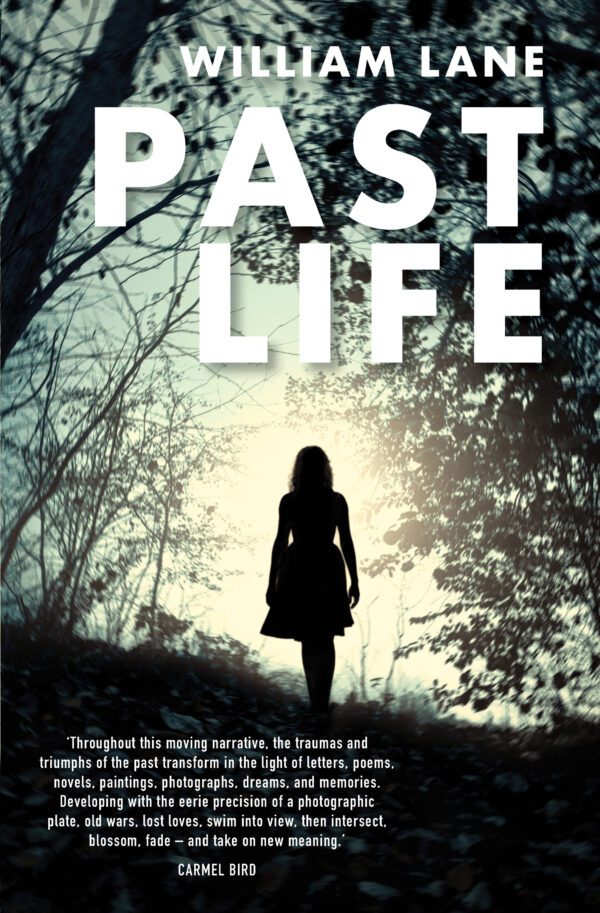
    Past Life is an intriguing journey into family, history and the common bonds that hold together, regardless if how disparate the various members of the group become: life is lived, past becomes present, blending into a mosaic that is ultimately reflective of the time old saying, the sins of the fathers are passed onto the children.

    Anna is met as a young girl beginning high school at a time when she begins to realize the restrictive life she has led with her obsessive mother, Sophia, is a little strange; that there is obviously more to living this new life, in a new country, than she ever imagined.

    The words are crafted to perfection as William Lane begins to paint the picture that will lead to tragedy, understanding with a history that seeps into the time and horror of the second world war, a place that surprisingly Anna has no recollection of, even though she knows she came from another place to live in this new, very different country.

    The supreme irony laced throughout the story is that over time, Anna grows into a talented photographer, obsessed with capturing the essence that is time through an orchard with which she will later discover she has deep ties.  As she matures into a woman who has made her own way through life since Sophia died, within her personal life she is inadvertently repeating the patterns of her parents; a father who was an acclaimed novelist, a mother who was, during the war years a resistance leader, an adoptive mother who had secrets to hide, lost in a world no longer in existence.

    Almost mesmeric the work unfolds slowly, the characters both young and old developing clear personalities, their history laid out for all to see, to share; their growing up, the teen years, the facing of risk and challenge, the slow discovery of who, why and the reflection of what, presents an interesting cameo of ‘family’. The work also shines a light on the emotional and destructive damage caused by war that lasts long past the wars end.

    Presenting lesser known aspects of the German occupation of Europe, the serious displacement of children who became a band of children living wild in the forests, fossicking and begging for food, lives forever altered by chance or circumstance, people changed irrevocably and even though time moves on, countries change and other influences come in to play, sometimes within even the most fragmented of family structures, very little really changes.

    Past Life is a beautiful, delicate and haunting work filled with characters to whom we can all relate.
  • A Boy, his Bear and a Bully

    A Boy, his Bear and a Bully

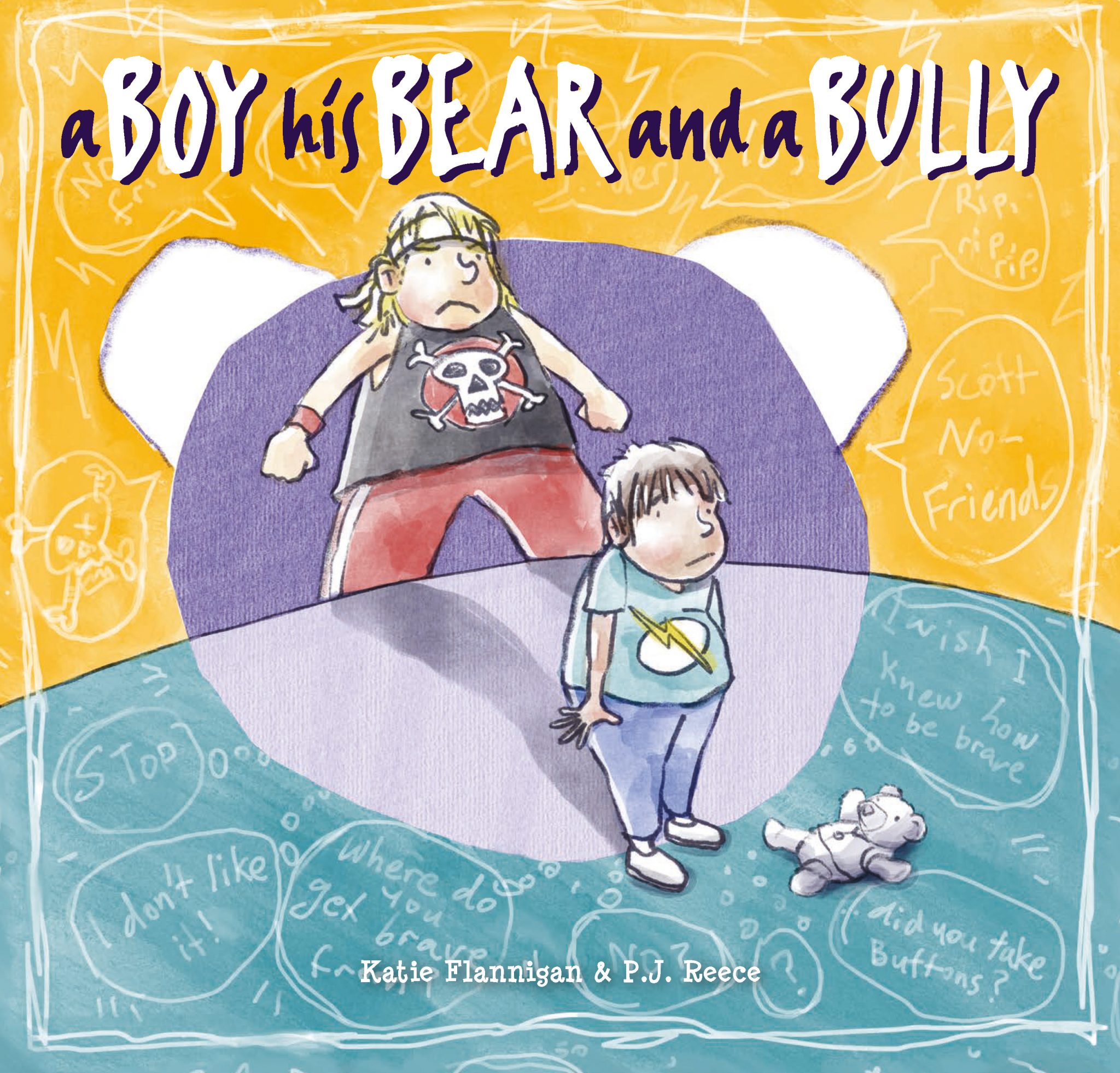
    The front cover of A Boy, His Bear and a Bully shows a small boy bending over his teddy. Behind him looms a menacing figure of a much larger boy complete with skull and crossbones on his shirt. This sets the tone for the story. Open the cover and the end pages are black, with some scary images.

    The story begins on a cheerful note, showing Scott and his bear, Buttons. They are off to school. Buttons helps Scott to feel brave. Scott’s friend Rosie is shy, and both are afraid of Duncan. Duncan is just mean. He tears paintings and teases the children. Oh dear! Buttons has gone missing, and Scott is worried about him. What will it take for Scott to face Duncan and ask for his teddy? Well, perhaps the dress up day at school will help.

    Scott is not sure what it will take to “Find his brave.” For many children this becomes an issue. Finding the right words to use and the confidence to face up to a bully is hard. For Scott, wearing a dinosaur costume helped. He was able to shout, “Stop Duncan, I don’t like it!” With a little teacher intervention, the situation was saved.

    Action must be taken in situations like A Boy, His Bear and a Bully. The more discussions we have about unfriendly behaviour with children, the more they will be able to assess a situation and behave appropriately. Bullying is not acceptable at any age.

  • OUR WORLD OUT OF BALANCE:

    OUR WORLD OUT OF BALANCE:

    UNDERSTANDING CLIMATE CHANGE AND WHAT WE CAN DO

    Our World Out of Balance hard backed picture book contains a large amount of information, stated clearly, about our planet. The issues are put forward, (Global warming, rising sea levels, etc) and explanations are given to promote understanding. Double page spreads with clear diagrams and small parcels of text are used. With each problem there is a section which says, “How you can help, and How people are helping.”

    The layout on double pages allows a clear explanation and diagrams to be shown together. With,” Plastic in Our Ocean,” the illustration shows how our oceans were before plastic and how they look now. Then facts are given, such as “Every year nearly 9 million tons of plastic waste are dumped into the sea.

    Under the heading, “How does it happen?” we are told that much of the plastic is dumped directly or indirectly (by storm drains) or is blown by the wind. We can help minimise this by not buying single use plastic and being careful about disposing of it. There are people attempting to remove huge amounts of plastic from the oceans, but this won’t make a difference if we keep purchasing plastic and disposing of it.

    The issues addressed are current and topical. The idea that each of us can help in a small way such as, planting something and caring for our fragile beach environments, or recording weather details and saving water, is positive. For younger readers it is encouraging to think that they can have some control and relevance.

    Andrea Minoglio and Laura Fanelli have covered many topics in the book and given much information for children and adults to consider.

  • Surrogate

    Surrogate

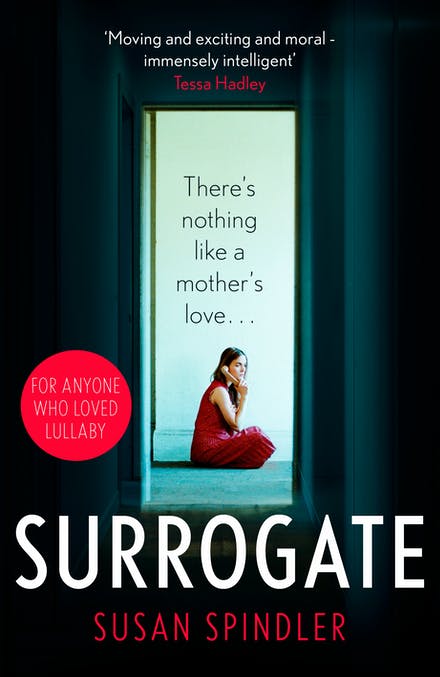
    What a journey Susan Spindler has taken us on! For those who have not had a close connection with anyone going through IVF procedures, Surrogate is an absolute revelation. The complexities that arise from the idea of surrogacy add a whole new dimension to this practice; the physical, emotional, spiritual, legal, international and financial requirements are overwhelming, and mostly hidden. Susan Spindler  has set the story in England, using a closely knit  family to unfold the story: the father Adam is a barrister and the mother, Ruth, a television executive.

    They have two daughters, Lauren and Alex. Lauren and her husband have been trying to conceive using IVF for several years. Their last pregnancy failed when Lauren was 12 weeks pregnant. They have almost run out of time, money and the emotional courage to continue treatments. It is at this point the idea of surrogacy was raised. Lauren still had four frozen embryos left, but her body was no longer able to carry a pregnancy full term.

    There are so many issues to contemplate if this path is to be followed. The surrogate mother needs to be a certain age and in good health. She needs to have had a previous pregnancy, and needs to sign legal documents regarding the handing over of the child. Then, of course, there is the fee. How much do you charge for lending your body to sustain a child, and for the discomfort of delivering that child?

    With so many barriers to fulfil their dreams, Ruth at age fifty- four, offers to lend her body to her daughter to act as the surrogate. The story is gripping and understandable, the range of changes in emotions and issues are completely realistic, holding the reader, while expanding their understanding of this process.

    A brilliant read and one that is very informative about the emotive world of Surrogacy.

  • The Greatfulness Guide

    The Greatfulness Guide

    Next level thinking – How to think, not what to think

    Like the author Jacqui Jones, I would have given much to have had the wisdom in The Gratefulness Guide How Not To Think as a teenager as the premise of gratitude is one which should govern our days and enhance our life journey. Her presentation of the information within is also well done. The author likens our life to an odyssey, or journey, and invites the reader to imagine that reading this book, is like going on an overseas trip.

    Jacqui introduces herself as your travel guide, and so she begins with your tips for the journey. You need to stay curious, commit to getting through the book, and keep a travel diary. There is an icon throughout which indicates that you should draw, write or have fun with the thoughts you have. There is luggage to pack. Courage, persistence, gratitude, and curiosity are some of the items you will need to take on your journey.

    The travel guide suggests we look at our thoughts, and self-awareness. Some thoughts that are negative can be likened to an old bag which we can choose to leave behind on the travellator. Hooray, we can feel much lighter. The act of meditation will help clear our mind, and there is an article by Novak Djokovic outlining how useful meditation is for him. Breathing to help us feel grounded is an easy way to slow your system down in turbulent times.

    The clever use of analogy in this book helps the reader to be aware of where they are going and how to get there. This book contains much information, and though it is broken down into a “Travel Journal,” it may take a few trips to assimilate a lifetime of knowledge.

  • The Music Advantage: How learning music helps your child’s brain and wellbeing

    The Music Advantage: How learning music helps your child’s brain and wellbeing

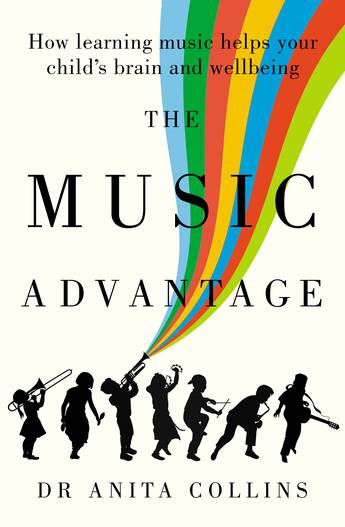
    It has long been recognised that music helps a child developmentally, and socially. Yet never has it been so easy to prove exactly how this works, and how great is the effect that music can have in our lives. Dr Anita Collins completed her PhD in this area and what she found was so monumental she wanted to share it widely. With advances in technology and equipment such as the MRI machine, the brain can be observed during activities.

    Not only does the scientific testing prove the author’s findings, but now we understand how the development of the brain and music work. From the earliest day’s babies begin to discern music from the sounds and language they hear recognising pitch, rhythm, and dynamics. There is a musical characteristic in the brain which recognises sound and processes it. Not only can a sound be recognised, but also the emotion behind it, showing how the person feels when listening. Sound is the way babies begin to understand their way in the world. The listening function of the brain never turns off.

    The Music Advantage covers the developing child from birth to age 12-14 years. While the links between brain function and music is proved by impeccable research, there is still the question, “How do we get started?” From her own experiences, Collins shares her methods and steps. She was involved in the now famous ‘Don’t Stop the Music Programme’, where children were all given a musical instrument and musical instruction, with the extraordinary results televised.

    Parents, teachers, and school communities should familiarise themselves with this book as the results, academic, social, and musical are proven. To be able to achieve the best outcomes for children, it is compulsory that music plays a part in their lives.

  • Tuck Everlasting

    Tuck Everlasting

    Tuck Everlasting was first published in 1975. There has been a movie made from the story and it has just been re published in 2020. There are several reasons for republishing the book primarily for a story to be considered a classic, it must pass the test of time, and re reading Tuck Everlasting, it does.

    The original and unusual tale set in the 1800’s raises many issues which can be challenging for children….life and death, loyalty, and friendship, to name a few. Language and descriptions assist the reader to picture the setting and the surrounds, as well as the tone of the family, with gentleness to the people, and the care shown by the family of Winnie, the main character, very obvious. Winnie’s parents protect their only child with many rules and structures.

    However, within that framework of love, Winnie is desperate for adventure. It is here that she meets and witness’s death, raises the question of “Living Forever, “and experiences her first love. Loyalty is another issue that the young girl struggles with. She deceives her family to help a friend in desperate need; the weight of her deception is not lost on Winnie.

    An unusual ending to the story makes it memorable. This is such a unique opportunity for adults and young readers to discuss the concepts raised and to share thoughts about matters that are not usually talked about. With the wonderful descriptions, “The sky was a ragged blaze of red and pink and orange..” make Tuck Everlasting a joy to read.

  • The Flower Girls

    The Flower Girls

    Georgie, a 5 years old girl disappeared on New Year’s Eve 2016 from a motel on the Devon Cliffs, England. Around this event the author has constructed a mesmerizing, thought provoking, chilling story of two sisters –Laural (10) and Primrose (6) – dubbed by the press as The Flower Girls. They were accused of killing Kirstie Swann (2) on a warm summer’s day in 1997.

    Now 19 years later Laural, convicted for the crime is applying for parole and Primrose (Rosie), considered too young to stand trial, and given a new identity, is spending time in this same motel. An ex journalist, with an eye to a good story, recognizes Hazel (Rosie) as being the younger of ‘The Flower Girls’. This has implications for both girls. Meanwhile the police are convinced that Hazel is involved in the disappearance of Georgie and that history is repeating itself.

    With a number of intriguing twists and turns Ms Clark-Platts has created a page turning psychological thriller, in which she raises a number of pertinent issues. Are children born evil? Would they ever consider killing another child? Is a child murderer capable of being rehabilitated?

    Long after finishing the book I found myself discussing these questions with friends. Although this is a dark novel, it engages the reader, who is left feeling quite uncomfortable about the ending.

    I highly recommend this book to true crime readers as well as fiction crime readers, as it rekindles memories of the notoriously unforgettable 1993 murder of toddler of James Bulger by two boys.

  • Slick

    Slick

    You know what, growing up is hard, especially when you’re dealing with friendship troubles and family issues. But it’s just as hard when you’re an android. ‘Slick’ is a novel that doesn’t shy away from the issues that affect modern day kids, and tells a satisfying tale of friendship and mystery.

    M.M. Vaughan tells this story from two interchanging viewpoints; Danny, the socially uncomfortable kid who isn’t the shining definition of ‘popular’. And Eric, who lives something of a well-off life, with his parent’s hosting fundraisers, and regular gifts of shoes from an uncle. Together the pair of them are very contrasting, however, circumstance brings them together and a friendship based on computer games and the need to unravel the mystery surrounding Eric is formed.

    In the beginning of Slick, Danny lets the reader know that Eric is a model of android that is being tested in society. With this knowledge, the remainder of the book allows the reader to pick hints and draw connection with the benefit of hindsight that usually wouldn’t be available in a mystery story. Perfect for a younger reader.

    As you can expect, the writing style changes per chapter depending on which of the two boys is narrating. Both viewpoints are very enjoyable and make for seamless reading. Eric behaves and thinks in the ways you would expect of an optimistic and slightly clueless android; he’s often compiling bullet points of data, drawing up probabilities and recording statistics. It all makes for a lovable and charming character.

    Similarly, Danny also operates with a likable charm and has a manner prone to overthinking situations and sometimes letting a bit of insecurity cloud his thoughts. It makes for pleasant reading when they can both help each other out. Seeing into their heads is amusing and really lets you get to know them.

    I appreciate the fact that this story deals with real life issues, neither of the boys have it perfect – despite Danny initially being envious of Eric. Danny has to deal with a deadbeat dad, and his family don’t have a whole lot of money. His overbearing mother also accounts for a lot of his social awkwardness. Eric, on the other hand, is living a lie – and is constantly lied to, his “parents” aren’t often there with him either, and he realises a lot of these things. The way the boys handle and react to their situations is maturely handled.

    Slick is a rewarding read, and provides a good story with satisfying friendships. A teenager or even a younger reader would enjoy this book with the storyline very relevant to that age, incorporating many suitable elements of our current, technological age.

  • The Great Divide

    The Great Divide

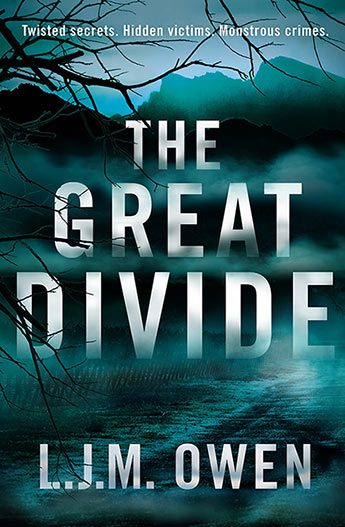
    The prologue grabs the interest from the very first paragraph and from that point forward, The Great Divide from L.J.M Owen simply must be read from cover to cover preferably without stopping, because although the narrative is relatively fast paced, it is essential to discover who is really responsible for such a heinous series of crimes.

    New to the country town of Dunton in Tasmania, a far cry from his fast paced, hectic life in Melbourne, detective Jake Hunter is struggling to settle into a place he thought would provide the necessary break to reassess his life and make, if any, changes to his current lifestyle.

    No hot water or lights in his tiny cottage is not helping and when he gets an early morning callout to help try and find a missing ten-year-old boy from local caravan park, it is almost a welcome relief to begin the day.

    Safely reunited with his family, the boy is covered in mud and says he has seen a monster and the body of a very old woman in the vineyards, which is scoffed at by several of the adults. Jake decides to investigate the claims made and does indeed discover the body of an elderly woman with a set of footprints leading to and from the site.

    Trying to discover who could have reason to murder the headmistress of a former children’s home in Dunton, leads Jake into a world of lies, mistruths, the dark, deadly secrets of a town kept well-hidden along with a crime scene that spans decades, and States

    Nothing seems to be what it appears and why is it that the very few children who were cared for at the Home, can be contacted, all who seem to be suffering from serious mental health issues. What went on there and who was behind what is beginning to seem like a real-life horror story, also seems to be buried in the recesses of time.

    As the story unfolds, Jake has to face his reality, face his personal demons and somehow try and discover some form of justice for the survivors of the Dunton Children’s Home.

    Riveting reading from the first word, this is a murder mystery that will not disappoint, written is style that has created a work which will be long lasting, with a storyline, in parts all too real, that will linger well after the case is closed.