Tag: art

  • Domina

    Domina

    Following on from her phenomenal first novel, Maestra, LS Hilton continues Judith’s journey, now known as Elisabeth Teerlinc, as she relocates to Venice to continue on with building her new life as an Art Dealer. Coming a little too close to the authorities in Paris, she has decided the place to be is Italy, a place where things are not always considered all that closely and Venice seems to be a beautiful part of the world, where people generally have money to spend and often, do not always consider the provenance of the merchandise for sale.

    But as the days begin to unfold in her new lifestyle, she finds that living life on the edge of serious disrepute is not all that different, regardless of where you go: that the people on the seamier side of the industry still seem to be able to find you.

    It is not until Elisabeth receives an offer from well-known Russian collector Pavel Yermolov, to travel to his home in Russia to evaluate his collection, along with a sizable recompense for her troubles, does she really enter into the dangerous world of Art forgery on a massive scale. Yermolov’s collection was something that had been bandied about the art world for years, as something of a mystery, possibly a rumour or even a legend and now, she was being offered the opportunity to undertake a private evaluation.

    Her journey to Russia proves to be the beginning of something even she, with her lack of any sort of moral compass, begins to realise, has far more layers, far more players, than she would ever have once considered possible when she was a junior, setting out to learn her craft.

    As she become more entwined in the ultra-rich world of clandestine art and art forgeries Elisabeth realises she has been set up, but why and by whom. She draws on her personal resources of high fashion, endless sexual conquest and a delicious love of murder, to meet the daily challenges being presented, as she struggles to survive in this new world of the super-rich.

    Once again LS Hilton has presented a well-researched journey into the underworld of erotica, dark and dangerous deeds, and the people who inhabit these sub strata’s of society, where anything goes and anything is accepted.

    There is something dark, vulnerable, comical and absolutely enjoyable, touched with a little irony and sarcasm, built into the heroines character which will appeal, as each of these characteristics lurks within each of us, with the salient point being, that we perhaps, manage to keep them slightly more under control.

    Book two in the series has proven to be equally as enjoyable and page turning as the first, therefor  it will be interesting to see how LS Hilton manages to round out the trilogy.

  • Rattling Spears: A History of Indigenous Australian Art

    Rattling Spears: A History of Indigenous Australian Art

    Although this is an comprehensive and fascinating presentation of Indigenous Art forms since 1770, when the first British person, in Captain James Cook came ashore at what is today known as Botany Bay, it is far, far more than that: it is also a history of the tragedy that came upon these highly skilled and organised peoples once white settlement came to their land, now also known as Australia.

    This history of Indigenous Art, created in a respectful manner by Ian McLean, details without prejudice, without judgement,  an intriguing look at how the Aboriginal Art form has gone a very long way to becoming the salvation of an ancient race.

    When the shamans gathered on the headland on that fateful day, they were probably trying to work out who these people were, where they fitted into the Dreaming and what were they going to do about the nature of them coming ashore. Eventfully, once Cook decided to come ashore, the men filed into formation rattling their spears, to show these people they were not all that welcome. Cook was having none of this, electing to stay, carrying out his plans to investigate what lay in the surrounding areas. Joseph Banks and his team set out on their collecting mission and whilst doing so, stumbled across the largest collection of Aboriginal art in the area.

    Much of what was collected during this time is now still housed in the British Museum; what followed on from this initial meeting is writ large in history or so you would think, but it is only in more recent times, when the likes of Albert Namatjira became an household word, a man renowned for his immense talent in recreating the land he loved, the land of his ancestors, in a manner that appealed to the European peoples, the artists, the recorders of Indigenous culture and spiritualism, began to become a little better known.

    Prior to this the mission’s and outstations were encouraging mainly the men of the desert regions to continue on with their painting on wood, canvas and cloth. So successful were some of these initiatives, that an excellent and fruitful trade was set up in tourist souvenir art works such as boomerangs and other early versions of ‘tourist tat’, until the quality of the works were questioned and this came to an end.

    There was a cultural price to be paid as many of the figures and hieroglyphics being painted where those of sacred figures associated with the Dream Time and Dream Time stories: this had to eventually be reconciled and with great resignation the Elders realised that they either had to move along with the ‘new way’ or watch their traditional art disappear altogether.

    Over the years both the women and men of desserts and cities of modern Australia of indigenous decent have created a formidable art form that is only growing stronger; showcasing the immense talent emerging into the modern contemporary art arena worldwide, in paint, sculpture, woven form, design and performance.

    Considered by some that indigenous art formed, or forms, the basis for the modern Contemporary Art movement in Australia, is to give to these ancient peoples the true accolades they and their art forms, their story telling and their ancestors deserve, perhaps going a little way towards making amends for the almost complete destruction of this race, this art form, created by white settlement.

    Much, much more than a book on Art this is a look at the early history of Australia presented through the medium of Art, in a manner that delivers in stark detail the traumatic and horrific facets of white settlement, the grab for land, the scant regard for human life and the salvation of the remainder of the indigenous population through their art, their sacred record keeping and eventually, their ability to create something special, unique and inspiring from destruction.

    Beautifully illustrated with a range of colour plates taken from early pieces such as Man and Rooster c.1900 – West Arnhem Land, Charlie Flannigan’s Richmond Homestead and Oscar, Police Boys Doing Duty (Lynch Law) 1895, to Michael Riley’s Untitled 2000/2005 from the series Cloud, allows you to enjoy the journey through the ages.

    There is much to be digested in this work, much to enjoy and much, which in many ways is unpalatable; the work makes for compulsive reading as the manner and style of Mclean’s method of storytelling, which is what he has achieved, draws you in and gives you more than just an a art history lesson, it delivers a lesson on life, making the most of opportunities presented, allowing them to morph into something majestic and wonderful.

    Perhaps all this was foretold in the Dreaming; perhaps not but whatever you believe, by the end of this comprehensive work you will be completely impressed.

  • The Museum of Modern Love

    The Museum of Modern Love

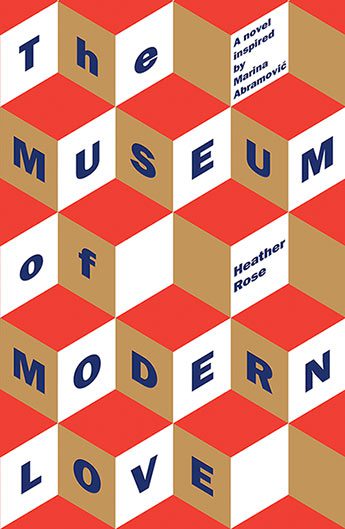
    Heather Rose has produced a paean of praise to the power of modern art in The Museum of Modern Love. It follows the artistic meandering of Arky Levin as he wanders (of his own volition or at the behest of something more mysterious?) into the Museum of Modern Art and witnesses Marina Abramović’s The Artist is Present.

    Levin connects the cast of characters, his friends, family and other spectators of the performance art as they are all observed by an other-worldly narrator, changed and challenged. Conversations with PhD students and strangers turn into amiable explorations of the nature of art and what Abramović is trying to achieve with her performance.

    Ultimately the characters that pass through the atrium of MOMA are all searching for some kind of connection, but whether The Artist is Present is about that connection, or about performance, perseverance, exposure or transformative acts, is left delightfully up for debate.

    Marina Abramović has ascended to the pantheon of deified modern artists, and this exploration of the effect of her performance piece at New York City’s MOMA is illustration of her omnipotence.

    Rose’s book is a respectful and engaging recreation of a fictional Abramović, whose decades of work have left her a rare enigmatic figure of the art world, an eccentric and moving artist. The intimacy of her performance is not hard to grasp, as the atmosphere Rose creates around it effectively communicates the unique experience that sitting with the artist became.

    Chapters delving into Abramović’s mind are sensitive and revealing, contextualising the life that culminated in almost three months of sitting still in the museum atrium. The weight of her personality is reflected wonderfully in the omnipotent narrative voice, succeeding in being charming in its mysterious nature where it could easily be isolating.

    Marina’s feats of artistic endurance obviously illustrate a formidable strength of character, and the novel is at its heart an exploration of different kinds of endurance. All Rose’s characters are working through their own struggles, be they artistic, familial or more personal. Love also sits as a central theme, its different manifestations prevalent enough that this cavalcade of characters could furnish the titular museum of modern love.

    Rose has created a loving meditation on art and music; her delicate observations on life are beautiful and charming. The text is an unselfconscious celebration of art and the power it holds, sometimes inexplicable and often disarming. She describes artists as “waterfalls shot with sunshine,” in characteristically lyrical prose.

    This novel is like a breath of calm despite being set in the frenetic New York City, with its quirks and characters that grow with the progress of the central performance. It is a rumination on the nature of art that rings with Abramović’s strength; that formidable figure in pursuit of sublime connection.

  • William Yang: Stories of Love and death

    William Yang: Stories of Love and death

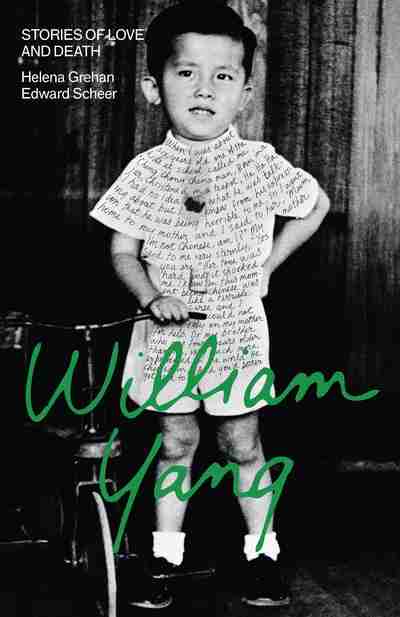
    That William Yang is a complex man is perhaps an understatement for a man who, over his lifetime as photographer has managed in one way or another to capture the essence of life and death, along with all the many facets in between which go to make up the human psyche, the human essence, the quintessential imperfection that contributes to the highs and lows of culture, race and creed.

    That Helene Grehan and Edward Scheer have taken on this ground breaking work is timely as Yang, like many of us who have graced or disgraced this world for so long, has a story that is well worth the telling, the researching of what is billed as his ‘self-portraiture’, something so few ever get to have documented in this style, is also a retrospective view on how the culture of Australia has also changed so dramatically over the past 50 years.

    As a child growing up in Australia in a country still influenced to some degree by the ‘White Australia policy’, his mother strived to have her children grow up as Aussie’s, not Chinese. He was six years old when he discovered he was indeed Chinese. His relationship with the fact that he was Chinese, which is complex, is ironic as he has spent much of his life using his ethnicity in the construction and execution of his many, many works.

    His photographic works are created from life in the raw; his detailing of the first Sydney Mardi Gras through to the social and political upheaval the debate on Marriage has created makes a poignant statement on civil rights and liberties; His film Friends Of Dorothy goes much further in that the myriad of images tells a story of the AIDS pandemic, the effect it had on the social fabric of Australia and the long slow struggle to stem the terrible toll of this insidious disease.  It is also a reflective and informative statement on the emergence of what is now known and accepted as the GLTG (Gay, Lesbian, Trans-gender) community within Australia.

    As he further explored the various dimensions of photography his experimenting with writing onto slides to make a further statement from a photograph gave him his personal trademark; an arena where he could add his personal ‘take’ on the subject portrayed.

    His long and colourful life has created many treasured moments through his performances, once again coupled with his photography, his documentaries always with a strong social commentary to the content, his works often sad, depicting loss, the need to change, the changing of a society from straight laced to exactly the opposite, have created a legacy of understanding as evolution moves relentlessly forward.

    Captured within the 100 photographs throughout the book there are in each instance, moments, events, people that have, and still do, mean something special to Yang. The chapter focusing on his personal life gives a wonderful, rich glimpse into a life that many may view as serious but as with all things has another lighter, fun side.

    For fans and followers of William Yang this is a must have as the richness of the content needs to be able to be absorbed, chapter by chapter, in the manner in which it was created, slowly and gently.

    Each chapter also contains so many gems on and about the life of a man who would have to rate up there in the elite as far as documentation of social and cultural change within Australia, both photographically and within the written word.