Tag: art

  • One Hour of Fervour

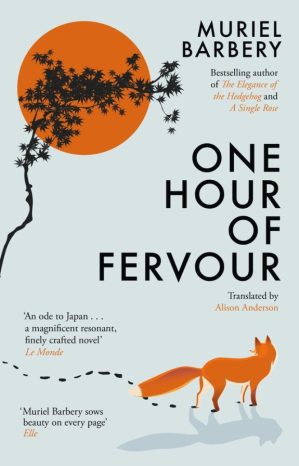
    One Hour of Fervour

    The first chapter in One Hour of Fervour is called “Dying” and begins the story of Haru Ueno. He describes his thoughts and feelings as his body gradually begins to shut down. He notices the beauty of the flower and the chiming of the bell and the graceful garden that he can see. In this gentle Japanese style, we gradually return to the beginning of his life.

    Haru was not born to a wealthy family but had a great love of beauty and form. He loved art and began to work his way in the world of art, sculpture and form. He learnt precisely and began to buy works from little known artists who later became very well known, mostly due to his exposure of their works. As the years passed by Haru became exceedingly wealthy and his home was always open to friends and artists.

    One Hour of Fervour is a gentle, reflective look at life that is recommended to all who enjoy the sparse simplicity of poetic phrasing which captures the highs and lows of a life well lived.

  • The Art of Her Life

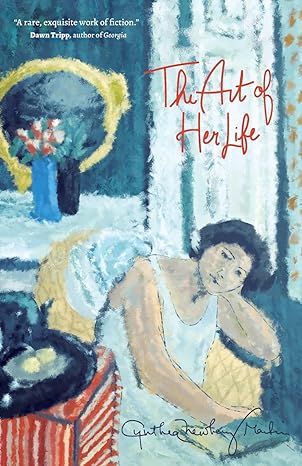
    The Art of Her Life

    Emily is somewhat afraid of life. She lives it by viewing life through colours of Matisse’s work Breakfast, a piece she fell in love with at the age of nine, captivated by the colours, the languid pose of the woman in the portrait.

    Her reality is a busy working life as a single mother to two young daughters, an immersive position as Registrar of the local art gallery, were she desires to eventually become the Curator, and a partner, archaeologist Mark; a man who has been in her life since high school days.

    There never seems to be enough time to do everything she desperately wants to do. When Mark is offered a position to head up an archeologic dig in Turkey, he proposes they marry, but Emily does not want to change her life at all, she is comfortable in her existence. She sees her world and threads around her in the colours of Matisse.

    A health scare, appears to be of little consequence, Mark moves out of her life and that of the children’s, leaving a huge hole in what was Emily’s well-ordered existence. But, in a world gone grey, she is holding onto the very real hope that she will once again see the painting of Breakfast, as she is one of the short listed winners of a Competition held at the Art Gallery.

    Brief notes from Mark are treasured by the children; Emily finds them confronting and when her Doctor advises her that the health scare appears to be far more than they first thought, Emily has to begin to face some of the very real truths of life, living and loving.

    The Art of Her Life is stunning, very real, easily relatable story of a young woman who has been damaged by life, creating a world that almost but not quite works, the risk of emotional distress kept to a minimum. Emily could be anyone; the way she has been created by Cynthia Newberry Martin makes her a person who could very easily be a family member or friend.

    Although the story took some time to evolve it has allowed the colours of life to develop gradually to form a beautiful, heartbreaking and unforgettable tale which reflects on people, the influence art in colour can have on emotion and how, at the end of the day, the things that matter the most are vastly different to the mundane nature of the life most often lived.

    The Art of Her Life is an unforgettable work of art which captures the many hued colours of what we all consider as life!

  • Reading the Rooms

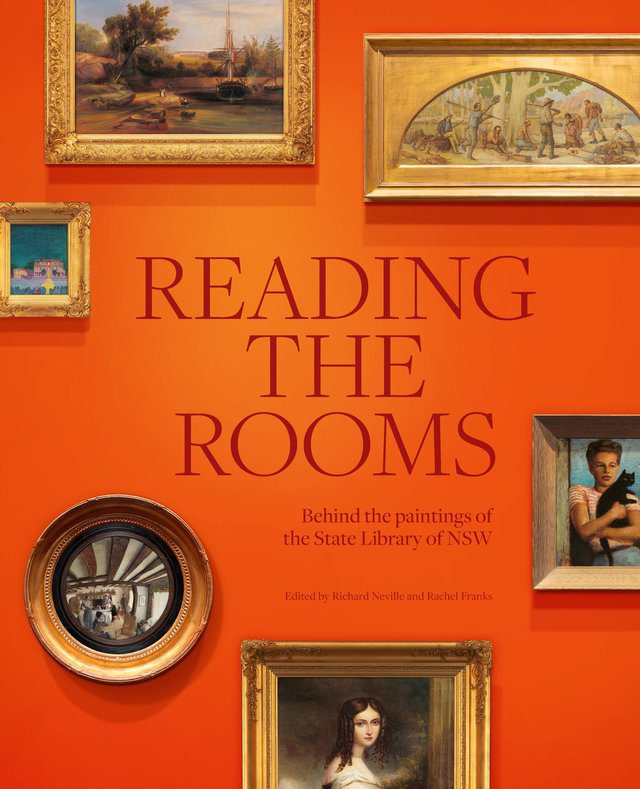
    Reading the Rooms

    Behind the paintings of the State Library of NSW

    What a truly beautiful coffee table and research book Reading the Rooms which is edited by Richard Neville and Rachel Franks. From the opulent cover and the intriguing title, this book will captivate any reader who picks it up.

    Who would have thought that the NSW State Library had such treasured art works, many of which were donated to the library in past times? This is explained in the introduction. “Large libraries are hard to use”, and so new galleries were opened to display art works which have been stored, some for a century.

    Conservationists spent nearly a year working on the paintings before the hanging. The “Emphasis was on identification and provenance rather than didactic analysis.” The reasoning being that the artwork supplements our knowledge of history and charters the progress of the Colony.

    An early addition to the Library collection is the painting of Sir Charles Fitzroy ca. 1855 and the history behind it is fascinating. It also reveals information about the artist Henry Robinson Smith who is little known. The search for authentication of the art has been extensive but complete.

    The sections in this book begin with ‘People and Place’. These are followed by ‘Power and Providers’, then come ‘Pastimes and Prosperity’. The emphasis is strong on early and Prominent Europeans who formed the focus of the Library’s collection.

    Country towns and settlements also featured heavily to add to the historical references. In 1898 Mr Mitchell, who valued old pictures and engravings, offered his collection to the public library, and since then, many have followed his lead.

    In this beautifully collated book, the reader can slowly work through the pages. In so many pictures and essays, we can learn from the details in the art as well as the background of each piece. This not only enhances understanding of our history but exposes us to the wonderfully talented artists of the times.

  • Night Blue

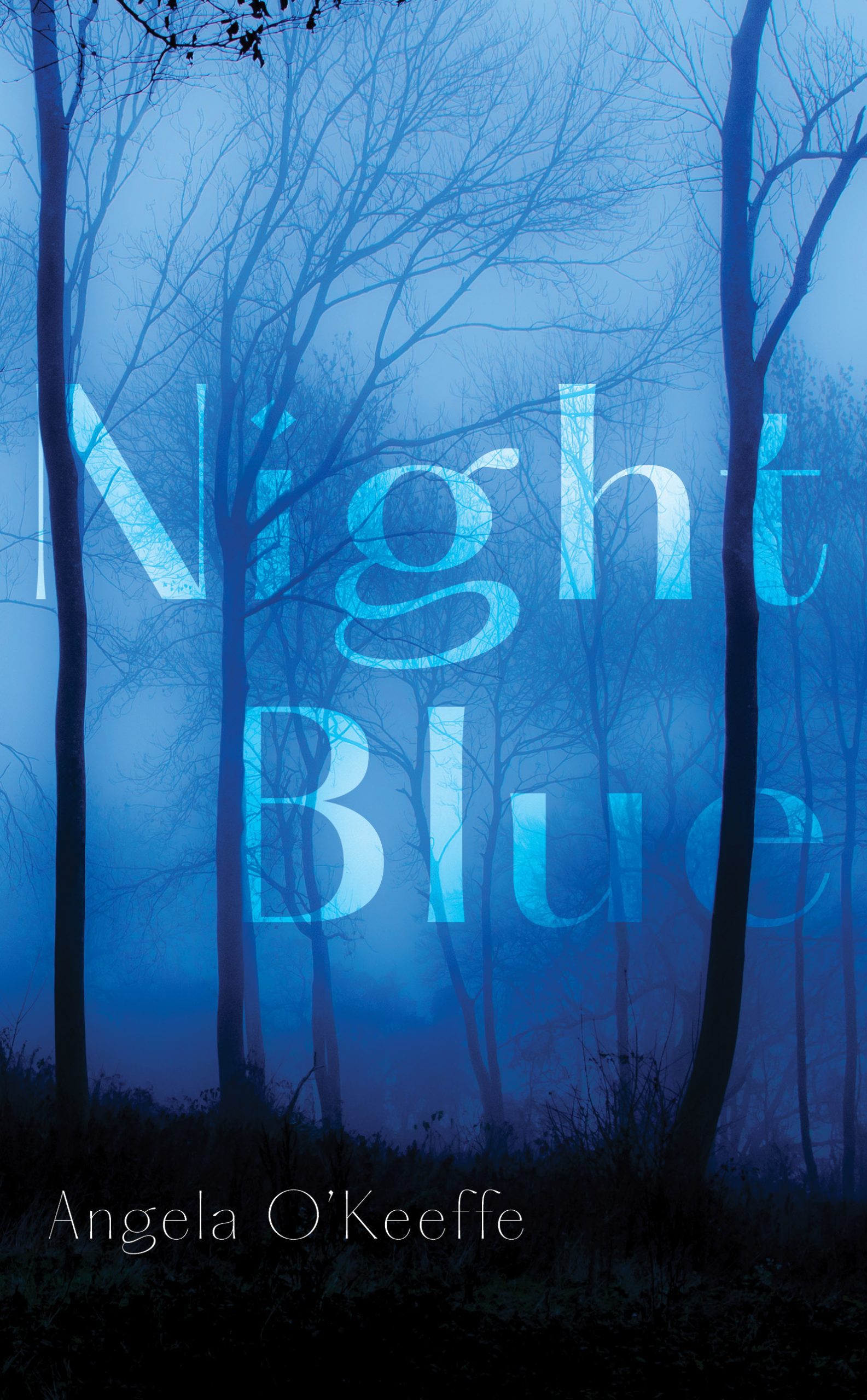
    Night Blue

    Every once in a while, you come across a book that is so remarkable it challenges all your previous concepts. Night Blue is such a book and so wonderfully written that you want to begin to read it again when finished, for this is the story of the painting of Blue Poles by Jackson Pollock. He said, “The painting has a life of its own” and this is the story told by that painting.

    A life begins in a barn in New York, in 1952, when the artist unrolls some Belgian linen five metres by three metres onto the floor. He liked to be able to move around the painting and “Feel he was part of it.”  Now the author of this story of the painting takes up the tale. From the smell of the paint to the artists splattered dungarees, a gradual relationship develops. It is a special love story. “His gaze… sought me as one seeks a horizon. To dream into, to orient oneself.”

    At the completion of the creation of this work, it was exhibited in New York. There was not much interest in Blue Poles at the time and the painting remembers being removed from its frame and rolled up. It was reframed and sold to a couple who kept it in a dim room where it felt it could die. It was not in physical danger but that is not how a painting lives.

    Part two of this tale is written by Alyssa, an art critic and writer. She is fascinated with Pollock and through her own experiences and studies begins to learn about his motivations, lifestyle and his art. Her story is revealing as it unfolds in the political setting of the times.

    Whatever your thoughts on the Blue Poles painting this is a story not to be missed. It is the “inside story,” narrated by the painting, and the “Outside story,” narrated by Alyssa. The lyrical writing is a joy to read, and is the crown on a wonderful tale.

  • This One is Ours

    This One is Ours

    In her acknowledgements, Kate O’Donnell sums up This One Is Ours by saying,” Lets ’make noise, make art, and make change.” She has written a truly inspirational story in a style that reflects a sixteen-year-old girl and her moment in time. The style of writing is compelling, immediate and gentle. Narrated by Sofie, the short sentences and understated language, place us alongside her. We feel her uncertainty, her desire to fulfill her dreams and what it is like to be sixteen.

    A passionate artist, Sofie’s dream has always been to go to Paris. She has studied French and is committed to her art. Her family support her, but financially can’t afford to let her study overseas. Hana, Sophie’s older sister, has saved money and surprises the family by having found a student exchange for Sophie in Paris.

    To get there, Sofie must also save some money. A year later, she is ready to go overseas to Paris, to her host family. A dreamer, Sofie has spent much time walking and observing. This is how she begins to learn about Paris. She draws maps of where she has been, and what she has seen.

    At first, she is exhilarated, then tired and jet lagged, then homesick. As time passes, she begins to find many of her dreams being realised; the art galleries, the monuments, and the French boy, who is thoughtful. But Sofie’s horizons are also being expanded by her host sister with Climate change a very powerful issue for the young men and women of Paris. Eventually a rally is held, in which they both take part.

    The girls feel sadness for the future, but come to realise that their time is now, in the present; heir role for the planet is to lead by example and be active in planning for the future.

  • One Hundred Summers

    One Hundred Summers

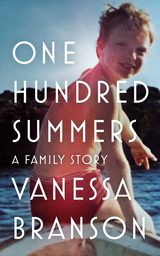
    Autobiographies can some times be rather dry and predictable, but One Hundred Summer; a family story by Vanessa Branson is a cracker. She has correctly determined that you are a product of your ancestors. Their fortunes, family traits, attitudes, and genetics have a huge part to play in who you are, and how you handle your life today. Therefore, it is quite fascinating to begin this story with the author’s family tree, and a little information about each character. Being removed from the family the reader begins to see patterns of behaviour emerge, and attitudes become entrenched.

    Having a famous brother adds to the interest, however this is her story, told in a vivid and compelling style. The author was brought up in a loving household. Her Mother was energetic and always looking for interesting and exciting ways to keep busy. There were very few restrictions placed on the children. They were always trusted to do the right thing and although physical love wasn’t demonstrated much the children certainly knew they were cared for.

    The house was always busy with friends of the family calling in to discuss topical issues, and everyone was allowed a voice. As the children grew, their friends would also come to the home and hotly debate a huge range of issues. All the family were exposed to new ideas, new ways of thinking and creative ways to be strong and solve problems. Richard had started Virgin Records, and Vanessa had survived boarding school. Interestingly and hugely inspirational is the fact that both of them suffered from a learning disorder.

    As an adult, Vanessa became well known in the art world and travelled extensively. She found love and had children and then survived a marriage breakup. Every page is a treat to read in this honest and loving recount of her family, warts and all.

  • Transformations: Harriet and Helena Scott, colonial Sydney’s finest natural history painters

    Transformations: Harriet and Helena Scott, colonial Sydney’s finest natural history painters

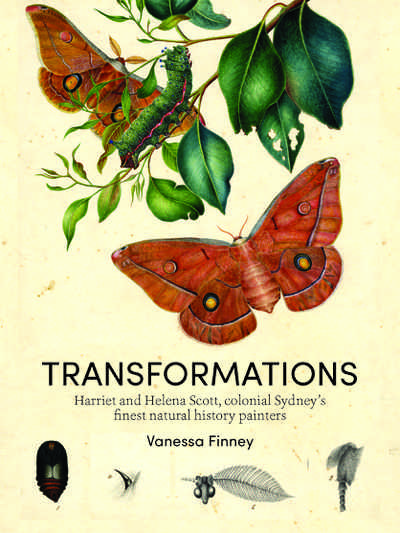
    Harriet and Helena Scott were without doubt the finest natural history painters of their time. Many would argue they still hold that distinction, as their work, created more than one hundred years ago, is today still used as a reference when categorising moths, butterflies and insects of colonial Australia, a number of which have become extinct over the past century.

    Their work has left a lasting, sophisticated scientific record of what is best described as the ‘natural history’ surrounding Sydney, Newcastle and latterly Ash Island, near Newcastle on the Hunter River.

    Transformations is more than just a record and lovely collection of their amazing artwork, it is also relative to the time when women where considered to have little if any purpose in the academic world, were actively discourage from taking a more productive place in society and marginalised should they dare to be different.

    The sisters had been bought up in a home that was as diverse as it was scientific, their father Alexander Walker Scott, was from a family who were very immersed in ‘natural history’; his older brothers Helenus and Robert, being the first members of the family to settle in new colony of New South Wales and taking up land, sent back to England samples and skins of various Australian specimens to their mother, Augustus.

    Encouraged from an early age to record the wonderful moths, butterflies and insects that abounded in the countryside, the sisters produced an amazing volume of work during the years of 1849 to 1951, developing what is referred to as the ‘genre-blending, innovative style’, which reflected a ‘history, specificity and subjectivity’ rarely seen in entomological painting. Harriet and Helena were well ahead of their times with their accomplished work which was received to great acclaim.

    Women at that time were not accepted into University, a place both the sisters desired, therefore, with the support of their Father, had to make do with the world around them. His efforts to saw their work recognised, and he encouraged a long and fruitful association with the Australian Museum, an institution that was to benefit greatly from their donations of manuscripts, species and artworks.

    The advent of the industrial age saw the demand for hand painted works declined, the death of their beloved Father, and the associated changes in family circumstances saw the sisters living in very much altered circumstances. Until her death Helena struggled with earning a living, along with marginalisation from the Museums of her youth and middle years.

    All this and so much more has been skilfully arranged amongst the magnificent pictures of Harriet and Helena’s incredibly detailed work; work which shows the transformation from artwork of accepted ‘prettiness’ to that of serious entomological detail, with in some instances, the background detail as in the plate Psalidostetha murrea Scott, showing the landscape of Bombo Beach from the headland of Kiama.

    Occasionally, amongst the more scientific drawing, are some simple everyday sketches such as the one on page 143, an enigmatic drawing from sister Harriet to brother Edward in 1866.

    In creating Transformations, Vanessa Finney has bought to life once again the incredible determination of two women, born into the wrong era in so many ways, and the legacy they left, to not just the world of Science but to the world of Art, with their extraordinary talent.

    Left undisturbed for many years on the shelves of the Australian Museum, it is fitting that this work has been complied as a history of their lives, as well as they and their family’s scientific achievements. This has resulted in a captivating and charming biography of the times they grew up in and the challenges faced by women who were different, were encouraged to be different and the professional and societal challenges faced.

    Harriet and Helena Scott – ‘two of Australia’s most prominent natural historians’ have now been given their true and proper place in the world of Science and Art!


  • Lola Dutch  Is A Little Bit Much

    Lola Dutch Is A Little Bit Much

    The authors have captured the enthusiasm, and love of life that many exuberant children have. For those lucky enough to have materials at hand, cooking ingredients, paints, books and toys, the experiments and fun can be explored. Parents who can stand back, and watch a little (big) mess be created, and see their children discover the joy of creativity, understand how important this is for a happy childhood development.

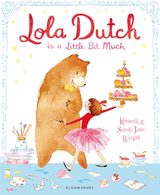
    Lola certainly has a great capacity for creating and making. Her faithful companion, bear, who is much more conservative, (and possibly represents the parental figures), watches on. In the morning, he feels like tea and toast, but Lola has “Grander ideas for breakfast.” She cooks grits and gravy for Gator, pastries and hot cocoa with marshmallows for pig, and crepes and cream for crane. The feast is happily shared by all, on a fantastically set table. The best part of this is the following page, showing Lola washing the dishes.

     After the cooking stint, Lola and bear visit the Library, and Lola discovers the great artists. Of course, this presents a challenge, so it’s off home with a pile of books to prepare her own masterpiece. The brushes, paint and canvasses are prepared, and the works of art flow from her brush. Bear does convince the busy girl that it is bed time, and after a bath and a story, it is time for bed. But still one can’t just sleep in an ordinary bed; one needs something a little special. After a last burst of activity, Lola does retire to her bed, with a special hug for bear.

     You can feel the vibrant energy emanating from this child. The story is written with an intimate knowledge of how children think, and how they spontaneously will explore and flourish if given the tools, time and space. The illustrations are delightful, and the matt cover of the book, with a shiny Lola on the front, is appealing. The double page spread of illustrations is colourful, and adds to the scant text. The illustrations add humour and warmth to a story that bounces off the page, and is wonderful to read aloud.


  • The Art Garden: Sowing the seeds of creativity

    The Art Garden: Sowing the seeds of creativity

    The creative urge is strong in most young children. You can see it in their play, their activities and their interests. Today, most children have the opportunity to experience a range of skills to art, to cooking, to gardening and acting and many more. They are given a chance to discover strengths in their abilities and they can also recognise weaknesses.

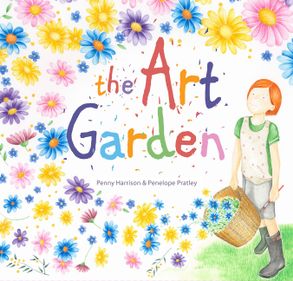
     Sadie is a little girl who has seen her best friend paint, and draw many pictures. His art makes “Sadie’s heart smile”. Although she loves colours, and finding patterns, she just can’t capture what she visualises with a paint brush. She tries and tries, but cannot master this medium. After many attempts to paint, Sadie gives up in frustration, and sits in her favourite tree, to stare at her favourite place. The garden. She tends this with loving care and sees the patterns and shapes in leaves and flowers. Suddenly, Sadie realises how she can achieve the colour and pattern and creative design that she wants.

     This is a great look at alternatives to our own first thoughts. Not giving up on an idea but finding a way around stoppages is demonstrated. Sadie still loves her best friends painting, but now she can produce, colour, shape and form in her own special way.


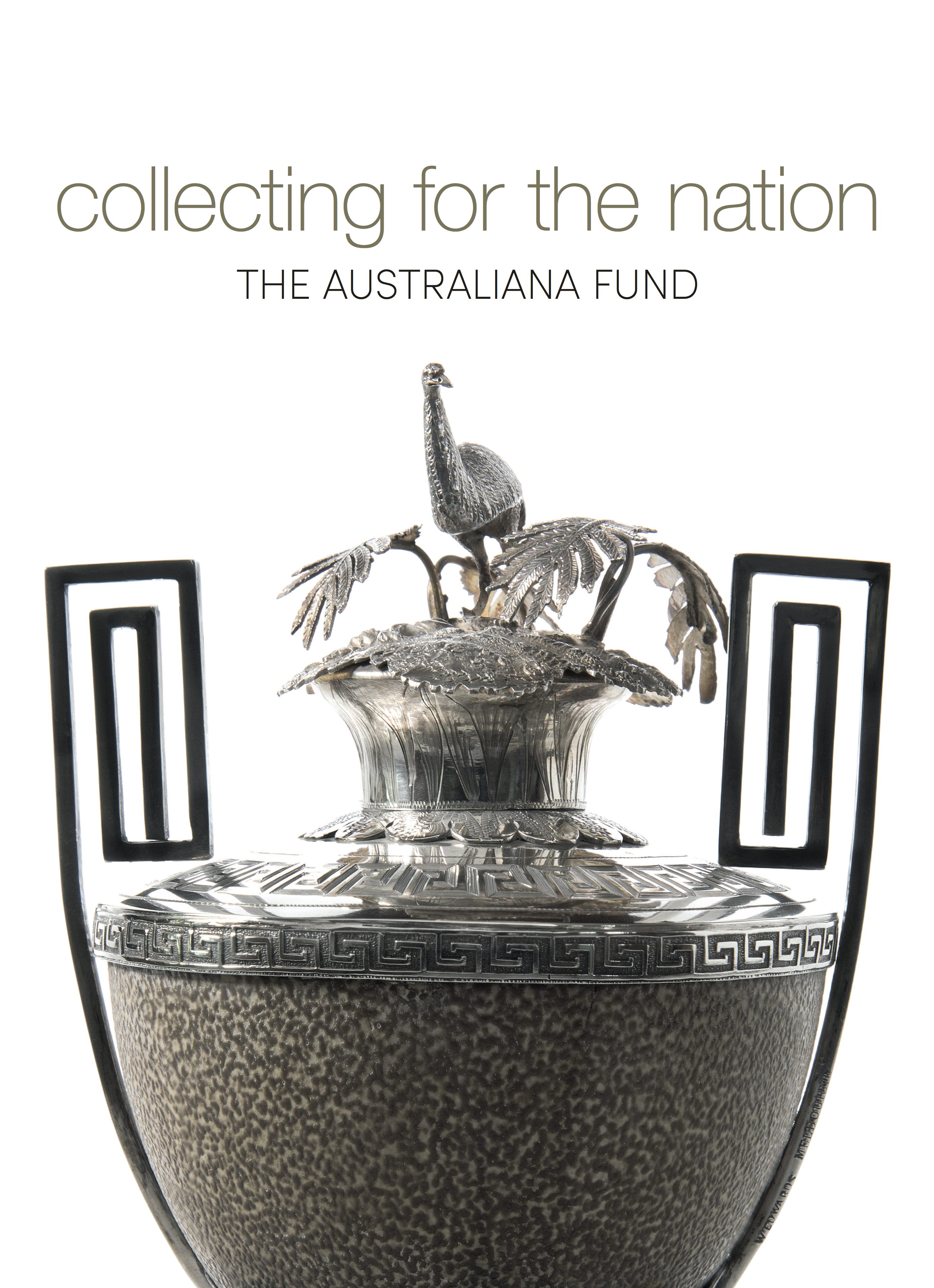
  • Collecting for the Nation: The Australiana Fund

    Collecting for the Nation: The Australiana Fund

    The rich and varied artistic history of Australia was for many years little recognised, and certainly not able to be appreciated by those other than the owners of the various pieces or objects, purchased or inherited; artworks which encompass cabinet and furniture making, ceramic and pottery, fine art and sculpture.

    It was not until Mrs Tamie Fraser, AO, wife of Malcom Fraser, the then Prime Minister of Australia, visited the White House during an official tour in 1976, seeing first-hand the rich and impressive collection of Americana in the nation’s capital, Washington.

    At that particular time, the four official houses of the Governor General and Prime Minister of Australia, lacked a great deal in the way of pieces which reflected the wealth of talent in Australia, with which to showcase the culture and history of the country.

    Funds were not readily available to purchase works of art: taking inspiration from the American model where funds were raised by The White House Historical Association, established by Jacqueline Kennedy in 1961, the Australiana Fund was formed. The intent was to establish a collection of items to be considered as working pieces, which were to be used to grace the four official residences, which is now considered, forty years on, to be one of the finest artisan collections in Australia.

    This book is in many ways a tribute to the fund, the vison of Tamie Fraser and the many people, Australia wide who have given items, raised funds to help purchase others and worked tirelessly to ensure the collection remains held in Trust for the Australian people.

    Broken into several segments the first, Houses, landscapes and people walks through the history of the establishment of Canberra as the nation’s capital, after Federation in 1901, the purchasing of what were then ‘grand’ estates, owned by wealthy landowners, to their eventual conversion to the residences that are now used by Sir Peter and Lady Cosgrove as well as Prime Minister Malcom Turnbull and his wife Lucy, to welcome and entertain visiting dignitaries.

    Each of the Houses is introduced by different authors, as is section two, The Australiana Fund Collection, which breaks the years of early to modern Australia down into sections such as, Terra Australis, The colonial period through to Modern Australia, which encompasses a wealth of information on this young and fledging country, as well as the craftsmen and women who came here and created such wonderful, unique and inspirational pieces, that have gone on to become national treasures.

    The book is in many ways a compilation of Australian history, the creating of a new style of design and art, political history and so very much more. It documents the coming of age of a country which was in its early days, very much influenced by the British style of the day.

    For those people fortunate enough to have visited one of these beautiful, quirky, residences on an Open Day, some of the pieces photographed in the book will be familiar, for others this could be considered as an introduction to an aspect of Australia and Australian politics, which was previously unknown.

    Each of the pages has been carefully constructed by the authors of the sections, the text easy to follow and written in a manner of pride in the achievements by the artists and artisans whose work is now used to celebrate the history of Australian Art and Design in such unique settings.

    Collecting for the Nation – The Australiana Fund is a tribute to a vision, as well as a wonderful and accessible documentation of pieces, which may be considered as ranging from the sublime to the magnificent, but all most definitely Australian, as is introduced by a loveable pair of sulphur-crested Cockatoos, created by Minton (1860, British) in majolica, familiar to many, and proudly pictured on the pages of Contents.