Tag: WWII

  • Female Guards of Nazi Brutality

    Female Guards of Nazi Brutality

    When Ordinary Women became Architects of Atrocity

    Even though it is more than eighty years since the cessation of the Second World War, the history that is now coming to life is a lesson to all; that when people are put under duress, are programmed to believe what they are told, tragedy and horror are the result.

    When Adolf Hitler created his world of a pure Arian race setting out to eliminate anyone born in the Jewish faith, he and many others, both men and women, showed the world what people can and do become under certain circumstances.

    Female Guards of Nazi Brutality from N Koster documents the lives of ten women, all from everyday families, nurses, teachers, farm girls, workers, all young women, all easily able to be indoctrinated as Hitler Youth.

    Each one rose through the ranks, each one became a person of significance within the interment camps, each one became capable of carrying out horrific acts of violence against other women, children and men.

    Survivors told the stories of these women who were feared, who felt nothing other than power, control over others, who eventually stood trial, all but one who was killed by the British, several who went on to lead a normal life, within the community after the War.

    Although it seems incredible this can happen, that these women could change once again, post war, to become people of standing within their communities, it documents what the human psyche is capable of when subjected to the right conditions.

    Koster has carefully researched and documented this section of history, recorded the names of these women, who along with their horrific deeds, would otherwise slowly fade from history and by doing so she raises the question, ‘What does power do to the powerless once it is given?’, a point on which we as humanity need to reflect.

    Confrontational in extreme, Female Guards of Nazi Brutality documents the tragedy that flows down through generations when lives/cultures are shattered,’when conscience is surrendered to system.’

    For readers who wish to discover more about these women there is a Bibliography, along with Archival and Trial Records at the rear of the book.
  • Painting the Light

    Painting the Light

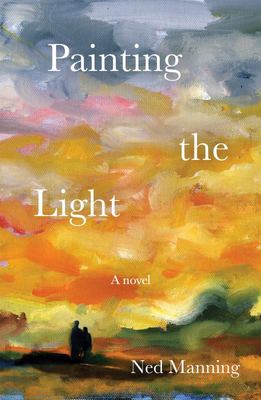
    Painting The Light is a detailed and fascinating look at a period of history in Australia. The time frame covered is from just before WW11 with the setting around the pastoral regions of Western New South Wales. The characters have been brought to life by the fact that they are based on the author’s own parents, and their passions and intent are authentic. The detail is so rich that it is evocative, and the older reader can relate to many of the social customs.

    In essence this is a romance, but the lives of Nell and Alec are far from straightforward. Having been separated by the war they eventually get together on a property which Alec is buying. They begin to settle down, but Alec has been awakened to the prospect of different possibilities after having fought overseas, and met with many different people.

    The new ideas and ways of living have made a deep impression on the young farmer, and he is encouraged to voice his ideas. Eventually he is heard at the highest levels and asked to stand for Parliament.

    Nell’s story is one that also encapsulates the role of women at the time. Her plight along with the intolerable treatment of the local Aboriginal people, shows how class distinction and the sense of entitlement has changed in Australia. The politics and the power games of the times were questionable.

    This is an interesting story on many levels. It is a great look at the history of the times and that region and the new ways of thinking after the war which caused disharmony to the conservative folk. The love story is very beguiling.

  • The Valley of Lost Secrets

    The Valley of Lost Secrets

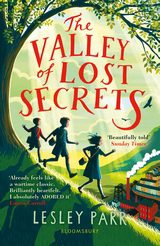
    The Valley of Lost Secrets is a war time children’s adventure set in Wales at the commencement of the British involvement in World War II. Children were evacuated into the country to be safe, but often the trauma that was caused to the children, being separated from their family, the resentment of the villagers and the generally bullying of the children of the Village, was far from a good outcome.

    In her debut novel The Valley of Lost Secrets, Lesley Parr captures the sadness, the unhappiness and the anger that many must have felt as their world was turned upside down.  Jimmy and his young brother Ronnie are evacuated to a small mining Village in Wales where they are cared for by Mr and Mrs Thomas. The Village is so different to London: here it is green and open and the air smells very different. Jimmy finds this disturbing while Ronnie, who is a little bit younger, seems to settle into his new life considerably better.

    Lonely and  feeling very unhappy, trusting no one, Jimmy discovers a skull lodged in a tree which gives him the creeps, but as the days go on and friendships form and break up, Jimmy becomes more and more determined to get to the bottom of the mystery surrounding the skull.

    The more determined he becomes to find out how a skull come to be hidden in a tree, the more danger he places himself and Ronnie in, and it is not until a most terrible event occurs within the town, the truth can finally be discovered.

     Beautifully written with a lovely continuity The Valley Of Lost Secrets is a rich, emotional, well researched story based in history, which provides a depth of authenticity to the canvas of life in a small town and the confrontational changes so many had to learn to manage, children and adults alike, during the long years of World War II.

  • The Good Pilot Peter Woodhouse

    The Good Pilot Peter Woodhouse

    In his delicately insightful style, McCall Smith bring to life the dark and troubled time of World War II, setting this war-time romance in a small country village where everyone knows everyone else business.

    Val Elliot is a land girl learning to work on the land under the grateful and gentle tuition of farmer Archie, whose nephew Phil has gone off to fight Hitler. She is considered as a bright intelligent girl, who if it was not for the War would have gone far with her education. She has been bought up with her Aunt, the local postmistress, and nephew Willie, who although considered ‘simple’, always seemed to understand far more about the land and life ever than given credit.

    It is his placement on Ted Butters farm, a man who is hard and cruel, that proves to be the catalyst, for a working dog, aptly named Peter Woodhouse’s journey through life, to end up as the mascot for the American Reconnaissance Squadron based nearby, Val falling deeply in love and a friendship that was span the horror of the final days of Hitler’s reign in Europe, which would last right down the years to modern times.

    The storyline is simple but so beautifully embellished that every page brings to life the hardship, love, fear, terror and happiness of a time in history which bought out the best and worst in humanity, allowing the passage of time to wind through the imagination, to gently captivating the reader.

    The detail as always with the written word crafted by McCall Smith is as if a painter had taken a brush and captured in cameo, a time and place, painting it with the richness that is life in all its many guises.

    Lovers of Alexander McCall Smiths’ cosy, intimate style will absolutely adore his latest offering.

  • Abandoned and Sacrificed The Tragedy of the Montevideo Maru

    Abandoned and Sacrificed The Tragedy of the Montevideo Maru

    History, especially history relating to war, retrospectively, almost mysteriously becomes dressed in fine feathers, lauding the bravery of the men and their commanders who went to war, conquering the foe and returning home to the gratitude of the Nation.

    But as the years roll along, many of the issues and decisions made, which were buried deep to protect the reputations of the men at the top, the leaders and decision makers, become open to public inspection.

    In this case, the case of the Montevideo Maru, the evidence of gross miscarriage was buried very deep indeed only to see the light in 2012, after the families of the young men sent to New Britain and knowingly sacrificed, campaigned and petitioned for more than 60 years to get to the truth of what happened and why, was made public.

    Lark Force, made up of mainly young boys and men, predominantly from Tasmania, many of whom where brothers or friends, were sent to New Britain, in theory to become a defence against the possible invasion of the Japanese. They were untrained for the conditions they were to encounter, thought the posting was only for a short period of time, and were woeful ill-equipped to defend anything at all.

    Nearly every member of Lark Force, along with a majority of nurses, missionaries, Chinese, locals and support staff perished on this Island, some at the hands of the Japanese, some of disease: more than 1000 prisoners and internees incarcerated on the Montevideo Maru, a Japanese prisoner of war ship that was sunk by an American submarine, perished.

    Politics in Australia at the time was an unstable platform from which to be fighting a war, as the Prime Minister of the day kept changing from Menzies to Curtain and then to Menzies. Both men failed to understand the situation in the Pacific until it was almost far too late in all respects. As an ally of Britain the focus was on the Middle East, France and Germany and the Japanese threat was something that was underestimated by Churchill and the Australian Government of the day.

    Kathryn Spurling has over many years, researched and uncovered this heartbreaking tragedy, one that should never have occurred, as well as the deceit used to preserve the reputation of Sir Robert Menzies, the man who has distinction of being the longest serving Prime Minister in Australia.

    The story is one long tragedy, from the day the ill equipped troops set foot on New Britain in 1941, until June 2010 when the Australian Governments Minister of Veterans Affairs, formally recognised the tragedy and offered the families an apology. In 2012 the missing nominal roll was found and a national memorial, located in grounds of the Australian War Memorial was dedicated to the 1,053 troops and civilians who died on the Montevideo Maru on 1 July 1942.

    Spurling has handled the subject matter with graciousness, and with considerable feeling for the families involved, who shared their stories, and whom were left for generations, not knowing what happened to their sons, sisters, daughters, husbands and fathers.

    A powerful story with no holds barred it is one that should be understood and studied in depth as it not only highlights the great courage of the men and women who were sent and served not only in New Britain but also Timor, New Ireland and Ambon, but also the great egos and political subterfuge in play which sent so very many young men and women to a sure death!

    Lest we forget!