Tag: writing

  • Story and Structure: A Complete Guide

    Story and Structure: A Complete Guide

    Leon Conrad has spent a life time researching story, or stories, teaching, lecturing and tutoring in the art of story creation, analysis and restructure and also in pursuit of the answer to the time old question, where do stories come from.

    In the Preface Conrad explains much about the motivation behind his journey, why he has applied the mathematical principle created by Prof George Spencer Brown to literary (Story) analysis and how it makes the breakdown of any story ‘visually intuitive, easy to understand and extraordinarily powerful’.

    After you negotiate the first chapter which is somewhat daunting, as it lays out the six primary symbols used in breaking down the context of Story, you are carefully lead into the absorbing journey relating to the creation of a story, what causes a story to evolve and how, using the positive and negative environment to create a flow, a story arrives in all its captivating glory.

    Story and Structure: A Complete Guide is a pilgrimage through the world of words formed into cautionary tales, academic writing, enriching and thought provoking poetry and riddles, all of which tell a story in long or short form.

    Over 18 distinct story structures, several of which are familiar tales told in childhood, others are more complex such as West African dilemma tales and the intricately crafted Ki-Sho-Ten-Ketsu, Conrad applies the six symbols to clearly illustrate the ebb and flow, positive and negative of the storyline.

    As the chapters unfold it is very easy to become absorbed into what is a Masterclass in writing, which when understood and applied, has been proven to improve the writing style of all forms of story; storytelling and story creation.

    A very comprehensive end section, beginning with the very short Epilogue, leads into the four Appendix further discussing various area of construction and analysis which concludes this exemplary book.

    For anyone studying literature of any classification, considering writing a book or has written a book Story and Structure: A Complete Guide is a MUST have book of reference.
  • Write Cut Rewrite

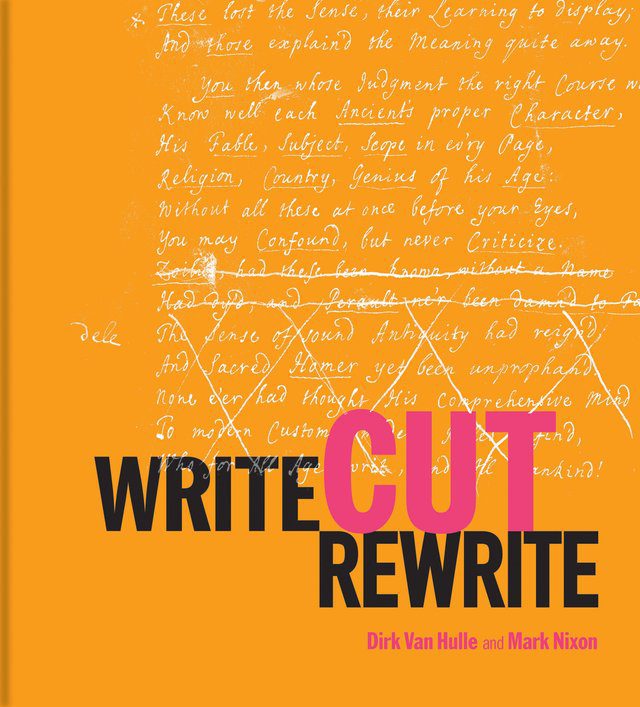
    Write Cut Rewrite

    The Bodleian Library is famous for its collection of manuscripts. It also contains drafts that have been discarded by authors or publishers.  The fact that the discarded pieces have not been expurgated shows that the authors have recognised that their final presentation would not have been achieved without these cuttings.  The author has explored many of the cuts with enticing titbits such as “Would we view the “Wind in the Willows” differently if its title remained as The Mole and the Water Rat? Some authors’ cuts were made against their will.

    Various chapters tell us about Authors’ Cuts, Revising Censorship, Difficult Beginnings and Editor’s Cuts. Write Cut Rewrite mainly focusses on modern manuscripts although there are some references to ancient texts. The first deletions we see are those done on Pope’s, Essays on Criticism. The editor has outlined a paragraph in pencil and written “Nonsense” above it. Christina Rosetti’s poem “Portraits” had two verses, but between the first and second verse, a page was torn from her notebook.

    Many examples of cuttings are shown in the poetry of W.H. Auden. He used a notebook to write his drafts and pages have been torn from this book. Examples of poetry, novels and Vestigial notes are shown here to have been reduced. James Joyce wrote down phrases or ideas in a notebook to be used for future writings. He then crossed out the ideas as he used them.

    The conclusion of this beautifully illustrated and book shows us the necessity of cutting text, “As an essential part of a story.” The example is given of Alice Oswald who began all her writing with a drawing which gradually gave way to words. This is a scholarly, fascinating book to be studied, read, and browsed with intent and enjoyment.

  • Creative Writer’s Sourcebook

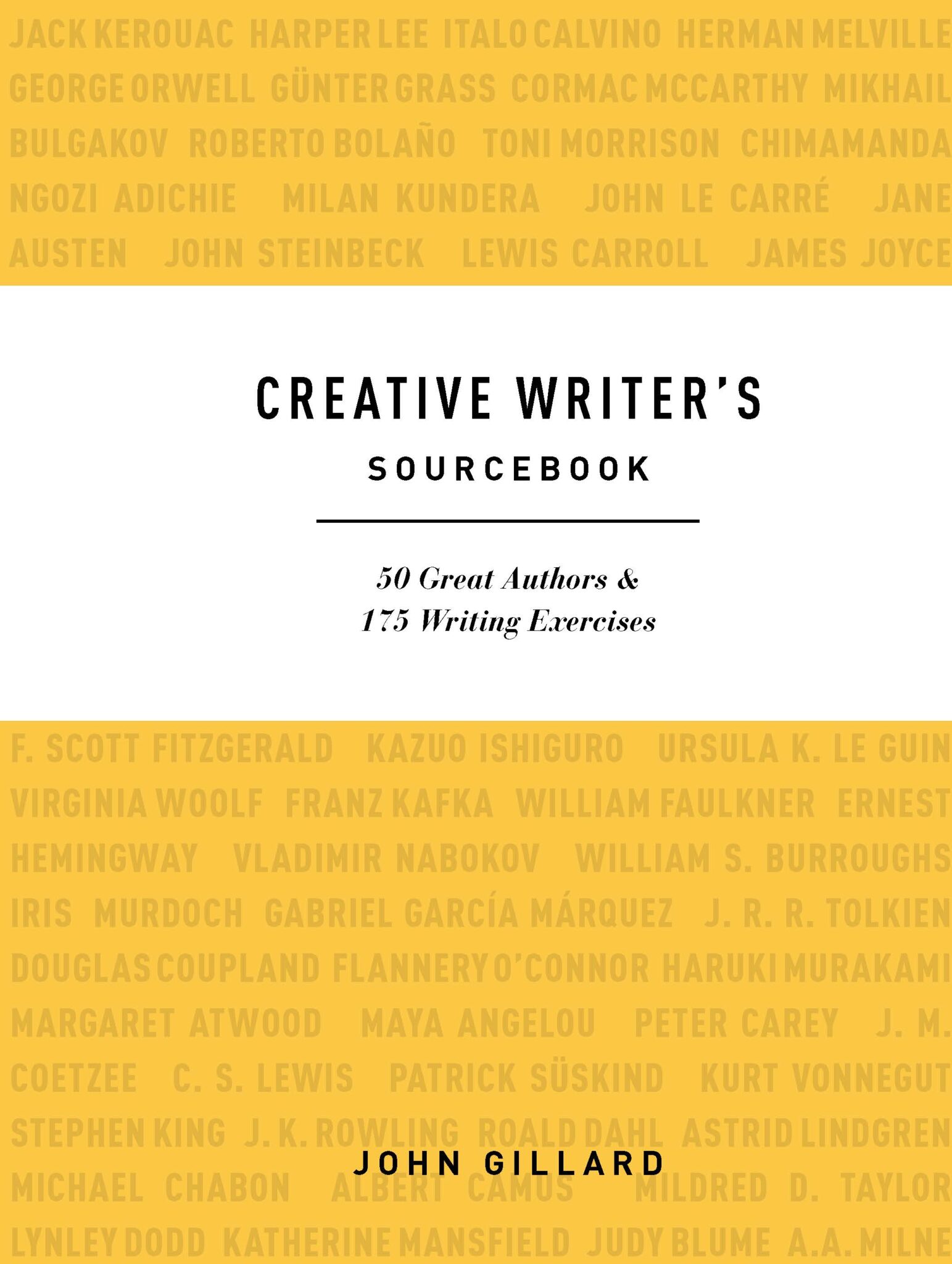
    Creative Writer’s Sourcebook

    50 Great Authors & 175 Writing Exercises

    What a treasure to have come across Creative Writers Sourcebook fromJohn Gillard, who has chosen fifty famous authors to discuss. Each author is given a double page spread which lists the genre they have written in. Their birthdate, nationality, and death date are given as well as their key works.

    A background description of the author’s education, place of birth and influencing factors is shown. Then either one piece, or several pieces of the most outstanding works are discussed and analysed. The following double page spread suggests exercises for those who wish to practice writing styles.

    John has excelled in writing for understanding. His text is clear and to the point. For example, in discussing “The Great Gatsby,” he writes, “ Color is used throughout the book to represent themes, from the white of apparent purity to the green of hope. …Daisy is the essence of the flower of her name- white purity on the outside, yellow centre of decadence and self-interest on the inside.”

    When discussing A.A. Milne, John talks about the dialogue used to “Propel the action forward and inform the reader about the character’s personality.” Haruki Murakami, “Blends stark biological detail with the ethereal. Somewhere in his body- perhaps in the marrow of his bones – he would continue to feel her absence.”

    Following the details of an author, John sets out a plan for writing in a similar style. For Jane Austen, he suggests ways of emulating the irony with which she writes, he describes how she manipulates the text and gives a backhanded compliment. He then suggests that the reader practice free indirect speech which he explains, and then suggests an exercise that outlines characters clearly.

    So many people would benefit from this amazing book. Those who love reading, discussing authors, developing knowledge of writing styles and those who have favourite stories and much-loved books. Creative Writers Sourcebook is a keeper.

  • Pure Spirit

    Pure Spirit

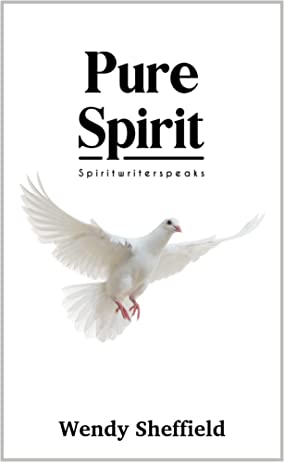
    Following on from her first book Spirit Writer comes Pure Spirit, in which Wendy Sheffield goes into far more detail as she sets down the purpose behind being a Spirit Writer, recounts a little of her personal journey and reaches out with love, to offer the words of the various Guides or Spirit to all who are in need of guidance through their words.

    The Preface sets out a little of Wendy’s journey but also contains a considerable amount of information about the ‘Spirit’ within us all; we are born with it but over the years of our lives we lose the ability, or rather hide the ability, to be able to listen to that still quiet voice and understand what we are being told.

    Each of the chapters is set out with a small introduction which leads to the words of Spirit in relation to the subject matter. The first two chapters are dedicated to her Father and then her Mother after their passing. These are beautifully worded and for those who are grieving the loss of a loved one, the graceful words in chapter 4; Spirit wants to speak to you, are perfect, offering love and comfort in a very gentle manner.

    The Personal Responsibility of Words is a chapter which resonates and is one that should be read carefully, as it sets down the personal responsibility we all have for our words; spoken or written. Spirit says that it is up to all of us to teach our children wisely and well, as words are powerful, they can make or break people, portray love or hate, happiness or cruelty and so much more. Spirit offers and leaves behind much ‘food for thought’.

    A quirky chapter is Time, especially in today’s world where we never seem to have enough of it, as it ‘aims to help people appreciate and value time’ (sic). Very salutary! Whereas one of the gentlest of pieces is Through the eyes of a wolf which captures perfectly so much we have forgotten or overlooked.

    As each of the chapters unfurl, the words flow as if a balm is being poured over the soul, full of comfort and explanation, that this gift of listening to Spirit can be once again heard and understood though various events in our everyday world.

    Pure Spirit is divinely driven, and once read through, it is the perfect book to keep with you to use whenever life gets difficult, a simple but clear understanding of emotions is required, or perhaps a distinct feeling that a ‘message’ is there, but needs translation.

    Pure Spirit makes the perfect companion to Spiritwriter

  • The Magical Writing Grimoire

    The Magical Writing Grimoire

    Words are the very essence of our society, used to wound, to heal, to inspire, as well as used to create magic, often in ways that are unconscious, directly from the soul, full of love and compassion. Words are powerful regardless of how they are used and in therefor should always be treated with respect, regardless of whether they are being bound together as a  healing spell, used for manifesting, gracing the pages of a journal or spoken out loud.

    Lis Marie Basile has gathered together a wonderful collection of words to create the beautifully presented The Magical Writing Grimoire to encourage the use of words to create a gloriously rich witchery as an everyday component of your life.

    She sets out in clear form words as a powerful tool, used often carelessly in today world and as in times before to create fear, anarchy and hate, rather than love, understanding and acceptance. Guidance is offered throughout the chapters with the understanding that a written journey will be a personal undertaking into self-discovery, healing and eventually the ability to cast spells and embrace rituals to transform your life.

    Regardless of the reason for discovering this book, there is much to be unearthed into the art of writing whether it be for journaling, creative writing, healing or having a go a poetry and prose; simply writing words on paper in itself a can open a doorway to discovering so much about emotions, and when combined with the art of magic, crystals and ritual, can be used to manifest your dreams into reality.

    As with many books on magical practices it is best read from beginning to end should a journey into witchcraft be just beginning and then used as required, but if the arcane arts are well understood, The Magical Writing Grimoire is the perfect reference tool to help the development of writing styles, and a to develop a comprehensive understanding of the power of words when used as a ‘Wand for Magic, Manifestation and Ritual’.

    A grimoire is a book of magic that may contain spells, conjurations, instructions for divination and the construction of amulets, and other secret knowledge of a supernatural kind; The Magical Writing Grimoire is certainly thus.

  • The Journal Writer’s Companion

    The Journal Writer’s Companion

    Journaling goes back centuries, to a time when only the wealthy of society who has some modicum of education began writing down things of interest in their day. Recipes, thoughts, a text from the Bible a piece of poetry, comments on the events taking place around them, list of goods to purchase and so much more. These journals became treasured possessions, being handed down from Mother to daughter or daughter-in-law, added to over the years and eventually containing the essential ingredients for a successful household and home as well as a social history of immense value.

    Journaling has over time become less important in a daily life and social history context, but is still carried out by many who find that creating their journal brings with it a sense of peace, accomplishment and often a clarity of mind. Those who have journaled from a young age often find that looking back helps with moving on when times are often challenging and difficulty.

    As a young teen Alyss Thomas began her first journal. Inspired, she simply wrote down whatever appealed to her; details of her life as it was being lived, without thought, form, direction or shape, but always with a sense of excitement about commencing a fresh new page, a fresh new day in her life.

    As she matured so to did her journals, as she wrote down in a far more structed style random thoughts, quirky ideas and so much more as while society may judge you on your original, if not definitely often left of centre ideas and thoughts, your journal will not, offering a safe haven for those often insanely private moments with ones self.

    But, and as both time and research reveals, journaling can be so much more and is so much more, as it helps you discover who you really are and what your passions may be; It helps with goal setting, sorting through emotion, creating structure in a world gone mad, making a note to self or simply letting off steam and in so many ways healing.

    It has also become apparent that being a little organised, having some structure to what you are busy Journaling and a clarity of purpose is also very important, as when looking back, it certainly helps to be easily able to find those vitally important notes, or pictures, added, long ago.

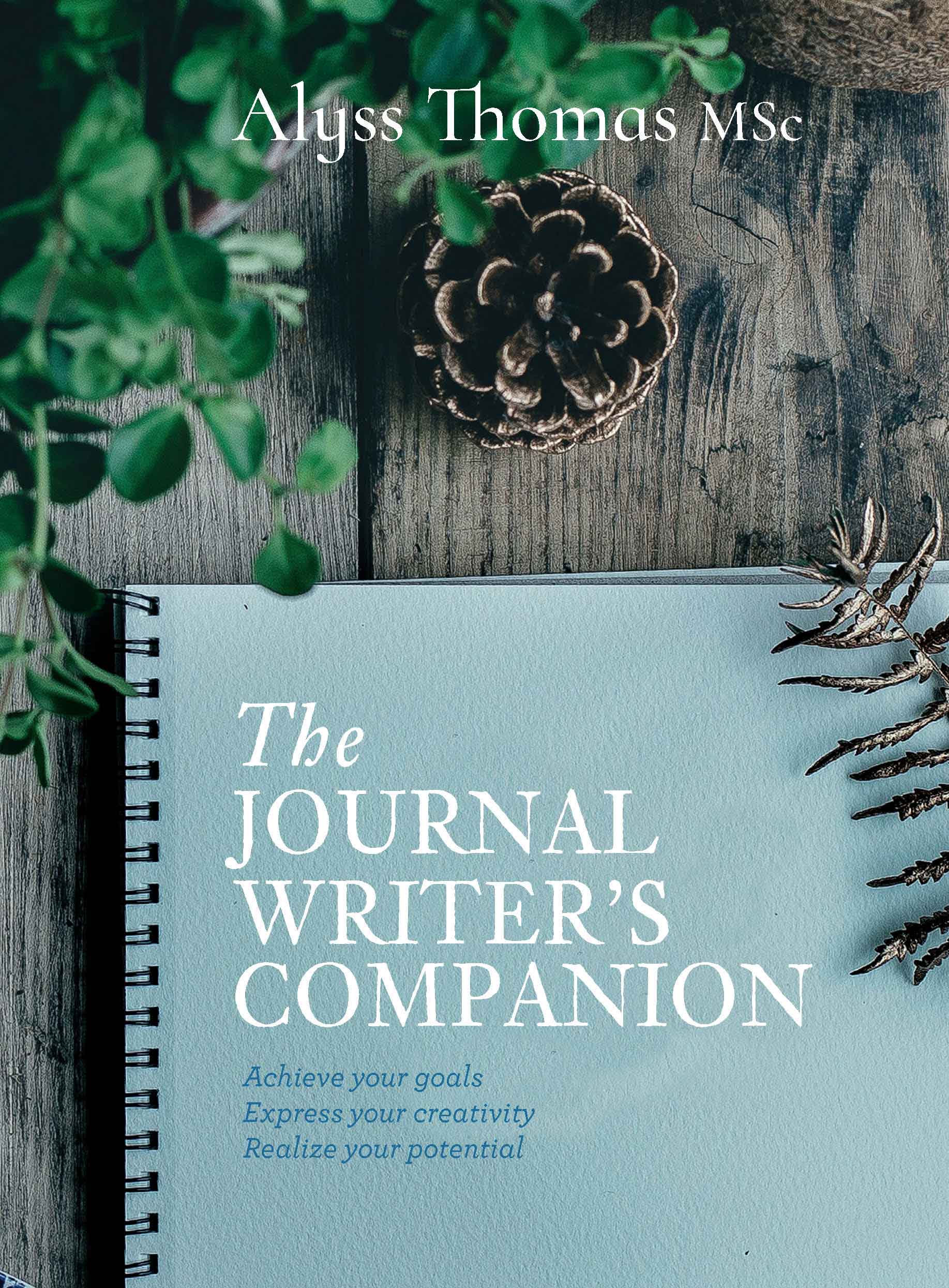
    Thomas, in The Journal Writers Companion begins at the beginning by presenting a very clear outline of Journaling and then moves on to set out the joy and healing to be discovered once you enter into the world of journaling with you, not someone else, as the centre of attention, the main and only focus for spending the time to share with yourself your ideas, thoughts and the world in which you live.

    Beautifully created and presented, this Companion will soon, after your journal, become your next best friend, as Alyss Thomas’ words and support help guide you into world you have yet to explore, courtesy of the very first page in your beautiful new journal.


  • How to Be  Writer

    How to Be Writer

    So you think you want to be a writer! You are convinced that the words you write will be a best seller that you are inspired, but all you need to do is find the time to write this epic book.

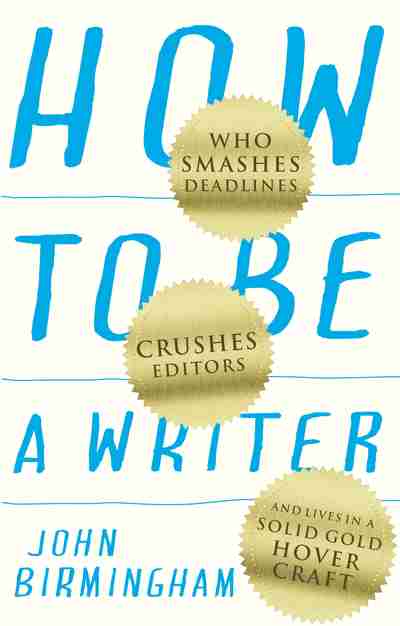
    Well, before you commence this incredible novel, and if you are a rank beginner at placing words on a page, or even if you have been dabbling about the edges of the craft for some time, by following the many, many tips and hints offered by John Birmingham, you may be the next Stephen King, possibly ‘smash those dreaded deadlines, crush editors under a torrent of words and maybe even live in a solid gold hovercraft’! Who knows until the final word has been written, the editing done and the book released!

    John Birmingham started his craft as a ‘freelancer’, grubbing out a meagre existence writing columns and articles for a range of magazines. Freelancing sounds like a glamourous way to write and earn a living but the reality is a bit more sobering; it is hard work, your words may or may not get printed, your money is not always guaranteed and in today’s world of rapid information, internet and so forth, freelancers have a very torrid time selling words.

    Birmingham rose to acclaim when his first novel, He Died With A Falafel In His Hand, was published in 1994, quickly rising up the best seller list. He has gone one to become a prolific writer of both fiction and non-fiction books, several of which have been turned into plays, movies and graphic novels.

    So when he writes a book like How To Be A Writer, sit up and take notice.

    As you read your way through the chapters you will begin to realise, in amongst the various language styles used, there is so much fact, so much information, that has been road tested by Birmingham, as he too was learning his craft, that if you are serious, you will take this information to heart, study it over and over again, then spend the time honing your skills.

    The topics covered  may be considered Ho Hum, but the reality is they are anything but as they look at getting noticed, establishing a routine to write, which by the way is very necessary, regardless of what you are writing, using technology to your advantage, promoting and pitching your skills, tenacity, which is most essential as you will get more putdowns than accolades, the ability to keep on going even when the cause looks hopeless, he calls it bravery and it is, and most importantly write, and keep on writing. And so very much more.

    As Birmingham says, success cannot be guaranteed, but by putting yourself at the ‘very centre of the human story, it is there the storyteller lives’ (sic).

    So if you are serious, are determined to crash through the obstacle course to getting published and actually selling and making money from your craft, treat this a little like the bible of how to, treasure it and wear out the pages as you refer to that hint or tip over and over again, but most importantly, learn to never, ever give up!