Tag: witches

  • The Witch’s Herbal Apothecary

    The Witch’s Herbal Apothecary

    From the beginning of this beautifully presented subject of Herbal Apothecary it is clearly explained that we are more than just our human form, that “We are not a part of nature. We are nature.” This, while it appears to be simplistic is far from that, as it is the basis of understanding the connection between the sacred Earth and ‘self’.

    As The Witch’s Herbal Apothecary unfolds, each of the chapters carefully sets out and explains the many facets of what it is to be ‘working witch’, dealing in the mystical elements of healing, with the offerings from Mother Earth as she and the plants are ready to offer their wisdom and healing to all who would chance to listen and understand.

    But do you have to be a witch to do this, you may well ask and the answer is no, as all you do need is a true heart, a desire to heal and understand the ‘magik’ all around. Understanding the wicca arts is most helpful though, as it definitely adds a further dimension of understanding and healing.

    If you enjoy rituals, remedies, recipes and potions, with a delightful smattering of seasonal content The Witches Herbal Apothecary is ideal, especially should you be a beginner in the arcane arts.

    Divided into three sections, which are then subdivided into specifics, is excellent as this allows a very large amount of information be easily read, understood and enjoyed, as there is nothing simple about understanding many of aspects of heavenly and earth energies, which without a doubt, are powerful.

    Pleasingly set out, the illustrations throughout help break down the text, creating a lovely, almost whimsical, aspect to what is serious subject matter. As with all books written on a spiritual plane, those who are seeking will find information to be treasured, while others will enjoy the work as informative and structural.

  • The Familiars

    The Familiars

    Set in the period around the early sixteen hundreds in Lancashire England, The Familiars is an Historical Fiction is based on true events. Many of the characters existed and lived their lives in Gawthorpe Hall. Their stories have been built up to show the political and religious era when King James was on the throne. These were turbulent times and the Politics which divided the Catholic church from the Church of England saw many people accused of witchcraft and hanged. In the Pendle Hill area twelve people were accused of Witchcraft and eleven of them hanged.

    The story is told by the young mistress of Gawthorpe Hall, Fleetwood, who was born in 1595.  As with most of the upper classes, she was quite unaware of the politics and poverty that surrounded her. The young woman was happily married to Richard whose prospects of becoming a leading light in the King’s court were good. Sadly, she had suffered her third miscarriage and had intercepted a letter which mentioned that another pregnancy may cost both the life of mother and child.

    This led Fleetwood to wonder why her husband had not mentioned the warning to her as she was again pregnant. The young woman loved riding in the woods, and it was here that she met Alice, a very poor village girl. When Fleetwood fell off her horse, Alice gave her herbs and bark to help save the baby. Gradually the pregnancy began to normalise, and from being sickly and pale, Fleetwood became healthy and strong.

    As this relationship developed, a friend of Richard’s, who was important at the Court disclosed that he had discovered twelve witches and was bringing them in for trial. This man, Roger, was a warm and helpful mentor to Richard, and although retiring shortly, wanted to bring Justice to the area. Imagine Fleetwood’s horror when she discovered that Alice, who was now her Midwife, was one of those people.

    The true story in the history books documents that twelve people were accused of witchcraft, but one, Alice Gray, was released. The rest were hanged. Fleetwood’s fight to save Alice is cleverly woven around the customs of the times. We read about the inmates of the Hall, their working days, and the clothing they wear. This is a fine immersion into the times, and attitudes in England during a reign of conflict and fear.

  • Witch Tricks

    Witch Tricks

    The cover of this book is very appealing with two young witches and a cat surrounded by much sparkle. It speaks of much mischief inside! This is the seventh book in the ‘Witch” series by Sibeal Pounder and will be eagerly followed by young readers. At the beginning of the book there is a map of a large area called Sinkville. It shows an area of land surrounded by oceans and a place called Badlands. There is also Ritz City, Brollywood, Silver City, a Forest and a Fairy Caravan Park. These places are the setting for many of the adventures that the witches in this story have.

    Tiga and her friend Fluffanora have just been invited to have an interview to join a witch’s club. They are very curious and surprised but decide to go along to find out what the witch ring has in mind for them. The two young ones are also involved with a Theatre Group and the manager of the productions wants to promote a special event called “Fairy Fitz”. The heroine of the fight has accidentally been named Peanut and so the crowd get quite excited when they chant her name.

    The story moves quickly between action and adventure. The Fairy Fitz is won by Peanut who is still grumpy about her name. Interspersing the story are excerpts from the newspaper, the Ritzy City Post. These keep us up to date with local events and add humour to the book. For example, a fairy has broken a rainbow and has to pay a large fine.

    Young girls will enjoy the drama, suspense, adventure and decision making that applies to the young witches in this very glitzy tale.


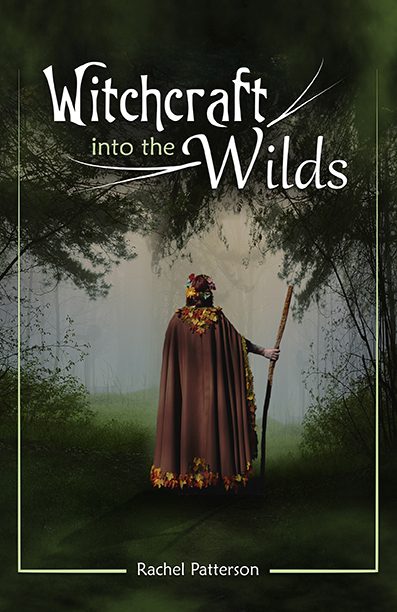
  • Witchcraft into the Wilds

    Witchcraft into the Wilds

    “I would love to take you on a journey, one that leads us through the wilds of nature and back to the roots and bones of witchcraft…” (Patterson 2017:4)

    Witchcraft into the Wilds is a well-written practical guide to witchcraft and paganism, written for the beginner witch, by a witch. Or to be more exact, a High Priestess of the Kitchen Witch Coven. Throughout there are discussions on almost everything regarding natural witchcraft and paganism and each is chapter brimming with interesting and crucial aspects of witchcraft/pagan practices and spells.

    In this book you will become acquainted with subjects such as altars and offerings, the powers of the elements, mythical creatures, divination, astronomy, significant plants and their magical properties. Throughout there are instructions on how a witch or pagan may use and interpret these subjects, as well as how to practice their beliefs or magic in any location whether it be city or country.

    The casual tone of this book allows a comfortable and great read that can easily be enjoyed without being overwhelmed or becoming stuck. Witchcraft and paganism are generally misunderstood topics that can inspire confusion amongst general audiences, however the definitions and explanations offered in Witchcraft into the Wilds will surely dispel any doubts or confusion. As the book was written in the United Kingdom, audiences in Australia or even America may find that some of the content, particularly regarding plants and animals, may not apply or be found in their regions. The central premise of the book is felt throughout; to get back to the roots and bones of natural witchcraft, with no need for fancy rituals or tools.

    Overall this is a fascinating read that will not only instruct a budding witch or pagan but inspire a curiosity about the world around us. Even the Muggles amongst us.

  • Giants, Trolls, Witches, Beasts: Ten Tales from the Deep, Dark Woods

    Giants, Trolls, Witches, Beasts: Ten Tales from the Deep, Dark Woods

    Back in ancient times storytellers moving about the countryside, told tales of caution and fun to entertain the townsfolk and deliver the latest in news and gossip from far and wide.

    Over time the stories were written down, accompanied by a drawing or sketch, but prior to this people used their imagination to create a picture, to embellish the tale told by the storyteller, to allow themselves to right to be frightened, in the nicest possible way. The other side of the tale had a more serious side, echoing caution, reflecting on pride, greed and bravery.

    Many fables and fairy tales were told ranging over many years; many countries and having possibly as many interpretations as there were storytellers. Now Craig Phillips has joined their ranks, taking an ancient art form, turning it on its head, to bring once again to a new generation, tales of old, of wild and wonderful people and events, all still laced with the same caution of old.

    With the advent of the graphic novel it has allowed modern day storytellers such as Philips free reign with their imagination to re-image characters such as the Boy who was never afraid, along with Fin McCool the Irish Giant who lives in a stone fort and Benandonner, of the Scottish Isles who decided to have a competition to see who was the biggest, noisiest and more fearsome of the two. Snow White and Rose Red also make an appearance in a tale which has, over the years, grown a little bit more.

    Momataro is a lovey tale from Japan about a peach, a God, a group of mischievous monkeys and of course a stolen treasure and when transposed into graphic form, gives the lively tale a completely new concept. Glorious full page illustrations, give Thor and his ferocious foe the Frost Giants a fearsome countenance, and we also get to discover just what did happen when a brother and sister fall down a well.

    Colourful, creative, vibrant and totally enjoyable, whether you are  young or old, Phillips has created, with obvious enjoyment, a completely modern take on tales gathered from around the world in Ten Tales from the Deep Dark Woods, which will no doubt, become a firm family favourite,