Tag: warfare

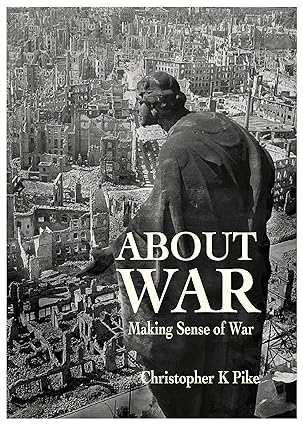
  • ABOUT WAR: Making Sense of War

    ABOUT WAR: Making Sense of War

    War is a paradox and a war is a scandal and regardless of what you think about War, how long or how often you pray or wish for world peace, the reality of the situation is that world peace is a fleeting thing, whereas War has been around since humans first walked this earth and is showing no signs at all of departing any time soon.

    In this fascinating look at War from Christopher K Pine, About War, he has, as have others before him, set down the interpretation of what is defined as War and what is also and perhaps more accurately, Warfare or the art of waging War.

    It is considered that war has no origin, it simply is a fact that men have waged war over almost anything, from land, to football, even stray dogs; in academic circles it is also considered as an activity that is ’mankind’s greatest experiment’.

    So why then do men wage warfare against one another? The Americans summed it up rather neatly by coining the description ’blood and treasure’, but surely there has to be politics and ego at the core of the matter, as well as in several instance a dash of madness, as could be viewed in The Football War between El Salvador and Honduras in 1961 with around 3,000 casualties.

    Pike traces the intriguing history of war to modern times with the establishment of NATO, the United Nations and various other government and non-government agencies, after the global devastation wrought during World War II, to try and prevent the outbreak of such wholesale devastation occurring again.

    But as history tells, war has continued and at the time of writing, war was being waged in Syria and the Ukraine, as well as parts Africa in the long, long list since the cessation of hostilities in 1946.

    Perhaps the release of About War is timely, as the re-election of Donald Trump for his second term in office sees the United States of America on a pathway to isolation, to withdrawing from all the established means of achieving what passes for peace in the modern world, and will help people understand the real issues that lie at the heart of waging warfare in the modern world.

    About War is a timely read that is both informative and fascinating as it paints an excellent picture of what motivates governments to spend millions to send men, women and machinery to war, with the winner, if there is one, taking all!

  • Leonor: The Story of a Lost Childhood

    Leonor: The Story of a Lost Childhood

    Leonor: The story of a Lost Childhood is a brutal, factual and honest account of life in Columbia from both sides of the political and economic divide, written over many years by Paula Delgado–Kling as she recounts both her and former child soldier Leonor’s story.

    Born into a family of wealth and politics, Delgado-Kling grew up spending weekends with her beloved Grandmother Helena in La Sabana, on the banks for the Bogota River. Her life was one of childish wonder, privilege and freedom.

    Leonor grew up in a small farming hamlet in southern Columbia, in a family of far too many children, domestic violence, poverty and hard, gruelling work. She joined FARC – the People’s Army – as a child of eleven or twelve years old, for what she believed would be a far better, richer life.

    Escaping the reality of the FARC, a damaged, drug addicted seventeen-year-old, she struggled to build a new life in the ‘demobilisation centres’ established by the Columbian Government. Over more than 20 years, she slowly rebuilt a life that was different to the brutality of life in the Military Camps.

    In an overheard conversation about Columbia, an opinion was stated that Columbia was a failed State and the women were the silent victims, saw Delgado-Kling return to Bogota in 2001 to meet Leonor; and so the story of obsession, brutality, bestiality, survival, drugs and war mongering unfolds through the eyes of a child, a teenager and then a mother of two daughters.

    Leonor: The Story of a Lost Childhood is contrasting, tragic, painting the life of many who grow up in poverty in countries where the is little or no equality, where guerrilla groups can gain a hold through drugs, terror and manipulation, where central Governments are weak and corrupt.

    It is a story of survival, struggle to regain a life that has meaning, but overall one of sharp contrast that two women from vastly differing backgrounds, but for the chance of their birth, could easily have lived either life during those early years in Columbia.

    Cathartic for Delgado-Kling and in many ways healing for Leonor, this is a story of hope for a better future, even if is only achieved one small step at a time.

    The Notes at the end of the book are well worth reading, as if you only had a passing knowledge of the tragedy that is Columbia, they are well worth accessing.