Tag: violin

  • Violin and Cello

    Violin and Cello

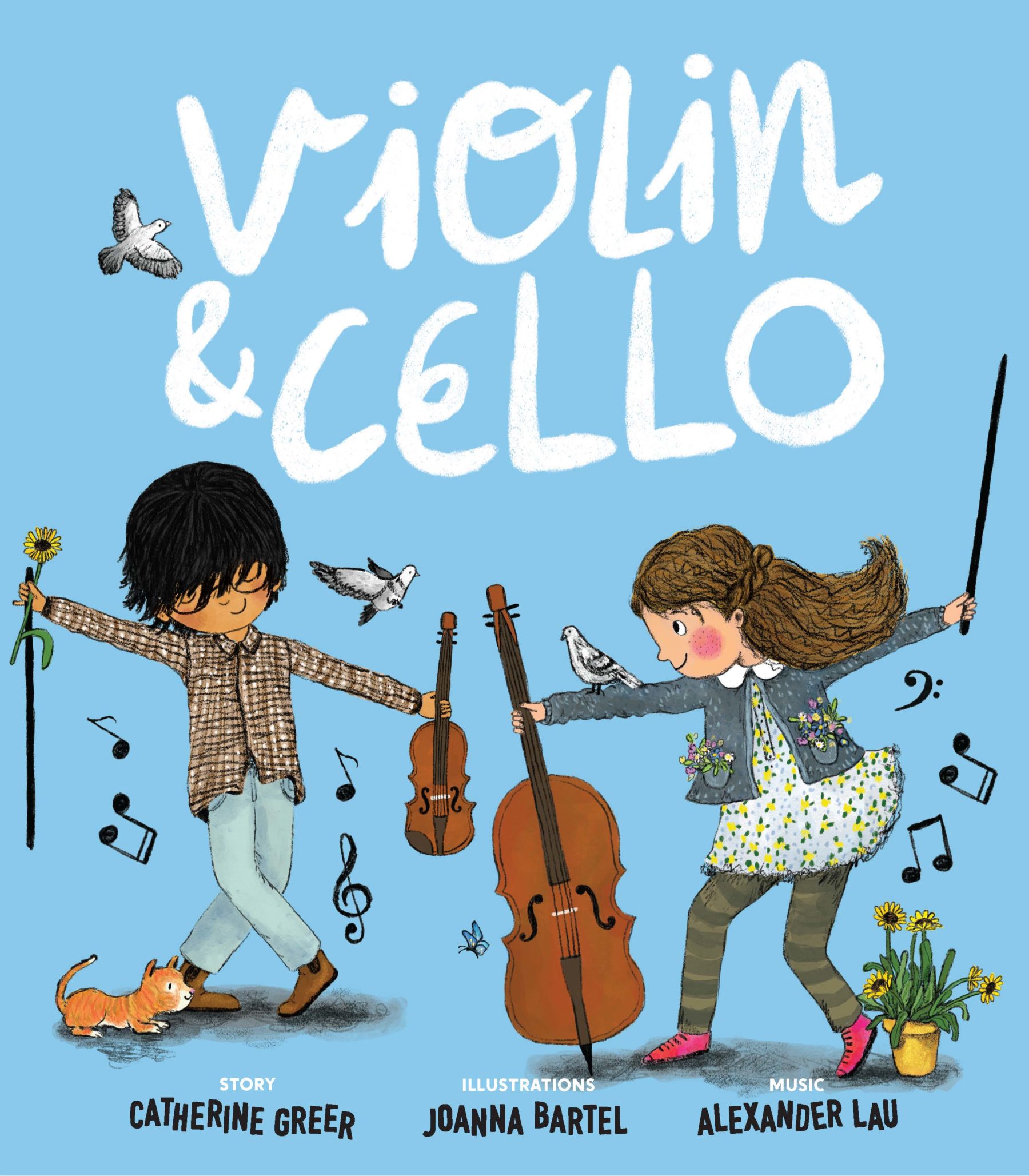
    How thrilling! An author who has thought to include musical children in a story book. The Picture Book Violin & Cello is for younger children who are beginning musicians and facing the idea of practising alone. The story acknowledges the unique personality that budding musicians have and the dedication needed to improve.

    The two children in the story live in adjoining apartments in a tower block. They have never met, but one plays the violin, and one plays the cello. After many months of practising and listening out for each other, the boy sends the girl a secret message in the way of a piece of music.

    It is called, “The Mystery Friends.” Part 1 Allegro. Separately they played the music. Then the girl sends the boy a piece of music, “The Mystery Friends Part 2 Adagio”. Again, they practice separately but listen out for each other. Then they have a great idea.

    Violin & Cello is a wonderful piece of literature involving music. The text is splendid, with the author, Catherine Greer stating about children learning music, “It was tricky, it took some time.”

    The music when described, winds its way across the page. “Cello from backpack. Violin from case.” Minimal text, but now beautifully the illustrator Joanna Bartel takes over the story. She fills in the details with drawings of the two characters which show their enjoyment and dedication.

    Musician Alexander Lau has written the music for The Mystery Friends part 1 and part 2 which is an original duet for violin and cello, and simple enough to be played by young musicians. What a fantastic combination of three very talented artists.

  • Moonlight in Empty Rooms

    Moonlight in Empty Rooms

    “In the painting of Alexander Volkov, where time stands still.

    I heard music” – Heidi Breyer

    Alexander Volkov is a world renowned artist, noted for his real life painting, a self-taught artist who believes anyone can create art. Heidi Breyer is his wife, a talented pianist and composer. Between them they have created what would have to be considered a magically beautiful work, Moonlight In Empty Rooms, a collection of compositions for piano and violin, based on twelve of the 500 works created by Volkov over the past 25 years.

    A small booklet accompanies the double disc set, setting out the philosophy of both artists as they live, work and combine their immense talent to creating a vision of rare beauty. Music is often compared to painting a picture through sound and in this evocative collection the best way to enjoy the magic is simply to relax and allow the music to wrap around the psyche, to create the visons as they arrive asking to be enjoyed.

    The introduction, Unfinished Conversation evolved from a work of pure simplicity; an empty room, an unfinished glass of wine, a candle snuffed out, the smoke from the wick still fresh allowing the viewer to write their own story. The music is introduced with the clear tones of the piano which are joined by the definite and yet delicate notes of the violin, offering the option of conversations unfinished, a pause in time, a moment to reflect. As the two instruments continue with their dance, art and music entwine seamlessly.

    Each of the twelve pieces are delicate, intricate and absolutely exquisite, each one with its own particular depth of emotion which is only enhanced by the wonderfully mellifluous tone of the violin played by the brilliant Charlie Bisharat. To listen to two instruments so co-joined is as if both Breyer and Bisharat are in total harmony, almost a spiritual connection where there is no defined end and no beginning, even though the violin is the secondary instrument.

    Emotion pure, clear and deep underpins each of the compositions which is both a tribute to Volkov’s stunning paintings as displayed in the booklet and the intimate involvement Breyer has with his works. It is as if she has simply sat in front of her favourite pieces allowing them to speak to her, to create through her the perfection of that moment in time captured forever.

    It is considered that this is Breyer’s best work to date, a work in which she has reached deep into the well of her talent, allowing the rich beauty to create a wonderful series of intimate and emotionally felt pieces which are gracious, delightful and a rare treat.


  • The Endsister

    The Endsister

    This is an exceptional story that has been written exceptionally well. As the story progresses, each of the characters adds a chapter, giving an immediacy to the reading, and an instant understanding of how each person reacts to the circumstances their family is involved in. The story begins with a family in an Australian outback town, and then moves to a huge old house in London.

    The beginning pages show a happy and busy family. Mum, Dad and five children all live together in a tiny cottage on a farm. Else is having a major problem with her music. She is quite gifted and identifies herself as a violinist rather than a girl. Clancy is the older brother, and he has problems with girls and teasing. The twins are happy playing together, while Sibbi, the four year old is a contented child who has free run off the farm.

    Money is always short. Mum is studying, and dad who was once a lawyer has chosen country life over business suits. A letter arrives notifying Dave that he has inherited an old home in Central London. He chats with Mum and the children, and they decide to go and claim the house and live there, as their tenancy in the cottage is coming to an end. From the beginning we realise that something has happened to the family in their new house.  The introduction tells us that “Something stirs in the attic, it shudders, a cobwebbed thing, tattered and dusty.” Sibbi talks about the girls who come into her room.  Now we meet Almost Annie and Hardly Alice, who write a chapter themselves.

    Everyone has changed. Mum becomes totally distracted with her study; Dad is going to the lawyer’s office each day to work out the taxes and legal issues, while Sibbi becomes quieter, more withdrawn and sickly. Else who left her violin behind in Australia is depressed, and Clancy is just angry.  The two outside girls have to be dealt with to restore the family to its close and united former unit.

    With great imagination, and humour, the author introduces Dad’s idea of fixing things. Then Else who has found another violin takes things into her own hands. The story, the settings, the characters and the ghosts all are meshed together beautifully to make a satisfying and complete tale. One is never sure where the family is headed, or what will happen next, but the large old house must be cleared of its secrets before anyone can live in it.

    It is always good to read such an imaginative and complete work.


  • Souvenir D’italia

    Souvenir D’italia

    Stepping back through a window into a time when the pace of life was somewhat slower, less frenetic, music was gentle and enjoyable, Elizabeth Naccarato has captured the timeless elegance, the fun and fiesta which has been, and always will be, an integral component of Italy and the Italian people.

    To her Italy is a place of soul, holding a sense of homecoming which has been reflected in the compositions which make up, in her words, ‘a picture book snap-shot’ of an Italian adventure, hers, yours or someone else’s.

    Each of the tracks has as the inspiration of a time or place experienced while visiting Italy: Waltzing Italiano is all about being there; the atmosphere, the vibe, the great sense of family and tradition whereas Assisi relates to a walk through a cathedral in Assisi and a visit to the tomb of St Francis, where the emotion of the moment brought with it, tears.

    Spanish Steps sees Naccarato, accompanied by violin, adding that element of romance so redolent of a late summers evening in Rome. Summers End has the deep, rich, broody tones of the sax added to piano, creating a nightclub style feel, but also the long drawn out days of the summer months slowly mellowing to the cooler times of the autumn. Natasha gets the blood moving with a structured piece featuring the beloved accordion, in a tango style tribute to the dance and the dancer.

    Moving on, you come to the marvellous Venetian Boat Song, in tribute to the gondolas and gondoliers who propel these wonderful craft effortlessly along the waterways and are beloved of those who live in Venice and those who visit, with their colour, flamboyance and tradition. The gentle relaxation of a trip on the water has been captured beautifully in this solo piano piece.

    Sadly, as with all great visits they come to an end and in That’s Amore we feel the sadness that is there as we begin to say goodbye; once again the moody blues of the sax come into play, the slow, almost reluctant notes of the piano played softly, create that time when all there is left is to say is, Hey, I Love you, I’ll be back soon!

    Evocative, enjoyable and truly presenting a taste of Italy, Naccarato has definitely created a melodious, moody, reflective and celebratory ‘snap-shot’ of her time in Italy for all to be able to enjoy.

  • Rainbow Road

    Rainbow Road

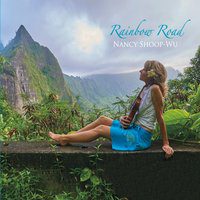
    Classically trained violinist Nancy Shoop-Wu has re-released the beautiful Rainbow Road album with bonus tracks from her earlier release Beautiful Mana’o in celebration of life, living and her connection with the otherworldly island of Hawaii, a place that has had and continues to have, a profound effect on her life.

    Moving thereto take up a chair with the Honolulu Symphony some years ago was a decision that was to have a far reaching effect and one she did not expect; that of a love and affinity for the island and its mystique which was ultimately to change and influence the way she played and created her music.

    As a member of the Honolulu Symphony she quickly discovered a broader application for her playing, sharing the stage with such as Yo-Yo Mah and Bela fleck. Her long held love of Celtic and New Age music was once again coming to surface, resulting in the two albums released , one of which, Rainbow Road was nominated, in the  prestigious Hawaiian Na Hoku Hanohano Award , becoming a finalist for Best Instrumental Album in 2016.

    As you relax into this delicate album it is easy to relate to the magic to be found among the Islands of Hawaii, as each of the pieces is gentle and delicate, evoking much of the magic and mystique still to be found in the hills, valleys, rivers and waterfalls that dominate the landscape.

    Adversity in the death of her much love musician father at a young age and the collapse of the Honolulu Symphony have each, in their own way, added to the inherent talent of this artist as she has, at these times, had to dig deep within in order to regroup. In doing so she has discovered and honed a talent that is as ethereal as it is genuine, with a depth of compassion and understanding which can only come from experience.

    Derek Nakamoto accompanies Shoop-Wu on a number of the tracks with a delicacy that wraps around the music.  The final track Carry Me Home sees the debut of Nancy Shoop-Wu as a vocalist which adds a further depth to the work.

    A true bonus to Rainbow Road are the final four tracks, as you get to enjoy for a little while longer, what is overall a most beautiful, relaxing and enjoyable transportation to a place which can be found deep with each person.