Tag: understanding

  • Understanding Animals: Philosophy for Dog and Cat Lovers

    Understanding Animals: Philosophy for Dog and Cat Lovers

    The Art of Philosophy is an interesting Art, as it is understood that no philosopher can ever be considered as wrong, perhaps because the many permutation of their pondering, observation and research are generally diverse, open to interpretation and always, further discussion.

    So, when a Philosopher such as Lars Svendsen takes up the challenge to understanding the Philosophy of not just Cats and Dogs, but the very humans that love and adore them, as well as their specific relationships, the subject matter makes seriously interesting, fascinating and astonishing reading.

    Does it help to better understand your Cat or Dog, what exactly they are conveying to you, as they twist you and your emotions around their very paw with childlike ease? Yes, perhaps it does, but then as with all things based in emotion, maybe not. Svendsen also looks at the bond that is often unbreakable between animal and human.

    Svendsen peals back the intriguing layers of communication between pets and their humans, looking at what certain types of behaviours, such as a cat purring, the volume used, the tone and times and situation, as verses dogs and their many varied ways of expressing their emotion means.

    Delving into the sensitive issue of changing animals’ behaviours, such as that of chimpanzee’s, once they learn to communicate with humans in the medium of drawing, a type of almost ‘Pidgin’ chatter and specific patterns of learned behave, how does this then change the perception of that chimpanzee. As a chimpanzee as it no longer fits into the traditional behavioural patterns of that species, nor does it fit into the full concept of human behaviour, so where does this leave the chimpanzee?

    He also investigates in some length the bonds that form between animal communication, intelligence and awareness and how all these, along with many other aspects of behaviour, form the basis of lifelong friendships that build a very emotional component of daily life for so many people.

    Thought provoking, particularly in relation to the aspect that because animals can look at us, see us, make us feel embarrassed, guilty or ashamed, even transferring emotions though a mere look, does than then, make them one of us!

    As with all things philosophical, Understanding Animals Philosophy for Dog and Cat Lovers, answers so many questions, and yet leaves many more areas open for further discussion and research, but in the final wash-up, animals and humans are each unique unto themselves, each coming with special gifts and talents.

    A very quirky sense of humour is strategically placed thought-out the book, lest everything written be taken far more seriously than was ever considered.

    Understanding Animals Philosophy for Dog and Cat Lovers is one of life’s more intriguing reads. Enjoy!

  • Alice to Prague

    Alice to Prague

    Tanya Heaslip in Alice to Prague has written a partial autobiography about the middle years of her life in which she discovered a new world. The story begins in Alice Springs, where she and her family lived on a cattle station. She and her mother often danced around the kitchen to waltzes and music which inspired dreams of grand castles and ballrooms. Not unusual if you consider the permanent brightness and heat in which they lived.

    At the end of her schooling Tanya wanted to study law and be in a position where she could help people less fortunate. After working for several years, her ambition to see those castles and travel became very strong and so she travelled to Czechoslovakia. Here she was lucky enough to find a job teaching English to senior students and staff; luckily, she could sing and play the guitar, and so a lot of her lessons involved traditional Australian songs which the students loved.

    Tanya struggled for a long time. She had no language, no knowledge of the culture, and little money. Everything was a major chore; supermarket shopping was a nightmare. However, gradually she developed friendships, which helped her to settle, and the friends helped with advice.

    Many issues arise which the author discusses. She begins to understand the “Australian Aboriginal concept of connection to Country… I now knew in my core that connection to country was a primal human need..”

    Women friends in Prague discussed the concepts and ideas they were fed about “Westerners,” their greed and disregard of any culture or understanding, ideas which were perpetuated by the communist regime. The women agreed that if they’d had any outside contact with people like Tanya, they would have all been more understanding.

    Gradually Tanya began to settle into a routine, with the dreary winter weather giving way to spring, a magical time to explore the old city and see the cobbled streets and spires. She found romance but the complexities of her situation present many issues. Perhaps the love wasn’t like “butterfly down,” so rare and special that it lasts forever.

    We have all looked at the Christmas cards with snow and sleighs and castles, but for the author these scenes came to life and her little girl’s dream came true. This is a warm and tender look at special times in Tanya’s life, and the great friends she made along the way.

  • Word to the Wise: Untangling the mix-ups, misuse and myths of language

    Word to the Wise: Untangling the mix-ups, misuse and myths of language

    Word to the Wise is a very handy book. It’s by an unashamed, or is that unabashed, language nerd, Mark Broatch and now sits between my dictionary and thesaurus. It begins with some brief tips about how to write purposefully and clearly from this experienced writer and journalist.

    When I first looked at the title I thought it was a spiritual self-help tome for the already wise. Fortunately, the subtitle set me straight, so I put it to the test by looking up ‘straight’ – Index p 141 (tick)   “Something that’s straight is without angle or curve or not askew (tick); as well as not humorous, (not!) direct, ordered, undiluted etc. Then some more about straight persons and straight roads and racecourses followed by the mix-up word ‘strait’, then ‘straightened’ meaning restricted.

    All of that just goes to show the English language is truly as frustrating and as fascinating as it would appear to be, but on another level it’s also an entertaining and educative non-fiction read; the kind of thing you can dip into and bring greater clarity to your writing.


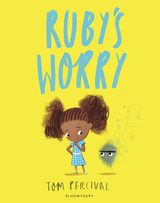
  • Ruby’s Worry

    Ruby’s Worry

    Ruby loved being Ruby. She loved to play, she loved to swing in the park and explore faraway places that lay at the bottom of the garden, until one day she discovered a worry!

    Now this worry was not a very big worry, but a worry none the less. It was something that would not go away. In fact, it grew, and grew and grew until it became a HUGE worry. The very strange thing was that no one else could see her worry, the only person that could was Ruby!

    This worry, that had arrived in her life, and went everywhere that she went, made her very sad. She really did not know how to go about getting rid of it as it just seemed to hang about, making her days not very bright and happy any more.

    In Ruby’s Worry, Tom Percival goes about addressing the problem of worry in a small child’s life, in a manner that is sensitive, perceptive and very enjoyable. The illustrations as always with his books are clear, colourful and fit the storyline perfectly, to create the character of Ruby as a happy, joyful and engaged little girl.

    By the end of the story Ruby has discovered the secret of how to make worries disappear, but not altogether, by sharing her worries, which makes them shrink, a bit like magic.

    Ruby’s Worry is the perfect vehicle to gently encourage children to understand what a worry is and that while worries are a part of life, they don’t need to become HUGE, big, worries before they can be talked about.

    As a book to share with a group of children, it is one which will provoke a range of ideas and discussion points, with the underlying message there for all ages to discover and remember, ‘that a worry shared is a worry halved’ as the old saying does go, which is something we, as adults, tend to forget and children need to understand.

    The perfect book for read aloud situations, classroom groups and for little ones who do tend to worry.

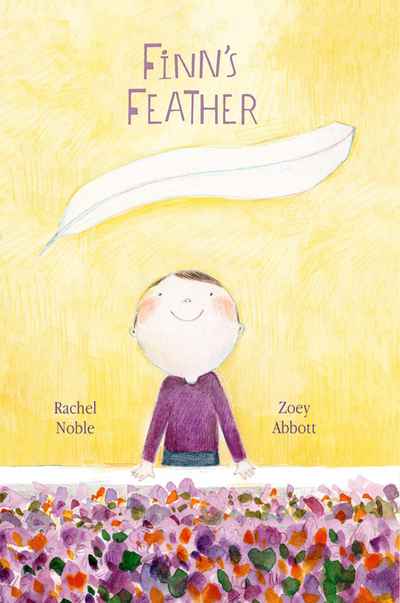
  • Finn’s Feather

    Finn’s Feather

    In this delicately insightful story about love, loss and forever, Rachel Noble draws on personal experience to offer a gentle pathway forward for anyone who has lost a beloved child or parent, and the process of grieving; a pathway personal to everyone.

    Finn knows his brother Hamish has gone to heaven and is very sad. He misses him every day. Everyone around him that knew Hamish is also very sad, but it is not until Finn finds a white feather on his doorstep, that he learns to accept that while Hamish may not be there anymore, Hamish is still looking down from his very own rainbow.

    The problem is Finn simply cannot understand why his Mum and his teacher are not as excited as he is about finding this perfect, beautiful, white feather. He discusses this with his friend Lucas who asks him what he is going to do with the feather and why he thinks Hamish has given it to him.

    They come to the conclusion, as little people often do, that perhaps Hamish wanted Finn to have some fun with the feather and so they set out to do exactly that, building a BIG castle, chasing the feather all over the school grounds and finally having to climb a tree, with the help of his friends, to rescue the feather.

    At the end of the day Finns heart is so much lighter and he is more accepting of the fact that while Hamish may not be there anymore, as he is an Angel, he is still a big part of his life and in his heart forever.

    A beautiful letter at the conclusion of the book offers a precious insight into acceptance, love and healing. In writing Finn’s Feather, Rachel Nobles wish is ‘for it to fly into the hands of every child who needs the story of hope.’

    Easy to read words combined with graceful artwork from Zoey Abbott completes a work which is both significant and poignant and perfect for children struggling to understand the process of death and grieving.

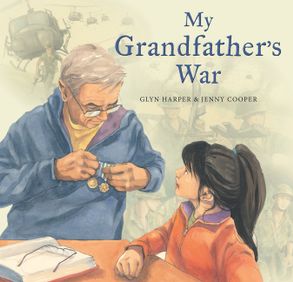
  • My Grandfather’s War

    My Grandfather’s War

    It is unusual for war to be discussed in a Children’s Picture Book, but this gently told story is narrated by eight year old Sarah, with all of a child’s curiosity. It is a lovely way to inform children about their grandparents and what they may have experienced in life. Likewise, a subject (War) that was always taboo in their household became manageable once brought out into the open. Grandfather was the one to benefit from this as well.

    Sarah loves her Grandfather as he has been living in their house since she was born. He has the time to walk to school with her in the mornings and pick her up after lessons. He gives her a snack and helps her with her homework. Sarah knows that Grandfather has a bad leg, and at times he feels very sad. After talking with her Father, Sarah discovered that Grandfather hurt his leg in the Vietnam War, and that he doesn’t ever talk about it. Sarah wanted to find out about the war which made her Grandfather so sad. She researches in her Library but can find little information.

    Taking the plunge, Sarah asks her Grandpa “Why did you go to the war in Vietnam?”  After a while, they have a discussion, where because there is love and trust between them, honesty prevails. Tears are shared, but the story Grandpa tells is so factual and so open that Sarah understands why Grandpa is sad sometimes.

    This is such a topical issue, where many children today have no idea of the turmoil and sacrifices their Grandparents went through. It is beautifully and sensitively told. The soft colours of the illustrations reinforce the gentle story and give a safe and warm feeling to the book. The text is well placed on light coloured backgrounds, and set in small blocks. The story is a great way to introduce the notion of a family’s involvement in war.

  • The Knight Who Said “No!”

    The Knight Who Said “No!”

    Even a knight who has the most amenable disposition can occasionally be argumentative. Ned was always the perfect gentleman when it came to obeying his parents, and he was an exemplary knight. He helped with the dishes, picked the cabbages, and raced inside at night when told. There was a dragon that swooped on the village each night and frightened the adults.

    Ned was sure though that he had heard the dragon groan, and he wondered if she was alone like him. Then one morning he awoke and felt strange and hot all over. He began to say “NO”! shocking all of the people in village as well as his parents. All day he said, “NO”!, and when told to come inside as the dragon was coming, he refused. Ned was right about the dragon. She was lonely and once they had overcome their surprise at confronting each other, they became friends. 

    Growing up is a difficult time for all knights. Ned was just beginning to assert his freedom and authority with his family, when along came a challenging friend. Mostly because of the happy friendship, Ned was more compliant with his duties, but every now and again, when adventures were too intense and involved, Ned would still say “NO”.

    This lovely hardback picture book is well illustrated with bright colours and patterns in the art. There are plenty of detailed items to gain attention of younger readers. The font is a good size for following along, and the occasional word is enlarged for emphasis. The text has interesting parts of rhyme and free flow. An enjoyable story for any would be knight, or growing child.

  • Next Door’s Dog has A Job

    Next Door’s Dog has A Job

    Dogs are incredible creatures and have a natural ability to look out for others. This has been used over recent years to train so many of them for various forms of work, such as Guide Dogs and Support Dogs, which makes many of them very specials dogs, important to their humans in a way that allows so many to be able to live normal lives.

    Gina Dawson and has been involved with support dogs for many years and understands the issues so many people not involved with either guide or support dogs are completely unaware of when these dogs are working.

    She has created a beautiful story around Tom, his Dad, their neighbour Kate and her support dog Bailey, to help educate not just small children, but adults as well, to the importance of these dogs in the lives of so many people.

    Tom is very impressed with Bailey’s lovely yellow coat that he wears whenever he goes out with Kate and wishes his dog Pepper could have one as well.

    His father explains to him why Bailey needs to wear the coat, and why he is so important to Kate. He tells Tom, that although Kate does not look like she has anything wrong with her, she does and that having Bailey allows her to go to work and out in the community

    Tom finally understands why Pepper can’t be a support dog and that support dogs have to be special dogs, trained into their role over a long time.

    He and his Dad see Kate and Bailey at the Supermarket and Tom wants to go up and pat Bailey, but once again his father explains that when Bailey is working, he must not be distracted.

    The text is such that it will appeal to young readers over a wide age range, using simple and easy to understand words and phrasings. Vivienne Da Silva has added her touch to the story with clear, colourful illustrations highlighting each of the points raised and discussed by Tom and his Dad.

    Teacher, Caregiver and Educator notes are included at the back of the book, making it very easy to discuss with groups the importance of Service Dogs and their important role in today’s society

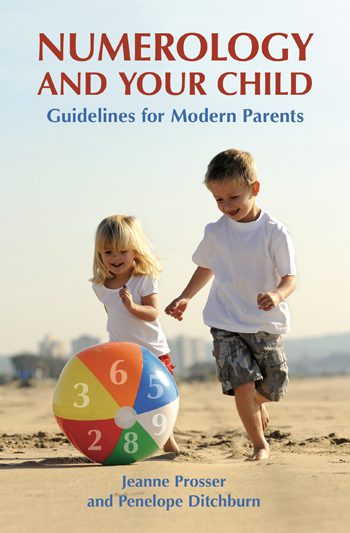
  • Numerology and your Child

    Numerology and your Child

    That the children of today are the saviours and the basis of the future of our planet is not a new concept; they are and will be the leaders tomorrow, the leaders of the future, the new pioneers and inventors of things not yet conceived or even in many instances perceived.

    But who are these wunderkinder, why are they so different to the generations who have gone before and the generations who are their parents or parents to be? In the era of alternates there is a consideration that the children being born into today’s world are far more spiritually advanced than ever before; that their energy fields are considered to vibrate to a much higher frequency.

    A new kind or style of energy is being born with these children, an energy based on pure love which comes from the heart. Through this new vibration, mankind is being encouraged to seek a higher consciousness.

    But as the authors have stated, to be able to understand more fully the children of today there is a great need to understand their intelligence, in order to encourage the best results for the child as an individual and also as a member of a changing order in society.

    To this end they have created this wonderful book based firmly in the ancient art of Numerology in order to present a new perspective, a new understanding of human nature.

    Based on the science of mathematics with a dash of astrology and an understanding of philosophy, Numerology can be used as it was in ancient times, to gain some serious information about your child or children and along the way, a little bit more about you.

    Children are very new little people who are largely, as far as their characters and who they will eventually become, an unknown force yet to be discovered. So many children are at a young age, tech ‘savvy’, intuitive, innovative, and inspired and in some cases incredibly gifted in the arts.

    As a parent of this new generation, wondering about so many things, Numerology is an excellent place to start discovering and understanding their child’s or children’s behaviour patterns and by doing so understand how to work with, encourage and set family guidelines, so they will gain the required and appropriate skills to equip them for a future far different from today.

    Each of the steps has been explained in clear detail, the grid required a little later, set out in an easy to understand style, as are the explanations to the meaning of the number sequences involved with your child’s numbers.

    For parent’s to be, choosing a child’s name is in important. A chapter has been included to help those who wish to choose a name filled with spirituality and deeper meaning, which also provides a fascinating look at just what the letters of your name mean!

    Beautifully presented and well explained Numerology and your Child will prove to be as fascinating and informative as it will be helpful towards providing insights for tomorrow’s children as they forge a new pathway through their lives into the ever beckoning future.

  • Wonderful Feels Like This

    Wonderful Feels Like This

    To be gifted, and intensely passionate about music, is something that many of us will never be familiar with and can only admire from afar. Steffi, the fifteen year old girl living in Sweden, has jazz and blues music and rhythm in her soul, in her fingers and in her feet. She is a gifted Bass player and is learning the clarinet. However, there is no one who really understands this young girl’s world. She lives at home with her parents, an older sister and a younger brother. Communication is rather limited between parents and the teenagers, not unusual.

     However, Steffi is different. Apart from the music in her head, she comes from a different ethnic background to her classmates, and is horrendously bullied by some spiteful girls. One day, Steffi is walking down the street, when she hears blues music coming from a window. When she looks up, she sees an old man sitting at the window, smiling and tapping to the music. He smiles at her and waves her to come up.

     Alvar, the man in the window, lives in an old folk’s home. As Steffi timidly enters his room he introduces himself and they begin their discussion of the music he is playing and it soon becomes apparent that he was an accomplished musician.

     Steffi visits him often after that and becomes well known to the friendly nurses. As Steffi gradually unwinds she talks to him, and he begins to share his life story with her, telling her of how he became a famous name in the jazz world of Stockholm. His world gradually impinges on Steffi’s, and she begins to see the terrible bullies who make her life miserable, in a pathetic role.

     The twofold stories are both fascinating. Alvar was a country boy who had come to Stockholm to discover a path for his music, and Steffi has to deal with growing up and applying for a scholarship to a music School. The characters he talks about with great love and kindness, become closer when we find them in the Nursing home with him. The times Alvar talks about are during the Second World War, when Sweden was supposed to be a neutral country and yet there were many restrictions.

     There are many interesting aspects to this story. Steffi’s final exam paper deals with jazz music during the Second World War, and we get to read what she has written, most of which has been derived from the many conversations with Alvar.

     Through this unlikely friendship Steffi learns of the true value of friendship, and how to escape through music, to move on to a happier place with compassion and confidence. This is a wonderful young adult story (enjoyed by an older adult.)