Tag: underground

  • Code Name Butterfly

    Code Name Butterfly

    A modern day fascination with DNA has led to many unexpected stories being discovered about family members, some hidden deep in the past and others more recent events simply never discussed with the family, considered by the people involved best left buried in the past. Every family has them, many remain undiscovered.

    When a letter, along with a photograph from Ange-Marie Preston with information about Eldoie Mitchell otherwise known as le Papillon de Nuit, the famous Josephine Baker and her Grandfather, Elodie’s family are caught unaware, believing they knew all there was to know about the family history.  But who is this woman that looks like a very young Elodie and why is she with Josephine Baker, wearing an outfit like that.

    Elodie Mitchell is in France studying, as well as writing columns about the situation in France for a newspaper in her home town. It is 1941 and the French believe the war with Germany is a ‘Faux’ war. She does not!

    She is lonely, fascinated with a man she sees often, and decides he is the man she will marry. She has decided that she will be out of Paris as soon as she can get onto a ship going to England. She is homesick, her spoken French still abysmal and her life, well….

    Over a many weeks she is slowly recruited into an underground network by Grant Monteray to pose as Josephine Baker’s cousin, to gather information on German movement and infiltration in the area This sees her French improve rapidly and as she is taught a range of skills she surprises herself with how easily she adapts to the is new role. Slowly she learns to look and listen, seeking out those who are happy to betray the secrets of France to the Germans.

    Already convinced Grant Monterey is her perfect match even though he is a damaged man, she discovers has she fallen deeply in love with him. Her new life is one she is not all that comfortable with, the new skills she is learning make her wonder who she really is underneath the skin of Elodie Mitchell.

    Based loosely on the story of Josephine Baker, (1906-1975) a famous American born French Cabaret star and her activities in the French Resistance during the Second World War for her beloved France, Code name Butterfly is rich in detail, with characters that come to life as the pages turn. The innocence of youth, the tragedy and callousness of War, the effect that fighting for a just cause has on so much of what is held dear, has been well developed.

    Fiction is often an excellent vehicle to tell stories about so many brave people whose stories have gone untold through the generations. Josephine Baker was very real, larger than life and generous too her detriment. The others, Elodie, Grant, Polly, Danny and Pierre are representative of the many who risked their lives to make a small difference.

    Code Name Butterfly is captivating, coloured in many hues, and very difficult to put down once begun.
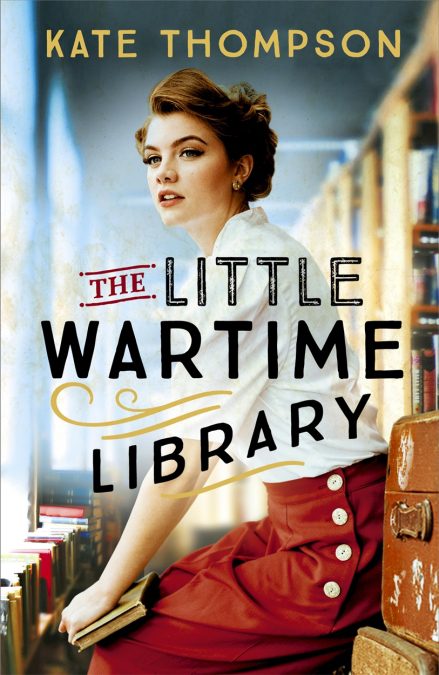
  • THE LITTLE WARTIME LIBRARY

    THE LITTLE WARTIME LIBRARY

    If you have a book you have a friend. For the 15 thousand plus Londoners in 1944, who were living in the Bethnal Green tube station through the mayhem and carnage of the terrible years of the blitz, this was certainly true; reading helped members of this community escape from the world of rubble and rations.

    No ordinary librarian Clara Button, a war widow needing something worthwhile to do, and her larger than life, glamourous and best friend library assistant Ruby Munroe run an extraordinary library in the half completed underground stop at Bethnal Green. It is a vital haven for the resilient community where everyone is welcome, where they can switch off for a short while and escape the realities of a city under siege.

     Together they devise many ingenious ways to bring books to the wider community; they deliver to factories to shift workers, who are unable to visit during library hours, hold nightly popular story times for children and also a boozy book club, which is equally well received, for their exhausted mothers. 

    However, not everyone wants Clara and Ruby’s help and there are those, who are determined to make their lives as difficult as possible. This is an era where generally men were the rulers and women the lesser species; reading gave women notions beyond their station in life.

    Author Kate Thompson’s inspirational book ‘The Little Wartime Library’ was motivated by the astonishing true story of an underground library and is based on the true events taking place in London during WWII. It transports readers to an entirely different world underground with its vibrant characters, who while the bombs are falling above them, are fighting wars of their own. This well researched, heartwarming story is about love, loss, forgiveness, acceptance and sacrifice.

    A book you’ll want to recommend to your friends. 

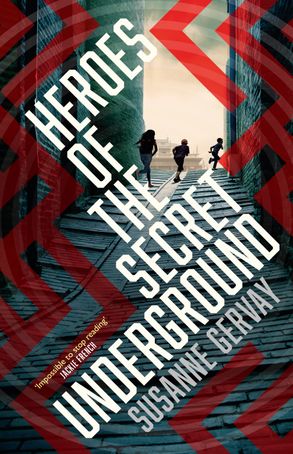
  • Heroes of the Secret Underground

    Heroes of the Secret Underground

    It is important in these times that the history of struggles and terror during the wars is not forgotten. For young people whose families were not involved in the day-to-day drama, many situations may seem unreal. Heroes of the Secret Underground is a story, told through history with the clever use of time travel to lessen the fear. The time slip gives an illusion of safety, while the characters are observing unspeakable times.

    Louie, Bert and Teddy live in a wonderful old hotel run by their grandparents. The year is 2000, and the summer holidays have just begun. Already Louie is aware that some people dislike their family although she doesn’t understand why. Racism is a topic that has not been discussed. By chance, Louie comes across a beautiful old necklace and through a process, she and her brothers are transported back in time to Budapest, in Hungary. It is winter and the year is 1944.

    What a different setting this is. People are cold, afraid, hungry and hiding. They are desperately trying to escape from the country, and to become invisible while wearing the yellow star stitched to their coats. The children have to rely on help from those people who work tirelessly in the underground movement. Louie and her brothers have to join the desperate ones who are guided by no less a person than her grandfather when he was a youth.

    The love of family and eagerness to support each other is of utmost importance. Louie must solve an old problem before they can begin to think of getting home again. Excitement, terror, adventure, and courage, make this a powerful read, and most importantly, an educational eye opener for younger readers.

  • The Monster Who Wasn’t

    The Monster Who Wasn’t

    Have you ever wondered where all the creatures that inhabit the very real fantasy world of monsters, fairies, gargoyles and witches and all the other creatures come from? Well, T.C. Shelley has written a completely wonderful story around all the strange and unique creatures, or should one say characters, because they are, who live their very intriguing lives in the ‘vast underground’, a place that everyone thinks they know about, but really do not.

    Just in case you did not know, fairies are born from a baby’s first breath and monsters also come into being when a person breathes their last breath. As to gargoyles and the like they also come from a creator’s handiwork but more on that as you read through the book.

    Imp is born from the breath of Kavanaugh, a man who is missing his wife terribly and is very old. He has a new granddaughter, who is definitely a newborn fairy. Kavanaugh feels that he is ready to leave this world and enter into the next life.

    From the beginning ‘Imp’, who is different as he looks like a human baby, is adopted by the gargoyles that live on the rooftops, who while grumpy, try to do their best. They love chocolate and of course as he is a human ‘gargoyle’, they teach him how to get them endless supplies of chocolate; something they simply adore.

    But while ‘Imp’, who does not get his real name until later, is growing up, the King of the Ogres, Thunderguts, the terrible and feared ruler of the underground, has other plans for this most unusual child monster. You guessed it, it is certainly nothing good, nothing good at all!

    The Monster Who Wasn’t is a fresh, different and unusual take on fantasy fiction aimed at 10 – 12-year-old readers who love a story that is fanciful, funny, contains enough horror to offer some seriously scary moments and so many wonderous characters threaded throughout the story line, to keep them on their mettle.

    If you ever truly wondered what does go on in that nebulous place known as the ‘vast underground’ after reading The Monster Who Wasn’t you will have pretty good idea!

  • Morris the Mole

    Morris the Mole

    To produce a Children’s Picture Book of excellent quality, one needs a complete meshing of the story and the art work. The story needs to be exciting, interesting and fresh. The art work needs to support the story and add to it in many ways. The characters in the story need to be endearing, and they need a mission. Nicki has certainly captured these many facets and more. The Melbourne based author and artist has produced a wonderful story which will be beloved by many readers.

    This tale tells of Morris the Mole. His passion is digging, and he has discovered many amazing treasures and food on his underground journey. Unfortunately, when he surfaces, he often disrupts activities on the ground, such as Ms Mousie’s birthday party, and the Bunnies vegetable shop. Then one day, he begins to surface from his digging and finds an impenetrable ceiling. It takes a massive effort for him to break down the barrier, much to the dismay of the animals who find the bottom gone from their swimming pool. Yes, the mole has misjudged his exit again! However, in the process of being exposed to the outside world, Morris makes another important discovery.

    What a grand story this is. The language is lyrical, “With a twirl of his spade and a twitch of his nose, Morris makes tunnels wherever he goes.”  The art work expands on the language and ideas of the story and creates a humorous element. The exasperation shown by the other animals each time he surfaces is clearly to be seen in their faces, but their tolerance and care also shine through. The double page spreads show the progress of Morris’s tunnels and just what it is he finds underground.

    This is a book for all ages to smile, read again and enjoy.

  • The Silver Hand

    The Silver Hand

    Terry Deary has become a legend in his attempt to bring history to young adults, in a way that is easy to read and intermingled with fiction. His HORRIBLE HISTORIES has gained world wide recognition and has been adapted for TV and stage. Access to the people involved at the time, their feelings, roles they played, lend themselves to a deeper understanding of the times. Terry deals with the characters in a well rounded manner, and brings a personal tone to the story.

    In this most readable book, we are taken to the village of Bray in northern France. The time period is the last days of the First World War, where we meet Aimee, a school girl. The British have left her village and the Germans have entered it. Everyone is exhausted and life is very cheap. Being in the village is almost like being on the outskirts of the battlefield. Many observations of aeroplanes, tanks, troops and trucks can be made by just looking outside. This information is essential for the British, and it is here that Aimee discovers her Mother is part of a spy network, which cleverly pass on this information to those troops.

    Being practical and desperate, Aimee’s Mother needs to enlist her help, and so the schoolgirl becomes involved with the spy network. Here we meet people who vary greatly. From the exhausted soldiers to the doctors who work under basic conditions; they are all suffering. A young boy who is gifted at using herbs has come to the German army to help alleviate their influenza outbreak. Although he is German, he and Aimee become friends. When he needs to escape but is ill himself, Aimee accompanies him to the border.

    The beauty in this story is the way Dreary has been able to show the horror of war, and the lot of the common soldier. Most of the men just want to go home to their families, but expectations force them to fight. The sub plot deals with Aimee and her mother always on tenterhooks in case they are discovered passing on information. They have a job cleaning the school which is where the Germans have their headquarters. Through being vigilant, they are able to pick up snippets of information.

    The final chapter is warming. It tells us how Marius, the German boy who Aimee saved comes back to visit the family in the village. He will become a doctor and their friendship will flourish. This book would be a fantastic aid in Australian History Curriculum

  • Piggy: Let’s Be Friends!

    Piggy: Let’s Be Friends!

    Piggy’s story comes in a wonderfully bright and colourful hardback book. The front cover shows the main character as being a bit quirky, with enormous glasses and a very sweet smile. He has obviously worked out that the way to develop good friendships begins with food. The bold colours continue through this story, giving it life and vivacity.

    The tale begins with a very lonely pig, just surrounded by his books. By chance he met Kate, and as the two of them arranged tea parties more friends popped along. In the forest community nearly everyone was by now well acquainted with each other; all except Mole.

     He lived under the forest you see, and so never had an opportunity to mingle. Miles the Mole also had an affliction. When he became nervous, he sneezed. One day Mole smelt Piggy’s roses and popped up to investigate the wonderful smell. Piggy saw him and called out, but Mole just sneezed and disappeared down his hole again.

    Hmmmm! Piggy was now thoroughly curious, and wanted to meet Mole. He and Kate talked it over and decided to invite Miles to one of their tea parties. Mole was so worried. What if he sneezed all the time? Maybe it was easier to stay underground and not appear foolish in front of others. However, there was the smell of the delicious muffins that Kate had freshly baked…..

    The illustrations in this book are charming. There is such gentleness to the characters and their surrounds it is almost as if you are invited to the party as well. When the mole is shown underground, the shades of brown could be harsh, but are softened by a warm glow. The story shows that by reaching out to others, you can bring joy and happiness for them as well as yourself. The text is really appropriate for reading aloud. It has small chunks of text on lighter coloured backgrounds for ease of following.

    Definitely a smiley ending.

  • The Safest Place in London

    The Safest Place in London

    The setting of wartime London is the backdrop for this most unusual story. The descriptions are so clear and unadorned, that you feel what it is like to be sheltering in the underground. Bombs are raining down very close by, you don’t know if you will have a house when you eventually leave the shelter, and when part of the roof collapses, you don’t know if you will leave the shelter alive. Add to this your children who have been there for most of the night, and are tired and hungry and cramped, and life is pretty desperate.

     Amid this fear and chaos, the author describes the lives of four of the characters. The people she has chosen to focus on are two of the mothers, down in the underground and their absent husbands. They could not be more different, and as their back stories are told, we understand why.

     Nancy is an Eastender, and has had an incredibly tough life. Her mother died at an early age and Nancy was allowed to stay and grow up in the boarding house where she lived. She met and married Joe who joined the Navy at the outbreak of war, and he has just finished his leave, returning to his ship. He also is from the East End, and has had a tough life. They both are determined to give their daughter Emily a better life. Due to the depression before the war, most people have been unable to get work, and save.

     Diana has brought her daughter, Abigail, to London to see a Pantomime. The truth is that she came to buy some black market food and is aware of the risk she has taken. She is from a family where money is not in such a desperate shortage. Diana sits next to Nancy but the two women don’t speak. Diana’s husband Gerald has been sent to the Middle East with a tank unit, and surprisingly has just been granted leave. Diana and Gerald have had a good marriage, although Diana suffered several miscarriages and then, as she aged, failed to fall pregnant. Eventually she conceived, but she and Gerald were too scared to acknowledge her condition until it was certain that the baby would survive. Abigail is their much loved and adored child and the center of Diana’s world.

     As the wives and daughters wait all night in the underground, the husbands are facing huge dilemmas. The stunning ending to the all-night vigil in the tunnel, leaves us confronted by an enormous moral problem. This will change everyone’s life hugely, and leaves one feeling personally engaged and wondering how we would react.

     One of the elements of a good book is to revisit the issues and ponder the alternative outcomes. Apart from learning a great deal of detail about conditions in London during the war, we learn how human behaviour can change dramatically in desperate circumstances.