Tag: undercover

  • Undercurrent

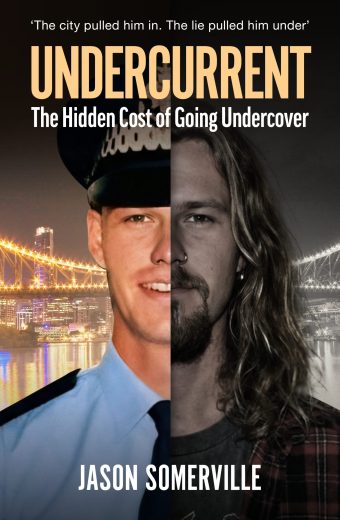
    Undercurrent

    The Hidden Cost of Going Undercover

    Most readers of the true crime genre will be aware of an undercover police sting which has solved a difficult case; the most highly publicized case being the solving of the 2003 disappearance of Daniel Morcombe in 2011.

     However, few readers would be aware of the actual mechanics behind these operations and the dangers undertaken by the officers in the role of undercover agent; a slight slip can expose their identity, putting not only themselves but their friends and family at the risk of unthinkable retribution. Jason Somerville in his page turning debut book “Undercurrent” gives the reader this insight.

    Jason Somerville didn’t set out to be a policeman let alone an undercover agent, however in 1991 he started his training in the Queensland Police Service. Drawn to work in clandestine operations and understanding the dangers, in 1995 he joined the Covert Squad; a role which would require him to move between safe houses, lie to drug dealers and buy ever growing quantities of illegal drugs.

    Understanding that the success of the operation depended on a fragile thread of trust extended to people whose loyalty belonged only to themselves, he took on the persona of Michael Bates drug dealer. Infiltrating drug syndicates generally required him to befriend small time dealers, gaining their confidence to move up the line; a small mistake or oversight could have catastrophic consequences. With a growing understanding of human behaviour, criminal methods and the nuances of policing, he started noticing his own personality subtly changing.

    By the mid-1990s street deals were disappearing as dealers were becoming more cautious about how they sold heroin. There was now a greater separation between suppliers and the actual transaction; some used runners, so that they were never physically caught holding anything themselves. Through informers he started to gain a deeper understanding of the seedy underbelly of the city. 

    After spending two years pretending to be Michael Bates, the author at times had difficulty deciding where Bates ended and he began; undercover work leaves marks. All readers will find Undercurrent a compelling, absorbing, and very insightful read. 

  • Exit .45

    Exit .45

    Ben Sanders has written two previous books in the Marshall Grade series with his trademark style of writing bringing his stories to the notice of crime readers. His characters are well rounded; Marshall Grade has quirky traits which help him focus on details which help him predict the thoughts and movements of criminals. Ben writes simply and clearly, with a storyline and action which is comfortable to follow, while tracking the plot.

    Marshall has a background of working for the New York Police dept. He spent a few years working as an undercover Policeman in New York, which led him to leave the city when that particular case was solved. Now, back in New York, a friend has asked to meet him urgently. He is in trouble. Marshall agrees to meet him at a restaurant that evening.

    Ray Vialoux has changed greatly since last Marshall saw him and there is no doubt, he is greatly troubled. He tells Marshall that he has some gambling debts and the gangsters he has become mixed up with are calling them in. As they sit at their table that night, Marshall sees a reflection in the window of a man with a rifle. He tips the table up into the window, but too late, Ray has been shot dead.

    He feels honour bound to track down the killers and bring them to justice of one kind or another. Immediately he recognises that if Ray is dead, he will be unable to repay his debt, therefor there must be much more to the story. There is many a twist and turn here, but never once does the reader fell that the Marshall’s action are mysterious or illogical.

    Exit.45 is a gripping tale, very well described and sharp, with plenty of action and drama.

  • Drugs, Guns & Lies My life as an undercover cop

    Drugs, Guns & Lies My life as an undercover cop

    Policing is difficult at the best of times; in Queensland in the 1980s and 1990s it was more so. It was both challenging and frustrating, as the police were dealing not only with villains in the community but also with criminals within their own ranks! In his book ‘Drugs, Guns & Lies’, one of Queensland’s most decorated police officers, Keith Banks exposes both the many short comings of this state’s policing and also the political corruption existing at this time.

    As an idealistic 18 year old Banks passed out of the Police Academy and was sworn in as a proud new policeman ready to help make the world a better place. Within a few years and little actual training, he became an undercover officer in the Drug Squad, traversing Queensland to outwit the dealers and keep drugs off the streets, thereby minimizing the harm to the population. Looking back, Banks now believes the undercover agents were just cannon fodder sent into the front line to integrate with criminal networks, buy drugs and organise busts for the more senior detectives to take the credit!

    This committed young policeman soon discovered that the 1980s in Queensland and its police force was a time of contradiction and ambiguity; there was little respect from the general public for the police. With Terry Lewis and his cronies at its head, there was statewide corruption; the author began to question the motivation and competence of some senior officers – he didn’t trust many policemen.

    Although, the Fitzgerald Inquiry exposed a high level of corruption, the author points out that there were many committed and honest police who diligently undertook their daily job and that it’s a great shame that post this inquiry, the general public had an even greater distrust of the police.

    True Crime readers will find this an interesting and compelling read as Banks gives the reader an insight into the day to day operations of the Drug Squad and its undercover agents. By reflecting on the policing procedures and practices of the 1980s and 1990s, he gives the reader a real understanding of the trauma and sacrifice which these agents made to do their job successfully.