Tag: tragedy

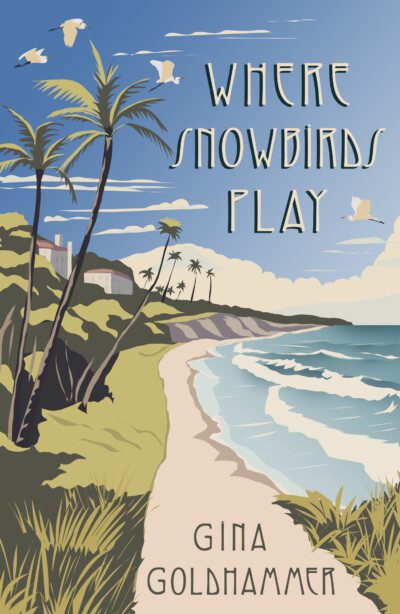
  • Where Snowbirds Play

    Where Snowbirds Play

    Where Snowbirds Play is an intriguing concept based on loneliness, family, intrigue and accountability presented in a manner that creates room for consideration, and captures as a snapshot, the deeply hollow nature of the world today.

    Philip arrives at the Iland to oversee the Institute founded by one of the Islands wealthy widows, Vanessa Vine. He is not there just to work but to follow a trail left by his father, a man who was a womaniser, to try and discover a young woman Hannah and her son, his half-brother.

    As the complex story unfolds, Philip discovers Hannah, now Mrs Hannah Caulfield and her son, down on the beach as he struggles to secure a stranded Hawksbill Turtle. They work together to get the creature secure enough to allow it to be to pulled up to the Institution.

    This sets the basis for the many layered story as Philip and Hannah grow to know and understand each other, he also finds he cares deeply for Jesse, a little boy with many serious health issues who is full of charm, wit and intelligence.

    Clashing personalities, a small community of wealth and entitlement, fractured families and salvation play out as change comes to a structured world; change that is long overdue, instigated by the Institute and a Hawksbill Turtle named Princess.

    As Princess slowly recovers, each member of the community who has come to care and support Princess discover their own pathway to salvation through this beautiful creature.

    Where Snowbird’s Play has been constructed in three parts, all of which capture deep, fragmented emotion, all of which gently bring the many pathways travelled together to a heartbreaking but fitting conclusion.

  • Leonor: The Story of a Lost Childhood

    Leonor: The Story of a Lost Childhood

    Leonor: The story of a Lost Childhood is a brutal, factual and honest account of life in Columbia from both sides of the political and economic divide, written over many years by Paula Delgado–Kling as she recounts both her and former child soldier Leonor’s story.

    Born into a family of wealth and politics, Delgado-Kling grew up spending weekends with her beloved Grandmother Helena in La Sabana, on the banks for the Bogota River. Her life was one of childish wonder, privilege and freedom.

    Leonor grew up in a small farming hamlet in southern Columbia, in a family of far too many children, domestic violence, poverty and hard, gruelling work. She joined FARC – the People’s Army – as a child of eleven or twelve years old, for what she believed would be a far better, richer life.

    Escaping the reality of the FARC, a damaged, drug addicted seventeen-year-old, she struggled to build a new life in the ‘demobilisation centres’ established by the Columbian Government. Over more than 20 years, she slowly rebuilt a life that was different to the brutality of life in the Military Camps.

    In an overheard conversation about Columbia, an opinion was stated that Columbia was a failed State and the women were the silent victims, saw Delgado-Kling return to Bogota in 2001 to meet Leonor; and so the story of obsession, brutality, bestiality, survival, drugs and war mongering unfolds through the eyes of a child, a teenager and then a mother of two daughters.

    Leonor: The Story of a Lost Childhood is contrasting, tragic, painting the life of many who grow up in poverty in countries where the is little or no equality, where guerrilla groups can gain a hold through drugs, terror and manipulation, where central Governments are weak and corrupt.

    It is a story of survival, struggle to regain a life that has meaning, but overall one of sharp contrast that two women from vastly differing backgrounds, but for the chance of their birth, could easily have lived either life during those early years in Columbia.

    Cathartic for Delgado-Kling and in many ways healing for Leonor, this is a story of hope for a better future, even if is only achieved one small step at a time.

    The Notes at the end of the book are well worth reading, as if you only had a passing knowledge of the tragedy that is Columbia, they are well worth accessing.

  • The Tragedy of Madagascar

    The Tragedy of Madagascar

    From the first page The Tragedy of Madagascar is an extremely well researched revelation, not revolution, about a small Sub-Saharan country that should be one of affluence, not one of extreme poverty and considered one of, if not the poorest, country in the world today.

    Nathanial Adams spent nine months travelling the country interviewing people from all walks of life; from people living in the most abject poverty to well cushioned politicians about the current state of the country, how it got into such a mess and where the country may be in future.

    He has used the Military coup of 2009 as the starting point to anchor the research as to why or how a country that has been independent for almost 80 years, has mineral wealth in abundance and an ever growing population, that in itself is rapidly becoming unsustainable, is in such a sad and sorry state.

    Interviewing the disposed former president Marc Ravalomanana and many others, Adams presents a very real look at a country which should have it all, but due to political instability, corruption and poor education, coupled with massive drought in the southern region of this small Island country, along with massive debt to the World Bank, is in very real danger of self-destructing. 

    The subject matter is heartbreaking in extreme; the narrative of Adam’s brings the people and the country alive and shows a small window on a very real humanitarian tragedy.

    What the future holds for his embattled country is difficult to really know, but after reading the facts of the matter, the various viewpoints both politically and popularly, it would seem unless a miracle occurs, nothing good is in their future.

    Can things change is the question, but this is something only the people of Madagascar can control and while to a large degree people remain uneducated, and politics is unstable, with no firm economic partners, the future remains bleak. 

    The Tragedy of Madagascar is one of the few well researched books on this Island country and certainly is one that will be well read by anyone interested in world politics, and the progress or lack of progress, of in the 21 Century, of Democracy.

  • The Shipwreck

    The Shipwreck

    The true story of the Dunbar, the disaster that broke the colony’s heart and forged a nation’s spirit

    It is a delight to read The Shipwreck, an Australian History expansion. The style of writing is informative, while being immensely interesting and descriptive. A massive storm hit Sydney on the night of August 21st in 1857.

    The young colony was always anxious for word from home. Every day they hoped to see ships on the horizon. However, the day after the storm, a beach walker saw the gruesome results of the wrecked Dunbar and its passengers. Word quickly spread but 121 souls were lost that night.

    Larry Writer begins the story of the Dunbar with a detailed description of the Colony at that time and uses a huge number of sources to assure an accurate and correct mood. From the 1820s the British Government subsidised workers and their families to emigrate to the new colony.

    The Colony was beginning to flourish and opportunities to acquire land were being taken up. In the 1840’s and ‘50s, John Capper described Australia as a region, “rich beyond exaggeration.”

    Following on, Writer uses diary entries from people on similar sailing ships to paint a picture of the Dunbar’s voyage. They are fascinating to read with the details providing an intimate awareness of conditions. In one diary entry, a man describes how a fellow passenger died and his possessions were auctioned off. Some of the passengers on the ill-fated Dunbar were traced to families and their life stories were able to be told.

    Reading the Acknowledgements at the back of the book is revealing. Larry Writer was able to locate people who were descendants of those who had knowledge of the ship or the passengers. Dr James Hanson the great, great grandson of the Dunbar’s sole survivor, had stories of his rescue. The Shipwreck is riveting and reveals many facets of our early little known Australian History.

  • Two Women in Rome

    Two Women in Rome

    Two Women in Rome from Elizabeth Buchan immediately transports into another world as the stories of two women, Nina and Lottie, destined never to meet, come together in the most intriguing manner, which has the capability to change the life of Lottie, if only she is brave enough.

    Known for her beautify crafted stories Two Women in Rome is an exceptional work that lays bare the emotionally challenging choices that were often made during and after the years of World War II.

    Lottie comes to Rome; a new bride whose husband Tom, has lived and worked in Rome for a very long time and knows what is what and how things work. Lottie is an historical archivist who has found work at the Archivio Espatriati. She discovers a 15th century painting she is drawn to and as she begins to try and trace the history of the painting, she discovers there is very little known about the woman, Nina Lawrence who gave the painting, along with several boxes of other materials, to the Museum.

    She decides to investigate Nina Lawrence further and in doing so discovers a tragedy of love and passion set again the turmoil of Italy during the second world war, at a time when various political factions were pitted against each other, adding to the horror of war already well entrenched. As more comes to light on Nina’s career in espionage, the more Lottie learns about her husband Tom, his real life and previous marriage. Nobody and nothing is as it seems. How very Italian!

    There are times when Lottie truly believes Nina is speaking directly with her, wanting her story to be told which causes her to begin to doubt everything is being told and when she gets a little too close to the truth, Tom has to ‘fix’ things to keep her out of danger.

    While it is unusual to find historic fiction set in the 1970’s during a period most would consider as the recent past, it works, as Italy, especially Rome, is timeless; history rubbing shoulders with the world of today with true aplomb.

    Told on many levels with more than one story intertwining, the tale of Two Women in Rome is a captivating look into a world that is and once was very, very real.

  • The Family Doctor

    The Family Doctor

    The recent Women’s March 4 Justice marches around Australia have heightened the awareness of violence again women and the fact that there is still much work to be done to keep women safe; a real problem in society. In her well written book, “The Family Doctor” Debra Oswald explores this complex and complicated issue; resulting in a most timely and powerful narrative.  

    Anita, journalist and court reporter and Paula, a suburban family GP, are devastated when their childhood friendship of twenty five years is shattered by the murder of Stacey and her children by their father, in an extreme case of domestic violence. The friends’ inability to prevent this tragedy has resulted in a sense of guilt; the back story highlights the red flags. Paula becomes extra vigilant for signs of abuse and takes the law into her own hands; setting herself up as judge and executioner.  Meanwhile Anita is consumed with the failings of the judicial system to protect women; how to stop the violence and keep them safe. 

    I highly recommend this thought provoking, suspenseful, engrossing book, however some readers may find it a confronting and difficult read. This gripping thriller explores not only the issue of domestic violence but also those of medical ethics and the justice system, while intertwining the themes of female friendship, revenge, grief, new love and resilience. Book Clubs will find this an excellent vehicle to instigate robust discussions around the moral dilemma ‘Can you justify the taking a life to save others?’

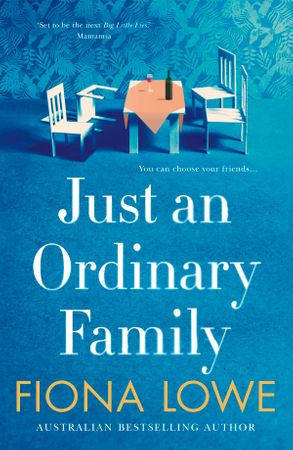
  • Just an Ordinary Family

    Just an Ordinary Family

    If there is such a thing as a blockbuster of a book, Just An Ordinary Family, Fiona Lowe’s latest family saga, could certainly be considered as such, as she has once again captured perfectly a family in distress, as secrets held long finally emerge into the light, destructive, cathartic and devastating.

    There is no short way to write about this captivating book without creating a spoiler alert, so enjoy the story as it unfolds, as you will certainly recognise the characters in those around you, which is why Lowe’s stories captivate, as they are built around real people, real emotions and real situations.

    Alice Hunter returns to the home of her youth, Kurani Bay, heartsore, single, struggling to earn some sort of living with series of casual summer jobs, back living with her parents once again; a far cry from her very upmarket position and life in Melbourne.

    Libby, Alice’s twin has it all: she loves her career as one of Kurani Bay’s Doctors, has a dream of husband who loves her immensely, two beautiful children and a fantastic home. Libby desperately craves another child after the still birth of her and Dominic’s last babe. Her obsession with becoming pregnant is placing a sever strain on her relationship with Dominic.

    Jess Dekic came to Kurani Bay as a teen, daughter of an alcoholic mother, fierce, independent, intelligent and determined to take whatever came her way in life; to succeed and never return to the Bay. She is now a single mother of a joy filled toddler, and despite not wanting to return, realises it is the best option for Leo.

    Karen Hunter, mother of Alice and Libby holds some serious secrets buried deep, scars of her childhood, a deep sorrow connected with her sister and terrified that somehow her carefully constructed family life will collapse. Always a worrier she has spent much of her life overprotecting her beloved daughters.

    When the family structure begins to collapse, it is very interesting to observe how Fiona Lowe has crafted the emotions of the people who have woven a very complex web of lies and deceit, all bound together through love.

    She has captured the very essence of devastation, rebuilding, love, hope and grief as each of the women eventually has to look within to be able to forgive, to rebuild, to accept that life is never perfect and that tragedy can come with hidden blessings.

    A word of warning thought: do not expect to put this book down once you have begun to read it. Just An Ordinary Family makes the perfect read for those who are in ‘lockdown’, or simply are remaining at home and enjoying the moment.

  • Making Peace

    Making Peace

    All of us face tragedy in our lives at some time. If you are blessed like Hannah and have spent a calm and loving youth and young adult hood, it must seem like the world has come to an end. A happily married woman, Hannah was preparing for Christmas when she heard the news that her husband and parents had been killed when a truck ploughed into their car. Having never dealt with grief and loss, the young woman thought she would never recover.

    Luckily, Hannah had a small circle of friends and an Aunty across the road, who kept her from deep depression. The other factor in the young woman’s recovery was a cat that she rescued. Not being an animal owner before, she didn’t realize the cat was about to deliver two kittens into the household. She fell in love with the proud mother and her tiny children and made a happy and safe home for them. They in turn jumped on her lap and cuddled whenever they could.

    One of Hanna’s closest friends was a woman who was married and had young twin boys. Her name was Sam, and she had a wonderful gift for creating artistic pieces which she decided to put on a market stall, with Hanna’s help. This was very successful, and Sam decided to produce more of her own works. However, her domestic life was to undergo a huge adjustment, and Hannah repaid all the support she had received from Sam.

    During this time, a court case was being heard against the truck driver who had lost control of his vehicle and crashed into Hanna’s family car. He was in a desperate way, suffering from depression and separated from his wife and family. Knowing that the truck company who owned the vehicle was at fault for not servicing it properly, Hannah had never taken an interest in the court proceedings. She accidentally met the man and made it quite clear that she held no grudges, and completely   exonerated him from blame. In fact, he and his wife became included in Hanna’s circle of friends.

    The many varied elements in the story come together seamlessly to show that from disaster and tragedy, one can rebuild their life, and although never forgetting her past, Hannah through her caring nature, was able to help others.

    A lovely continuum which draws to a close much of what was left behind in at the conclusion of Finding Hannah.


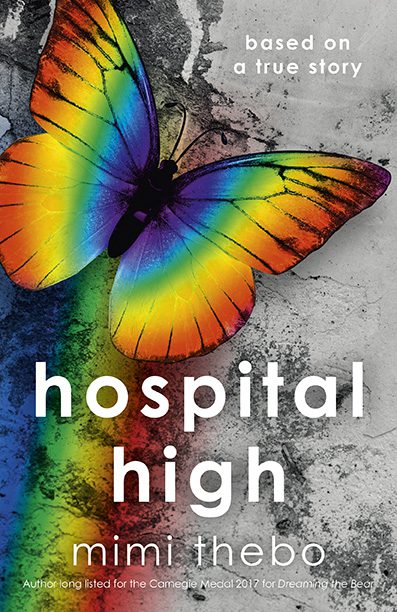
  • Hospital High – based on a true story

    Hospital High – based on a true story

    Based on the life story of Mimi Thebo, this is a beautiful journey, a beautiful story based in truth, and the deep and everlasting courage of the human spirit, and is one all teens should read.

    Coco is pretty mad: she really should be dead, but someone, some interfering someone, had decided that she was worth saving and now, well she was not too impressed. Just when she had a legitimate out from what she considered the horror of her life, which by the way, was looking pretty good from where she stood, well lay actually, a place called  heaven  that is, or wherever it is you go next!

    She has had a pretty rough time of it lately, with her father divorcing her mother, her mother not coping too well and then having to change from a very nice school to the local one which was full of clicky little groups that simply did not want to accept her, going out of their way to make her feel like an outsider.  Coco’s spirit had taken a bit of a battering.

    Kim, the one close friend she does have, is always there for her. On that fateful day, Kim had borrowed her mother’s new car, picked Coco up from Ballet and then they stopped for ices on the way home. Problem was, on the way home Kim took a curve too fast, hitting a Cottonwood tree and catapulting the car down the bank.

     And so the story begins of why Coco was in such a snit in the hospital.  Kim had hit the steering wheel, but Coco had hit the dash with her face and throat, breaking her larynx, which was not at first noticed when their friend Bobby found them wandering around on the  side of the road, and took them home to Coco mother.

    Once the dust had settled, she woke up to a world of pain, to a life that had changed totally, a life that would never, ever be the same again, having to face challenges and pain undreamed of, both medically and socially. Normal was having friends, working towards a professional career as a singer, being accepted into a strange new world of school society: that was before. Now normal was simply surviving another day, another life lesson, another acceptance.

    Meeting a group of teens in hospital, some in worse condition that her, gave Coco hope of a future and serious, unconditional friendship when the going got really, really tough.

    This is the story of growing up, finding and discovering true courage, learning to look below the façade to discover who your friends are really, and what, in the final wash up that comes at the end of high school, matters the most in life.


  • The Crying Years: Australia’s Great War

    The Crying Years: Australia’s Great War

    As Australia approaches the Century of the end of the First World War on 11 November 1918,  when Germany agreed to an Armistice, a day now known as Armistice Day, if is fitting to take time to step back a little from the emotion which is slowing building, to spare a minute to reflect; not just on the lives lost, frequently so needlessly, but to the cost of  ‘Australia’s first war’, at least on the international front, to the cost to the many, many people who were left to manage somehow, and a society which would remain changed forever.

    In compiling and writing The Crying Years, Peter Stanley has over many years, gathered together a volume of work that should be mandatory reading for anyone, whom in anyway, has an interest in War, the fall-out in the broadest possible sense and changes which follow, not just in society but in the shadow that is always there, that somehow, never seems to go away.

    Stanley has broken the War years into sections from 1914 to 1919, the year the Treaty of Versailles was signed on June 28th, 1919 drawing an official conclusion to four horrific years of destruction and death, which helps to place a focus onto some of the many issues the people in Australia had to contend with, as well as the constant demand for more men to send to the front, wherever that may have been at the time.

    Stepping back in history, 1914 was a good year in the young country of Australia. It had the highest wages, an excellent standard of living, good health, a good arbitration system and women had been given the vote, showing the world that Australia was a very progressive, prosperous country. There were still some serious downsides to this economy such as rural hardship, the ‘white’ Australia policy was alive and well, and in spite of all the great publicity to the contrary, slum areas existed in the capital cities.

    Once War was declared, via a declaration in Australia on the morning of 5 August 1914, world events immediately began to change; to many it was almost a relief, as it had long been anticipated that this would more than likely occur in Europe and that Australia ‘would be ready’ to support King and country. And so it began.

    As the years unfold a visual history is unwrapped, thanks to depth of the National Library of Australia’s archives which does more to illustrate what was going on at ‘home’ than thousands of words could possibly achieve.  Peter Stanley has chosen well from this massive resource to illustrate via press cuttings, poetry, cartoons and photographs of the day, to show World War I as captured and told from the ‘home front’.

    It is pointed out that the loss of what would be 60,000 men on the battlefields of Gallipoli, Flanders, Fromelles, Passchendaele and Villers –Bretonneux was a tremendous blow, but equally the bitter fight for survival being undertaken in Australia was as devastating.

    Men remaining in Australia had to make some incredibly difficult choices; to enlist, get conscripted or do none of these things and be branded a coward. Women had to manage a home, children and cope with severe shortages of a food and money, while all the time mourning the loss of a loved one, a family friend or neighbour.  Bad news was delivered by the Minister or Vicar; too see this man about his business was a common and dreaded daily occurrence.

    Drought and bushfires caused more problems as the already struggling country was forced to face ever more stringent rationing. Conscription was a divisive issue, with communities struggling to remain cohesive. A pandemic pneumonic Influenza outbreak in 1918, which became known worldwide as the ‘Spanish Flu’, caused serious quarantine restrictions, but despite best efforts, more than 12,000 Australians died.

    And when the ‘War Was Over’, as the old song goes and all the men returned home broken in body, mind and spirit what then! Once again the communities had to change direction, learn to understand, manage and put the pieces back together, yet again.

    In this highly visual presentation, as well as extremely enjoyable reminder of our early history, it presents in flamboyance, a time which, without the reminders of what we, Australian, have sacrificed over the years, this period in history, this cameo of the other side of war, will fast fade from everyday memory.

    The last of the ‘Diggers’ who served in WWI, Alan Campbell died in 2002, at the age of 103 years and would have been perhaps not best pleased to see the recent adulation of a time and place, that he referred too as ‘the fiasco of Gallipoli’, is receiving.

    What was once a household name and grief has once again become almost bigger than the event.

    World War I was the beginning of so much societal change and the end of the naivety of a young country, it created the ANZAC legend and the Diggers who fought in their own indomitable way. Thanks to many men taking photographs and sending them home, an archival heritage that will possibly never be equalled as far as a record of world events, has been created.

    Overall, this retelling and showing of the days of 1914-1919 underscores that war is a complex piece of machinery, which almost 100 years on still is throwing its shadow over modern Australia.

    “Lest we forget”……….