Tag: theatre

  • City of Girls

    City of Girls

    Vivienne Morris, at age 95, decides to tell, and what a life story she had to tell. her life story. City of Girls focusses on issues such as female sexuality, feminism, loyalty, and relationships. As a member of a wealthy, social family, whose disinterest in their daughter is apparent, these were subjects that Viv had never considered. In fact, she had not thought about much, except love for her grandmother and her sewing machine.

    After failing at College (she never attended a lecture) Viv is sent to her Aunty in New York City. Aunt Peg owns a rundown Theatre which showed productions of banal musicals, starring dancing girls and their “Wobbly bits.” It is here that Viv sews costumes and meets the other show girls, who live with the thought that life is fleeting, so experience everything now. They kindly arrange for her to lose her virginity (to a gentleman) and party hard every night. Drinking and partying and sleeping around become part of their nightly routine.

    A famous actress Edna, who is a friend of Aunt Peg’s, comes to stay. She has just heard that her home in London has been destroyed in the Blitz.  Edna is persuaded to star in a new play which becomes a great success and Edna takes on a mentoring role for Viv. She begins to teach her the “Rules of Life”, which lasts until Viv makes a terrible choice,  betraying Edna, who calmly tells her that she is worthless and will never amount to anything other than ordinary.

    Viv moves home in a daze that lasts for almost a year, then decides to return to New York City on her own. Meanwhile, World War Two has swept America into its turmoil, and we find our young woman working at the Navy Barracks. After the war, Viv moves in with Marjorie, from her theatre days, and together they work and form the family that Viv will always have her loyalty.

    City of Girls is hard to put down as it will speak in many ways to most women.

  • Black is the New White

    Black is the New White

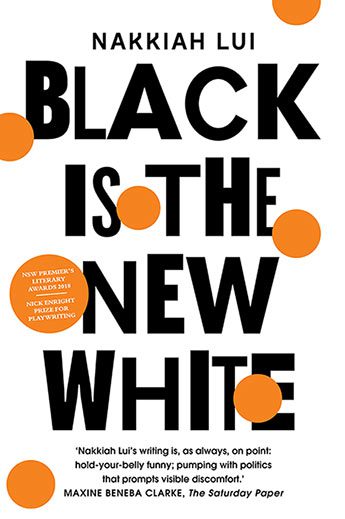
    Nakkiah Lui’s play, BLACK IS THE NEW WHITE has been performed in Sydney, Melbourne and will be in Queensland soon. There have been accolades given to this new young playwright for her sharp wit, her clever insights and her promotion of the huge issues of racial inequality. The author is a Gamillaroi and Torres Strait Islander woman from Mt Druit. She developed a love of reading from her grandmother and wanted to write for a purpose. She found it empowering that people found a value in her voice, and this is shown in her play.

    Reading this play is comfortable, as it is well explained and set out. The humour in situations and speech is sometimes subtle and sometimes overt. When the young couple get caught out in the nude by their family at Christmas time, the horror and hilarity are evident. The title of the play suggests that nothing is either black or white, which is especially so at Christmas time with extended families gathering together.

    However, this is no lightweight skit. There are many references to politics and past times. Aboriginal affairs are brought to the fore, with questions asked about a recent law passed, which will disadvantage Aboriginal people more.

    The first character we meet is Charlotte, an Aboriginal woman who has become a lawyer with a brilliant career ahead of her. She has fallen in love with a white man, Francis, who is a modern composer of music, without a job. Her sister feels that it is the duty of the sisters to maintain their race and marry a man from their culture. Rose, Charlotte’s sister, is avoiding pregnancy for as long as she can. The girls’ parents are horrified when they find out that Francis’s parents are coming for Christmas Day. They are on opposite sides of politics with many a harsh word between them.

    The dialogue and fast repartee are witty, as the two adversaries lock horns around the table. Many issues are raised, and some solutions are posed. For a while, everyone is involved in the melee, but then some step back and thoughtfully put forward suggestions. This is an educational, funny and insightful play to read. Hopefully, we look forward to more humorous, thought-provoking writings from this young author.

    This idea for the play came about when Nakkiah was reading the Census and found that the Aboriginal community has the highest percentage of interracial marriages. It is indeed thought provoking.

  • The Floating Theatre

    The Floating Theatre

    Twenty years before the American Civil War began, there were slave catchers based along the Ohio River. This river was a natural border between North and South. It was common for runaway slaves to attempt to cross the river to the North shores, where, if they were lucky, they could escape slavery. Rewards were paid to slave catchers who intercepted these runaways.

     Martha Conway has set her Historical novel in 1838. Her central character is a young woman called May Bedloe. May travelled as an assistant with her cousin, a performer, until she was asked to leave. So she found herself a job on a flat boat, which was a Floating Theatre on the Ohio River. The performers and the captain lived together on the boat, rehearsing their plays, performing at each place they tied up for the night. The characters are well rounded:  May is an unusual person, who is direct and honest, a talented seamstress, who attends to the details of the costumes, as well as playing piano for the show.

     Because of a previous debt, May is drawn into the world of helping slaves to cross the river. Her job is to take the rowboat and cross the river to collect a slave at night. She must do this without anyone knowing, to avoid the slave catchers when she arrives back to the North shore. The dangers to May and the slave are very real, and when she discovers her first “parcel” is a new born baby, she is determined to see it survive.

     The happiness May has found in her first real home is tempered with the ever present danger of being notified that there is another parcel awaiting her. The fascinating world of the theatre, and the characters whom perform for the riverside audiences, keep us entertained; while May and her superb stitching ensure she stays a valuable member of the cast. The people on shore go about their day to day lives, without much thought of the stories of torture and enslavement that occur across the river.

     The author has woven a wonderful tale around the lives and the times of the people in this story. May is an unusual and endearing character, who has never understood guile, and we share in her fears as she rows her tiny cargo to the other side of the river. Martha Conway has captured the sentiments of the times, as well as the activities at this particular place, using historical fact to authenticate her story. From people who believed that slaves, if freed, would ruin the economy, to compassionate thinkers, we see the issues of the times.

  • Rose Campion and the Curse of the Doomstone

    Rose Campion and the Curse of the Doomstone

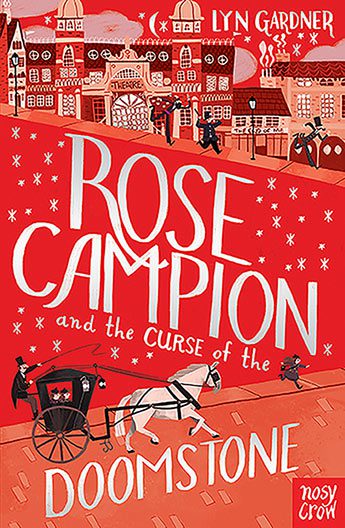
    Set in London in the days of horse and carriage and popular Music Halls, this is a murder mystery tale with a twist. The main characters are young adults who have developed a strong friendship and loyalty to each other. The Mystery takes place in Campions, a Music Hall which is suffering from low attendances and is looking forward to Gandini the Magician coming there to perform. Aurora, Effie and Rose, are the three girls who are always at Campions, and perform various acts as well.

     Aurora, previously left as a baby on the steps of the Music Hall, has just discovered her real father, who is delighted to acknowledge her. He is a Lord, and a fine actor. Rose was also an abandoned baby and was left for Thomas, the owner of Campions, to find. He raised her as his own child, and she is firmly entrenched in the theatre.

     One night when the Great Gandini is opening his magic act, a beautiful young woman comes into the theatre wearing a magnificent blue diamond. The Doomstone, as it is called, is being auctioned, and Lydia, a newcomer to the scene, is promoting it. As the lights go down and the magician begins his miraculous performance, there is a scream. Lydia is bleeding and the diamond is missing. What pandemonium breaks out! The minders who were right behind Lydia frantically search everywhere, but cannot find a clue.

     Scotland Yard is notified, and a Police Inspector comes to investigate. There are many characters around a Theatre, and many people who could benefit from stealing the diamond, but where does one begin when it seemed to just vanish! Was the Great Magician, who was performing at that moment, clever enough to spirit it away? Or was it a cunning plan by some suspicious new employees? Rose knows she will have to use her advantage as an Insider, to help solve this extremely complex and dangerous case.

     Gandini’s new assistant is murdered, and one of the stage hands is beaten badly. Things are becoming desperate. The Police Inspector suggests that the case is lost with the death of a witness, but Rose knows she must persevere for the sake of her theatre family.

     This is quite an accurate depiction of the times, and the characters. The language is authentic, “Someone cut ér throat to prig that gem.” The characters with waxed handlebar moustaches, and pocket watches also talk of the era. This is a comprehensive tale, which covers murder, mystery, imprisonment, poverty, and the hub bub of life in London at this time.

  • Harry Potter: The Character Vault

    Harry Potter: The Character Vault

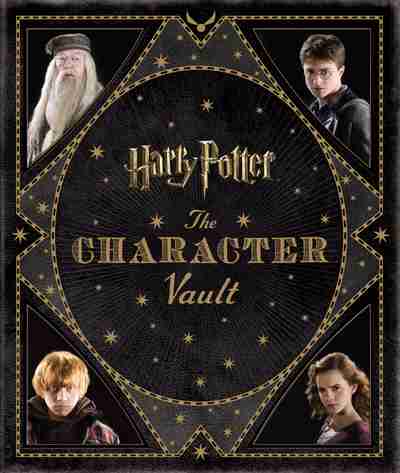
    The beloved characters of the Harry Potter series created by JK Rowling have become part and parcel of so many children’s and now adult’s lives, as they evolved from words on the pages of a book to the silver screen, bringing the written word too magnificently, believable life.

    How this amazing collection of stories evolved into the magical world of cinema is incredible as the creativity required over the eight movies that have been made, has set the bar so very high for further creations based in the magical world of faeries, magicians, wizards, make-believe and magic.

    Collated in a wonderful book to treasure, we are invited into the world of make-believe and how, by collection and combining resources and talent from many sectors, the screen magic of Harry Potter is born.

    Each of the characters is represented with beautiful full colour plates commencing with Harry Potter himself. A small synopsis accompanies each of the characters as well as detail on the creation of each of the costumes represented. One of the more fascinating details to accompany each of the characters wardrobes is the manner in which the costumes have been devised to set the scene, to create the ambience of time and place and awe.

    Wonderful snippets of information from the designers and actors adds an extra layer of information to this amazing world of costume and makeup, along with the props that are used and the amount of experimentation, time and trial required to discover the correct item to be used or worn is remarkable. Check out just what goes into the making, design and usage of the wands and the experimentation required to get them just right.

    Marvellous snippets from many of the actors involved help you understand how they transform into Professor Snape, Madam Hooch, The Grey Lady and Kingsley Shacklebolt to name just a few of the many.

    Divided into sections it is easy and fascinating to follow the journey from the creation of the Hogwarts Students to Families and all the bits and pieces that go into creating something so otherworldly that it comes to life, comes into reality and remains so!

    In many ways it is a book that is a great reference tool to be used by people who are considering and interested in costuming, make-up, props and behind the scenes in the world of theatre and make-believe.

    If you are simply a Harry Potter fan this is a definite addition to your book shelf.

  • Creating The Illusion: A fashionable history of Hollywood Costume Designers.

    Creating The Illusion: A fashionable history of Hollywood Costume Designers.

    Who would ever have thought the world of costume design could be so political, dangerous, fascinating and sumptuous all at the same time, but it was very much so at the dawning of the film era, an era that has gone from the silent screen and costumes designed to provoke, tantalise and enthral, let alone set the standards for glamorous fashion throughout the ages.

    Complied by Jay Jorgensen in a desire to share his fascination with the often unsung heroes behind the glamour of the silver screen, the costume designers beginning in 1909, when William Selig began to make films in Los Angeles, now have their day and are able, in so many ways, to tell their stories.

    1909 was the beginning of the movie industry we know today but costume mattered little to these early pioneers and it was not until DW Griffith realised that wearing the same outfit, usually owned by the star, and in every scene was compromising the integrity of the film being made.

    He was the first filmmaker to reinvest in his costuming but also hiring a designer to create the costumes for the production. As you turn the pages of this fascinating look at the other side of Hollywood you will enjoy not only the stories of the designers but little known  facts about the stars whom wore the costumes, the life and times of a budding industry.

    Beginning at the Silent Era of film these designers pushed all the boundaries prevalent in society during the post war years, right through until the Wall Street crash, which not only saw a change of societies attitudes but a craving to move on from the excess of the “Jazz Age’ into something that was more fitting of the times and the traditional values.

    The Golden Era of Hollywood saw the birth of Haute Couture designers making a name for themselves, not just on the runways of Paris but also on the Hollywood screens. Designers such as Coco Chanel were enticed to design for producer Samuel Goldwyn, a coupling of talent that was sadly destined not to last. But the simple, well cut styles created by Chanel did have a long lasting effect on the ladies of Hollywood as they struggled to learn and understand that simple, yet elegant style so beloved of Chanel.

    Cecil Beaton dressed Audrey Hepburn in her unforgettable role of Eliza Doolittle in ‘My Fair Lady’. As a designer for Hollywood blockbusters he was already well known as he was already designing for a variety of theatre presentations from Revues, to ballet and West End Theatre productions.

    The Modern era heralded in change once again and a new range of designs to suite the era; those such as Norma Koch, Theodora Van Runkle and Bob Mackie designed and created, not just for the screen, with their style and flair moving into the fashion scene readily. Outfits such as those worn by Faye Dunaway in the Thomas Crown Affair’ became the accepted norm for women’s fashion.

    The final chapters are more in the nature of a Question and Answer with the various designers of the more current movies which show a fascination with their craft, the actors they dress and the movies. This also gives a greater understanding of what creates the art of excellent costuming and costume design, as well as an insight to the actors who wore the various outfits which helped create memorable characters such as Capitan Jack Sparrow, Willy Wonka,  Danny  Zuko and Sandy Olsson of ‘Grease’ fame, and Meryl Streep’s character Sophie in ‘Sophie’s Choice’.

    If you are into fashion, movies, glamour, and design or simply love to read about the old days of Hollywood, glamour, a lifestyle long gone, and the people who remained, in many cases the unsung heroes of the silver screen, this is a book that you will enjoy for many, many years.

    From the early beginnings of the outrageous years of the ‘twenties’ to modern day creativity, the evolution of Hollywood, fashion and film makes far more fascination reading than any tales created for the silver screen.

    From the magnificent to the mundane there is something on every page to keep you interested, intrigued and fascinated.