Tag: technology

  • Behind the Screens

    Behind the Screens

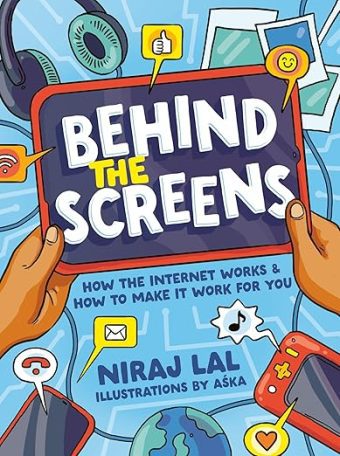
    Behind the Screens How the Internet Works & How to Make it Work for You

    Younger and younger children are being given their first personal mobile phones, however often this does not come with the appropriate instructions on how to use this much wanted device sensibly and safely.

    The reading and discussing of Dr Niraj Lal’s wonderful, well researched little book “Behind the Screens How the Internet Works & How to Make it Work for You”, should be mandatory before this device is put into the hands of a primary aged student as it not only provides the reader with valuable information about the workings of the internet, but it also lends itself to the discussion not only of the benefits of the internet but also on how to use it sensibly and responsibly.

    This illustrated guide empowers children to navigate the vast online world with confidence, by providing them with the knowledge they need to understand how the internet works and who and what to trust online. 

    Although young people aged 9-13 years are confident users of the internet, they generally have little understanding of things that are happening behind the screens which influence the behaviour of the user. Written in age-appropriate language, the author alerts the young reader to how the technology is using the user too.

    This is an excellent text to be used in an educational setting where students can explore the statistics provided in a safe and non-threatening manner. Young users of the internet often believe that they are invincible and that the statistics provided in this must have guide don’t represent them; they are reluctant to accept them as they believe that they are exaggerated.   

    Adult readers will find that this informative little gem will demystify the internet and enhance their understanding of its workings.

    A must read for all users of mobile phones and the internet.

  • A New Map of Wonders A Journey in Search of Modern Marvels

    A New Map of Wonders A Journey in Search of Modern Marvels

    A Map of New Wonders: a Journey in to the Search of Modern Marvels to quote the author, ‘this book is an attempt to inspire and share curiosity and wonder, …’ (Henderson 2017: 21).

    The book begins with Henderson recalling a moment of wonder he experienced one morning in his kitchen, which he writes inspired him to think about wonder itself. This prompted him to explore and investigate many of the questions and elements surrounding wonder and thus inspired the book.

    The book is divided into seven chapters with titles including ‘The Rainbow and the Star: Light’ that focusses on all aspects regarding the phenomena we know as light as well as rainbows; ‘Edge of the Orison: Self’ which explores the three stages of life as told in the riddle of the Sphinx; and ‘A Hyperobject in the Head: Brain’ which discusses the incredible and complex piece of engineering that is the human brain.

    Each of the chapters delves into religion, science, philosophy, art, history and technology to explore and interpret the various wonders. Throughout the reader is shown where wonder can be found and takes every day phenomena and reveals how extraordinary and unfamiliar they really are. This makes for an informative and interesting read.

    While this is definitely the book for those of a scientific background or who possess a scientific curiosity, it is also a good read in general. For a non-fiction book, it is an easy read that is factual in its detail but personal in writing style as it is filled with the author’s personal anecdotes that detract from the tedium of facts and figures.

    Filled with interesting and fascinating diagrams that inform and provide greater detail within the chapters.

    Overall this an intriguing read that inspires the audience to look for the wonder in our everyday lives. Well deserving of its glowing reviews.

  • Raising Your Child in a Digital World

    Raising Your Child in a Digital World

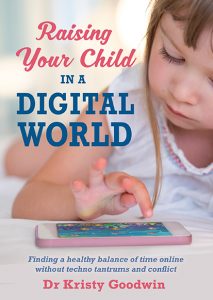
      How to raise your child in a digital world is one of the most posed questions I hear from my own family and other concerned parents and grandparents. Dr Goodwin has responded to an area of great concern with this book which covers many areas with a low key common sense approach. She reveals the astonishing figures that suggest our children aged between 0-8 years are spending nearly 2 hours a day watching screen media. Older children, aged between 8-18 are watching over 7 hours of screen media per day. The author has given us a recommended table of times for children to use digital media.

     The Doctor then explains the child’s brain function and how neural connectors are formed at an early age. These develop through experiences with the surrounding environment. Some of the ways in which technology can enhance young children’s learning, are by, “Catering to visual preferences, Compensating for emerging skills, and Providing instant access to information,” therefor the parent needs to be aware there are benefits to digital learning, but also needs to understand children’s development to be able to implement the safe amount and type of viewing for that age.

     Sleep is another aspect of this book that is looked at closely. There are considerations, such as falling asleep with a device on and how that impacts on the quality of sleep. Reading e-books before bed is again a matter of careful selection. The screen should be dim, with less blue light exposure and the distance between the child and the device should be greater. Sleep patterns and needs are discussed carefully and it is stressed that good sleep patterns need to develop at this time.

     Children’s play is a hugely important part of social life and development. So time needs to be managed between types of play and selected devices. Educational video games provide good stimulus for learning and add value to learning. But playing with toys, or games with friends, is a learning experience that will hold the child in good stead for life. Within this balance, the games they play need to be carefully selected. For example, the app about the human body, and the app from the South Pole, (Directly linking Father Christmas), are both valuable and informative for a child to use. Developing close relationships with family needs time, so meal times become an important gathering.

     Another helpful aspect of this book is the topic on older children’s addictions. Many countries consider the addiction to be a major health threat. It seems that research shows that children feel more powerful, respected and valued by others, while using their screen media. The author has suggested a variety of strategies to help wean these children off the treadmill they have chosen and to cut back on time spent on devices. She also suggests that the bedroom be a media free zone.

     In this new age, all parents, careers and grandparents, need to understand the effects of digital media on the child’s growth and development. This is an easy to read, informative book that should be in every home and Kindergarten.