Tag: tea

  • The Tea Ladies of St Jude’s Hospital

    The Tea Ladies of St Jude’s Hospital

    Joanna Nell has taken the grey and dreary out growing old and created a range of books around the idiosyncrasies associated with, let’s face it, growing up. The Tea Ladies of St Jude is her fourth book which shines a light on what is considered as family and what it is to make a friend, regardless of who you are, or your age.

    Hillary and Nancy are siblings with the full range of sibling rivalries still alive and well, even though they are now well into their older years. Hillary married an entrepreneur and lived a life of wealth and privilege, whereas Nancy stayed at home, faced a failed love affair, looked after their parents and helped run their father’s business.

    The anchor of Hillary’s life is her position at St Jude’s as the manager of the tea shop within the hospital, which has a proud record of fundraising for those essential extras, always required to brighten the life of the patients and their families.

    Joy is the assistant who is as flamboyant in her approach as Hillary is traditional, which often causes conflict between the two, but as volunteers are hard to attract Hillary appreciates she is lucky to have any help at all. A new volunteer is due to commence at the Tea Shop, who is a daughter of a resident St Jude’s Doctor.

    Chloe arrives in flamboyant a style of dress as Joy, just many years’ younger. She has her own personal demons to overcome, the main one is she does not want to be a Doctor like her brother and sister and parents, she wants desperately to become a photographer, go to art school and do anything that does not involve blood or bodily fluids in any way.

    The Tea Shop forms the basis for an unlikely friendship to be formed, a cause to be fought for and a huge understanding that life is to be lived, letting go has to happen and sometimes, standing up for what you believe in, is the only way forward.

    One of the true joys of reading Joanna Nell’s work is that her characters are all so very real: in each one of the people in this book, from the tea ladies, the patients, the staff and the people who come into the Tea Shop, there is someone to whom we can all relate or have within our own family units.

    Heartwarming, funny, poignant with a thoroughly entertaining plot The Tea Ladies of St Jude’s Hospital is a true feel good story based in the power of love, acceptance, kindness, and believing in yourself, even if it does come a little later on in life.

  • Tea & Honesty

    Tea & Honesty

    Heartfelt conversations. Lessons learned. Stories shared.

    Jules Sebastian in her first book Tea and Honesty describes herself as a quiet shy child, who grew up in a loving family who were regular church goers. Church was where she met her future husband Guy, whose family began attending the same church when Guy was twelve. What began as friendship blossomed into love and they married in 2008.

    Guy won Australian Idol in 2003 which catapulted Jules, reluctantly into the public eye. Jules admits she struggled at first with the public perception; however she has emerged as an intelligent, caring young woman with empathy for her fellow human being. Jules has transformed into wife, mother, philanthropist, stylist, public speaker, an interviewer with her own program and now author.

    Tea and Honesty is part biographical and a big part insightful information on living our lives to the fullest, helpful advice from those well known and not so well known whom she has interviewed, always beginning the interview with a cup of tea, the universal conversation starter. Jules adds her own life experiences to the book with candour and vulnerability laced with her trademark warmth and humour: and most definitely honesty.

     A user friendly book, you can read from cover to cover or as a self-help book to help with the daily trials of living when we encounter grief, passion, fear and guilt: just some of the subjects she covers so beautifully with her chatty narrative.

     Tea and Honesty could be considered as a good friend as I imagine Jules would be, as you enjoy a little peek into the busy and productive life of Jules Sebastian.

    Remember as Jules says be kind, always be kind.

  • Steam Australia: Locomotives that Galvanised the Nation

    Steam Australia: Locomotives that Galvanised the Nation

    Steam trains and Tim Fischer seem to be a complete part of each other as from a young age, Fischer fell in love with the huge steel dragons of the railways, watching with rapt attention the South West Mail passenger train into Narrandera from Sydney, bringing to the small town the all-important mail: The train was five carriages long, had a louvred freight wagon and Guard’s van.

    Apart from the passengers the train was also bringing the papers from Sydney, only a mere 36 hours after publication, doing what trains have always done and continue to do, connect remote areas with Cities and towns, providing and maintaining that all important connection that contributed to development of the Industrial age in Britain and became, in the fledgling country of Australia, an all-important lifeline for goods, people and expansion.

    Steam trains and their replacements, the not so glamorous workhorses, Diesel engines, have held an incredible fascination for everyone since their inception.

    In this comprehensive volume on the ‘Locomotives that Galvanised a Nation’, Tim Fischer has lovingly shared his knowledge in a body of work that pays tribute to a bygone age; an age that has been kept alive by people such as he, aficionados of the era of Steam, as they  have over many years, loving restored and documented so many of these beautiful, majestic pieces of engineering, leaving a legacy for the generations to come.

    The first three chapters tell the important story that rail and steam played in the development of Australia from its arrival in 1854, when the Directors of the Melbourne and Hobson’s Bay Railway Co placed and order for the very first steam locomotive, which was, as it was to be built in Melbourne, an engine that would be a stop-gap until a Stephenson model arrived from England.

    Known as Hobson’s Choice, the engine was so successful and was proven to be a mighty piece of engineering. This important step was to see the network of the railways expand rapidly and when gold, copper and iron ore became such vital factors in the economy, rail spread even further to allow the exporting of such valuable resources to be faster and far more economic.

    As each of the States developed the rail links provided the lifeblood of the Nation. Perhaps one of the most historic events, amongst many was the completion of the East West railway linking Western Australia to South Australia, which was completed eventually at Ooldea in 1917, ending at Kalgoorlie, where people enroute to Perth would have to change trains.

    Many South Australians living in remote regions remember with great fondness the ‘Tea and Sugar train’, so vital to their welfare, along with the ‘Ghan’, providing work and an important link to the top end of Australia, for many, many years and now serving as one of the great attractions for tourism in South Australia, albeit now accomplished with the use of Diesel engines.

    Thanks to the National Library of Australia and the comprehensive Buckland Collection, the visual aspects of this massively important component of Australia’s history is presented in true style, with so many wonderful photographs, time tables, schedules and other memorabilia spread throughout the pages to present a comprehensive and fascination look back at a time when Stream trains were the vital links through drought, hardship, War and underpinned the burgeoning economy of Australia.

    Tim Fischer has created with love and respect, this impressive tribute to the time of Stream and the people who made it all possible. Steam Australia – Locomotives that Galvanised the Nation is one very collectable book all train lovers, spotters and anyone with an interest in  history will relish.

  • Teatimes: A World Tour

    Teatimes: A World Tour

    Helen Saberi takes us on a world tour with a delightful difference in Tea Times, as she invites us into the genteel pastime associated with not just supping a delicate brew of tea in a fine china cup, but the more basic and down to earth desire to eat something warm and delicious on a cold winters day, a delicate pastry or two with friends and the many, many layers that have traditionally gone to create the enjoyable and pleasant pastime of, taking Tea.

    Every culture, every country has its own version of Tea Time which stretches back to the Chinese, a race who had long cultivated and enjoyed tea. It came to British shores in 1650 via Dutch trading companies, but due to the high cost was only enjoyed by the wealthy. Eventually the cost decreased but not before much political debate had ensued. John Wesley in 1748 argued that it gave rise to ‘numerous disorders, particularly those of a nervous kind’, whereas Dr Johnson of Dictionary of the English Language fame celebrated drinking tea, by doing so, 25 times per day. The Scots declared it a greater evil than Whisky!

    Tea came to Russia in 1689 when the Treaty of Nerchinsk was signed between Russia and China; the Tea Road, or Great Tea Route was established and from there the custom spread into Iran, the Middle East and Turkey, countries that had long been accustomed to drinking coffee.

    As the drinking of tea became more popular and affordable, so too did the range of traditions and rituals associated with the ‘taking of tea’, each particular to the country and the culture. China, with a long history of taking tea, traced back to the Tang Dynasty (AD618-906), developed the custom of Dim Sum or Yum Cha. Japan refined the art to an elaborate tea ceremony with the associated meal known as cha kaiseki. The Koreans and Taiwanese developed their own specific ceremonies, which in the modern world of fast food, has led to the quirky Bubble Tea trend!

    The British took their tea culture on the road as far afield as Australia and New Zealand and into such far flung regions as Patagonia, courtesy of group of persecuted Welsh people who were looking for a country where they could practice their religion and speak their language. They founded a colony in the Chubut Valley with now more than 50,000 people claiming Welsh decent.

    But let us not forget India, where green tea had been well known since the early 17th century for its medicinal properties, a country which was eventually to become established as a tea growing nation, in an attempt to break the Chinese monopoly and lower the high cost of this popular drink.

    For purist who enjoy serving Tea in style there are a collection of some of the traditional  recipes that were often served with the hosts choice of brews such as Tea a la Russe (Russian Style),Masala Chai ( Indian) or if you like Qymaq Chai served in Afghanistan for very special occasions. A selection of sandwiches, cakes and pastries with delicious names such as Petticoat tails, Fat rascals, Tea Kisses and such like which can be served with plain black tea, tea with milk and sugar, tea with a slice of lemon or simply green tea, as you desire.

    Helen Saberi has created a wonderful collection of facts and fancies, as well as a few fantasies, covering all aspects of Tea and tea drinking that will be treasured by, not just lovers of tea, but anyone who has an interest in history and all the quirky bits and pieces that somehow end up becoming a tradition.

    TeaTimes is jammed packed full of the most fascinating and enjoyable facts about the what is today considered as a ‘humble brew’, so readily available to all and available to be consumed by lovers of tea on a daily basis, which make this a most enjoyable book to savour while enjoying a ‘cuppa’.


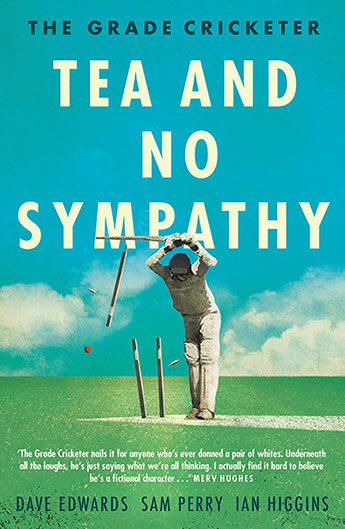
  • The Grade Cricketer: Tea and No Sympathy

    The Grade Cricketer: Tea and No Sympathy

    This is a sorry tale and all to true, which anyone who has ever been inside a change room will all too readily agree. 

    The cricket change room, until recently, was the providence of the male: a place inhabited and immersed in a strange culture only able to be related to by those stalwarts who have all but given their lives, in the name of Grade Cricket. 

    ‘Big Fella’ has given his all, his youth, his career, or at least his University studies, to the game. His game is more often off than on, his post-game blood alcohol levels frequently higher that his batting scores, but he lives and breathes for the cricket whites and the game played out every weekend; the mateship, the after game team bonding, along with the ferocious hangover after the weekend. 

    But there comes a time in his life where he is forced to make a choice, remain as a 30 year old cricket yobbo, or pick up his flailing life and attempt to establish something like a reasonable future. His girlfriend has gone to Guatemala without letting him know, but telling him, via Facebook, that he needs to get a life.

    As nothing seems to be gelling from within in Australia he decides to make the move to Britain; move away from his mates and give up cricket once and for all, but somehow ends up playing for a local team, in his first love, cricket.

    He very soon discovers that yet again, cricket seems to be consuming his life, his studies are on the back burner and life somehow, is beginning to seem pretty much the same as it was in Australia. Nothing much has changed. 

    What does it take to make the ‘Big Fella’ discover that there really is more to life than cricket and that strangely enough, if you get it right you can really have it all – cricket and a life!

    Each of the characters who populate the pages of the book, as well having nicknames such as Nuggsy, Jonesy and Bevo, have real life personas which can recognised by anyone who has ever graced, or not so gracefully, inhabited the change room.

    Therefore, it could be seriously considered that this humorous, tongue in cheek look at cricket from the other side is perhaps not so fictitious after all.

    What does the Grade Cricketer really have to do to consider life worth living? Well firstly, consider reading this book!