Tag: Tasmania

  • The Captive’s Song

    The Captive’s Song

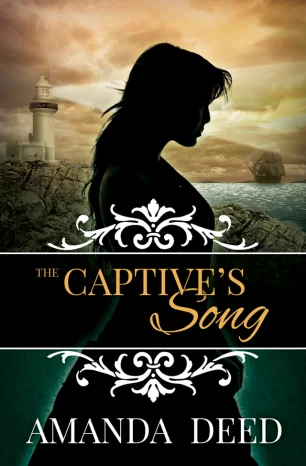
    Transportation of prisoners from England commenced in 1788 and continued to Van Diemen’s land (Tasmania) at least until 1853. Of the 164,000 convicts transported approximately 25,000 were women. Award winning author, Amanda Deed has drawn her fictional women characters from real women’s stories and their suffering at the hands of a brutal penal system.

    Charismatic Olivia Cruikshank, who was transported for six years for a petty crime to Van Diemen’s, has lost all faith in mankind. Although popular among her fellow convicts incarcerated in The Female Factory’, she trusts few and is wary of most. Initially she is very suspicious of the new staff member Michael Reeves (Micky), who treats the women very differently from the long term existing, sadistic jailors. 

    Believing she has no family and a bleak future, Olivia frequently finds herself in front of the magistrate, who sentences her to more time and even more severe detention in the foul-smelling dark cells. Can Olivia’s gift of a beautiful singing voice and Micky’s Christian faith and genuine interest in Olivia make a difference?   Will Olivia find a way to come to terms with the past and find the ability to trust again?

    As a result of her thorough research, the author has been able to construct a page turning narrative of Olivia and Micky’s life and relationship, which gives the reader a greater insight into the cruel treatment, and punishment of the vulnerable convict women by their wardens.
  • Practising Simplicity

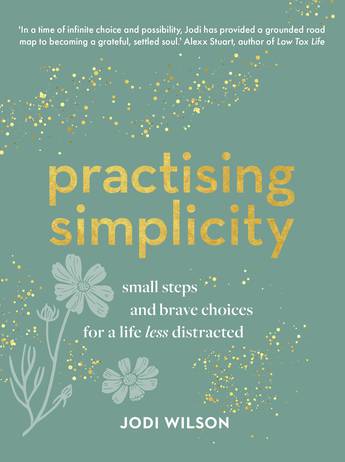
    Practising Simplicity

    Small steps and brave choices for a life less distracted

    The desire to get away from it all, to pack up and just go, to live a simpler life is the dream of many an overcommitted, stressed person. However, it takes a brave being to actually make this fantasy come true. Jodi, her husband Daniel and their four children, made the spontaneous decision to leave their schedules and lists behind. Within eight months of making this life changing decision, they set off in their newly purchased caravan to live the simple life travelling Australia; having never camped or caravanned before.   

    The initial plan was to travel for one year but this turned into three before the family finally settled in country Tasmania.  ‘Practising Simplicity’ while chronicling their life on the road, is more about living within nature, living spontaneously and trusting in what will be.

     ‘Simplicity’ does require energy and awareness, as does sustainable, ethical, waste free, frugal living. The author, however explains how in nature no one is rushing things along, that there is grace and beauty in the slow and subtle; that it is important to celebrate the remarkable ordinariness of life and self.  

    Jodi Wilson a freelance writer, blogger and photographer has used all her skills to perfection to create a beautifully illustrated book, which will inspire many readers to consider stepping off the treadmill to engage in a simpler life. By referring to books which espouse her findings, she provides readers with further information about a life style which may lead to a more fulfilled life.

    If you are looking to make a ‘sea change’ and don’t know where to start, look no further than this beautiful, inspiring book. The magnificent photos alone will encourage you to pack up and leave.

  • A Family of Strangers

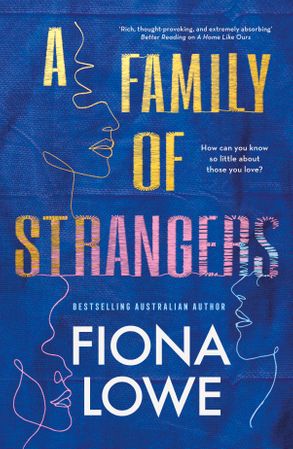
    A Family of Strangers

    Setting A Family of Strangers in a small town in Tasmania means that author Fiona Lowe is in her element as she has a deep understanding of the mentality and closeness this sort community produces. Her knowledge and experience of people and their relationships is keen and insightful. The beautiful setting at Rookery Cove, in the Northwest of Tasmania, where the surf rolls, is evocative.

    The novel begins by exploring three different characters and their families. The introduction of the initial characters helps us to understand their back story. We first meet Addy Topic, who has grown up in the Bay and has no wish to return. A great job is offered close by, and with her parents’ home vacant after their death, makes it sensible to return to advance her career. The Bay holds no happy memories for her.

    Steph Gallagher and her husband Henry have been trying to conceive a child. They were living in Melbourne and decided to move to the Bay for a more peaceful and fulfilling lifestyle. They have one toddler, Monty. Now Henry’s daughter Zoe, from a previous marriage, is about to join them.

    Brenda Lambeck has been a long-term resident of the area. She was married to a farmer and unhappy for a long time. After her husband’s death she moved to town but she is harbouring a secret held for many years.

    Addy begins her job, working long, long hours. Steph finds that the peace and tranquillity she was after are elusive, as Henry has taken to surfing when not working. Brenda needs to come to grips with her secret life. All these stories unravel in the bosom of the choir which they have formed and grown with love and care. Can they all survive the uncompromising truths that will make them all reconsider the decisions they have made about their lives in Rookery Cove. How very quickly the best intentions can come very seriously undone

  • Music for Tigers

    Music for Tigers

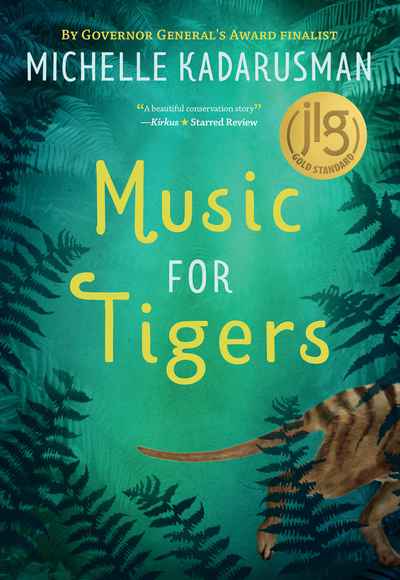
    Once again Michelle Kadarusman has crafted an epic story, Music for Tigers around conservation, acceptance and friendship set in a remote bush camp in the Tasmanian rain-forest, the Tarkine, a place of great beauty and mystery.

    Louisa is passionate violinist totally focused on gaining a place in the  youth orchestra and really is none too happy about being dispatched to the furthest corners of the earth, at least as far as she is concerned, to spend the summer with her Uncle. She should be at home practicing.

    Even though she is greeted with what sounds like the real life version of Vivaldi’s Spring from the Four Seasons suite, she is very worried about snakes, spiders and also her Uncle, the only person waiting at the bus stop. Her first night at the bush camp is filed with dreams, a scraping, snuffling sound and rancid odour, which completely mystifies her.

    Meeting her neighbours Colin and his mother who live at the Eco Lodge and specialise in Eco Tourism, begins what will turn out to be the most momentous summer for Louisa as she, her Uncle, Colin and Mel set out to discover if what they believe could be the last Tasmanian Tiger is living in the area of Convict Rock; an island in the fast flowing river, considered to be haunted.

    Louisa is offered a copy of her Grandmother Eleanor’s Dairies which carefully establishes the background to the conservation of an endangered species begun by her grandmother so very long ago. As the story unfolds so too does an understanding of friendship, letting go, beginning again and acceptance.

    Kadarusman has woven a story with beautiful use of language that captivates from the first sentence, as the wording immediately brings to the mind and sense, the smell and rich beauty of the Tasmanian bush along with the overwhelming awe it inspires when first discovered.

    Music for Tigers contains something very special: the magic of a story well told, that not only demands to be read from cover to cover, but ensures the gently presented messages wrapped within the text remain in the memory for a long time.

  • The Last Lighthouse Keeper A memoir

    The Last Lighthouse Keeper A memoir

    If you have an interest in Lighthouses and fancy you could cope with the isolation that caring for them brings, then this is a story for you. It relates the life story of the John Cook and the changing times in tending Lighthouses that he has witnessed. John has the honour of being one of the last “Traditional kerosene light-keepers in Australia.” The Last Lighthouse Keeper” is a story of historical significance, looking at the different technical stages that Lighthouses have gone through, and the experience and knowledge that the keepers needed to maintain them.

    John’s personal story is interwoven with his compelling descriptions of fierce winds, lashing rain, and a dark and silent landscape. Animals had to be guarded to prevent their falling off cliffs, or from being blown off the headland. On the first tiny island he worked on, there was no place to land a boat, so the people and their goods had to be winched up the cliff to flat land. Getting up in the middle of the night to tend the light was just one of the many chores that needed completing. The prisms of the light had to be polished, and other machinery had to be maintained.

    The relationships that develop on the isolated islands were varied. Some people could not cope for the length of time they had to serve. Any newcomer to the tiny community was scrutinised and held at arm’s length until a trust was established. In this situation pets became remarkably close and important. Dogs were much closer to their owners, and when John began to document the bird life he began to appreciate and care for them.

    The descriptive language gives a real picture of the beauty, ruggedness, and isolation of these islands in the sea. The people who tended the lifesaving lights were tough, reliable and aware of the great importance of that light across the dark and heaving seas.

  • The Great Divide

    The Great Divide

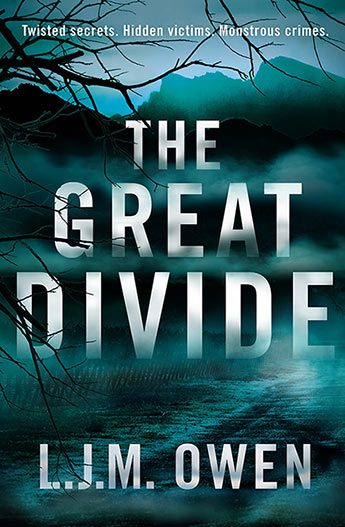
    The prologue grabs the interest from the very first paragraph and from that point forward, The Great Divide from L.J.M Owen simply must be read from cover to cover preferably without stopping, because although the narrative is relatively fast paced, it is essential to discover who is really responsible for such a heinous series of crimes.

    New to the country town of Dunton in Tasmania, a far cry from his fast paced, hectic life in Melbourne, detective Jake Hunter is struggling to settle into a place he thought would provide the necessary break to reassess his life and make, if any, changes to his current lifestyle.

    No hot water or lights in his tiny cottage is not helping and when he gets an early morning callout to help try and find a missing ten-year-old boy from local caravan park, it is almost a welcome relief to begin the day.

    Safely reunited with his family, the boy is covered in mud and says he has seen a monster and the body of a very old woman in the vineyards, which is scoffed at by several of the adults. Jake decides to investigate the claims made and does indeed discover the body of an elderly woman with a set of footprints leading to and from the site.

    Trying to discover who could have reason to murder the headmistress of a former children’s home in Dunton, leads Jake into a world of lies, mistruths, the dark, deadly secrets of a town kept well-hidden along with a crime scene that spans decades, and States

    Nothing seems to be what it appears and why is it that the very few children who were cared for at the Home, can be contacted, all who seem to be suffering from serious mental health issues. What went on there and who was behind what is beginning to seem like a real-life horror story, also seems to be buried in the recesses of time.

    As the story unfolds, Jake has to face his reality, face his personal demons and somehow try and discover some form of justice for the survivors of the Dunton Children’s Home.

    Riveting reading from the first word, this is a murder mystery that will not disappoint, written is style that has created a work which will be long lasting, with a storyline, in parts all too real, that will linger well after the case is closed.

  • Bruny

    Bruny

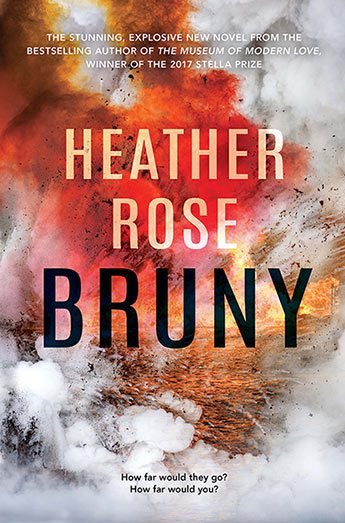
    Bruny is Heather Rose’s eighth book, her fifth adult novel: her last book, The Museum of Modern Love, which took eleven years to write, won her several awards; the Stella Prize and the Christina Stead Prize awarded in 2017.

    Returning to her native Tasmania, Rose writes, with a deep passion and love for Tasmania, her home /heartland, is evident in this enthralling novel. Bruny took me on a little visit to Tasmania courtesy of a storyline I could not putdown. She says it’s a political satire wrapped around the current and on-going global political situation, as well as the increasing concerns about the rise of power the Chinese Communist Party in Australia, however in the chaotic world of today, I hope she is not prophetic.

    Bruny is narrated by Astrid Coleman, or Ace, who is a renowned conflict resolution expert working for the UN based in New York. After years of absence she returns to Tasmania to help her brother, the Premier, who has sanctioned a huge suspension bridge between Tasmania and Bruny Island causing much dissention among the people of Tasmania and Bruny.

    When the bridge is blown up only three months from completion with the culprit or culprits remaining unknown, Ace finds she is facing issues within her own family and as she is there for the specific purpose of pouring oil on troubled waters, once she finds out the true motive for the bridge, she is left facing a life changing decision.

    Part political intrigue, Bruny explores family dynamics, concerns about the expanding Chinese presence in Tasmania, the New World Order while weaving a love story around the beauty that is Tasmania and Bruny.

    A really great read. Now I am off to find The Museum of Modern Love.


  • Fortune

    Fortune

    Lenny Bartulin has dipped into the grab bag that is history, pulling out an assortment of events, all well chronicled over the decades, beginning with Napoleon Bonaparte’s rampage through Europe reaching the 1806, when he and his army marched through the Brandenburg Gates, then segueing across the world to the misery that was white settlement in Tasmania, to return once again to the killing fields of Europe and the terrible days of World War I.

    A face seen through the window viewed in a moment of passion, liquorish, murder and calamity all co-inside to set young poet Johannes Meyer on a pathway into his future, as he gets pressganged into the life of a soldier in the French Army.

    Elizabeth, the face seen through the window on that fateful day when Bonaparte marched into Berlin, begins to lead her own life eloping with General Foures, a man many years her senior, as he takes up the position of governor in the Cayenne’s, an Island group off the coast of South America.

    Elizabeth and Johannes paths will begin to cross down through the years, leading to cruel and terrible times in South America, the penal colonies of Tasmania and the finality of war, yet again.

    Bouncing all over the pages of history, Fortune is a book that teases, tantalates and becomes somewhat addictive, in so far as the very many characters who populate the pages, beckon to see if they can be discovered somewhere else further along in the narrative. Unfortunately, they often turn up dead!

    Somewhat unusual in format and style, the work could be considered as challenging, with the lavish use of sex as one of the main drivers, but the skill that is required to keep all the various characters who populate the pages, and their lives, let alone the recorded facts of history, heading down through the Century without becoming a confused narrative, must be considered as either a damming admirable, or otherwise, the genius of a somewhat abstract mind.

    Perhaps Bartulin has tried a little bit too hard to create a novel that is vastly different to the accepted norm for alternate works.

    Yours to decide at the final word!

  • The Orchardist’s Daughter

    The Orchardist’s Daughter

    Be prepared to have many of your senses stimulated with this descriptive story, set in the heart of Tasmanian forests. The sight, smell and sound of the trees becomes the background to a fresh and honest look at small town workers involved in a world- wide process. The setting gives perspective to the lives of the main characters, who interact in the way that people faced with hardship and change often do.

    The characters range from an elderly grandfather, who has seen all the logging, and also been a part of it, to a young boy faced with the anger of parents who struggle to make ends meet all the time. Each of the characters has challenges in living, and also, with their environment. Miki, whose parents burned to death in a house fire, is looked after by her brother who locks her in their Fish and Chip shop to protect her. As she was home schooled by her mother, the eighteen- year old knows little of the world. She does know how much she loves the trees and the native animals though.

    Leon has come from Bruny Island and has a job as a Park Ranger. There is little respect in the town for anyone vaguely associated with “Greenies.” To his dismay, Leon discovers this when he goes out to football training and is flattened time after time by the loggers. He is small but speedy so needs to outrun them when he can. Gaining their acceptance will be an enormous task, but one which he decides to stick too.

    The story revolves around these characters and their issues. The young boy Max has a dog he loves, but his father finds the animal just another mouth to feed. When you feel that the hardship and tough attitudes are overwhelming, someone will stop and make a decision which reveals humanity under the desperate layers. It is this humanity which gives the book a positive feel, acknowledging the hardships, but revealing laughter and kindness as well. The dilemma is to find alternative employment for the loggers. Tourism is one aspect to be developed, but the process is slow.

     Karen has presented a thoughtful scenario, and one which everyone should ponder.

  • The Sisters’ Song

    The Sisters’ Song

    In the author’s notes, she writes that her novel, “Pays homage to the countless intelligent, insightful and courageous women throughout the centuries, who through no fault of their own, have been prevented from achieving their potential, and following their dreams.” It is certainly true that women had cause to despair in the past, and still today, are not recognised as equal in many areas. This is a story of a family in 1926; there are young parents full of dreams and laughter, and two girls who are part of that happy normality. The story is divided into three parts.

     Disaster strikes the family, and the mother struggles to cope. These were the days when children were seen and not heard, and many of the decisions that were made in their family were quite puzzling. This is also a snapshot of those times where society had no support for those with issues, either financial or medical. It was a hard time, and fulfilment in education, or following a dream, was only for the wealthy.

     The story is narrated by Ida. She has a sister Nora, who is both beautiful and talented, and many times the two are compared. The family has had to move in with grandmother, who is quiet and set in her ways, but sensitive to the needs of the girls. They settle into a new routine and develop into maturity. Ida meets Len at a dance, and feels that her role now is to marry and have children. Nora, on the other hand, has discovered that she has not just a talent for singing, but an extraordinary voice. Thanks to grandmother, this has been recognised, with Nora winning a scholarship to study at the Melbourne Academy of Music.

     This is where the plans and dreams come unstuck for both women. In today’s society, neither Ida nor Nora would have had their pathways truncated by the issues that faced them. However, Ida, always supportive and caring, helps Nora and satisfies a need within herself. Both the husbands of Nora and Ida are loving and patient, and recognise the sisters need each other. In the end, it seems as though the next generation will have the opportunities that were denied Nora and Ida, but this also will not happen without suffering.

     Set in Tasmania, the descriptions of the mountains are quite lovely, and the land in its natural beauty is pristine. Only Nora during her move to Melbourne leaves the island, while Ida and her family have a house near to where they were raised. So many customs are touched on, and the primitive surroundings for those who worked on the land, showed how hard life could be. Progress in every way, on the land, in the characters, in society, and in the views of the next generation, is shown. For these women indeed, many of their dreams were never to be fulfilled, and their greatest hope was for future generations.