Tag: society

  • Southsightedness

    Southsightedness

    Poetry in all its formats is deeply immersive, but very mood driven, no matter what the subject that has caught the eye of the poet; emotion, environment, people, moods and pretty well most everything in between.

    Southsightedness is Gregory Day’s latest release of intimate and vibrant poetry created over the past twenty years, many of the of the pieces used as the catalyst for his novels, two of which were short listed for the prestigious Myles Franklin awards.

    But back to the anthology that is waiting to be explored, an anthology that explores so much of the modern world, written in modern terminology that provokes, creates thought and touches at times, the very essence of who we are as people on this earth.

    One of the more delicate pieces is the short but powerful Southsightedness, a reflection on change, how we see what is there and yet not there, contrasting elements of nature.

    In the introduction Little Marsh, Gregory Day sums up succinctly the art that is poetry in all its forms when he says, ‘Moments come and go like sunshowers, shining with passing light, proving that we do have the desire to share and remember.’ Poetry captures these ever fleeting moments by recording them for as long as the ink on the paper lasts!

    Sister Light details a gentle yearning for a beloved sister to return once again to share the beauty of the wetland; the bird song freely given, the river trees standing sentinel over the river flats, the light dawning slowly over the land, which happens to be just one of the pieces that would be considered as a favourite piece to return to often.

    The stanza, sonnets, lyrical connectedness, and standard formats along with free verse are mixed with complex emotions and yet when time is taken to absorb the words, piece by piece, the complete and complex work is emotionally sensitive, raw at times and in many instances, carries within the words a subtle essence of loss for the natural world around us.

    Gregory Day’s poetry is intriguing, intricate and not always enjoyable and as with all anthology’s no matter the driving emotions, is one that needs to be enjoyed piece by piece, supped slowly and reflected upon at leisure.

  • Champagne at Seven! (Bitches of Fifth Avenue)

    Champagne at Seven! (Bitches of Fifth Avenue)

    Champagne at Seven is a snappy, well written, serious tilt at the often unseen, but generally understood side of wealth that is all too real, all too dangerous and all too easy to shatter into a million pieces, by simply failing to follow the invisible rules that govern the ‘Wives’ of powerful men.

    Olivia Wyatt loves fashion, the colours, texture, the art of creating a glamourous look mixing new with vintage. She does not like her life as the wife of Edwin Wyatt, CEO of a very prestigious Advertising Company. She is considered as the ‘most interesting and recognised hostess’ in Washington DC.

    She used to live for the life she now hates; the fake sweetness, the must dos of so called high society.  She is rapidly falling out of love, not just with Edwin, but with her glamourous lifestyle. She understands that somehow she has an innate ability to create wonderful dinner parties, dress in stunning style without too much effort and swim through societies vicious gossip, which makes her dinner parties high on the list of places to see and be seen.

    Edwin, yet again, charms her into staging another last minute dinner party that evening for some top line guests; men she has never heard of and could not care less about, but as it is what she does best, she pulls out all stops to make another memorable evening happen.

    This one becomes more memorable than most, turning Olivia’s life upside down with cruel reality as she discovers she has to create a new life for herself and daughter Gwynnie.

    As fashion is something she loves and understands, she sets out to begin again, finding the road somewhat challenging, until she is offered a position at her favourite store Harper James, which as it turns out is not all she was lead to believe.

    Toni Glickman survived for many years in the cut throat world of high fashion, facing the depression, fear, backstabbing and the relentless pressure to sell, sell, sell. She brings this to the new series Bitches of Fifth Avenue Book one – Champagne at Seven with flair and passion, which sets the background for more from Olivia, as she begins again in world that could be just as cut throat as the one she has left behind.

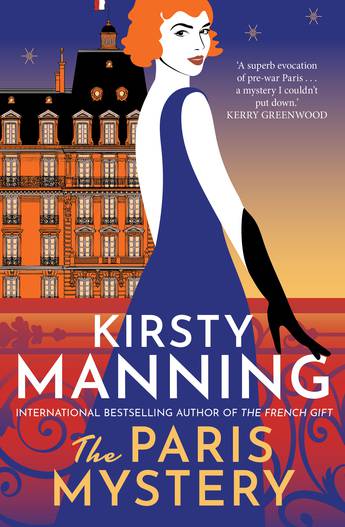
  • The Paris Mystery

    The Paris Mystery

    Charlotte “Charlie’ James is a determined young woman. She lived in Sydney and was happily married until her world fell apart. As a journalist, she knew she needed a fresh start and a challenge, so she applied for a job with a Parisian paper, The Times. Speaking fluent French, as her mother was a native of France, Charlie was accepted for the job with the proviso that she produced work of a high standard.

    On her arrival in Paris, Charlie is greeted by a co-worker, Violet, who proves to be a very capable and supportive friend. Set just after the time when King Edward abdicated and the Boche were gathering supporters Lord Ashworth and his wife have moved to Paris after their support of the King failed. Charlie, the rookie realises the best way to a good story is to get to know the Ashworth’s and gain their trust.

    So it is that Charlie finds herself in the height of society, where an annual Solstice party, a Circus Ball, is given by the Ashworth’s. She has met Lady Ashworth and her husband, and both have been welcoming. They have suggested she follow the Ball as a journalist and provide her with a photographer to support her newspaper article. There are some powerful characters at this ball, none more so than Marchant, a prominent banker and financier, a man despised by many

    Charlie has sharp eyes and a curious disposition, which are of great benefit as there is a murder committed in the gardens during the ball. Every guest needs to be checked and motives are sought. It seems that the murdered man had many enemies. Can Charlie cement her place on the newspaper team? Will Inspector Bernard be amenable to working with Charlie?

    Set in a time of amazing wealth and fashion, The Paris Mystery, a decidedly French story is certain to please and makes the perfect introduction to a new series from Kirsty Manning.

  • Trust

    Trust

    Trust, the latest riveting thriller from Chris Hammer takes the issue of trust expanding it out to create a storyline that is all too real, based in Sydney; a Sydney that is there, hovering on the fringes of society, full of crime, corruption and murder at the highest of levels.

    Life is looking pretty good for Martin Scarsden; Liam is down on the beach enjoying the water as only a little boy can do, Martin watching his stepson with pure enjoyment and love. His phone some distance from the water’s edge rings and falls silent. It rings again only to be ignored once again. The third call is eventually answered, only to strike fear into Martins heart as he checks the previous two calls, discovering they are from Mandy which is unusual; she normally texts.

    Scarsden has once again to reassess his life and his relationship with Mandy, Mandalay Blonde his partner, as her past has returned in a particularly challenging way; a past that sees her kidnapped and drugged, the death of his mentor and long-time friend and journalist Max, which in turn finds him once again on the trail of a hot, hot story, dealing with the privileged of Sydney society in a way he never thought possible.

    As he commenced his career in Sydney, he returns to a place, a life he believed he had left far behind, the echoes of what he once thought was everything life could hold, to reflect on just how much better and happier his life had become.

    Mandalay Blonde is further explored as it is her past, a past filled with diversity that has bought them to Sydney; to death, sadness and destruction and is also something Martin is struggling to accept, as he thought Mandy had shared her all her secrets with him over the past year or so; looks like he was wrong, so very wrong.

    Set in the world of undercover police work, money market manipulation and global crime Hammer draws on his past life as a journalist covering World Affairs, to create a scenario where real life fits comfortably together with fiction evolving into a fast paced, riveting story, that appears to form a trilogy, which has allowed Martin Scarsdale and Mandalay Blonde to become firm friends in readers hearts and minds. Trust can also be read as a stand-a-lone story.

    Chris Hammer burst onto the Crime Mystery genre in 2018 with the birth of Scrublands, followed by Silver almost a year later. Trust simply underscores the accolades already received as a writer of substance and stature.

    Trust; when you get your copy, turn off the phone, get settled comfortably and step into the latest fast paced thriller from internationally acclaimed writer, Chris Hammer.

  • Kitty Flanagan’s 488 Rules for Life The thankless art of being correct

    Kitty Flanagan’s 488 Rules for Life The thankless art of being correct

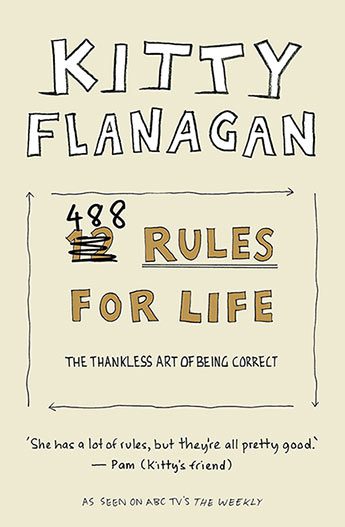
    What started out a joke, could be easily considered as the breakthrough book on modern day etiquette, as delivered by comedienne Kitty Flanagan in her latest book, 488 Rules for Life, a book which could possibly become the arbiter of modern day manners, for those who care to discover that there are indeed manners, or at least rules for just about everything in life, whether you knew it or not.

    As she rightly says when she was presented with the fact that there were ONLY twelve rules for life, ‘That’s madness, I have more than twelve rules just for the bathroom.’ And yes, she really does, as you will soon discover.

    Feeling it was her next mission in life, Flanagan set out to write down all the many rules she considered as essential to being able to survive the modern times we all live in, with a modicum of decorum, as well as preventing continually annoying at lot of people.

    After some considerable though she has made finding the right rule out of the 488 very easy, as the book is clearly divided into sections which contain the basics and then the more complex aspects of the rules, which you may not already know, and if you do will simply reinforce the veracity of the rule!

    Now some of this is tongue in cheek, but some of it is not, as you will discover in the section Fruit, which has its own ‘sealed section’ for reasons which will become clear once you have availed yourself of this advice, and why not. In all the etiquette books and society standards over many, many years, fruit was always an issue to be addressed.

    There is another ‘sealed section’ devoted to Wedding Speeches which, as most of you have been to a wedding or three in their time, probably needs no explanation, but is something that should be presented to anyone in danger of committing a terrible social ‘faux par’ by not following all the rules!

    Funny, irreverent, and poking fun at the rules, or rather lack of rules in today world, rules which over generations, even centauries have set the stands by which society operates and setting the boundaries many dare never cross for fear of social ostracization, 488 Rules for Life contains so many elements of truth about how we, as a modern society, go about living what we consider a pretty courteous life!

    By the end of this ‘comprehensive guide to modern behaviour’ Flanagan’s hope is that you will be a better person, and understand all the rules. By doing so you will also help others become socially law abiding citizens of the world who manage to do the almost impossible, change society and by doing so, will make it a far less irritating place in which to live and carry out what should now be considered as the essential rules to guide you through life, hassle free, with the confidence to know you got it right!

    Note: Flush Pause Check (FPC) about the loo: No bare bums on tables – not what you thought, its about parenting: and a final word as rule 372 states: If you tell guest not to bring anything, don’t be annoyed when they don’t bring anything!!!!!!

    No, you’re not finished. There are more rules after this one………

    You got it! Right!

  • The Windfall

    The Windfall


    Set in India, this is the story of two people and their extended family, who in midlife have a dramatic change to their world. The language used by the author reflects beautifully, the thoughts and emotions experienced by the characters. Speaking of the main character’s mother, Diksha says, “Once a week they went out for dinner, and Mr Jha’s mother would dress in the latest fashion of the town and push her feet into sandals with high heels and stiff straps that made her ankles bleed and she loved it.” This gently flowing language explains and sets the tone of the story.

     Mr Jha is the main character. He began a website some years previously, and developed and built it up. Now an international company has bought the site for millions of dollars. Mr and Mrs Jha have always lived with their son Rupak in a housing complex, where they watched Rupak grow up and also watched their neighbours wash, iron, cook and argue. Windows were never closed and the close proximity of each apartment meant there was little privacy. This is the way they have always lived, and now Rupak is going to study overseas, Mr Jha has decided it is time for he and his wife to move. Not to another country or city, but to the elite side of Delhi, where each house is isolated and the silence is overwhelming.

     The humour in the tale comes from the way the husband and wife gradually adapt to their new way of life, and the old habits which still persist. Mr Jha notices that even though they have a bidet now, Mrs Jha still keeps her mug in the bathroom…. The neighbours are a mystery to Mr Jha, who wonders if he should get a pool because the other houses in the street have one. The lounge that he has specially imported from Japan with Swarovski crystals embedded in it is very impressive, but rather uncomfortable to sit on.

     As time passes, Mr and Mrs Jha gradually adapt to the new neighbourhood and the exclusive club. They begin to see the nasty, insincere people who are shallow and needy, and realize they have a wonderful relationship, and a greater degree of groundedness which will always serve them well.

     Now they have recovered from the shock of absolute wealth and the idiotic way it makes some people behave, they are determined to find contentment and fulfilment in their lives. This is a gentle story and a delightful reflection on custom and culture from another country.


  • I Knew You’d Have Brown Eyes

    I Knew You’d Have Brown Eyes

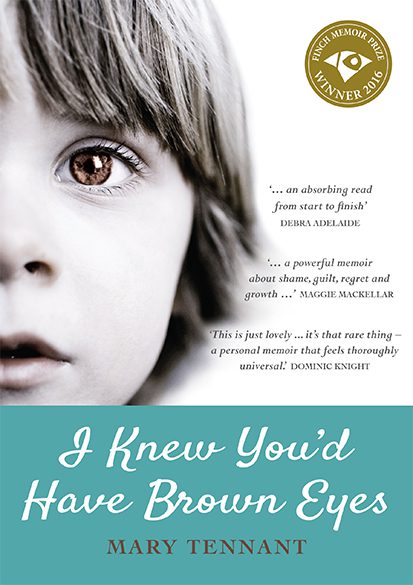
    The story Mary Tennant has chosen to tell is a personal memoir of her life which will resonate with so many people. In 1974, as a seventeen year old, Mary found herself pregnant. Her family was an ultra-conservative Catholic family, who lived in Queensland. Mary’s mother was authoritarian, and a very unforgiving and cold woman. Mary was hoping to gain entrance to University, but didn’t make the required mark because of constant sickness during the exam. This is her story, told in a factual, clear and truthful style, which immediately aligns the reader to her plight.

     Abortion was out of the question, because Mary feared her mother’s reaction, and also because she and her boyfriend didn’t know where to go, or how much money they would need. Eventually she resided in a home for pregnant girls, who were all advised to have their babies adopted out. The birth was easy, but when the nurses said it was better for her not to see or hold the baby, it was devastating. The Adoption laws at that time made it clear that she was not allowed to ever contact her son. Mary began the next phase of her life.

     Although she had wanted to study medicine, she trained as a nurse in a large hospital. From here, she moved to many positions, continuing her studies, never forgetting her son, celebrating each of his birthdays. Mary decided to work with Indigenous Communities in the Northern Territory and spent time on Groote Eylandt. Some of the stories she relates are amusing and all are fascinating. Aboriginal customs are well respected in this area, and when a man had his leg amputated, it was meant to be returned for burial and ceremony. Unfortunately the leg went missing, and a huge leg hunt was undertaken until the limb was found and returned.

     In the remote communities where she worked, Mary found friends who loved to water ski and camp, and she also went food gathering with the local women. Still, she never forgot the son she had given away, and seldom shared this information. It was her dream to meet someone and begin to build a family of her own. Eventually, she did meet the man that she could trust and confide in and eventually marry. Mary gave birth to two daughters, and still looked out for any changes to the Adoption laws to help her contact her son.

     Eventually, those changes came about and she was able to contact her son. We share in the wonder and amazement she felt as she related to him as a very familiar adult.

     The title of this book is touching, revealing the thoughts and longing that Mary carried with her for all those years. As well as a true story, which has not written as an emotional outpouring, but with dignity and truthfulness, Mary has many amazing stories to tell of her work and her family.

     The issues of abandonment, grief and loss are considered and shown to be so powerful in shaping people’s lives. As Mary says, about Abandonment, “For some it builds resilience, and yet for others  …it had spelled disaster.”

     The story is very deserving of the Finch Memoir Prize for 2016.

  • The Other Side of the Season: Seasons Collection

    The Other Side of the Season: Seasons Collection

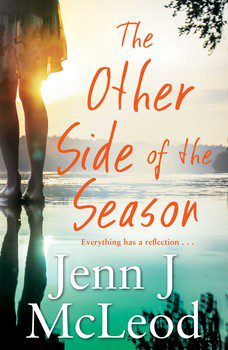
    This Australian family story is set in NSW, near Byron Bay, and reflects the surrounding country and lifestyle beautifully. Initially in 2015 we are taken on a road trip with a brother and sister. They are Sydney, and her brother Jake, who are setting out for a bit of respite in Byron Bay. Sydney is pregnant and alone, and Jake has never really settled down.

     The beginning of the story though, jumps back to 1979. Natalie, who later becomes mother to Sydney and Jake, is a young girl who lives on a banana plantation. She was adopted, as was her brother Albie, to help out on the farm. Next to them is another banana plantation with brothers Matthew and David, and their parents. Natalie and David are very close, as they share a common love of painting and plan to run away together one day and open a gallery.

     The story is quite complex, as David is injured and Natalie, so determined to leave the farm, that she convinces Matthew to go with her and marry her instead. As with all families, the parents’ background never ceases to play a role in their day to day lives. You see Sydney is not Matthew’s baby, but his brother David’s. There are a great many issues raised here and discussed. Child abuse in Children’s Homes is one of them.

     Natalie seems to compound her mistakes by always saying “Never look back”, which is a great way to avoid looking at the past and trying to rectify mistakes, or facing up to past errors. The children have no knowledge of their grandparents’, or their parents’ childhood, so when they stumble upon the remains of the banana plantation and the family there, they are in for a very large shock. Sydney and Jake have no idea that this is where there parents lived.

     There are many tragedies that befall these families, with Sydney and Jake about to uncover all of them. As the story unfolds, by moving from the 1970’s to 2015, everyone is confronted by the past, and as Sydney says, “There’s another side to every story.”

     The themes that are identified in this story are numerous, but parenting and families are the themes that dominate the tale.  For Natalie’s love of family, many a twisted logic has been used as Natalie, having grown up in an Orphanage, views parenting as an art she has never learned, and this again is the crux of the story.

  • Australia To Z

    Australia To Z

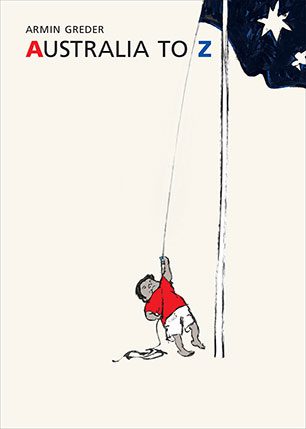
    Although this may at first glance look like an Alphabet book for children, it is not! It is an ironic look at us, the people of Australia and what we stand for.

    It is disturbing in that the modern and perhaps not so modern myth of the Aussie, great person, accepting and helpful to all and so forth,  is put under the microscope and found to be somewhat wanting and definitely a lot jaded.

    It is in every aspect uncompromising and although this may seem like a tough definition of the great Australian person, it is a perspective reflecting the Australian culture and the myths that are perpetuated within.

    Each page, commencing with the letter A for Aborigine; with a simple, unflinching picture a wealth of meaning, history and failure is encapsulated. B for Boat people follows; a topic that has been dragged, touted and sensationalised since the Vietnamese fled their country back in the 1970’s. A lot, yet not a lot has changed!

    The powerful image D for Digger is reflective of our history at war with the same sad result.

    But there is a glimmer of the Australian sense of humour amongst the reflective commentary when you get to T for Thong! And a definite chuckle at V for Vegemite; something they say only Australians can eat!

    Each letter  is worthy of sitting and reflecting upon  individually, in regard to what is encapsulated in the lines, the image, the quirks of society past and present. What you find will surprise you.

    Is it a comment on who we are now, who we were, or who we believe ourselves as a nation to be, but sadly are falling short of the mark. Or is it a truthful reflection on how we are seen by others who come to these shores to make a new life, to settle in what is touted to be a place of fairness and equality, to be free from oppression and mostly to be given a fair and equal chance in life!

    Evocatively, the national anthem, Advance Australia Fair, is printed on the final pages. Read it with a reflective attitude in mind and once read, it may pay to take stock of just how true to these sentiments we are as individuals and as a Nation!