Tag: Sci-fi

  • The Season for Flying Saucers

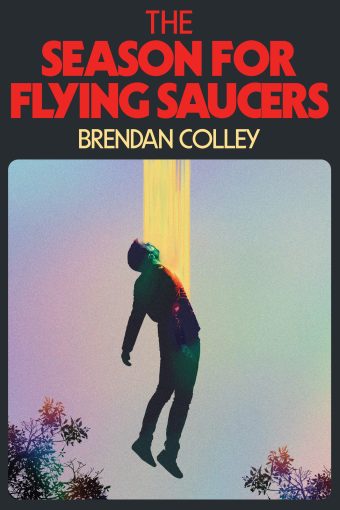
    The Season for Flying Saucers

    Between 12th February and 14th April 1976 there were at least nine separate occasions of sightings of UFO’s  in Maydena, a small Tasmanian locally, which were reported to the Tasmanian UFO investigation Centre. Award winning author Brendan Colley was inspired by these events to create his second novel ‘The Season for Flying Saucers’ an interesting but strange narrative.  

    Noah Grey, unemployed cook and known by some as the UFO poet, has bought his family home from which his father had been abducted by aliens twelve years ago. Not long after his return to his family home his father returns unexpectedly. When within weeks, his sister, Martha and mother join him there a tense domestic situation is created.

    Meanwhile, the locals ‘stalk’ the house, taking a great interest in its inhabitants, as the residents are convinced that something supernatural is imminent. Is this location attracting the lights from the scout crafts? Is there a mothership circling? Will something happen before the summer is over? How does Martha use her telepathic magic in her job as dog groomer?

    By relating the story from the main characters’ point of view, readers are given a fascinating insight into the dysfunctional Grey family and their special gifts. Sci- Fi readers will no doubt find this an intriguing read, while those unfamiliar with this genre will at times be totally confused and struggle to fully appreciate the nuances of the storyline. 
  • Crypt of the Moon Spider

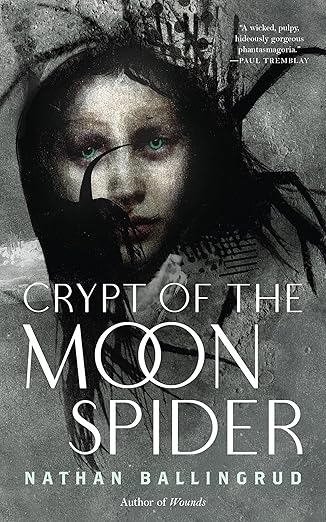
    Crypt of the Moon Spider

    The Lunar Gothic Trilogy, 1

    The Crypt of the Moon Spider is both a compact and impactful piece of science fiction that leaves a lasting and frankly haunting impression on readers. Readers will  have heard the phrase: “a quick and easy read.” — The Crypt of the Moon Spider manages one of the two…

    Whilst Ballingrud achieves the “quick” element of the equation, he, in no way, makes his content easy on the reader. Though this novella is undoubtedly a difficult read, it is not for the reasons one would suspect. The language is used succinctly and beautifully, considering the premise (not an adjective wasted), making it easy to follow along.

    Where the difficulty comes into play is the ensuing story. A story that starts off tame, with a mere palpable undercurrent of melancholy, that rapidly escalates into a traumatic 8-legged train wreck.

    Ballingrud presents a creative yet warped perspective on the treatment of mentally ill individuals, providing an equally bleak alternative to the torturous reality experienced by patients in the 1920s. Though this book is science fiction, much of this novella rings true for those with any knowledge of the history of mental health institutions.

     The importance of upholding traditional values whilst discarding of ‘broken’ family members. Prioritising mental wellness whilst maltreating patients. A complete disregard of personhood and furthering individuals from their humanity in the hopes of ‘curing’ them. A uniquely cruel combination that would surely take a toll on even the strongest of minds.

    Ballingrud manages to explore these themes brilliantly over a brief period of time whist appreciating the nuances that come with having a human mind, “The mind is very complicated. It is like a labyrinth. It can even deceive itself.”

    This fantastic piece of literature takes the individual on a chilling journey that rewards them with a climax of cosmic vengeance. It is a thought provoking, intense and truly bizarre read; however, certainly not for the faint hearted.

    The Crypt of the Moon Spider is an unsolicited review.

  • After the Great Storm

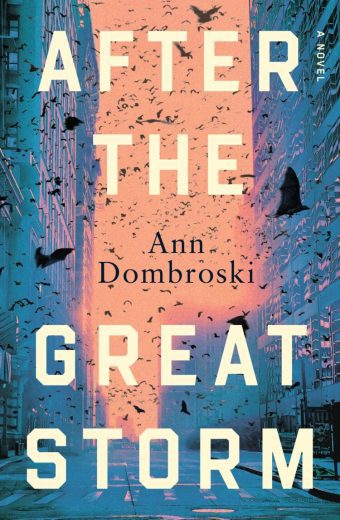
    After the Great Storm

    Author Ann Dombroski transports the reader to the near future world of 2075 where technology and experimental medical procedures are not quite beyond imagination. This a strange world with no houses, just towering apartment blocks and transport is by slider or airpod; a world where the fifth great storm is worse than the ones before.

    The story unfolds gradually. Not only is forty-year-old medical engineer, Alice desperate to have a baby and trying to access her stored embryos for IVF, but she’s also anxious to get her ‘wrongly’ incarcerated husband, Daniel out of jail. To add to her challenges a half human/ bat medical experiment creature (T) appears on her doorstep; Alice is destined to care for her until other arrangements can be made.  What is the strange connection between Daniel and T?

    Who can Alice trust after she was stalked and her home obviously searched? She must draw on her innate problem-solving skills plus ability to make shrewd character assessments to navigate the dangerous territory, in which she finds herself, and its challenging ethical dilemmas.  Are Sydney’s transport and health systems governed by blackmail and money?

    Although described as a psychological thriller, many readers will judge this fascinating novel to be a sci-fi read.       

  • Providence

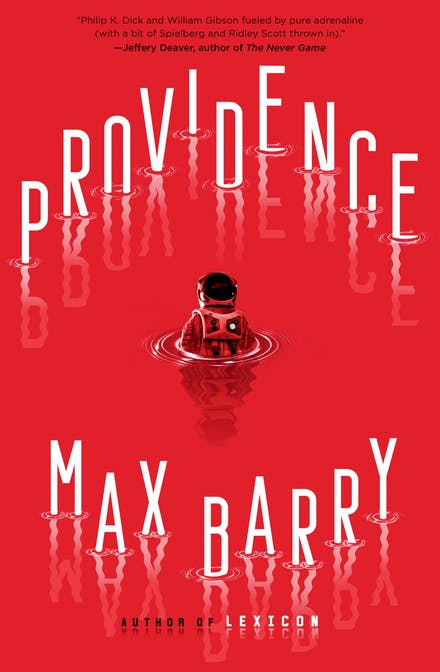
    Providence

    Max Barry is an Australian author following up his smash hit, 2013 novel, Lexicon. Providence, his new release, takes a few left turns from what he has written before, and tells a story that will be familiar to those who are fond of Space Operas.

    Providence brings a few interesting and new elements to the table of this genre. A couple of portions of the story are written in second person with more than enough ideas and moments that make this book stand out from the pack. The book touches on many themes such as autonomous machines, boredom, comradery, and heavy morals. Providence tells a galactic war story with many different and exciting additions that even strong fans of the genre will not be expecting. These twists seem to be relevant to our current era and climate, with elements of social media prevalence slipping seamlessly into the storyline, ensuring it doesn’t become generic.

    A new spaceship called Providence is launched, and woe behold to any salamanders that may cross its path. The providence ship is the most technologically advanced and has a single mission of obliterating humanity’s alien counterpart, the salamanders. In fact, this ship is so advanced it can handle navigation, planning, and battle strategies all by itself and it does so very effectively.

    The four crewmen are more likely to be under threat of boredom and each other, compared to the war that is waged outside the bulkhead wars as there is very little circumstance, they will need to put their brains or skills to use. The extend of this concludes back home on Earth, where the progress of the war and battles must be divulged to the masses by the crew, propaganda style.

    Providence provides some very tense questions and situations, along with the characters, which will keep the reader guessing. Perfect for any science fiction fan, or someone who likes to experience something a little different from the rest, the differences in this book are refreshing and provides for a very enjoyable reading experience.