Tag: school

  • Mitchell Itches

    Mitchell Itches

    Eczema is a distressing condition which affects many children and adults. Telling the story of Mitch from babyhood to adult is a courageous way to explain this skin complaint. Children can feel different in many ways but having red, constantly itchy skin could easily make them feel isolated. The positive illustrations show Mitch as smiling and part of a happy family.

    The author tells this story in a positive and explanatory way. Mitch is shown as a baby who must wear gloves at night. By the time he goes to school he and his family have tried many things to help his condition.

    Before school he must cover his skin with a cream. Some of the things that helped were keeping his nails short, special oils and bleach.  Some of the things that didn’t help were hot baths, soap and sharing the bath with the cat.

    For anyone who has eczema, the positive and humorous style used in the book will demystify the complaint and add a sense encouragement. For anyone who doesn’t have eczema a much greater understanding of the condition will also help.

    The whole tone of the story is a positive and happy one. The book would also be extremely helpful for anyone with a baby or child who has eczema. It is explained that eczema is not catching, and that sunshine and sea bathing are a great help. At the back a page is devoted to tips to help manage the skin of a patient.

  • ALL THAT WAS TAKEN FROM US – A Child Migrant’s Story

    ALL THAT WAS TAKEN FROM US – A Child Migrant’s Story

    The Child Migrant Scheme was a scheme created by the British Government as far back as 1618, when what were considered ‘vagrant children’ where rounded up and sent to the fledgling Colony of Virginia, in what is now known as the United States.

    In 1903 South African Kingsley Fairbridge, horrified at the amount of children on the streets of London, unwashed and neglected, had a ‘vision splendide’ to give these many orphans a fresh new beginning by sending them out to a fresh new life in Australia. They were to be trained in domestic service for the girls and agricultural trades for the boys. They considered these children as ‘good, white, British stock’.

    The first ‘Farm School’ of its kind was established in Western Australia at the Kingsley Fairbridge Farm School, just outside of Pinjarra. Over the years of 1913 to 1982, when the scheme was finally and thankfully abandoned, more than 3,580 children were sent to Western Australia, to a life that was anything but wonderful, frequently full of abuse, hunger and often extreme bullying.

    The Pinnegar brothers, Tony, Christopher and ‘Garth’ were three of these children sent out to Kingsley Fairtrade Farm School from England in 1950; Tony the eldest suddenly being give the responsibility of caring for his two younger brothers, whom he has not seen for many years.

    They had come from a dysfunctional family, where not considered as orphans, but somehow found themselves being part of this program. Tony as the elder had been asked if he would like to go to Australia and thought it would be a great adventure, as you do when you are thirteen years old.

    Through the eyes of his son Shane, Tony’s story is told for the first time, and although pieced together, as it was seldom Tony would talk about his time at Fairbridge Farm School, it is a sobering reminder of the reality that many children lived with, powerless, distressed and abused during their early and formative years.

    Tony would only talk a little about his and his brother’s early years in Western Australia, preferring to leave the past in the past, but Shane felt his father had a story that was worth the telling, as there were many things in his father life, which overflowed into his and his siblings lives. As they grew up, they realised that many aspects of their fathers apparent lack of background, and occasionally his actions, simply did not make any form of sense.

    Shane says the telling of the story, the research and tracing of his family’s history, as well as beginning to understand his father’s traits has been cathartic, but still considers, as his father sadly passed from Cancer in 2022, there are still far too many questions unanswered.

    Not an overly heavy read, All That Was Taken From Us- A Child Migrants Story is none the less a powerful story and one that so many could tell if they so choose, but many took with them to their grave.

  • The School That Escaped the Nazis

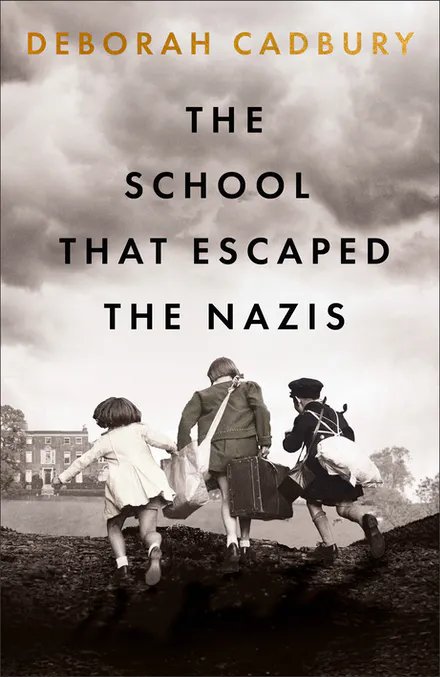
    The School That Escaped the Nazis

    Anna Essinger had great foresight in 1933, but never did she imagine that anything as inconceivably barbaric and inhumane could come to pass as Hitler and the Nazi party’s reign of terror; horror beyond what imagination could grasp.

    In her comprehensively researched book ‘The School That Escaped the Nazis’, Deborah Cadbury relates the truly remarkable story of the German Jewish educator Anna Essinger, who not only, over the course of 22 years, cared for and taught over 900 children, but also gave them safety and love.

    After reading Hitler’s book ‘Mein Kamf’, Essinger realized that her progressive school in the south of Germany had no future. Hatching a dangerous and daring plan, Tante Anna, as she became known, quietly and methodically moved her school of 66 children to the safe haven Bunce Court in Kent, south England. Despite issues of illness, a shoestring budget, school inspectors and being enemy aliens in a foreign country, the school and its students thrived.

    By 1938 Kindertransport’s, the organised rescue efforts of children from Nazi-controlled territory, that took place during the nine months prior to the outbreak of the Second World War, began arriving in England. Now nearly 60 years old, Tanta Anna with help set up a reception camp to provide safety and security for 10,000 refugee children; many of whom were deeply disturbed.

    In June 1940, the school with roughly 140 students, again had to evacuate when southern England became a defense area. Given little over a week, the ever resilient Tanta Anna relocated the school to the dilapidated ‘Trench Hall’. With outstanding organizational acumen, resourcefulness and support from several wealthy benefactors, she saved the lives of hundreds of Jewish children in Nazi occupied territories.

     ‘The School That Escaped the Nazis’ is not only the amazing narrative of a little known hero and her enlightened education system, but it is the story of her students, many of whom went onto have distinguished careers.  After the war, her school had taken in numerous traumatised children survivors of the Nazi concentration camps, who no longer knew the meaning of a normal life. With her wisdom and compassion, she gave them a home and hope, and as one of her students asserts, his two years at Bunce Court ‘turned him back into a human being’.

    Although some readers may find the graphic recounting of the atrocities perpetrated during Hitler’s reign of terror, towards not only the Jewish population of much of Europe, confronting, I highly recommend this book to anyone who wants to gain a better understanding of the behaviours of the masses when one group of human beings is criminalized. 

  • Are You There, Buddha?

    Are You There, Buddha?

    Many years ago, a fresh and hugely popular book, “Are you there, God, it’s me Margaret?”, came on the market. Young girls who had not grasped what growing up really entailed, were informed about changes to their bodies; not in a cold and distant way, but in a funny, real life story about a teenage girl. Are you there Buddha is in a similar vein, but Bee doesn’t want to have a period, and doesn’t want to have her body shape change and grow hair in other places.

    Bridget Ballentine or Bee to her family and mates, is twelve-years-old, starting her first year at High School. Her Mother left several years before to spend time at an Ashram in India, to learn Yoga but never returned. Bee’s Father and Bee struggled on for a while, but then he met Kath, who is a thoughtful, honest lady. She has been part of the family for a few years.

     She enjoys her schooling as well as swimming for her local club, is competitive and strong, and is looking to be selected in the State championships.

    There are many aspects of life, and fast approaching puberty, which mystify her. How will she swim if she has a period, how will she fit in at school, and why is her friendship with Leon changing? Her awareness of the issues of local bushfires, smoke haze and water restrictions add to the confusion.

    The realistic portrayal of characters and the splendid writing style make this a book to remember. The free verse is immediate and powerful.

    “I know

     as a Buddhist,

    I’m not supposed

    To want things,

    But I want to win

    Pretty badly.”

    Are You There Buddha is a magical, beautifully constructed story that exposes many concerns that young girls of this age face. A must read for any young girl.

  • Girl of the Southern Sea

    Girl of the Southern Sea

    Beautifully written and capturing the very essence of life in Jakarta, Girl of the Southern Sea from Michelle Kadarusman follows the journey of fourteen year old Nia who longs to be able to continue on at school, but instead has to look after her little brother and help her father at the family food cart down at the train station.

    Bright and intelligent, Nia’s family is poor and once the free schooling provided by the government is finished, families have to pay for their children to go on to high school. Her father has never recovered from the death of her mother when her brother Rudi was born and drinks away all the money earned at the local Arak dealer’s illegal bar.

    Nia has always loved to write and create stories for her little brother; wonderful, magical stories based on the legend of the mythical Dewi Kadita Queen of the Southern Seas. Her mother always told her stories about this mythical being and Nia is continuing on as it comforts both her and her brother.

    After narrowly escaping death in a bus accident Nia becomes considered as somewhat mystical; as having good-luck magic. The family fortunes begin to change, until once again something appalling happens and Nia has to face some hard facts about life. Help comes from a most unlikely source and perhaps Dewi Kadita likes the stories Nia makes up and lends a helping hand. 

    Crafted in the streets of Jakarta, Nia and her family and friends are bought vividly to life in this elegant and charming look at life and culture in a land known to many, but not always understood. Kardarusman has captured the vibrancy, the smell of the markets, the helpless frustration felt by many who live in the poor areas of town, their daily survival depending on the fates and an enduring sense of courage felt by many who look to better their meagre lives.

    Girl of the Southern Sea is a powerful story of courage, good-luck magic, all bound by the  determination and hope of being able to create a bright new future.

  • School Rules Are Optional: The Grade Six Survival Guide 1

    School Rules Are Optional: The Grade Six Survival Guide 1

    Perhaps School Rules Are Optional; The Grade Six Survival Guide 1 from Alison Hart should come with  parent alert built in for any parents who have children beginning year six, as Jesse and his friends certainly do redefine what going to school is all about as they front up to a new school term and year as the top group in the school.

    It is only the first 30 minutes of the new term and Jesse is already is a bit of a pickle as he realises that maybe he could be the new School Captain, something he really does not want to be, he has Mrs Leeman as his class teacher, who in his opinion is simply antique,  he has lost his special Grade Six jumper, Mum won’t be at all happy about this at all; and so begins term one with the school at Assembly, sitting in a boiling hot gym waiting for the announcements to be made before they can get out of there and get into fresh air.

    Alison Hart has capture exceptionally well the first day angst that comes with the beginning of a new school year when the rules are about to be changed, more responsibly is expected from the children and how, some children simply can’t help being themselves.

    The role of the teachers had been carefully created as people who care but have learned to cope with the unexpected; like the day when the toilet block seemed to explode with water, naturally it has to be the girls toilets, the camp that Jesse so desperately did not want to attend that went terribly wrong but came out classed as pretty special and so much more that does or will or could occur in any school, given time and young, fertile minds.

    Kamp for Kids turned out to be everything a school camp is not supposed to be; there were goats everywhere to begin with and then things quickly went downhill from there, or did they as invention became the name of the game and survival, cold, mud and heaps of fun became the everyday norm. What a term it was turning out to be  as Jesse made a new friend, several actually and in the process of term one learned much about who he was and how true friends support each other when the going really does get tough, at least in the world of grade six!

    Reading School Rules Are Optional: The Grade Six Survival Guide 1 as an adult and grandmother there are so many laugh out loud moments that totally relate to raising children, especially those who do think outside the square, don’t always do the expected and come armed with loads and loads of charm.

    As a first novel from Alison Hart School Rules Are Optional: The Grade Six Survival Guide 1 is a deliciously funny, laugh out loud, often cringe worthy tale of life through the eyes and emotions of a grade six boy and his friends, as they learn to negotiate life with all of its left and right turns. I can’t wait for the next installment of Jesse and his friends as term two surely has to commence sometime soon, even though I am slightly grown-up!


  • The Heartsong of Wonder Quinn

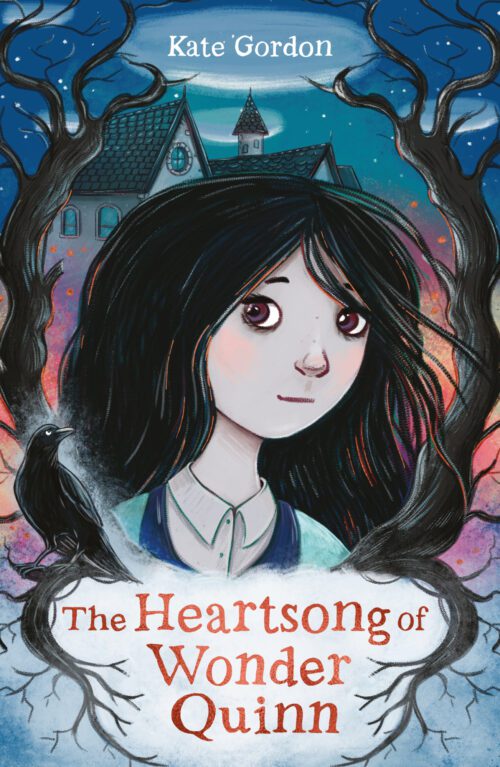
    The Heartsong of Wonder Quinn

    The Heartsong of Wonder Quinn is pure enchant from the first page in this delightful fairy story about friendship from Kate Gordon. Wonder Quinn lives in an attic room in the library at the top of a very, very old school called Direleafe Hall.

    Wonder has read all the books on the shelves over the years she has lived there and realises that she is very lonely. Her only friend is a rather grumpy, very old and temperamental crow called Hollowbeak, who has been her only companion for such a long time.

    The first day of a new year at Direleafe Hall, finds Wonder and Hollowbeak sitting on their favourite place on the roof, watching the girls arrive, looking for faces Quinn knew and maybe could be her friend this year. All of a sudden Quinn spots the face of a new girl, a very pale face with a mess of long, red hair. , I wonder,’ thought Quinn, ‘if she could be my new friend’.

    Mabel Clattersham chooses to sit next to Wonder  in class, the first girl to do this, well ever and so begins what many would consider as an unlikely friendship, as Mabel is on a mission to complete at least once in her life, a long list of things. Wonder ponders on why this rather strange list is so important to Mabel and when she realises Mabel is not always able to do what she wants to and why, Quinn begins to wonder if once again her heart will break.

    Through the wonderful medium of storytelling, the many layers of love and loss are explored in a gentle and enchanting style along with just enough illustrations to add an additional layer to the story and text.


  • Bush School

    Bush School

    When Peter O’Brien was a young teacher his first placements were in City schools where he honed his love of teaching. Back in those days male teachers had to undertake a mandatory two year teaching position in the country. His Supervisor offered him a position in the small rural school of Weabonga, a two day trip by train and mail car from Armidale in New South Wales.

    Arriving in the very small community he was shown where the school was by Bon the mail driver, met his landlady Jill O’Callaghan, was shown his room on the veranda of the house and eventually met the rest of the family. His evening meal was a sparse meal of rabbit and veg, eaten alone. The remainder of the family ate later that evening and so was the pattern of the evening meal established.

    Somewhat astonished, and slightly perturbed Peter set about visiting the school, setting lessons for the coming day and wondering what he had landed into, missing his very noisy Irish family, Patricia who he had not long met before he accepted his rural posting and the very real fact that this was to be his life for the next two years.

    Beautifully told Peter O’Brien’s, Bush School paints a wonderfully rich portrait of life in a community that was remote; a town of few people who faced hardship on a daily basis but were filled with determination to keep their very small school of 18 children, ranging from 5-15 years old and the friendships that formed over his two years of teaching in such a remote location. He firmly believed in child centered learning, which proved to be perfect for a school with a very wide range of ages and learning requirements.

    The pride both he and the children took in accepting the limitations of learning in an under resourced school and excelling despite the enormity of the challenges they had to overcome, saw him able to develop a teaching style based around their lives and community, which taught both he and the children much about life, learning and understanding, which was to stand him in good stead throughout his teaching life.

    All the children Peter taught in those years went on to lead successful lives, the small Weabonga School finally closing in 1968. Peter went on to focus on child-centered learning, ‘Open Education’ learning styles and maintained his interest in indigenous Australians.

    In 2019 Peter finally returned to Weabonga, almost 57 years since he waved goodbye to the townsfolk and his students, reminiscing that although those years taught both him and the children much, they were happy in that small school where they created a learning environment that was genuinely successful.

    Stepping back into a past that seems so far away and primitive by today’s standards, through the eyes of Peter O’Brien is a rich, wonderful tapestry held together with kindness, love, understanding, learning, acceptance and perhaps most importantly resilience!


  • The Battle

    The Battle

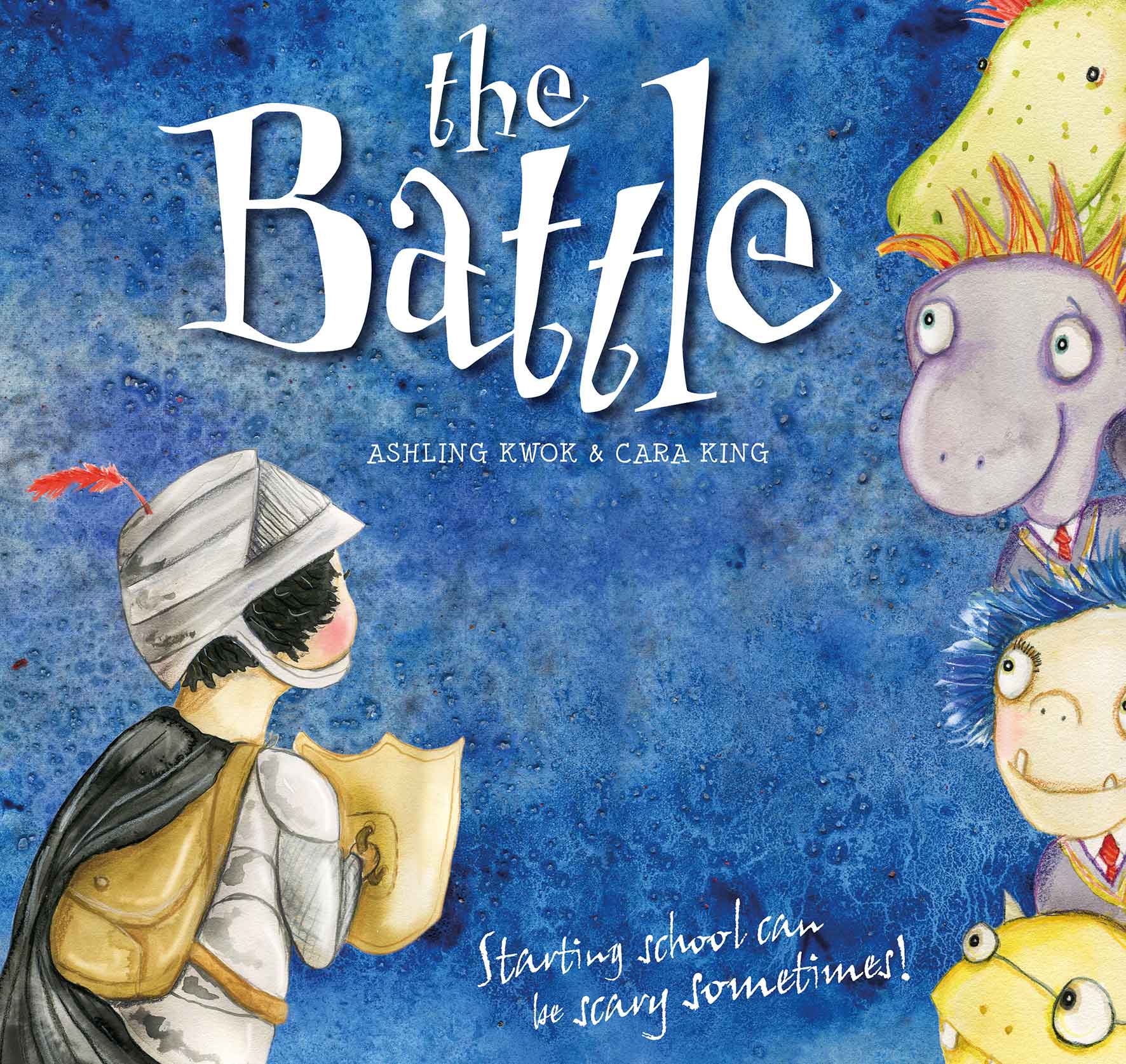
    Edward is facing his very first ever day at Knight school and he is very, very worried. He is expecting to have a day filled with Battles, and as every Knight, big or small knows, the best way to deal with a Battle is to wear all your armour.

    So, Edward puts on his armour, including his helmet and walks ever so slowly to the great hall where the King is to address the new students. When the King asked Edward to introduce himself to the rest of the students, Edwards simply wished he was anywhere else but right there, but found the courage to answer the King, who smiled back at him.

    Ashling Kwok and Cara King have created a wonderful tale of overcoming those first day fears in The Battle, as Edward puts on his very brave face and heads off into a strange new world of possibly dragons, giants and ogres.

    Somehow Edward manages to survive the morning, but when it comes to lunchtime and he has to go outside in the playground, oh, dear me, what terrible things may happen. When an ogre with bright blue hair, called Lucy, sits down next to him, poor Edward does not know what to think or do.

    Then some monsters he recognises from his class want to know if he would like to play hide and seek; maybe this is a trick too he thinks, but when Lucy joins in he realises he really would like someone to play with and joins in as well.

    Captured perfectly in The Battle is the anxiety felt by many small children when they have to face up to going it alone, in new surrounding with new faces and people to meet. The way Edward chooses to overcome his fear of change has been sensitively captured, both through both the text and illustrations, with Edwards cheeks moving from apple red to a more normal colour as he begins to realise all the other monsters there are just like him!

    The Battle is perfect for children who are fearful of change, especially beginning school or undertaking any new experience.


  • Wayside School: Beneath the Cloud of Doom

    Wayside School: Beneath the Cloud of Doom

    Louis Sachar writes a most delightful School Story. He has the ability to make the most outrageous statements seem quite commonplace. Todd was in Mrs Jewl’s class on the 30th floor…..It was important not to be late for class. The author also introduces humor through language…the Principal’s name was Mr Kidswatter, through speech,” I’m going to be a paper clip bender when I grow up,” and through actions, such as when the Councillor hypnotises himself. The story is written in such a matter of fact way that the reader smiles and accepts the unusual.

    Each chapter in the book is almost a complete short story but the common thread that links them together are the characters in the classroom and their reactions to school issues. Things are running relatively smoothly until “The Cloud of Doom,” moves to hover over Wayside School. It turns the sweetest child into a brooding, disobedient pupil, and everyone is on edge. Something drastic will need to be done to shift this cloud.

    Many aspects of school life are written about. The Librarian has a large stuffed walrus in her Library. Her name is Mrs Surlaw…She did not believe in books being separated into Fiction and Nonfiction, “Who was she to decide what was true and what wasn’t?” Her books were organised by the number of pages. Skinny books at one end and fatter books at the other. The children knew where to look for an enjoyable story.

    In the author’s note we learn that this is the fourth book about the Wayside School. The first book being written more than forty years ago. Louis has included himself in a small cameo in the book as the yard teacher, who blows up the balls and plays with the kids at recess time. The style and creative stories will make this as popular as the previous books in this series.