Tag: Russia

  • The East German Spy Mistress

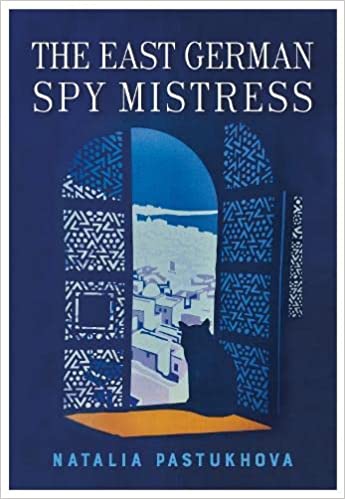
    The East German Spy Mistress

    The East German Spy Mistress has been set in the Cold War era, post-World War II. Ulrica zu Lauenburg is facing some hard truths about the life she has lead as a ‘spy mistress’, realising it is only a matter of time before she is caught by the British, who are well aware there are double agents everywhere; many left over from the War years and others newly crafted.

    She sets up her cousin Walther Coberg as a ‘spy’; a man with a chequered past, serious perverted lusts and very little conscience when it comes to murder, or anything else. He is aware of what is being asked but accepts the challenge, with the knowledge he will be caught and if all goes to plan, either expatriated to Britain or America, depending on who gets him first.

    Basically he is to be a red herring to hide Ulrica’s real purpose, that of selling off stolen artworks and ancient coins to pave her way to a better, safer life far from her operational bases of Tangiers and East Germany.

    The plot, which is somewhat madcap, also involves a group of British officers who are fed up with the so called ‘spy’ networks that are constantly disrupting their signals and feeding intelligence to the enemy, in this case Russia.

    They set up what seems to be an elaborate ruse to flush out these faceless people which has some surprising results; far more than ever expected. This upsets some member of the newly formed MI6 but the officers involved in the ‘ruse’ disregard the warnings as they believe they are better able to flush out the ‘faceless people’ far better than the British bureaucracy.

    Ranging from Tangiers, East Germany, Libya and Beirut, to Otterburn Moor and peopled with characters whom are in many ways very descriptive of the people of the era Pastukhova draws a fine picture of many still deeply scarred by the War years, others trying to hide in the exotic Tangiers, Libya and the corrupt world of Beirut, with others using their skills honed in conflict to try and create a better, safer world, nuclear style.

    Is Ulrica a heroine, possibly, but an unlikely one, is Walther a psychopath, or is he a relic of a man scared by war and his past. Has Pastukhova captured the spirit of the British ‘old boys network’ when facing challenges, definitely, as she has within the somewhat erratic storyline, managed to capture that certain essence of the years in-between, when the world was in transition between the old and the new.

    The East German Spy Mistress makes a light, if somewhat confusing read perfect for a lazy afternoon relaxing.
  • Children of Conflict

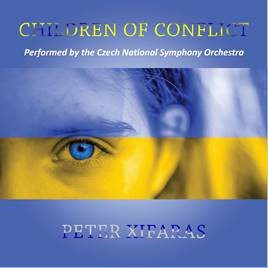
    Children of Conflict

    Children of Conflict is a powerful, classical work of music over six movements which touches the very soul, as it brings home the senseless, destructive hopelessness of War, of conflict; the wider effect, the long term grief, despair and tragedy which eventually changes nothing

    Born into life by the Czech National Symphony Orchestra the suite, all be it a short suite, is coupled with images which are powerful, poignant and not easily forgotten. People, who before the destruction of Afghanistan, Russia, Ukraine began had very different lives, families, homes, tell the story all too well.

    The faces of the orchestra as they create each piece reflect the true emotion of the songs being performed. Very real emotion is written on them for all to see. For them, it is more than just music, it is hope, a voice, reaching out through music; through the medium they know best to tell all who would listen a story of hope and despair woven together.

    Prologue contains the the words Fear, Destruction, ‘it was clear nothing and no one would be spared’. Epilogue holds the spoken words Fate: Despair: for the present, are where the opportunities of the future, unwind’ . Hauntingly beautiful and immensely powerful words.

    To truly appreciate the powerful message contained within Children Of Conflict, it is vitally important to watch the captivatingly haunting video’s while the music unfolds.

    Peter Xifaras releases this work on August 5. Best viewed on a big screen or even a small screen the images create the picture, the music, full of sadness with hidden beauty, brings home the message.

  • The Half Life of Valery K

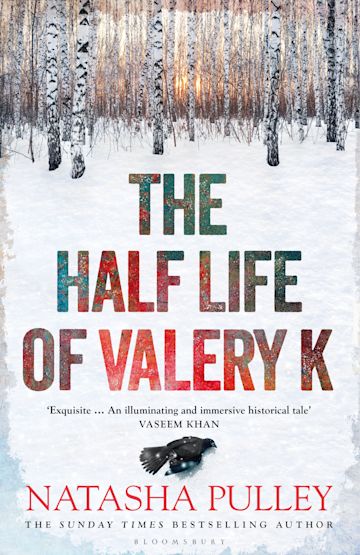
    The Half Life of Valery K

    What a fantastic read! Natasha Pulley has again produced an unforgettable story in The Half Life of Valery K. Set in Russia before the second world war and moving through until the cold war, it is a piece of history little known. Although the facts are raw and brutal, she has woven a deep love and a little magic, to lend heart into the story. The author’s notes tell us that although the characters are fictional all the other details are true.

    The intrigue and convoluted thinking of the times has the reader on edge, and although the main character, Valery, is guilty of crimes, we see his integrity and compassion shine through. Again, Natasha Pulley has chosen her main characters to be people of the highest intellect, and we see the way they rationalise their thoughts. Valery is a physicist who has studied the effects of radiation and is a foremost expert in the field. From his short exchange into Germany while an undergraduate, to his imprisonment in a Gulag, his life is a challenge.

    When the KGB step in and place Valery in a wire enclosed town to help with radiation studies, he is challenged as never before. As he gradually realises the full extent and implications of the study, he realises he needs the most exquisite timing and planning to make a difference. With help, he evades the ever-watchful KGB.

    Even though there are technical terms used, the author has placed them in context for ease of understanding. She is superb in her development of characters and presents their deepest emotions so beautifully. The Half Life of Valery K will be a story to remember always. The love, the magic, the man.

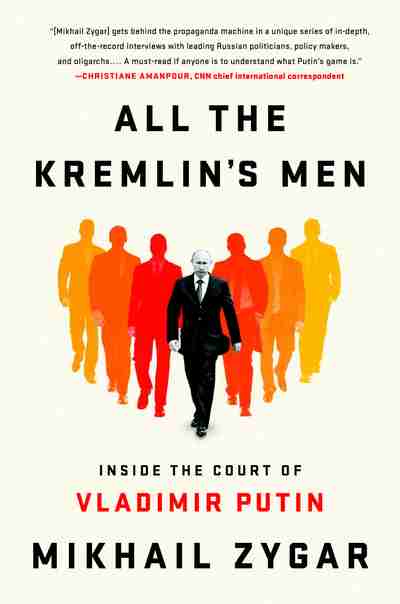
  • All the Kremlin’s Men: Inside the Court of Vladimir Putin

    All the Kremlin’s Men: Inside the Court of Vladimir Putin

    Over recent months with the political situation in the United States remaining in the headlines worldwide, with many references to Vladimir Putin and Russian politics being made by the now present of the United States, Donald Trump, this independent and unbiased look into what it is that makes up the foundations of Russian Politics is timely indeed.

    Written by Mikhail Zygar the former editor of the only independent TV station in Russia, TV Rain (Dozhd) it is made up of many, many stories and characters which, in many cases simply beggar belief in what they have done, set out to do or have carried out, all in the name of politics and how this amazing collection of people have created and shaped the man the world knows as Vladimir Putin.

    Divided into four specific sections, reminiscent of a Victorian style novel, the facts contained within each of the sections could be construed as fiction, should the results of the machinations of the men behind the scenes, much of it now recorded in history, were not seen and felt on a daily basis by the rest of the world.

    Zygar starts out taking a look at Putin, the young man who found himself the leader of Russia at a time when great change was taking place, and the peoples of Russia were still struggling to deal with the legacy of Boris Yeltsin. Just reading the first chapter gives an understanding of the layers within the Russian political system, the belief in country and history, the underhand dealing and deception which has existed for centuries, all of which are an essential component of the Russian psyche and the culture.

    The work is fascinating in that it details how the man who thought he really could make a difference has been reinvented as a man who has achieved almost ‘messiah’ standing, in that he can be seen to do no wrong, is the father figure all Russians need to have in their lives and on the world political stage, is the man to be most feared.

    But is Putin really the man he is portrayed as, or is he simply a man whom has, over the fifteen years of his Presidency learned to live with the status quo, shaped into the character “all the king’s men’ want him to be, and is now resigned to the point where he believes a considerable amount of the rhetoric that surrounds him.

    The book reads like fiction of the deepest and most mysterious kind, but is not, and therefore, is as fascinating as it is real, as it details the complexities and intrigue of Russian politics, the challenges of doing business in Russia and the people who really do hold the power, for at least today. Tomorrow, who knows?

    Brilliant, frightening, fascinating and complex by turn, anyone who has an interest in politics should add this radically different narrative of life inside the Russian political ‘Court’ to their reading list.


  • The Wolf Wilder

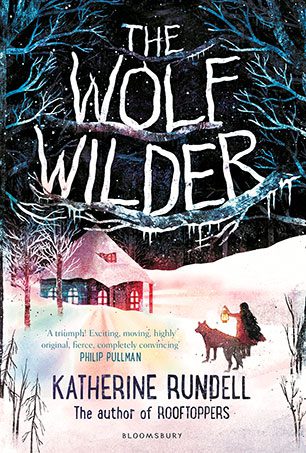
    The Wolf Wilder

    Set in Russia, this is the story of a mother and her young daughter who work and live with wolves; one a wolf wilder, the other in training.

    More than 100 years ago in Russia wolf cubs were much prized as pets, considered good omens and bringers of good fortune to a family. They were taken from their mothers new born cubs and sold into the upper classes for as much as one thousand roubles; a white wolf cub could bring as much as twice that amount.

    As wolves are not born to settle into captivity they eventually become fat, sick and lazy, tending to eat little pieces off the people around them, which is not acceptable. Once this happens they are returned to the wild, or to a wolf wilder, like Feodora (Feo) and her mother Marina, who train the wolves to be able to survive and live in their natural habitat.

    General Rakov, a general in the Czar’s Army, arrives at their house in the woods blaming them for the death of one of the Czar’s deer; he eventually burns down the house, as he is perhaps afraid of what she and the wolves she has trained could do to him and his men.

    Ilya, a young soldier in Racov’s Army has befriended Feo, and helps her try to rescue Marina, which is going to prove a lot more challenging that it seemed when they tried to enlist the help of local villagers, who were also very afraid of what Racov and his men could do to their village.

    It took one girl, her wolves and massive courage to carry out her plan, a daring rescue mission into the heart of St Petersburg with her friends, a group of homeless children, and of course the wolves, to rescue her mother, and see the final end of the fearful General Racov.

    There is a little bit of everything worked into this wonderful story set during a time in Russian history when the Czar’s Generals could do almost anything, were brutal men and human life was not considered of much worth. As in all Russian tales there are several layers to the story, each as fascinating as the other.

    Compelling reading, beautifully written, this is a tale that will live in your memory for a long time, allowing you to bring out the special bits to enjoy time and time again, as you do when a story told already has that timelessness. Although written for the younger reader it has a wide audience appeal.