Tag: resistance

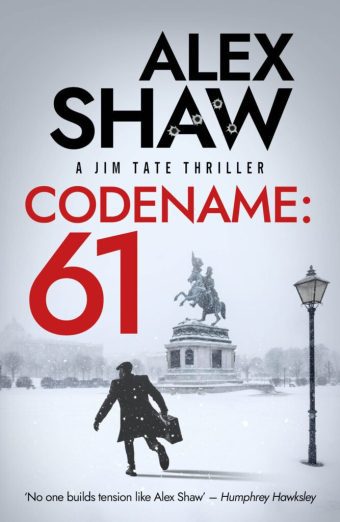
  • Codename: 61

    Codename: 61

    Alex Shaw has delivered another riveting read with his new, at this time, stand alone, Codename:61 with two unlikely heroes in Jack Tate and Adrian Snow. Thrown together during the War they became friends as well as operatives, moving on once Germany signed the Armistice.

    It is now 1961, the War is long over but to some, it never ended. Railwayman Jack Tate is now working in Kenya and Adrian Snow, still with the secretive ‘6’ meet up again, as a third member of their once active Unit has been gunned down on a quiet, sleepy, steamy street of Nairobi.

    Julian Jones-Smyth managed to pass over his leather attaché-case to Snow seconds before his death. When Snow sees the contents, he is at once returned to a tragic and horrific time when a traitor within the close Special Operations Executive destroyed a team of Agents in Sangatte, France, in 1942.

    Snow seeks out Tate to help him deal with what he perceives as a threat, also to right a terrible wrong. They find themselves under attack at Chemelil, a small out of the way railway station in Kenya, Tate’s two engineers held hostage.

    This volent and once again unprovoked attack, cause the pair to rethink what it is they are prepared to do and decide that this time the traitor in their ranks, so very long ago, will be held to account; one way or the other.

    Up against some powerful men, they find they must return to the days of subterfuge, resurrect long forgotten skills and ruthlessness to meet the enemy on his home ground, but they both discover the past has not finished with them either, as they return to Sangatte to pick up what should have been a cold, cold trail, but find it is not!

    Using a dual timeline very effectively, Shaw builds a powerful plot that see two aging operatives returning to a skill base honed as operatives and agents during the Second World War, both haunted by times past, both out to make amends long overdue.

    Highly recommended for lovers of a good read and fans of political spy fiction.

  • The Girl from Lake Maggiore

    The Girl from Lake Maggiore

    The Girl from Lake Maggiore is set in 1943 on the shores of Lake Maggiore, Italy in a town called Marta just before the invasion of the German army. The residents of the town believe there is an armistice, but this proves to be wrong.

    Guila’s father, Aldo Leone, a businessman of some note has a prestigious Hotel on the lake shore and has over recent months been sheltering a number of Jewish families fleeing from the German atrocities.

     When they discover there are Germans in the nearby town of Stresa, they are concerned but when they are told they are rounding up all the Jews in the area, Guila and her parents, along with some of the local fishermen,  begin to plan an escape for the people who have been their friends for many months.

    Unfortunately, this goes terribly wrong which sees Guila’s parents arrested, the families sheltering the Hotel shot or sent to Auschwitz and Guila having to seek help and hide from the Germans determined to arrest her.

    She is helped by a young man Raffaele, a man who has always considered her as a rich, spoilt young woman, far too soft to join the local Resistance group. She proves him wrong, going on the become a valuable member of the local Resistance community, determined to seek justice for her friend Ester, killed by the German SS, and her family.

    As the story wanders along over several years it loses the urgency of a group of young Resistance fighters and slowly blends into a love story of Raffaele and Guila set against the invasion of Italy with the final chapters almost far to modern for the balance of the story.

    For those who enjoy a good love story set during wartime The Girl from Lake Maggiore is a comfortable and enjoyable read, but for those who need a lot more grit in the telling, it does fall somewhat short.

  • Code Name Butterfly

    Code Name Butterfly

    A modern day fascination with DNA has led to many unexpected stories being discovered about family members, some hidden deep in the past and others more recent events simply never discussed with the family, considered by the people involved best left buried in the past. Every family has them, many remain undiscovered.

    When a letter, along with a photograph from Ange-Marie Preston with information about Eldoie Mitchell otherwise known as le Papillon de Nuit, the famous Josephine Baker and her Grandfather, Elodie’s family are caught unaware, believing they knew all there was to know about the family history.  But who is this woman that looks like a very young Elodie and why is she with Josephine Baker, wearing an outfit like that.

    Elodie Mitchell is in France studying, as well as writing columns about the situation in France for a newspaper in her home town. It is 1941 and the French believe the war with Germany is a ‘Faux’ war. She does not!

    She is lonely, fascinated with a man she sees often, and decides he is the man she will marry. She has decided that she will be out of Paris as soon as she can get onto a ship going to England. She is homesick, her spoken French still abysmal and her life, well….

    Over a many weeks she is slowly recruited into an underground network by Grant Monteray to pose as Josephine Baker’s cousin, to gather information on German movement and infiltration in the area This sees her French improve rapidly and as she is taught a range of skills she surprises herself with how easily she adapts to the is new role. Slowly she learns to look and listen, seeking out those who are happy to betray the secrets of France to the Germans.

    Already convinced Grant Monterey is her perfect match even though he is a damaged man, she discovers has she fallen deeply in love with him. Her new life is one she is not all that comfortable with, the new skills she is learning make her wonder who she really is underneath the skin of Elodie Mitchell.

    Based loosely on the story of Josephine Baker, (1906-1975) a famous American born French Cabaret star and her activities in the French Resistance during the Second World War for her beloved France, Code name Butterfly is rich in detail, with characters that come to life as the pages turn. The innocence of youth, the tragedy and callousness of War, the effect that fighting for a just cause has on so much of what is held dear, has been well developed.

    Fiction is often an excellent vehicle to tell stories about so many brave people whose stories have gone untold through the generations. Josephine Baker was very real, larger than life and generous too her detriment. The others, Elodie, Grant, Polly, Danny and Pierre are representative of the many who risked their lives to make a small difference.

    Code Name Butterfly is captivating, coloured in many hues, and very difficult to put down once begun.

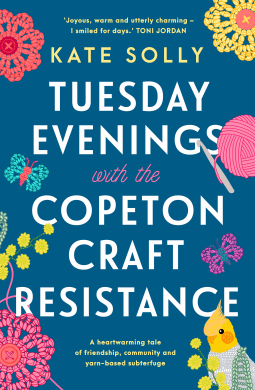
  • Tuesday Evenings with the Copeton Craft Resistance

    Tuesday Evenings with the Copeton Craft Resistance

    Tuesday Evenings with the Copeton Craft Resistance is a seriously good, entertaining read once you get past the first chapter, which appears to be a little muddled, but really is not as it establishes the flow of the story and the range of interesting and intriguing people to be met, as somehow or other, by about chapter 5 you find yourself joining the Copeton Crochet Collective (no knitters please) umm, and no men.

    Meredith decides she needs more in her life other than work and makes what will be a monumental decision, to establish a crochet group in Copeton on a Tuesday evening. She has little, if any social skills, no friends and a desire to make sure everything goes according to carefully drawn up plans.

    Claire is drowning under the weight of a family of five small children and domestic bliss is certainly not her forte. She needs an outlet – perhaps this will be the perfect answer as she has huge amounts of wool, crochet hooks and unfinished ‘projects‘ filling the spare spaces in her house.

    Yasmin, expecting her first child, missing her mother terribly and terrified of her forthcoming role as a mother, works at the Copeton Council. She is also a proud Australian born Muslim woman and would like to create a lovely outfit for the new babe.

    Harper is angry; she is angry at everything; Young, just out of gaol and resentful of life in general, she is asked to join the group by her support worker as she is brilliant with crochet.

    Luke brings along his grandmother and decides to stay, much to Meredith’s chagrin, and a clandestine knitter also joins the group.  Poor Meredith, as things somehow never seem to go to her schedule which she finds very frustrating.

    When there is talk of a Mosque being built and refugees being encouraged to settle in the town, it attracts the attention of a group of rather ugly anti-muslim protesters whom it would appear, will stop at very little to get their point across.

    When it comes to the point that one of the members of the Collective is threatened and things begin to get out of control, the Copeton Craft Collective becomes the Copeton Craft Resistance, fighting back with some very clever yarn bombing, wonderful photography and some very sneaky tactics.  

    Kate Solley has created a delightful, feel-good, binge worthy as they say, and don’t feel guilty, story that is a real pleasure from the first to the last page. Her characters become very real, the threat to all they hold dear is one sadly we can all relate to and their solution is superb!  

    Tuesday Evenings with the Copeton Craft Resistance is a definite must read over the summer season as you to join the ladies, and one man, of the Copeton Crochet Collective.

  • The Last Hours in Paris

    The Last Hours in Paris

    Occupied Paris in the autumn of 1944 is a city overwhelmed by a sense of tension; one of the most beautiful cities in the world is just a ghost of its former self. Parisians live in fear of being arrested or deported by their Nazi captors. It is a terrifying time; a period of distrust and distress.

     Then why does a young Parisian, who has nothing but contempt for the Germans, risk being labeled a collaborator by forming a union with a German? How will the secrets surrounding this relationship affect their daughter years later?

    Elise Chevalier, working by day in a bank, helps at a shelter for Jewish children in the evening, where she risks the lives of herself and that of her family by assisting the resistance movement to smuggle some of the residents out of the country. Sebastian, a document translator with a French mother is a reluctant wearer of the German uniform; he despises the power and the way of life it represents. After a chance encounter in a bookshop, Elise is ill prepared for the effect this young German will have on her life.

    Years later in Brittany, Josephine Chevalier uncovers a secret which shakes her to the core; she is determined to unearth the truth. Will Elise’s secret past catch up with her?

    Inspired by the story of her East German great-uncle, author Ruth Druart, has written a powerful well researched book about a time that for many readers is hard to imagine. By capturing the atmosphere of Paris during the occupation extremely well, the reader is exposed to the prejudice, judgement and cruelty of the ordinary residents of Paris. 

    I highly recommend this riveting dual timeline novel. Not only will you find it difficult to put down but you’ll also be totally immersed in the plot and the lives of the three main characters until the final page. Definitely a book you’ll recommend to friends.

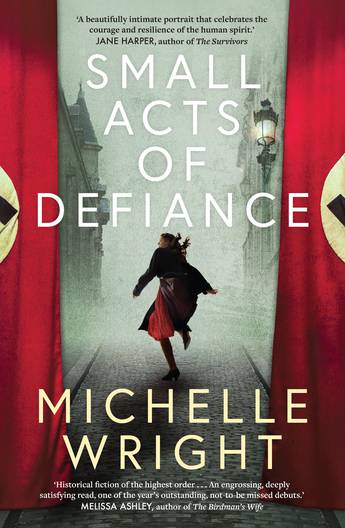
  • Small Acts of Defiance

    Small Acts of Defiance

    Small Acts of Defiance from Michelle Wright is without a doubt a brilliant piece of historical fiction that has been meticulously researched, which shows through in the storytelling as the nightmare of occupied Paris during the Second World War is set out as if it was an event occurring today, not more than seventy years ago.

    Having lived in Paris for more than eleven years, Wright adds authenticity to the story with intimate knowledge of the streets of Paris, especially around Notre Dame where a considerable amount of the story is set. During her studies there she began to realise that while the French are very passionate about some of the aspects of their history there is a less than flattering side that is seldom discussed.

    Lucie and her mother Yvonne return to Paris, the birth place of Yvonne, after a shattering family tragedy in Australia only to arrive at a time when the German invasion of Poland was dawning. Parisienne’s carried on living life as normal, refusing to believe that Paris would fall to their old foe the Germans, until there came a time only several months after their return, when this became a fact to be faced.

    As time progressed and it was apparent that Paris was now under the firm and brutal hand of the Nazi regime, Lucie and her mother struggled to adjust to a life so different to the one left behind in Australia. Dependant on her brother for their home and livelihood, Yvonne and Lucie find themselves trapped in a world of fear and distrust.

    Lucie, a talented artist eventually has to make a decision to use her talents to help the resistance movement, which becomes more and more apparent as she be befriends Alina, a girl of Jewish decent. When the Nazi’s begin a crackdown on the French- Jews, Alina’s grandfather Samuel is the first of her family be arrested and sent to one of the camps.

     Faced with brutality, hatred and an ever growing resistance movement, Lucie and eventually Yvonne have to decide how far they will go to create Small Acts of Defiance and defend the lives of those they now call friends.

    It is interesting to note Michelle Wright has used the little known and very dangerous rescuing of new-born babies from the maternity hospitals, to use in the fabric of the story; a campaign that was carried out by women across Paris in the darkest days of the Nazi brutality at enormous risk to those involved.

    It is hard to believe Small Acts of Defiance is a debut novel from Michelle Wright as the work flows, is totally immersive and brilliantly written.

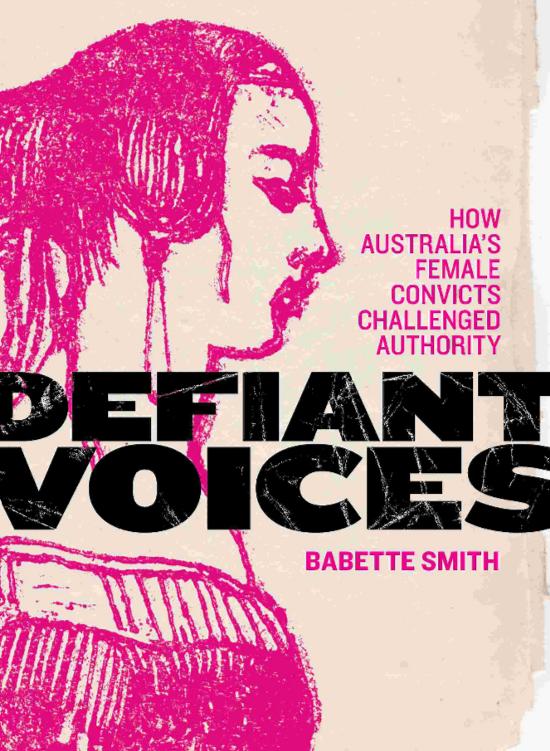
  • Defiant Voices: How Australia’s Female Convicts Challenged Authority 1788-1853

    Defiant Voices: How Australia’s Female Convicts Challenged Authority 1788-1853

    Many Australians take pride in the fact that they are a descendant of a convict. Generally, until recently their genealogical research has understandably focused on male convicts, as during the period of 1788-1853 only 25,000 female compared to 163,00 male convicts were transported. 

    Historian and writer Babette Smith first work “A Cargo of Women” opened a new perspective on the women prisoners sent to the penal colonies in Australia. Her latest book ‘Defiant Voices’ collates a huge volume of research to dispel many of the earlier misconceptions while giving a fresh insight on how the female convicts challenged authority and carved out a new life for themselves.

    This scholarly volume is a comprehensive chronological history of female convicts in penal Australia. It emphasises that many of these women were far from being powerless victims, who were subjugated, but who used their voice and every kind of sound (stomping, clapping, singing, clacking etc.) to demonstrated deliberate resistance to authority; generally achieving satisfactory outcomes.

    Women’s scarcity also gave them power, as they didn’t need references due to the excess availability of jobs.  By including individual biographical stories of female convicts, the author demonstrates their triumphs and achievements. The book is also generously lavished with Illustrations, images of artifacts from the convict era and letters from the National Libraries collection (in the main).

    By dividing this academic work into ten distinct sections covering the leaving of British shores to the cessation of transportation, the author has provided the reader with a most absorbing read, while also allowing it to be used as a source of reference for future publications on this most riveting topic.

  • Codename Suzette An extraordinary story of resistance and rescue in Nazi Paris

    Codename Suzette An extraordinary story of resistance and rescue in Nazi Paris

    Many a great story comes about by chance. Codename Suzette is exactly that. Stumbled upon while researching Red Orchestra, a retouched photograph of a woman known as Suzanne Spaak, was unearthed. Supposedly listed as a Soviet spy during World War Two, a known friend of Leopoldo Trepper, a man who was definitely a Russian spy, little was known about her.

    Anne Nelson made the decision to discover more about this mysterious woman and her wartime exploits, and in doing so uncovered one of a myriad of incredibly courageous stories, one of the many of which sadly, have faded into the past.

    Suzanne Spaak was born into a wealthy Belgian Catholic family, her father’s favourite and an intelligent woman. Falling in love with Claude at the age of 14 years, he was 15; they became secretly engaged, marrying in 1925.

    Considered a golden couple, she with the wealth, he and his family both wealthy and politically influential, they eventually moved to Paris: on one level to try and revive a flagging marriage and for Claude, a playwright and poet to be more easily accessible to theatre groups and his older brother Charles, who had already begun to make a name for himself in theatre.

    Alone and lonely Suzanne befriended Jewish refugees fleeing before the wrath of Russia, which once Germany invaded Paris, saw her become one of the leaders of an extremely comprehensive and effective resistance group.

    Her life was to change dramatically once the infamous Gas chambers of Auschwitz began to ‘process’ Jewish children aged between 3-17 years.

    She was instrumental in recruiting a group of people from all religious persuasions to ‘kidnap’ Jewish children from the orphanages, hide them with willing families and then somehow, in a desperate economy, raise the funds required to help feed them.

    Over time her network spread far and wide, enlisting the help, of many who put their own families and lives in jeopardy, and by using her contacts ,her social standing and realising this was her purpose in life, she and many others ultimately saved the lives of 1000 Jewish children.

    Not only does the story of Suzette paint a picture of bravery and courage, but as research often does, also uncovers a Paris under Gestapo rule, the underhanded dealings often done by neighbours and people who were trusted members of the community. Society was a dangerous place to be as to trust, to talk to the wrong person, to dare take on a member of the German occupation forces would result in death.

    Over the years munch white wash has been painted in relation to the reality of life in occupied countries, in Codename Suzette the white wash has been removed to show Paris as more of the reality; a very dangerous place to live.

    Riveting and engaging, the story of Suzanne Spaak, her family and the people who gave so very much to help others, offers a new and better understanding of what being a Jew during the horrific years of World War Two was like and the bravery of so very many who helped them.