Tag: research

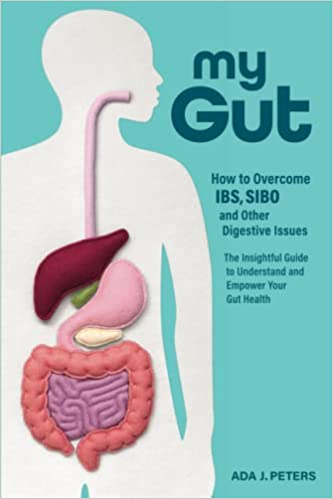
  • My Gut: How to overcome IBS, SIBO and other digestive issues 

    My Gut: How to overcome IBS, SIBO and other digestive issues 

    Ada Peters has suffered with a dysfunctional gut all of her life, thinking that this was perfectly normal, but as she grew older, married and had her family, she began to think that not everything that was happening to her was based around the effects of childbearing on the body.

    Depression, mood swings, bloating and general feelings of malaise were not ‘normal’ and on the advice of her Doctor she set out on a journey to try and come to terms with her many and varied health issues.

    In My Gut: How to overcome IBS, SIBO and other digestive issues she shares her medical journey which has gone on from natural therapies, a vast range of medical testing and consultations, dietary reforms and then back on the medical-go-round for more testing, changes of both diet and lifestyle, often too little or no avail. Often, what appeared to be a long term positive result, turned out to be a short term fix.

    The sheer frustration of moving from feeling great to feeling terrible finally saw her begin to investigate the gut and what causes all the many issues grouped under Irritable Bowel Syndrome, Small Intestinal Bacterial Overgrowth, Coeliac Disease and so many more conditions, most of which she has been diagnosed with at one stage in her life.

    Her findings have resulted in My Gut: How to overcome IBS, SIBO and other digestive issues, which is an absolute goldmine of information for anyone who suffers for any sort of bowel or gut condition.  While it is based on her research, backed up by medical resources, Ada Peters in no way states this is an absolute be all and end all book. She advocates that you undertake your own research, work out the best avenue to follow and take it in small steps.

     As the Gut or Gut health is now taking some prominence in the field of Medical Research, scientists are discovering the Gut has a massive impact on the entire body and if it is not in good health many of the vague and not so vague symptoms of ill health can be traced directly back to poor performance by the gut.

    For anyone who has gut based health issue My Gut: How to overcome IBS, SIBO and other digestive issues should be considered as a must read as it aids understanding of the how, why and what you need to know, that no one ever tells you.
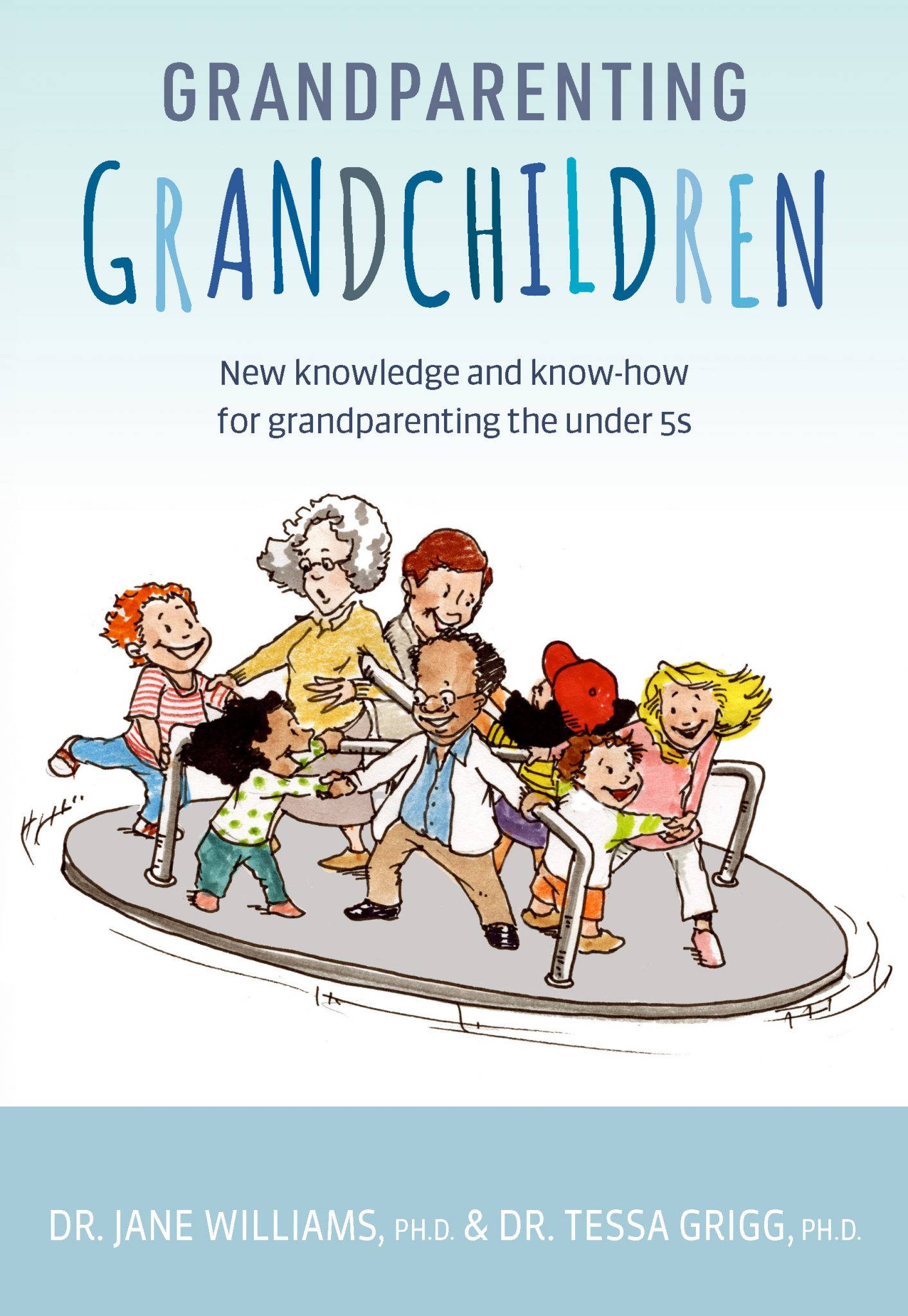
  • Grandparenting Grandchildren

    Grandparenting Grandchildren

    Research and knowledge about the human body and mind has exploded in the short time there is between Parenting and Grand parenting. Drs Jane Williams and Tessa Grigg have worked with young children for many years and have studied all the latest developments for children under five years.

    They have presented these facts in a wonderfully easy to read and structured book, Grandparenting Grandchildren. Their idea is to help people who have recently become Grandparents. Many of their suggestions are not new but embellish the way we work and play with babies.

    The authors discuss latest developments by scientists and paediatricians and use everyday language to show how important these discoveries are. We know that sugar is not good for a person, but the connection between the gut and the brain is outlined for us. So “No junk food at Nana’s.” 

    In the following chapters issues of mobility and exercise are explained. For a child’s brain to develop normally, the body needs to exercise. We also need to explore space and movement to allow proper development of the bones and muscles. This is explained with fun examples of how to combine games with effective structure. Other chapters deal with sleep, talking, music and singing, enhancing curiosity, and gifts to give.

    Grandparenting Grandchildren would be a wonderful gift to give to a new grandparent (or parent). The information is so interesting and relevant that it needs to be shared.

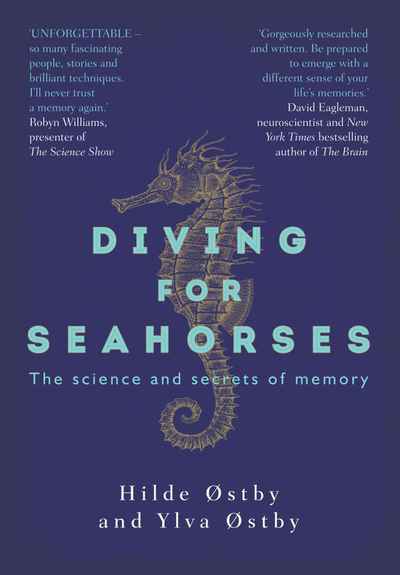
  • Diving for Seahorses: The Science and Secrets of Memory

    Diving for Seahorses: The Science and Secrets of Memory

    Memory is one of our least understood faculties. The authors have written this book with the aim of clarifying and explaining the research and discoveries that they know of to date. They tell many wonderful stories and the book is a delight to read. One sister is an acknowledged author, while the other is a neuropsychologist. The combination of writing for this topic is successful in conveying the understandings that are current about memory.

    In 1564 an Italian doctor was dissecting a brain. Inside the temporal lobe he discovered something that looked a bit like a seahorse. It was about the size of a silkworm but he named it Hippocampus. It was not until 1953 that an understanding of the function of this part of the brain was spotlighted. A man with epilepsy had many seizures a day and his doctor decided that removal of the hippocampus may alleviate some of these. From that point the man lived in the present as he had no long-term memory. The modern theory of memory is partly based on the studies done on this man for the next fifty years.

    Many experiments have been conducted on individual’s memory. Different physical conditions and environmental conditions have been explored. Divers in the freezing waters off Norway were tested for memory, and experiments in space have been on going. Even the smallest jelly fish has a type of memory shown by its choice of direction to follow. A songbird put into another nest as a baby will learn a song not used by his own breed.

    Many findings suggest that it is only humans who have the ability to look back in time, “Regardless of context.” There are many side issues of interest as well. For example, the sense of smell and taste is closely connected to memory.

    The fascinating facts about the research into our memory are written in such a simple and story like way that the information is interesting and easy to access. So, if you were asked about your strongest memories, and your fondest memories, what period of time in your life would that cover?

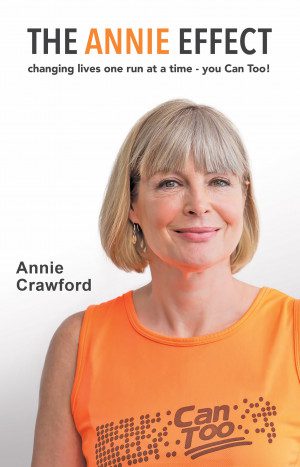
  • The Annie Effect  Changing lives one run at a time-you Can Too!

    The Annie Effect Changing lives one run at a time-you Can Too!

    Can Too is a charity that has changed so many lives in the most unexpected ways, by providing a pathway to facing fears, losing weight and gaining self-confidence, just for starters. Can Too, a non-profit organisation, channels all the monies raised into cancer research which has given many young research Scientists the time and funding to dig ever deeper into the causes and possible cures for some of the more challenging cancers that attack the human body.

    But how is it that one woman searching for a reason, a purpose in her life, can step back more ten years after starting this organisation and say – Hey, well done! In this very personal memoir Annie Crawford offers a window into believing in self, believing that, Yes, I can do it, whatever IT may be.

    The story begins in her childhood, growing up in a family of seven children in the suburb of Normanhurst, with parents who always looked at a challenge square on and worked out ways to meet them as they came along.  This was a good foundation for the many challenges and issues of self-doubt Annie was to face in her roles as a Social Worker, mother and wife and then as the founder of Can Too, many years later.

    Her love of running was to be the instigator that was to see Can Too evolve when the family returned to Australia after many years living and working in Switzerland and America. This return to Australia also saw Annie once again, trying to work out what was the purpose of her life and what was it that she really wanted to do.

    A glimmer of an idea, thrashed out with her husband Simon, led to Can Too being established with a foundation base of just seven, which slowly grew to 25, then to 54 people registering to undertake the training program for the Blackmore’s Sydney Running Festival and raise funds for Cure Cancer Australia, the organisation that supports young Australian scientists in cancer research.

    From this very humble beginning Can Too has now become a Foundation, has raised more than $18,000,000 has coached and inspired more than 13,500 people and offered the hope of a cure to many thousands more.

    As you move through the chapters of Annie Crawford’s life to date, the most powerful thing to be presented is the complete understanding she came to when she understood fully, that by giving back, she received far, far more than she would ever have expected on the day when she and Simon sat down and discussed the fledgling idea that was to become Can Too!

    As she says on the final page of the book, ‘There were once so many things I thought I couldn’t do, but now I know I can do anything. And you know what? You can too.”

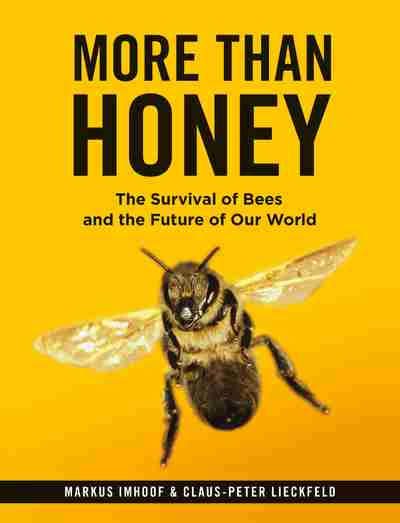
  • More Than Honey

    More Than Honey

    “If 70 percent of all cattle or 30 percent of all chickens were to die annually, states of emergency would be declared everywhere. The death of bees is at least that dramatic and with even more far-reaching consequences.” More Than Honey

    There has been much research carried out on the plight of our little fuzzy, busy Bees worldwide and the findings are alarming, to put it mildly; the bee populations of the world are dying, not slowly, but rapidly and when you start to read, even just a little, it is perfectly understandable. Actually it is horrifying!

    We, by our fiddling with natural order of things are committing a slow form of suicide by killing off the bees. Over exaggeration you may think or say, but once you have taken a read of More Than Honey, you will perfectly understand the damage, trauma and destruction we are creating.

    Although much of the data gathered relates to America and Europe it translates to other food bowl producers such as Australia, New Zealand and Asia and is a telling piece of work by Imhoof & Lieckfeld. They describe the Bee as an intellectual addition to this world; one that has immense capabilities and definitely does far more than produces honey. This information makes fascinating and astonishing reading.

    The truth of it is that without Bees we would be a hungry race of people living in a desert region with little or no food. Certainly not the food we have become accustomed to eating on a daily basis.

    That we owe our wellbeing to this highly evolved, talented little creature is a humbling though but sadly not one we, as this so enlightened race, bother to spend time considering. Interesting, is it not! The problem being the way we have allowed food to be grown to feed the masses raises many, many issues with genetic modification being only one of the many.

    Transportation of masses of bee colonies from one place to another to pollinate mass orchards, crops and the like is another, with many Bee’s dyeing on the way is one that many are not aware of strangely enough, as it is a matter which, unless you are involved, causes the end user little concern.

    But, and it is a big but, unless we begin to start taking note of how out demands, and ever increasing demands for foods, is beginning to seriously affect our ability to be able exist on this world we, the human, enlightened, educated peoples will eventually be no longer.

    What we, as a modern society are doing to this magnificent little Bee is unforgivable. But there is hope as, although agriculturally, bees are in decline, there appears to be a renaissance happening within the cities, as more and more people within the urban environment begin to keep hives for fresh honey and to help pollinate their small plot of land. While this will help a little, preserving various species of bee, it will not overwhelmingly solve the problem. But what to do is the question of which, at this time, there is no one, specific, quick fix answer.

    The answer lies in Corporations facing up to the effect and damage their methods of mass production of foods, the chemical usage and over stressing of bees has created, and a concerted effort made by all peoples to fix that which is most definitely, broken.

    Unrealistic you say: But consider the very real, very close alternatives.

    In a quote attributed to Einstein he states that ‘humankind cannot survive without bees’ and he also says that ‘we cannot solve our problems with the same level of thinking that created them’.

    The final question there to be asked as posed by Imhoof & Lieckfeld in this work and the documentary of the same name is ‘where do we, as a civilization go to from here, if we will not listen, will not observe and keep on blindly charging down the same pothole ridden pathway, failing to fix up the potholes’?

    Makes you wonder, does it not!