Tag: refugee

  • Daughter of Bad Times

    Daughter of Bad Times

    Looking at Australia in 2075, Rohan Wilson paints a picture in Daughter of Hard Times that portrays a future were all the very worst aspects of our society have flourished and rule the country. Big business’s with ideas only of profit are running many Government Departments, including prisons and Refugee Sanctuaries.

    The story opens with some refugees from the Maldives who survived a tsunami which wiped out all of their families. To stay in Australia, they are housed and work on a conveyor belt assembling small toys. They have a quota which is strictly monitored, and they have to pay for their accommodation, water, food and all the things that they consume. Yamaan, one of the refugees, has a bill of over $40,000 dollars. To repay this he will have to spend many years working at the camp.

    The owner of the huge Corporation which is in charge of prisons and refugee camps is a multi-millionaire. She constantly works to cut costs in the prisons and refugee camps, implementing many money saving strategies. Her daughter Rin has fallen in love with Yamaan but thought he had died in the tsunami. Now Rin discovers that he is alive and is one of the poor souls who works and sleeps in the Refugee Camp. Although Rin’s mother disapproves of the relationship, the girl secretly visits Yamaan at the Camp and tries to set him free.

    This is a bleak, though not altogether unrealistic view of how our society could evolve if profit and wealth become our sole aims. The story is a look at the darker side of our nature. It focusses on power, and the absence of any compassion once the notion of profit is deemed to be all important. People vaguely remember words like teamwork, trust, kindness and compassion. These virtues are no longer valued by many and despair seems to have filled the void left.
     

  • The Beekeeper of Aleppo

    The Beekeeper of Aleppo

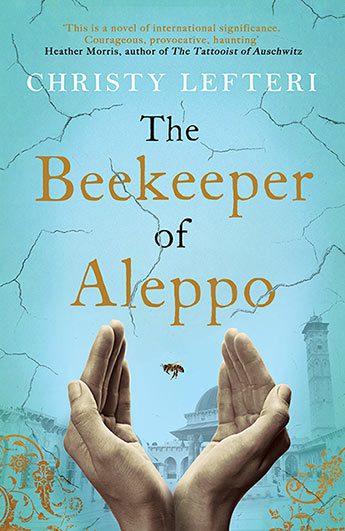
    This beautifully written story could be described as a gentle, loving horror story. The characters are rich and expressive, their experiences disastrous. The story describes a family Nuri, Afra and their son Sammi, who live in Aleppo, Syria. They love each other deeply and love their city. Nuri is very contented caring for bees with his close companion Mustafa. They care for their hives and always promote the wellbeing of the colony.

    Then comes the war and the tragedy it brings to the people who lost loved ones and their city, which is destroyed. A loss of trust, faith and the ability to believe in a better future follows. To remain in Aleppo would mean certain death, but to go and leave your child’s body, is an agonising decision many had to make. No matter where in the world these people go, they have seen and experienced things that can never be forgotten.

    Nuri and Afra eventually leave Syria, and try to find their way to England. Hardship becomes a way of life and merciless people an everyday experience. They arrive in Athens and begin the process of migrating to England; Then the waiting begins.

    Christy Lefteri was in Athens as a volunteer, working in a refugee centre in 2016 and 2017. It was here she met many people and realised they all wanted their story told so the world would know what their families had been through, and what was happening in their country.

    Listening to their stories, and seeing the children drawing the usual childlike scenes, but with dead and dying bodies, Christy realised that she wanted to relate their tragedies. So, the characters of Nuri and Afra were born from the many people she had helped and spoken with.

    Although the factual news had been reported daily from Syria during the war, it does not prepare you for the shock of putting this in the context in a family’s life. The losses these people suffered, will live with them always, but to continue to live means they must move forward, and with support have a future.

  • Going Back

    Going Back

    Going back to any component of a life already lived is always challenging, but when it is returning to a country left under massive duress, your life hanging by a whim, a mere thread, the reality is something different altogether.

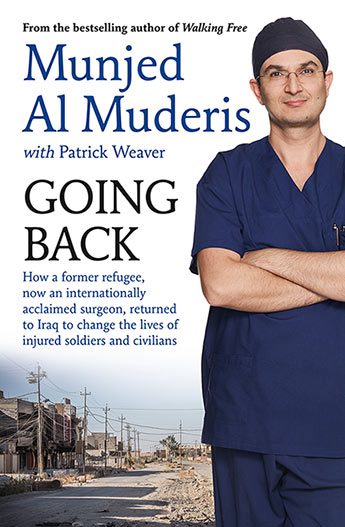
    Munjed Al Muderis’s story is one well known as a man whom, as a young Doctor fled the regimen of Hassam Hussain, finding himself one of the many thousands of refugees reliant on people smugglers to find a safe place, a place in which to begin to re-establish a new life.

    Eventually, and after some considerable time on Christmas Island in the Curtain Detention Centre, he was granted asylum in Australia. Not one to waste a very hard-won opportunity, he set about using his medical background as an orthopaedic surgeon to forge a new life and in doing so became a leader in the ground-breaking technique of osseointegration; a technic which implants titanium rods into the human skeleton which then allows robotic limbs to be attached, granting the person unimagined mobility and freedom of movement.

    A phone call from the Iraqi government requesting he return to Iraq to carry out much needed operations on army, police and eventually civilian amputees, set his pathway in a new direction, a direction he never, ever envisaged, that of bringing much needed humanitarian aid to the people of Iraq. He granted the request, but it was not until he was almost ready to land in the country of this birth, he began to have some serious second and third thoughts about what he had committed both his team and himself to, in the coming days.

    His story of Going Back fills in some of the many gaps in his life as an international surgeon, with many of the stories told full of heartbreak, acceptance and courage. He talks about the healing and help his skills a have been able to give to survivors of the Christchurch earthquake, soldiers from Britain, Australia, Iraq and the many Australian civilians who have been given the gift of mobility and in the case of so many people in Iraq, the gift of life.

    His insights into the horrors of the continuous war faced in Iran, Iraq, Egypt and Palestine/Israel is enlightening, his brushes with authority in Egypt and America interesting indeed and also laced with irony, in the case of the United States.

    Each chapter peels back the other side of humanitarian work in war torn, corrupt countries but it also shows the immense gratitude such work generates from people who have had enough of war, enough of politics and simply want to be able to lead a fruitful and positive life.

    Going Back is a wonderful, heart-warming look at the good that can be engendered world wide when politics, humanity and hope combine.

  • The Jade Lily

    The Jade Lily

    While she was overseas on holiday the idea for this book gradually came to the Kirsty Manning. In Honhkou, she noticed a “Rusted Star of David inset into a doorway.” That led to a visit to the Shanghai Jewish Refugees Museum. She has used historical research to detail a fictional family’s journey, and experiences during, and after, the war.

    The story outlines the journey over time of the Jewish Bernfield family and their lives, as the Germans invade their home in Austria. Narrated by Romy, the twelve year old daughter, and also Alexandra, her granddaughter, we pass from the present to the past to gradually delve into mysteries that have held the family together in love.

    When Romy, Papa and Mutti witnessed Kristallnacht, and saw their brother and son shot, they knew they had to leave Austria. Through a very good friend, they were able to get visas to China, and being a fine doctor, the father was offered a position in a hospital in Shanghai. They were privileged because of their medical backgrounds, and because they had money. The Bernfields made great efforts to fit in to the large Jewish Society of refugees in Shanghai, and they also made friends with local Chinese.

    Romy enjoyed her time learning a new language, meeting new friends and studying at school. Romy met Nina on the boat to China, and although Nina was living with an uncle, Romy and Nina kept in contact. Romy also had great friends in Li and her brother Jiang, whose father was also a doctor, but of Chinese traditional medicines. He and Papa shared many ideas.

    We meet Alexandra, Romy’s granddaughter, when she has been called to Australia as her Opa is dying. As Romy and Opa migrated to Australia from Shanghai, and raised Alexandra, she is sure of the love and family ties she will find. However, Alexandra wants to learn more about her mother, who died when she was young.

    The strength and love that dominate this story is quite remarkable. The calamities that Romy has faced as a young girl, then as a young adult, are enormous. The Japanese invasion of China and some of the atrocities committed there were witnessed by Romy, who used her medical knowledge to help the locals. Her parents had not left for work at the hospital when their building was bombed, so yet again, Romy witnessed the death of loved ones.

    It is hard to convey the fascinating search Alexandra has in China, while looking for information about her mother. It is also remarkable how little is known about the Jewish refugees in China. The characters in this novel stand firm in the face of adversity, and are totally loving, as their idea of family unity comes before all else.

    Such a unique story told in a gradual revelation of facts and ideas is compelling and great reading.

  • The Mediterranean

    The Mediterranean

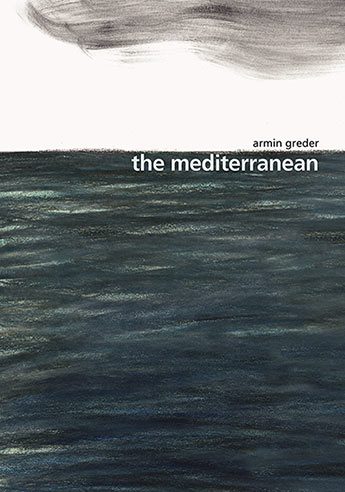
    To begin at the end is perhaps to begin at the beginning, with this powerful work by Armin Greder. Greder has once again taken a subject that is powerful, emotive and occurring on a daily basis, depending where you live and in what section of the of the Mediterranean coastline; that of the  refugees who board a boat, full of hope and despair, seeking a better life somewhere in Europe.

    On the first page the words ‘After he had finished drowning, his body sank slowly to the bottom, where the fish were waiting’ highlight, with the spare use of words the fate of so many, who have for many more years than is on record, attempted the crossing from Africa to Europe, paying dearly with their lives.

    It is known widely throughout the region that fishermen have for decades, pulled up the bodies from the deep in their nets and simply returned them to their watery graves, moving on with their lives.

    Greder has in stark black and white, with sweeping, powerful images created the cycle that did, and does, exist for so many people living in war torn and politically destructive countries, who sacrifice everything in the hope of being able to begin again. They pay the smugglers with more than they own to take them to a better, safer place.

    Sadly in this day and age the people who do make it, along with the people who do not, are rapidly becoming the faceless, the nameless displaced or dead, in countries that can no longer cope, or hold out hope for their future.

    Death, life, war, peace, hope and despair march across the pages, giving form and shape to the people, which according to the Afterword, written by Alesssandro Leogrande totals more than 12,000 deaths in the last three years.

    Who were these people, these bodies, which mount up and then ironically become fish food, which as is succinctly pointed out in the storyline, eventually return to the tables of the fishermen who threw them back?

    Cynical, bitting and hard hitting by the end of the book the lines become blurred as to right, wrong, fact, whitewashing, and responsibility: to ask or raise the question, who eventually has or owns the responsibility.

    The Mediterranean is not a comfortable read, but is certainly a book which evokes discussion, and in some small way, addresses the issues we all like to repress when we read in the newspapers of the world, the cold statistics of the numbers of people who have latterly or recently drowned in the Mediterranean.

    There is a beginning and there is an end, but as said, to begin at the end is to begin once again, to begin at the beginning!