Tag: refelction

  • Lost in a Trance

    Lost in a Trance

    In this delicately poised EP, Lost in a Trance solo pianist Eddy Ruyter takes a gentle and meandering journey into the world of massive changes the two years of COVID bought into people lives, no matter where they lived.

     He found the days eventually developed a certain slow, almost changeless ambience which he has captured in the four pieces that make up Lost in a Trance.  In so many way, for so many people who did not have the luxury of being able to move further than their apartments, life took on an almost trance like state, a matter of simply being and getting through another day.

    While in reflection of this sameness he realised that while restrictive, the slower pace of life presented a rare opportunity to to slow down, to begin to see and value the everyday aspects of life, often taken for granted. Snow falling, birds nesting, leaves changing colour, the many hued colours of the ever changing skies, family and the small things so often overlooked.

    Lost in a Trace is a short interlude in time introduced with the light Into Tomorrow, before drifting into Floating, a beautiful soft, resonant piece which is most enjoyable.

    The signature piece Lost in a Trance is faster, more up-tempo with several layers filled with life and a lovely sense of vibrancy.

    Concluding with Sundays Calling the soft sound of the keyboard gently stroked, brings with it an image of a man, a piano with the time to simply sit and dream, capturing emotions in a beguiling manner.

    Short but enchanting Lost in a Trace, while created out of the sameness of the COVID epidemic, is a soft, gentle and peaceful moment in time to be enjoyed at any time.

  • Standing In Motion

    Standing In Motion

    Standing in Motion is an intriguing title for the latest release from Holland Phillips, which is both refreshing and absolutely charming, from the first immersion in a musical journey that will take you places in a single moment of time and allow a little delicate romance to colour the day.

    Capturing the imagination from the first delicate sound of strings is the title track Standing in Motion which creates a peaceful, gentleness before the sharper notes of the piano form the body of the composition to sweep across the spectrum in a subtle layer of light and dark.

    Charming and intriguing is the quirky piece Matters of the Heart which in its sheer contrariness comes with a smile built in, as if the voyager is somewhat confounded by the vagaries of the romantic. Harpsichord, French horn and the deeper tones of the orchestral backing make this a deceptively delightful piece.

    But when it comes to refreshingly eloquent in a musical context Hours before Dawn is full of pure magic that entrances, beckons and encourages a brief journey into time, when the night is not yet gone and dawn has not yet arrived. This beautiful piece creates a time of reflection, regeneration and rebirth and in subtle shades, moves the work from new-age to contemporary with effortless grace. Gorgeous.

    How can the title Trail of the Pixies fail to capture the imagination; spacey, slightly dark and almost mischievous, as these fey creatures are known to be, Holland Phillips encourages a journey into their world of mischief and dance with this catchy number. How could you refuse?

    A captivating piano piece Chasing Daylight, is threaded with soft flute before the deeper underpinning of the orchestra gives a rich body to the melody allowing the movement from soft and gentle to a lighter more up-tempo beat full of energy.

    Whimsical and immensely enjoyable Reasons to Dream is enchanting, dainty and forming the perfect background to simply entice the mind and emotions to be in the moment, to dream, to wander, to enjoy.

    Drawing a beautiful work to a conclusion is At the Close, once again a piece that encourages a sense of dreaming, a sense of timelessness, of change and peace, asking nothing but giving much.

    Throughout the compositions touches of a jazz beat intermingle with the more electronic ‘drone’: dashes of classical formations are discovered, which creates within itself a story to be told. But perhaps more than that, it is music to simply be enjoyed without any attempt to dig further into the meaning within the music other than to offer pleasure and encourage a little timeout.

    Standing in Motion is an album which is in its broadest context, helping to change the term ‘new age’, as a generalised form of music to a more contemporary standing as it is a delightful blend of mystical, enchanting, contemporary and so much more.

  • Life Sometimes

    Life Sometimes

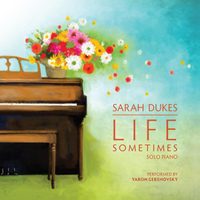
    Composition by Sarah Dukes and translation by Yaron Gershovsky makes for a wonderful, refreshing fusion of precise notes and performance in this beautiful solo piano album.

    Each piece in this latest release, some five years in the creation, is a completely individual piece that overall comes together to tell a tale, create a mood, present perfection or as close as it gets to purity in construction and presentation.

    The first two tracks Stargaze and Violet Beams set the ambience for what is to follow, a catchy, slightly more upbeat piece in Rainbows and Crystals followed by As the Wind Blows which is delicate, intriguing and descriptive of the various moods the wind takes on its journey; from teasing to gusty and all other paces in between.

    Black Rose brings in a slightly more sombre overtone with the precise notes played in a deep and slightly melancholy manner, reflective and evocatively peaceful. Closer is simply that, a well presented piece that draws you in, draws you closer to the music, the heart and the rhythm that is life in one form or another. Tripping delicately along you meander into an interesting closeness with each note played.

    Hidden within each piece is an almost compulsive, although subtle, enticement to become involved, to allow yourself to be immersed, to simply join in the flow of the river of life and be taken wherever the music will take you.

    Dancing in the Dark changes the tempo once again to a light and tantalising piece that allows the imagination to visualise the spirit dancing with joy, a light and happy heart moving slowly and gently towards the final piece One, which seamlessly combines all the emotions of the previous pieces into one gloriously representational offering on the steady flow of life; the ups and downs, the joy and sadness and the reminder that all things move on, all things change, all things become renewed once again and perhaps, most importantly, all things are unique and come to us only once.

    Listening to this album several times over finds you relaxing, dreaming, drifting along, and moving into an almost mediative state of mind, where the stillness comes upon you without conscious thought.


  • Poems That Make Grown Women Cry

    Poems That Make Grown Women Cry

    The title is a misnomer in that the poems in this anthology will make both men and women cry, should they be read at a time in their lives when they need a comforting word, a reflection on life or simply are emotionally vulnerable and open to having a good cry.

    The purpose behind the book, by this interesting father and son team, in conjunction with Amnesty International is to make us open our hearts, to have a good cry, to let it all go and to spend a little time in reflection.

    Of the 100 poems selected by the 100 women asked to contribute to this work, each piece chosen has meant so much to the particular women at a specific time of point in their lives.

    A time when they too have needed to take a minute out to simply be, the words they have selected are all powerful, created as an art form, each an exquisite collection of words wound together to express emotion in the only way the poet could, through his works, her words.

    From the simple stanza, To A…, written to Antonia Fraser, by her husband Harold Pinter about eighteen months before his death, to John Keats Ode to a Nightingale which he wrote in 1819, selected by Marina Lewycka. His words have meant so much to her over the years and touch her deeply each time she revisits the poetry. Each piece is laced with poignancy.

    Judi Dench and Emily Mortimer selected Lord Byron’s , So, we’ll go no more a roving, a piece that means so very much to them – Judi Dench in memory of her late husband and Emily Mortimer, her father.

    Germaine Greer has selected the words of Clive James as he reflects on his past and his own approaching death from leukaemia.

    Each piece chosen is essentially a commentary on life and death encapsulated into a few words; because the basic fundamentals of life are stripped down to a few words in most instances they tend to be peaceful, yet reflective, even while being confrontational.

    But all this brings us to the point of why put together such a collection; as with most things it has been a series of idle chatter, vague thoughts and a challenge to see what may happen, coupled with a desire to reintroduce poetry to the people in a time when to read poetry, to create poetry, to cry over anything is not considered the ‘done thing’.

    The title of this book is, if you have not discovered the previous book, titled Poems that make Grown Men Cry, could be considered as many things, provocative being only one of them, but definitely of an interest. The contents are as sound and lovely as they have always been and interestingly, as a good number of them were written many, many years ago, still as reflective of society and all its woes as they were when written.