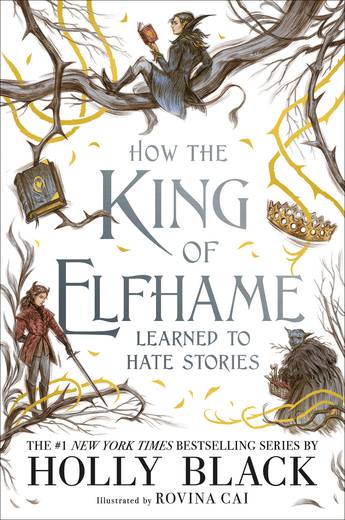
Fantasy: It’s an interesting genre and by interesting I mean I have had an interesting past with it, growing up reading Harry Potter which I loved, didn’t mind the Hunger Games and couldn’t get into the Twilight Saga. As for the Song of Fire and Ice series, I struggled to get through one book a year, despite it being such a good read. So it’s fair to say I have a conflicted relationship with the genre and now I can add How the King of Elfhame learned to hate stories to the fantasy books I have read.
How the King of Elfhame learned to hate stories is a fantasy book by Holly Black and is the third book in The Folk of the Air series. Now I will be honest, I haven’t read the other three books in the series therefore I struggled with this book. The book is told from the perspective of a certain Prince Cardan, who taking from the blurb of the book, eventually becomes a High King of the land of Elfhame. The book reads as a bit of an origin story and Prince Cardan is an unpleasant person; a trait he apparently carries with him into adulthood. Elfhame itself consists of a series of large islands rather like the Philippines or Indonesia. The story is told in third person.
Unlike other fantasy books I have read How the King of Elfhame learned to hate stories dedicates a quarter of its pages to illustrations. The artwork in this book is done by Rovina Cai and is quite good. I won’t comment on the style of the illustrations as I am neither an artist nor have any academic knowledge in art. However, though the illustrations make the book physically more attractive I feel that it would have been better to have used those pages to add more to the story.
As I said previously I struggled with this book, although had I read the other books then perhaps this wouldn’t have been the case. However the story is good and the illustrations add a nice, if slightly unnecessary, touch. The book is not that long and can easily be finished within a day. From reading it I believe it is more geared to a younger audience such as early teens rather than adults or young children.