Tag: questions

  • I Love Harriet Kippley 

    I Love Harriet Kippley 

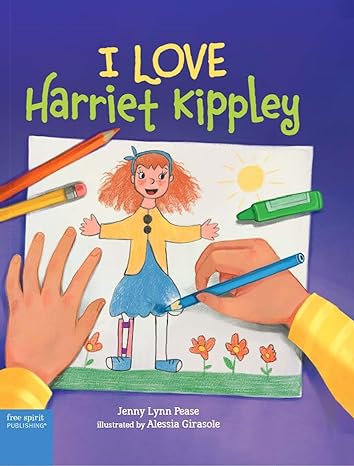
    Harriet Kippley’s art class was to have a party. They had to create a painting of something they loved for the event which was causing Harriet to become seriously worried. She simply did not know what to draw.

    All her bright ideas had already been taken and no matter what other ideas her family came up with, they were already taken or simply far too silly. What was she to do. After much thinking she went and asked her family what it was they loved the most and that is what she painted.

    Jenny Lynn Pearse has created a delightful story about loving yourself in this colourful and entertaining story of Harriet and her family, as they let Harriet know that she is the one who is special, that she is the one that they love.

    Bright and colourful the artwork from Alissia Girasole captures the worry when Harriet struggles to come up with something that is suitable and different, as well as the happiness and joy when Harriet discovers answers to her worries. It also presents in a very gentle style, the important issues of learning to ask questions to try and get answers to the problem and understanding that it is alright to love yourself.

    At the end of the story there is a lovely little section titled Questions and Ideas for You which helps understand the many facets of I Love Harriet Kippley while encouraging the reader to draw a picture of themselves and all the wonderful things they love about themselves.
  • The Bedtime Book of Impossible Questions

    The Bedtime Book of Impossible Questions

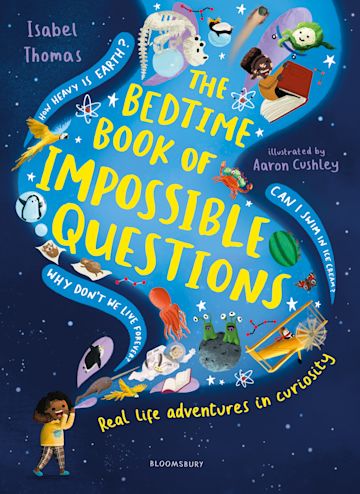
    What is impossible about The Bedtime Book of Impossible Questions is the ability to put it down. As much as you may wish to share it with a child it is hard not to keep reading yourself to find the answers. Hilarious!

    The introduction explains that Science is not so much about knowing a lot of facts, but about asking questions. The best questions though are the IMPOSSIBLE ones, such as “If chickens are so delicious, why don’t they eat themselves?”  The reader is encouraged to explore life and come up with their own questions.

    Following pages have questions which have answers such as “Why does rain smell rainy? Could I touch a rainbow? Does yellow look the same to me as it does to you? The pleasing part of these discussions is the logical and simple explanation given. For example, the question, “Why do I like my friends more than I like other people? is given a serious answer.

    Friendships have been studied and it is found that we “Tend to make friends with people who are like us.” Being of a similar age and living close to each other helps, but it seems that expressions and body language often match our own.

    There are approximately 40 questions posed and answered in this book. Each one is given a page of simple explanation. The illustrations and colourful pages add to the pleasure of reading and help to give visual answers and perspective. This is such a fun way to learn.

  • Brain Briefs: Answers to the Most (and Least) Pressing Questions about Your Mind

    Brain Briefs: Answers to the Most (and Least) Pressing Questions about Your Mind

    There are always a thousand and one things there to be wondered, pondered or marvelled about or over, as we travel along the pathways of our lives. Sometimes the answers are there, but mostly, if they are, they are something that may, or may not be possible, or even probable.

    In this lively look at what really may be going on in the brain, so many of the imponderables in life may be answered. Well probably!

    How many times has a rhetorical question been posed, while seeking to find the solution to a problem; problems such as how to catch out a liar, or does multitasking really work, or does time speed up as we are getting older, are taken out of the closet and given a serious analysis with an entertaining component, in an attempt to answer what may be to many, unanswerable questions.

    Now a thoroughly confusing hypothesis has been presented, settle in to enjoy, mind you in small doses, the revelations about to be forthcoming from this team of Markman and Duke, who really do know what they are talking about as far as the brain is concerned.

    Clever little aphorisms are dotted throughout the book, generally as the summation to the question being discussed, such as chapter 15, where ‘Does time speed up as we get older’, is analysed and is answered, slightly tongue-in-cheek, with ‘time flies when you’re getting older’ which relates to learning cycles, memories and how the two change and combine to create a richness to your days and lives as you look back.

    And then there is the seriously concerning chapter 23: ‘How much of what we see is real’, which opens up many, many doors in the mind and the psyche! This is answered in the short by ‘to see is to assume’ – perhaps you need to read the chapter to really get this one!

    ‘Can delusion be a good thing’, is something that only the deluded may  be able to answer; that will depend on what is behind the delusion at the time, but is based on how you perceive your little corner of the world and how this is chosen to be used – as a motivation or an excuse.

    So many issues, so many answers; by the time you have worked your way through the 40 questions posed, and the 40 sets of research based answers, all coming from a firm basis of the latest research across the fields of psychology, you are sure to have at least some of the answers to the world’s most vexatious questions and have enjoyed discovering just what it is that does indeed tease the brain!

    A thoroughly enjoyable, entertaining and informative collection of bits and pieces of intrigue and interest presented to tantalise the mind!