Tag: Prague

  • Christmas In Prague (Remix) – Single

    Christmas In Prague (Remix) – Single

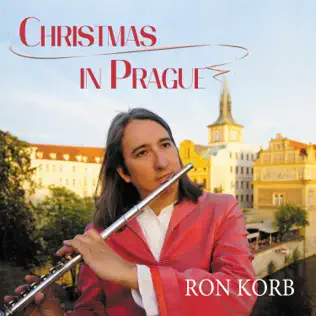
    In the wonderful spirit of Christmas Canadian Flautist Ron Korb, with Margaret Maria on cello, Patrick Therrin on glockenspiel, Laila Biali on Piano, George Koller on bass and Larry Crowe on percussion, have come together in beautiful harmony to present this year’s festive offering Christmas in Prague, composed by Korb after time spent in this amazing City during the festive season.

    Soft, gentle neo classical sounds of glockenspiel, piano, flute, cello with dainty washes of percussion come together in seamless harmony, the flute holding the piece together, often underpinned with the deep vice of the cello which enriches this short but delightful song.

    Eloquent and somewhat different to the usual festive music Christmas in Prague reaches out with a gentle message of peace for the Christmas season.

  • The Museum of Broken Promises

    The Museum of Broken Promises

    The Museum of Broken Promises as a title is instantly captivating, and even more so, when the reader discovers that, in the story, such a building exists. One begins to think and wonder about the person who instigated this museum, and why. What were the stories behind the exhibits that it contains? The train ticket, the baby teeth, the bridal veil….one can only imagine their history and past.

    This story is so much more than the museum, however. It is a time slip story which moves from Paris to Prague and to Berlin. It is partly set during the time of the Communist rule in Czechoslovakia and is very informative of the horrendous conditions which were imposed on the population.

    The main character is Laure, whose father was English and Mother French. She moved to Paris after her father’s death and was employed as an au pair for a Czech family living in Paris. Life is good here, but she is informed by the father that the family has to move to Prague, and they want her to accompany the children.

    It is in Prague that the young woman discovers the horror and the restrictions of everyday life under such a devastating regime, where being followed is the norm, and suspicion is in the very air. As she is wandering around Laure discovers a puppet theatre.

    All of the stories that are told could be seen to have a suspicious element, and what better way to encourage bravery and resistance than through puppet stories. There is also a very rebellious musician who Laure becomes involved with. She becomes aware of the dangers of this friendship after a violent confrontation.

    Later in the story we find Laure back in Paris with enough money to buy an old building which she converts into the Museum. Her own exhibit is a train ticket, and at the end of the story the riddle of the ticket unfolds.

    The story is well written, with wonderful descriptions of the sights and sounds, of both Prague and Paris. The atmosphere and tension are remarkably well crafted, as is the wonderful sense of freedom in Paris. The characters are complex and their behaviour almost understandable.

    As for the actual museum, the concept is still a great idea and the ever-changing collections something to reflect upon.
  • Alice to Prague

    Alice to Prague

    Tanya Heaslip in Alice to Prague has written a partial autobiography about the middle years of her life in which she discovered a new world. The story begins in Alice Springs, where she and her family lived on a cattle station. She and her mother often danced around the kitchen to waltzes and music which inspired dreams of grand castles and ballrooms. Not unusual if you consider the permanent brightness and heat in which they lived.

    At the end of her schooling Tanya wanted to study law and be in a position where she could help people less fortunate. After working for several years, her ambition to see those castles and travel became very strong and so she travelled to Czechoslovakia. Here she was lucky enough to find a job teaching English to senior students and staff; luckily, she could sing and play the guitar, and so a lot of her lessons involved traditional Australian songs which the students loved.

    Tanya struggled for a long time. She had no language, no knowledge of the culture, and little money. Everything was a major chore; supermarket shopping was a nightmare. However, gradually she developed friendships, which helped her to settle, and the friends helped with advice.

    Many issues arise which the author discusses. She begins to understand the “Australian Aboriginal concept of connection to Country… I now knew in my core that connection to country was a primal human need..”

    Women friends in Prague discussed the concepts and ideas they were fed about “Westerners,” their greed and disregard of any culture or understanding, ideas which were perpetuated by the communist regime. The women agreed that if they’d had any outside contact with people like Tanya, they would have all been more understanding.

    Gradually Tanya began to settle into a routine, with the dreary winter weather giving way to spring, a magical time to explore the old city and see the cobbled streets and spires. She found romance but the complexities of her situation present many issues. Perhaps the love wasn’t like “butterfly down,” so rare and special that it lasts forever.

    We have all looked at the Christmas cards with snow and sleighs and castles, but for the author these scenes came to life and her little girl’s dream came true. This is a warm and tender look at special times in Tanya’s life, and the great friends she made along the way.