Tag: political

  • Bad Neighbours

    Bad Neighbours

    There are many aspects of a novel which need to be covered to meet the standards of a “Murder mystery genre.” Joanna Jenkins has done this elegantly in Bad Neighbours, and the result is an immensely interesting and complex story. However, the reader never gets lost in the plot. Chapters are narrated by the main characters, so there is never confusion, and multiple factors are discussed to clarify back stories of the people who live in the apartment.

    Bad Neighbours is set in Sydney and the descriptions of that city and harbour are a good backdrop to this tale. Ruth is the main character. She has been given an opportunity (by a work colleague) to purchase an apartment near Potts point, a wealthy location. Being a litigation lawyer, she has a curiosity about her new residence, and the people who own the other apartments.

    She gradually meets these people, and they have their own stories to tell. In the lightwell in the basement of the building lives Ben. His father owned an apartment but sold it. Ben is waiting for the money since his father died and has been let in by one of the residents. His swag stays there and he sits in the garden for a while during the day. Most people avoid him and many want him gone from the building.

    We learn about Ruth’s work and her friends. She is investigating a bank’s attempt to give misleading information for a housing development. One of the culprits is living in Ruth’s apartment building, which causes concern over conflict of interest.

    Then one day, while Ben is lying in his swag, a woman comes by who helped his father sell his apartment. The following day, Ben is found dead. Forensics show he was poisoned, and a bottle is found in Ruth’s garage which matches the poison.

    The building of tension which is reflected in Ruth’s workplace, her home and neighbours begin to mount up. As she starts to investigate, with the help of two friends, a huge deception is uncovered. This is a truly clever read!
  • Zero Ri$k

    Zero Ri$k

    They called him ‘The Toad’ and he was universally disliked. They dreaded the meetings he Chaired as the head of the Financial Risk Operations Group of the National Bank; he loved the meetings, the rush of power, the control was like a drug to him, but he was also considered as somewhat of a financial genius so his actions were overlooked for the so called better good!

    Holly Brand was only his latest victim, even though she exposed serious issues within the security systems of the Bank, leaving them vulnerable to a well-designed cyber-attack; she was instantly dismissed as she used his Bank account to illustrate her point!

    Eight years on, with Christmas knocking on the door, Rob Tanner was dreading the annual family gathering where he would once again have to tolerate his father’s open dislike for him, while trying to keep things civil. He is also planning to enjoy a well-earned break from the Bank.

    He has moved up the ranks in the National Bank, but is still Martin Keller ‘The Toad’s’ fixer. He gets a call from the Chief Risk Officer to say there is a serious issue at the Bank unlike anything he has ever seen before; one thousand accounts have mysteriously had a zero added to their balance.

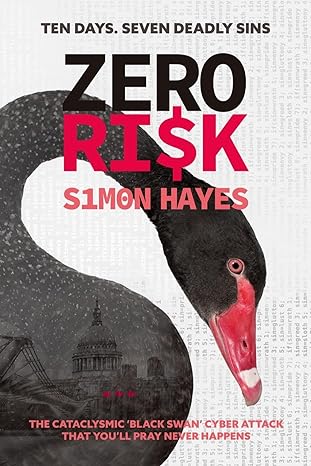
    So begins Zero Ri$k, one of the most intriguing, fast paced, riveting reads based in and around the world of Finance, cyber-crime, politics and truth to have hit the Booksellers this year. It is a blockbuster of read that moves from the Halls of London to Germany and Switzerland in an effort to track down who or which group of cybercriminals is trying to bring down the British Banking system.

    Set during the Christmas holiday period, a series of cryptic clues are being sent at 11am daily, along with another zero being added to further accounts. The clues, all based on Hironimus Boshes painting of the seven deadly sins, has even the best cryptographers confused. The longer the delay in meeting the demands, the more zeros are added until a crisis point is reached.

    Time is running out; the British Prime Minster is refusing to meet what are simple demands, and those who previously have supported him, are beginning to wonder what the end result will be if he will not listen to his advisors.

    Simon Hayes has captured the very murky world of High Finance and Politics to perfection creating characters’ who are undoubtedly based on an amalgam of people he has met over his many years of working in the world of High Finance.

    He looks at the very relevant points of greed, ego and power along with ruthless determination to   continually refuse to take the blame in any legal sense, for the of the financial and political scandals so prevalent today. He also tilts at the world of technology, the speed it is advancing and the massive influence it has over everyday life.

    Zero Ri$k It is also a novel of courage; standing up for what you believe in, facing your own reality and the intrinsic and incredibly important fact, of Truth!

  • Old Rage

    Old Rage

    SHEILA HANCOCK

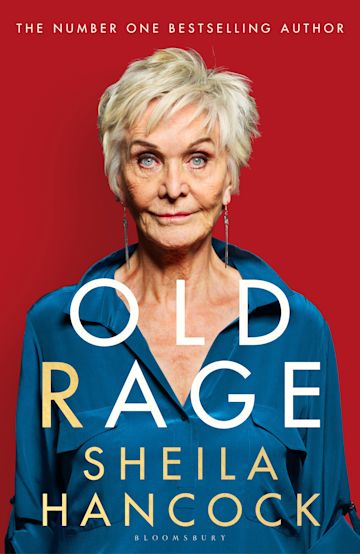
    Old Rage is the fifth book Sheila Hancock has written and the fourth one to follow her life’s journey. In her 80’s, Sheila begins this story by sharing an invitation just received. It is an invitation for her to be presented for consideration to be a Dame of the Realm, for her contribution to the Arts. This shows the respect she has gained for a memorable career on the stage and screen. Indeed, she is a woman of great thoughtfulness, and unafraid to voice her opinions on politics, and social conditions.

    In January 2016, the actress began this diary. She has written her thoughts and memories down all her life and is now using the diary format to present this book. Her thoughts on aging disgracefully and unpredictably are memorable.

    Sheila’s opinions on her aging body and slowing mind are fierce and humorous. She bitterly resents her inability to complete tasks which once would have been easy. But she doesn’t give up without a fight. Climbing a mountain and sleeping rough for a film shoot is what you do at 80!

    Politically Sheila is aware of her country’s decline in political rigour and she laments leaving Brexit. She attributes her passion and thinking to her early childhood, growing up in war torn Britain, and playing as a child in bombed out sites. Her Quaker faith also dominates her thinking.

    Old Rage is often difficult to read, as Sheila grapples with an aging body, a political scene she abhors, and a family’s perception of her frailty. She is forthright in the appraisal of her life. An excellent, if somewhat challenging, read.

    Sheila Hancock.

    “Sheila Hancock is one of Britain’s most highly regarded and popular actors, and received an OBE for services to drama in 1974 and a CBE in 2011. Since the 1950s she has enjoyed a career across Film, Television, Theatre and Radio. Her first big television role was in the BBC sitcom The Rag Trade in the early 1960s. She has directed and acted for the Royal Shakespeare Company and the National Theatre. Following the death of her husband, John Thaw, she wrote a memoir of their marriage, The Two of Us, which was a no. 1 bestseller and won the British Book Award for Author of the Year. Her memoir of her widowhood, Just Me, also a bestseller, was published in 2007. She lives in London and France.” Courtesy Bloomsbury Publishing.

  • Everywhere Everything Everyone

    Everywhere Everything Everyone

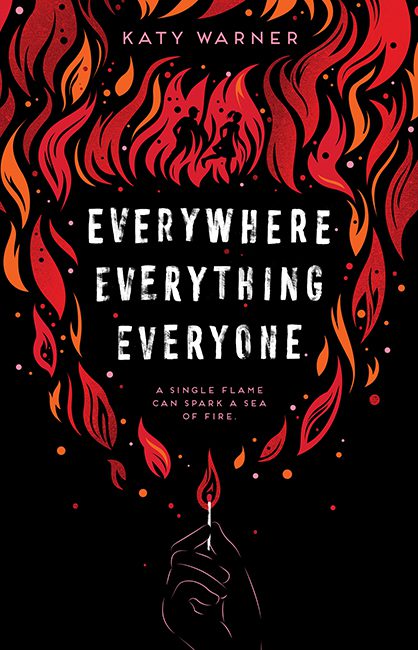
    Everywhere Everything Everyone from Katy Warner will keep you reading and turning pages until solutions have been found. She has written a fast-paced tale with twists and turns to entrance the reader in a setting which could be anywhere, with well developed credible characters, the situation, scarily possible.

    We first meet sixteen-year-old Santee as she is running home. She has been to school for the day and then has gone to try and see her father. Her mother is frantic when Santee comes to the door of their apartment, as she has only just arrived before curfew.

    By now we realise that this is no normal family and their situation is causing great stress. This family live on the wrong side of town, where the poorer people reside. The people are known as a THREAT or POTENTIAL THREAT. As such, a person can be taken away and incarcerated, which is what happened to Santee’s father. He made the mistake of speaking out against the ruling regime.

    Santee is a loner; isolated at school because of her father. Zac, a new boy to the school, befriends her and admires her fine art work. A friendship gradually develops, and when she finds out that Zac’s mother has also been taken away, their bond deepens.

    One afternoon Zac asks Santee if she will go for a ride in the car with him. When the car breaks down the pair are stranded for the night. The following morning, they hitch a ride home, but the most calamitous situation has developed. With horror she realises she may never see her family again.

    As the story develops, we see people begin to support each other in quiet ways to overcome the monstrous regime and its spread of fear. By small acts and tiny murmurings, a protest group slowly emerges with individuals seeing their presence and contribution can make a difference.

    The fascinating political scene and the gentle romance developing make this a Young Adult novel that gives a powerful message. One person can make a difference and being different is natural. Spreading fear to control people is a much-used tactic by weak leaders. And by recognising these facts, it gives younger people an insight into the role that power plays in our world.

    A powerful young adult debut novel from award winning playwright Katy Warner.


  • The Twentieth Man

    The Twentieth Man

    This griping and suspenseful thriller is loosely based on an incident that did happen in Australia during a time when ASIO was considered as corrupt, and the law was something that was also considered as corrupt, if not more so.

    Tony Jones has, with masterful strokes managed to combine the political jungles of Australia with the power struggle being undertaken in Yugoslavia, transposing the storyline to 1972 – 1973, setting the scene and making this a work of fiction, based on political fact.

    A reporter working for the ABC takes a phone call early one morning telling her about two bombing attacks in the Sydney CBD. The bombings were to be some of the worst the country had ever experienced and were noted as terrorist attacks. As Australia had no terrorist laws at the time it was considered the work of ASIO to find the people responsible, but to no avail as it turned out. This left more questions than it answered.

    Marin Katich is a young revolutionary who is hell-bent on making a name on the political revolution scene.  He is following in his father, Ustasha  patriarch, Ivo Katich’s footstep, a self-styled Croatian revolutionary. The problem is that Katich is anything but an amateur, and if his life is to be on the line, his professionalism will be very much in the forefront of activities.

    His brother, while being an unreliable revolutionary, decides to construct several bombs placing them in the CDB of Sydney and by doing so, he considers he will also have staked his claim as a left wing radical.

    Marin is one of twenty men sent to Yugoslavia on what is supposed to be a clandestine mission, funded also clandestinely by parties within Australia, who have a vested interest in creating as much trouble as possible during the forthcoming visit by the Yugoslav Prime Minister.

     Twenty men went and only one returned, and how is he going to even the playing field to achieve his father’s dream, is yet to be played out.

    Lies, secrets, deception and cover-ups, line up along with many real characters that had serious political influence in Australia during these years, to take those readers old enough to remember to a time and place in recent Australian history, when a radical few tried to change the face of Australia forever.

     The plot is well set against historic fact, moves rapidly through the minefield of terrorism, sabotage, corruption and suspicion, to come to a final and devastating conclusion in the streets of Sydney, with the impending arrival of Yugoslavia’s Prime Minister Bejedic, and the rifle of an assassin.

  • Vietnam Remembered

    Vietnam Remembered

    War is never, ever a good thing; the tragedy and destruction created in so many ways leaves an eternally lasting imprint on the fabric of society. Nothing that is said, written or discussed can ever remove the traces recoded, in what eventually becomes history, to be revered or reviled depending on your viewpoint.

    Within the history of Australia, Vietnam would have to rate as the most unpopular war the country ever became embroiled in, and was, until recently, the longest war Australia had even been involved with, continuing from 1962 to 1975.

    Each of the nine essays which make up Vietnam Remembered looks at a specific aspect of the conflict, beginning with Australia’s Road to Conflict 1945-1965, by Gregory Pemberton which, although it commences some years before the large Australian involvement in Vietnam, sets the scene for future events.

    Conscription and Dissent follows in the second chapter written by Ann Mari Jordens where she takes a very detailed look at the controversy that dogged Australia’s involvement throughout the ten years, shedding fresh light on the political decisions of the day. The conclusion to this chapter some 52 years later is damning as to the effects of meddling in other countries politics, for whatever reason is touted at the time.

    Peter Cochrane looks at the effects of War at Home – Australian Attitudes During The Vietnam Years. History remembered has a habit of tidying up all the loose ends, all the little oddities that at the time made some sort of bizarre sense, but history revisited is a very different situation. In this segment the changing face of Australia, both politically and socially, is under consideration.

    Australia’s Legacy by Jane Ross which is followed by After The War Was Over by Nancy Viviani offers a compelling conclusion to this incredible work, which shakes off the myth and legend which strangely, seems to grow around the historic events which ultimately shapes a nation.

    Black and White images rub shoulders with coloured in images; sections of newspaper reports and articles have been used as excerpts, all presented in a clear and informative manner to highlight the chapters content. Poetry and lyrics have also been used to help illustrate cohesively, this component of Australian history in a manner which makes much of the information stark in extreme, but does more for the storyline than thousands of words will ever achieve.

    Presenting the politics of the day, the very prosaic manner in which Australia took up the request to join America in Vietnam, the changing face of Australia during the years from 1950 to 1980 and the massive impact this small, but significant time in the history of Australia has had on the formation of modern day political and social attitudes prevalent in Australia today, has been collated in such a way that this work should be considered as one of the foremost documentations of Australia’s involvement in the Vietnam War.

    New information is always coming to light, being released from archives. Therefore, it should be considered that no work is ever complete, it is only a current analysis based on the information available at the date of writing. History never changes, only the way in which is it viewed

    This work has been updated to include the names of the  all the Australian soldiers who died as a result of their service in the Vietnam War, as well as the Active Service Register, which lists the names of all servicemen who served in Vietnam,  including members of the Nursing Corps.

    More than 61,000 Australian personnel served in Vietnam, made up of regular and conscripted servicemen. The number of Australian servicemen killed or injured over the ten years in Vietnam totals 3,692 (500 of these were deaths).

    Those who returned faced a life that had irrevocably changed for ever.

    Lest We Forget.

  • Atomic Thunder: The Maralinga Story

    Atomic Thunder: The Maralinga Story

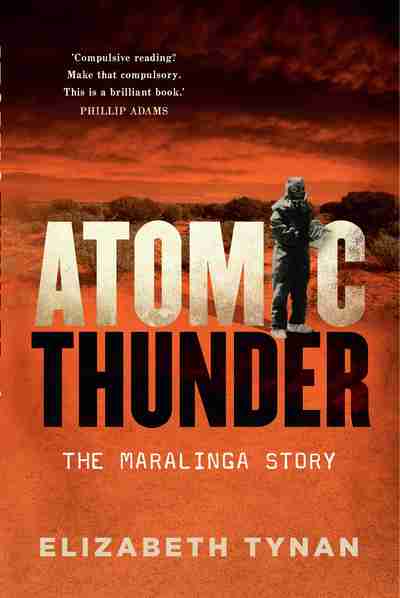
     The word Maralinga is one that appears from time to time in modern society with a new generation asking what it was all about and the older generations, know now what it really was all about; all have come to the same conclusion, which is that it was and is one of the worst, and most appalling incidents carried out in Australia by the British for reasons best known to them and only them; and to this day some 60 years on, still only known to them to a large degree; still kept closely guarded under the official secrets act or similar.

    Elizabeth Tynan has gone a long way to presenting a case of what can be considered a diabolical time in Australian history that has left a legacy none really want to be concerned over. How long will the effects of this ‘Machiavellian’ project continue to effect the future generations of Australian, British and others who were there in one capacity or another, is yet to be discovered.

    That the nuclear testing carried out at Maralinga was undertaken under the nuclear warfare hysteria following the end of the Second World War is nowhere near an excuse; that it was considered by the British Government of the time to be a necessary step in their defence against the likes of Russia and China becoming world powers is, as time has told, largely deplorable.

    But what was, what is Maralinga; how did it all come about and become sanctioned by the Menzies Government. How was it that the British Government had so much power and the Australian Government so little? How was it the media of the time did not publish more on the nuclear testing being carried out in their own backyards and how was it that one scientist, Ernest Titterton could be allowed to obtain such power, that he managed to be able to virtually demand secrecy was upheld at all times.

    Some of it is explained by the rational of the 50’s. Australia was still considered a British colony; Menzies was a man who strongly believed in the traditional ties to Britain. After all we had just walked side by side with them during a horrific war.

    But when it came to using Australia as a nuclear testing site, surely you would wonder why more questions were not asked, why as the time went on and Britain showed no signs of stopping was there not a public hue and cry. What was there in it for Australia? As history now tells us nothing at all other than devastation, destruction and a legacy that simply will not go away, as far as the lands around the testing zones are concerned?

    The British decided to test their new bombs in Australia because in their eyes we had a lot of open country where no one lived. They were also off-side with their American allies at the time over Suez Canal. The Monte Bello Islands off the coast of Western Australia was the first choice, the second the dessert of inland Australia known as Emu Fields and Maralinga. They showed scant regard to any people living in the area, scant regard to people working on what was to become a nuclear testing zone that used plutonium, hydrogen and other material in their race to be the first to have nuclear warfare capacity.

    This scant regard to the effects on human life, on the lands of the indigenous occupants, the lack of concern as to the fallout from the nuclear radiation carried by the prevailing winds, is still to a large extent, relevant today.

    It is a chapter in Australia and Britain’s history that shows both countries in a very poor light: Australia for not asking more questions and accepting on blind faith that Britain was the BIG Brother and would not do anything too horrible on our shores and Britain for knowing exactly what they were doing and going to incredible lengths to keep it Top Secret.

    The effect of those ten years of nuclear testing at Maralinga are still being dealt with today by the men who have lived long enough to tell a sad and sorry tale; for the children and grandchildren of these same men who have been affected by the effects of massive doses of radiation: for the lives destroyed, for the Governments concerned to not recognise the damage done to human life without having to be publicly shamed is appalling.

    Indigenous occupants are now only just, in 2016, being allowed to access some of the land destroyed; scientists are still carrying out testing and more testing on the lands to discover the extent of the radiation still measurable.

    The outrage has simply not been enough by anyone. It should be a roaring that demands to be heard and should not have to be discovered through the likes of WikiLeaks.

    Read the book and then make your own judgment on this subject that, regardless of how you try to view it, is nothing but a ‘shocking legacy’.


  • Australia To Z

    Australia To Z

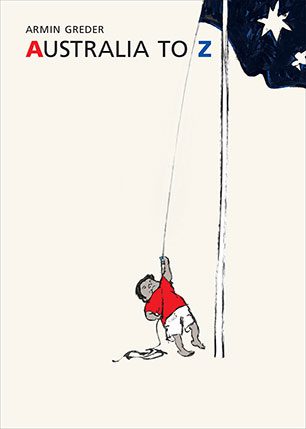
    Although this may at first glance look like an Alphabet book for children, it is not! It is an ironic look at us, the people of Australia and what we stand for.

    It is disturbing in that the modern and perhaps not so modern myth of the Aussie, great person, accepting and helpful to all and so forth,  is put under the microscope and found to be somewhat wanting and definitely a lot jaded.

    It is in every aspect uncompromising and although this may seem like a tough definition of the great Australian person, it is a perspective reflecting the Australian culture and the myths that are perpetuated within.

    Each page, commencing with the letter A for Aborigine; with a simple, unflinching picture a wealth of meaning, history and failure is encapsulated. B for Boat people follows; a topic that has been dragged, touted and sensationalised since the Vietnamese fled their country back in the 1970’s. A lot, yet not a lot has changed!

    The powerful image D for Digger is reflective of our history at war with the same sad result.

    But there is a glimmer of the Australian sense of humour amongst the reflective commentary when you get to T for Thong! And a definite chuckle at V for Vegemite; something they say only Australians can eat!

    Each letter  is worthy of sitting and reflecting upon  individually, in regard to what is encapsulated in the lines, the image, the quirks of society past and present. What you find will surprise you.

    Is it a comment on who we are now, who we were, or who we believe ourselves as a nation to be, but sadly are falling short of the mark. Or is it a truthful reflection on how we are seen by others who come to these shores to make a new life, to settle in what is touted to be a place of fairness and equality, to be free from oppression and mostly to be given a fair and equal chance in life!

    Evocatively, the national anthem, Advance Australia Fair, is printed on the final pages. Read it with a reflective attitude in mind and once read, it may pay to take stock of just how true to these sentiments we are as individuals and as a Nation!