Tag: police

  • Cellnight: A verse novel

    Cellnight: A verse novel

    John Kinsella via Cellnight, A Verse Book returns to the tumultuous past of Fremantle in Western Australia, at the time of the protest rallies against American nuclear warships coming into the Port town. Kinsella jarringly opens the pages with the arrest and bashing in custody of a protestor by the Police at a time when no one cared; no one had heard of Police brutality.

    The prose is lengthy and throughout the discourse there is beauty threaded amongst the anger and deep sadness; the beauty of the dolphins as they swim the waters of the Port into the mouth of the Swan River, the created vision of the red-tailed cockatoos as they sit in the pine trees pondering their future. Beautiful but disadvantaged; destroyed and destructive.  The beauty has within it the bitter sting of the words.

    Kinsella is well known for his environmental stand, his deep and loving concern for the environment which once again becomes very apparent as the pages turn, moving from the early days of Fremantle to modern times, each word precise, painting a picture of a past which showed little concern for the environment or the traditional people of the land.

    For anyone who grew up in Fremantle during the halcyon days of protest marches, environmental rage, and a massive change in societies standards, Cellnight will resonate, will be confrontational and will also return to a past where so very much changed far too fast in the history of Fremantle; and by association, the history of Western Australia.

    Back then nuclear warfare, logging of old forests, ending the Vietnam War, to name just a few issues of the times were considered so important, but looking down the lens of 50 something years, the modern generation have never heard of the Ports history, the deep, all-encompassing desire to protect, to save the land, for future generations. 

    Within Cellnight there is the very real truth which presents the fact that despite the furious cries of the people of the past, so little has in reality changed. The red-tailed black cockatoo no longer visits in flocks, the dolphins still come but not in great numbers and the trees are no longer along the shoreline. The history of the past, the protesting, the ill treatment of prisoners all carefully tucked away, considered of no real consequence.

    History cannot be changed, it must be accepted, to be learned from, understood and used to change the basis of modern thinking, but is it? That is the question and, within that question, are so many of the aspects of the past presented within the multi-layered Cellnight. A Verse Book.
  • Operation Jungle

    Operation Jungle

    Although Operation Jungle may well read like a bit of fantasy it is the absolute truth; a truth that is without precedent in the Federal Bureau of Narcotics about a drug bust in the far reaches of far North Queensland that was to destroy John Shobbrook’s career but also see the end of what was one of the more corrupt departments in Queensland law enforcement agencies.

    John Shobbook has told his story in a very matter of fact style, no frills, just the facts which more than anything else, highlights a time where the corruption he encountered had been part and parcel of the Law enforcement agencies for many years.

    His career was on an upward trajectory when he and his partner went to Sydney as a result of some serious investigation into the importation around 2 kg of heroin. They had come to arrest John Edward Milligan, a known drug trafficker. The arrest went very smoothly which surprised them both and when was being charged at Customs House for his involvement in the illegal importation of heroin in 1977, he was once again very relaxed about the charges.

    It was only when bail was going to be opposed, Milligan said he knew all about Shobbrook’s silly little Operation Jungle which was not surprising, but the fact he knew the name of the operation was! From that point on, Shobbrook’s glistening career was on the rocks, as the further he dug into the case the more corruption he uncovered the more fragile his position became.

    He eventually left the job he loved, an honest and brave man made to feel like a pariah, a man of no use and not wanted within the ranks of what was to become the Australian Federal Police.

    His story is astonishing but sadly all to true, his ethical way of undertaking his investigations was the instrument of his downfall, as he had no idea how deep went the corruption, how intent on covering up the layers of deceit where those with the most invested.

    His story is incredible even all these years later, when many incidents of corruption at the highest levels have come to public light. Since then the Centre for Public integrity was been established in 2019 to conduct research into critical integrity reform in order to change attitudes and rebuild public trust in onto not just our democracy, but our Laws and institutions.

    It may have been a long time coming since John Shobbrook bore the brunt of systemic corruption, but his case it has served to build the foundations of something better as Operation Jungle would have to be considered as a textbook case on what not to do, but highlights also the endemic levels of corruption that were allowed to spread far and wide, through all levels of society.

    Operation Jungle is a segment of Australian history that has deserved to be presented in the light of a new day and is extremely important for the understanding of political modern Australia and many other issues only now being discussed publicly, and off which, continues in the recorded history of Australia for posterity.

  • Gun to the Head

    Gun to the Head

    My life as a tactical cop. The impact. The aftermath.

    In his second book Gun to the Head, Keith Banks opens up a world of policing, corruption, bravery and challenge, based on his twenty years as a serving officer with the Queensland Police Force.

    Each aspect of his varied placements in the Force look at the often complex, frequently overlapping areas of Policing in the 1980’s, during a time when corruption was endemic within the Force, all the way to the top and beyond.

    Beginning his career as an undercover cop with the Drug Squad, he and a mate refused to be part of a lucrative ’sideline’ selling a portion of the confiscated drugs. They soon found themselves out of the squad, out of a job he loved, transferred to Taringa Criminal Investigation Branch, eventually reaching the rank of Senior Detective Constable, but found he missed the edgy, adrenaline filled life of undercover work.

    As a part time member of the Emergency Squad, formed to deal with hostage taking and sieges, he and his mate Peter felt they were finally right where the wanted to be; right at the serious edge of modern day Policing. He eventually went on to become a formation member of the Tactical Response Group, facing off against some of the most formidable, ruthless criminals of the day.

    This took a huge toll and it was not until he found himself on the verge of committing suicide, something not uncommon in those days and still to agree today, gun in mouth, finger on the trigger he began to realise he needed serious medical help. His marriage was done, his life a shambles and he either had to get it sorted out or leave what he loved the most, Policing.

    Each of the chapters moves back and forwards through his years of service, each one detailing a case, an incident in the tragi-comedy that was often all part of a day’s work.

    Thoroughly entertaining Keith Banks takes a walk back through a world of varied police work, throwing a light on the dedication of so many men and women who do enjoy the many challenges involved what they consider a normal day’s work.

    Gun to the Head looks at the corruption that was endemic within the Police Force back in the day, at the people who perhaps should never have been in that line of work, but also at the many honest ‘çops’, of whom there are many, trying to make a difference in a world where violence is real and present threat, even on what appears to be a simple, straightforward call out.

    Gun to the Head is a must read for anyone who is into True Crime or enjoys a very well-constructed, totally readable look at the history of Crime and Policing in Australia.

  • When You Are Mine

    When You Are Mine

    Touted as the best of the best from crime writer Michael Robotham, When you are mine is a standalone thriller that focuses on the dark side of obsession, passion and revenge.

    A Crime Boss, a mistress, a police woman and an investigative journalist forms the basis for an edge of the seat psychological crime thriller that demands to be read from beginning to end. What could possibly go wrong apart from everything.

    Philomena (Phil to her friends) is an up and coming cop in the Metropolitan Police Force, defying the odds of her family history; her father is a well-known crime boss, her uncles all having done time for one crime or another.

    She responds to a call for help, with the assailant being somewhat difficult about being arrested, so she deals with him promptly, handcuffing him and charging him with a range of offenses. Trouble is he is a much decorated Top Cop and also a member of the infamous ‘old boy’s club’ within the Met.

    The woman, Tempe, his mistress creates a bond with Phil and as Phil becomes the persecuted within the Met, she and Tempe form a friendship of sorts, which as time goes by and strange incidences begin to occur, leaves Phil wondering who she can trust.

    When a journalist’s body is discovered wrapped in chains attached to a lump of concert it is considered as a gangland killing, and as the journalist has links to both Phil and her father, the Met is keen to use this to their advantage, which they do with ruthless precision.

    Phil is forced out of the Met, has to face the fact that being part of crime family is something she has to face up to rather than run away from, as well as try and work out who is trying to frame her, sets the scene for a complex and riveting plot that is all too believable.

    Loosely based on the issues faced by the Metropolitan Police Force in Britain some few years ago, when the extent of the ‘old boy’s network was laid bare for public inspection, the reality of the many cover-ups makes for terrific background material for a host of seriously chilling crime thrillers of which Robotham in When you are mine, mines for pure gold.

    When you are mine is Robotham at his best.

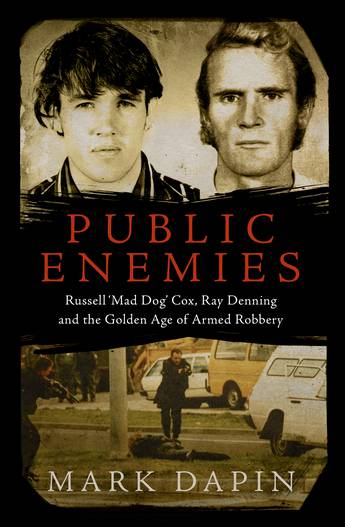
  • Public Enemies Russell ‘Mad Dog’ Cox, Ray Denning and the Golden Age of Armed Robbery

    Public Enemies Russell ‘Mad Dog’ Cox, Ray Denning and the Golden Age of Armed Robbery

    Unlike today when it is a struggle to find an ATM, let alone an actual bank, the period of the late 1960’s to the end of 1990’s saw Bank branches sprout on almost every high street corner. Hence it is not surprising that it became the ‘Golden Age of Armed Robbery’; prospective armed robbers could undertake intense reconnaissance, and be assured of a healthy reward for their efforts. Amongst these professional criminals, Russell Cox and Ray Denning were considered to be Australia’s No.1 and No. 2 public adversaries. Their diverse but intertwined lives are chronicled in great detail in Mark Dapin’s well research book ‘Public Enemies’.

    Although quite different characters both started life similarly; their fathers were habitual criminals who spent most of their time when not incarcerated, getting drunk.  There was little upon which to model a wholesome life. Spending their formative years in barbarous children’s homes and brutal juvenile reform institutions, which were places not about rehabilitation but ruthless punishment and sexual abuse, they were disadvantaged from the start.

    Here the main subjects of the book forged networks which stood them in good stead throughout their criminal careers; it’s not surprising that theirs was a life of crime and violence.  Although Mark Dapin has some degree of sympathy towards these men and others like them, he makes it clear that he doesn’t want to glamourize their violent actions, as there are many innocent victims whose suffering ripples through their families to this day.

    Cox’s and Denning’s daring escapes from what were considered impenetrable prisons, has the making of a ‘Boys’ Own Adventure’. After one such bid for freedom, Denning managed to locate Cox in eight days; something which the police could not do in almost eleven years. The author contextualizes their story by introducing their associates, common enemies and even their victims.

    This gripping, entertaining but confrontational book leaves the reader wondering who were the felons; the police who verballed suspects and weren’t averse to using vicious force or those who were actually doing time for breaking the law.

  • Clues From Beyond: True Crime Stories from Australia’s #1 Psychic Detective

    Clues From Beyond: True Crime Stories from Australia’s #1 Psychic Detective

    Murder and disappearances occur on a daily basis. Some never reported and many reported but with little or no end results.

    How do the Police, when all else fails go about moving on, eventually looking into the issue as a cold case and occasionally being able to deliver a result to the families who, although they continue on with their lives, are  always are left wondering.

    Debbie Malone, a highly respected psychic and medium opens the door to one of several ways Police choose to use with their enquiries when many of the rational methods have failed; that of using psychic abilities to try and piece together what happened.

    Malone’s exceptional gift is not something she sought, but was something that became a seriously difficult component of her life after she faced some horrific health issues more than 24 years ago.

    Visions she had managed to shut out as a child came back in the form of people being ‘shot, stabbed, strangled, bashed, raped and set alight’ which caused her considerable distress and anguish until she learned to understand what it was that was being conveyed and to work with the information imparted.

    Throughout the stories that make up the book, Malone is very careful to state that she in no way ‘solves crimes’ simply assists, as and when required, the Police to follow up on information to add another, often clarifying layer to the investigation.

    Over the years she has worked with sceptics, non-believers as well as people with open minds and reflects that often the most sceptical become believers and friends, but at all times considers she is blessed to be able to help many of the families still seeking and waiting for answers, a little further along their journey.

    In the sad and tragic case of six year old Keisha Abrahams’ disappearance, her input helped bring the perpetrators to court. This came about by relatives of the child coming for a reading, wanting to try and find out a little more, if it was at all possible.

    Who Shot Shane Barker is still a mystery and although Malone has worked on this cold case with Police for some time, the final piece of the puzzle is still missing

    As with each of the cases Debbie Malone works on, and even though she experiences the trauma the victims have experienced, she considers her role as a privilege. As she says ‘all of the people in the book want you to now they were ordinary people, just like you and me (sic)……”

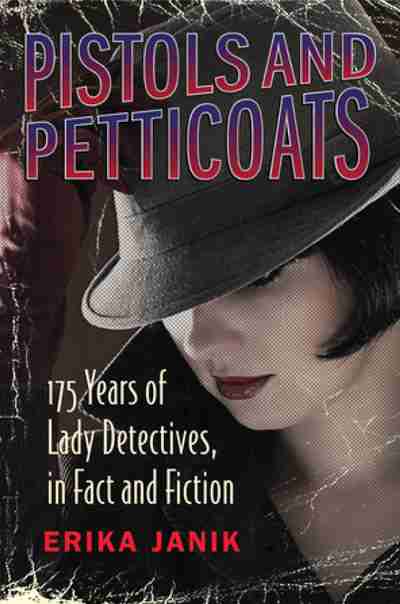
  • Pistols and Petticoats: 175 Years of Lady Detectives in Fact and Fiction

    Pistols and Petticoats: 175 Years of Lady Detectives in Fact and Fiction

    Ms Janik has found a fascinating topic which encompasses many areas of female involvement in crime fighting. She has looked at early police women and also female fiction characters fighting crime and how they emerged. The author compares fiction female crime fighters with the real women who did enroll in the police force.

     It is thought provoking to realize that detective stories actually “had strong ties with the Gothic novels of the late 18th century”. In 1794 “The Mysteries of Udolpho”, by Ann Radcliffe was a very popular book, “which balanced traditional moral values with strong political statements”. These stories always exposed the oppression of women. In the 1860s, detective novels began to flourish. They seemed to mix the Gothic with realism to make the story more plausible. The developments in science and technology allowed much more specific data to be gathered, and family secrets were no longer sacred. Mary Braddon was one of the first to pen sensational novel forms, writing about “far from virtuous females”. More crimes were written about the wealthy classes now, which was quite a contrast to the poor, bewildered women previously victimized. Many of these topics were seen as unsuitable which increased their appeal.

     Sensational real life stories were capturing the public’s fascination with death. The National Police Gazette was a popular read as it described criminals explicitly and in the USA, Americans fervently read about the gory details involved in many crimes. Biographies of murderers sold very well, and true crime began to creep into fiction books. It was at this time that women were joining the Police Force, with many seen as valuable contributors to solving a crime. They were discriminated against, but persevered, because for these women, it was a true calling.

     It seems that fictional detectives began to appear at the same time as the Police Force began to emerge in America. A system of the night watch and volunteer groups had previously looked after public safety. Fictional women detectives were “Independent, confident women,” who observed human behavior and understood the family and home life. Real woman, who joined the Police Force, often worked to protect young girls on the streets and were able to steer many away from the life that faced them.

     Erika Janik has won awards for her writing and as a historian, she weaves a clever tale around the women she has written about. We hear about Agatha Christie, as well as Patricia Cornwell, Kay Scarpetta, and Sue Grafton. There are also TV characters such as Olivia Benson in Law and Order mentioned. Women in today’s Police Force are able to progress in their career, we hope, without the tremendous battle for acceptance that their forerunners experienced.