Tag: plants

  • The Language of Flowers in the Time of COVID.

    The Language of Flowers in the Time of COVID.

    Finding Solace in Zen, Nature and Ikebana

    Beautiful and eloquent the delightful The Language of Flowers in the time of Covid is a reflective work that revisits the two years that for many, changed their lives on a permanent basis and for others, made little difference or allowed their innermost obsessions to surface.

    Joan Stamm was like everyone else busy planning her year to come; a long awaited journey to Japan to visit the beautiful and many temple gardens in the Kansai region. Many years in the planning she was looking forward to undertaking this pilgrimage, returning to a country where she had lived many years before; a place where she had discovered the wonderful flower gardens of Japan and their deeper meaning; hanakotoba – the language of flowers.

    This was not to be as the SARS-CoV-2 (aka Covid) virus was beginning to make its presence felt in China, before moving on to eventually render the world almost helpless in the face of a new mutation that defied science. Depression, death and immense trauma was to follow in its wake.

    As an Ikebana teacher and follower as well as a Zen Buddhist, Stamm eventually decided that as she could not go to the flowers, perhaps the way ahead was to simply bunker down, draw on the Zen teachings and make the most of it beginning in the Time of the Plum – February.

    February signifies a time of hope and endurance which was somewhat ironic, as it was to be discovered. From this beginning she reflects back over the periods of time when Covid waltzed freely amongst us.

    She revisits the political situation prevalent in the United States at that time, the warnings issued by State Governors, the ever growing tally of deaths, not just in America but world-wide, the lack of understanding or empathy by the then President to this world calamity and so many of the emotions we experienced like winds throughout our lives, have now been let to pass into our yesterdays.

    Each of the twelve chapters presented is courtesy of the relevant flower of the month, often with a beautiful Ikebana illustration which helped to lighten the moment amongst so much uncertainty. Stamm allows us to see her garden through her eyes, as a place of hope, when a treasured plant flowered abundantly or calamity, when the relevant flowers and plants failed to realise their full potential, or withered and died.

    Humour is injected once the ‘essential trip’ was made available. Stamm sets out to go ‘off-island’ to visit the nursery to replenish her garden, with essential, must have plants, with unexpected and humorous results.

    Throughout The Language of Flowers in the time of Covid the correlation is drawn that our lives are like gardens in every stage; from a mere seed to a spent, dead or dying plant. Stamm has, in the Epilogue said it is a harsh landscape which we move through on our life journey, therefor it is up to us, through our awareness, to make of it what we will.

    Perhaps, the most salient point presented, is that we walk hand in hand with joy and grief into a very challenging and changing world, but we should never lose sight of hope, which is very much like the Daffodil, buried in the ground for long months of the year. When it is the right time, green shoots appear which later flood the landscape with vibrant shades of yellow and white to celebrate the arrival of Spring.
  • Walking in Gagudju Country: Exploring the Monsoon Forest

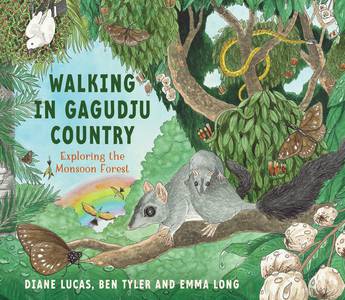
    Walking in Gagudju Country: Exploring the Monsoon Forest

    Walking In Gagudju Country is set as a journey; the family set off to take a walk around the billabong. As they walk along, they realise that they have no idea how long their walk will take them, and as it an adventure of sorts, they have no idea what they are likely to discover.

    Packing their bags with water, food and matches to boil the billy, they set off into the monsoon forest around the edge of the billabong and it is not long before they discover their first surprise, a tree full of anboyberre, or white bush apples and when one fell into the water, a ngarderrhwo pops his head out to gulp down the tasty treat.

    Walking in Gagudji Country is a wonderfully creative and formulated story of ancient knowledge and words of both indigenous and English language are used with wonderfully descriptive pictures of the birds, animals, reptiles, bushes and trees that can be found to nourish, as well as help support the many creatures that live in the rainforest.

    As the journey unfolds it is amazing what is too discovered. Carefully detailed information is provided along with intriguing pictures on double page spreads, with each of the discoveries having their own details and caricature, before being involved in a large picture of them in their natural environment.

    So much detail has gone into the creation of Walking in Gagadju Country, which makes this a perfect non-fiction book to introduce children of all ages, as well as their parents to ‘language’ and what is considered as an endangered environment, little understood by Europeans, but well understood by the indigenous people who have loved and maintained these special eco systems of thousands of years.

    A glossary at the rear of the book for a quick word reference is an excellent resource. Better known as Kakadu National Park, Walking in Gagudjiu Country is the perfect introduction to the environment and the Kundjeyhmi culture.

    Diane Lucas, Ben Tyler and Emma Long share their knowledge and love of the Top End in this enchanting and accessible book about one of Australia’s most ancient and beautiful ecosystems.  Their fascinating biographies are also at the rear of the book, adding a depth of understanding to the words and pictures that make Walking In Gagudju Country a very special and perfect resource for teachers and schools.

  • PLANTS OF POWER

    PLANTS OF POWER

    CULTIVATE YOUR GARDEN APOTHECARY AND TRANSFORM YOUR LIFE

    For everyone who has a garden, and enjoys time spent in it, this book will become a trusty friend for many years. Both Stacy Demarco and Miranda Mueller passionately believe that our ancestors had a binding relationship with plants. They nourished us until we died, then we nourished them. Science has confirmed what many ancient tribes understood and used in the plant world.

    Both these women worked in the corporate world but found something missing in their lives. Stacy is a Witch and is in service to the Community. Miranda escaped from her high heels and began her journey by studying Permaculture.

    So, you’re not a gardener. It doesn’t matter. You need the desire (as Prince Charles has), to value your plants and listen to what they may say. This requires patience, and in the beginning, careful planning. Any small patch of land is able to produce plants, which will in turn attract bees and other insects. Slowly, you can build up a healthy community by nurturing and caring for the plant life.  

    The practical and easy steps which are mentioned here, make sense. Firstly, with your plot of land, you need to identify each little micro- climate.  The gardener can then gradually build a picture of the area for those plants that will thrive where the sun shines longest, where the wind is constant, or where the soil is sheltered from the rain.

    There are many tips on composting and care of soil. But by far the largest portion of Plants of Power is taken up by individual plants. There is a full-page illustration of a plant (ginger), then other names are given for it. The properties of that plant are given, and its healing benefits discussed. This is followed by ideas the authors have for utilising this product. Here we see a recipe for “Kick -Arse Candied Ginger,” a delicious way to use this plant.

    The photographs and information mean Plants of Power will find a lasting place in the homes of those who spend their lives caring for our soils and relating to plants.

  • Gardening with Drought-Friendly Plants

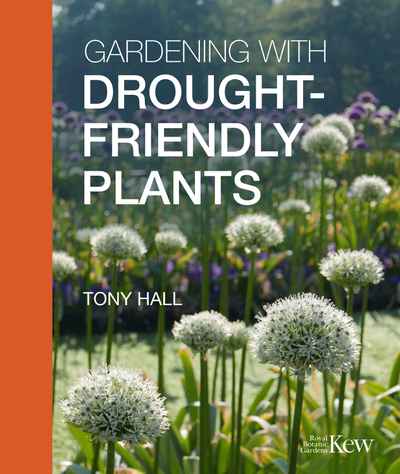
    Gardening with Drought-Friendly Plants

    Low maintenance gardens that are drought tolerant, colourful and most importantly enjoyable, are the way of the future with the serious changes in the Climate worldwide, making the more traditional gardens so loved by the British or those of British decent, something that is seriously under threat.

    Gardening with Drought Tolerant Plants interestingly, is based on Kew Gardens and the changes they are experiencing within their botanical structure, due primarily to climate change, people becoming far more  water-wise, as well as the warming of the Northern hemisphere, making it possible to grow plants outdoors that would once, have only survived in a greenhouse.

    Tony Hall has over his twenty years with Kew Gardens in the role of Senior Arboretum and Gardens Manager, seen the change to smaller suburban gardens emerging, along with balcony and patio gardens, many of which require compact, colourful plants, that will tolerate the new climate conditions.

    To this end he has taken his more than fifty years as a gardener, along with his love of Mediterranean plants to created this colourful and extremely useful book, or  list as he prefers to call it, of  Mediterranean plants that will happily grow just about anywhere.

    While Tony Hall is based in the Northern hemisphere, this is a more than useful book for anyone who lives in the more tropical, subtropical or arid regions of the world, namely parts of the USA and Australia, as the information detailed about the plants listed make them a suitable choice for a range of garden locations and elements.

    Well set out, with a mass of detail about the plants selected, this is a perfect reference book for anyone thinking of establishing a drought tolerant garden or something a little bit different on their balcony or patio. Although many of the references are areas of the Mediterranean the basic information is the same, care needs to be taken in regard to seasonal information if you are in the Southern hemisphere.

  • The Waterwise Australian Native Garden A practical guide to garden design, plant selection and much more

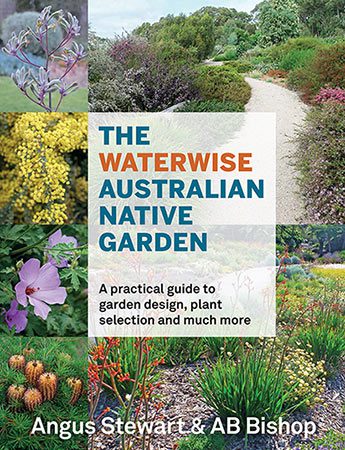
    The Waterwise Australian Native Garden A practical guide to garden design, plant selection and much more

    As the long hot days of the Australian summer are making themselves felt, rain is scant and gardens are suffering, never has a reprint of a book on Australian gardening been more perfectly timed for re-release. Originally published as The Australian Native Garden in 2015, this current edition places stronger emphasis on waterwise benefits for a drought-stricken country.

    Early settlers bought with them favoured plants from their home countries, which formed the basis of the Australian garden. Bright, colourful and water loving, these plants became the stalwarts of everyone’s gardens, but as conditions have steadily become far dryer than ever before, these same plants are no longer a practical alternative.

    Drought proofing gardens is now the talk of many gardening programs, but leaves the everyday gardener feeling hopelessly lost in their ‘garden beds’ wondering what to plant, how to select the right species to attract bees, provide colour and more importantly survive!

    As a rather slap dash gardener, as many of us are, this is a real challenge, as trying to discover the right plants becomes somewhat nightmarish, and when you add what is difficult terrain, having The Waterwise Australian native Garden offered to review was like a dream come true.

    The photography is simply stunning, showing what can be achieved with making the right choices for your garden, the detail as provided by experts in their field, the much-respected Angus Stewart and AB Bishop, make discovering a fresh, new sustainable garden very achievable.

    Dreaming your way through your new garden is delightful, designing your new waterwise look is even more inspiring but then, selecting what to go in this lovely new look waterwise garden is often when things get tricky, especially for the occasional gardener.

    All this has been taken into consideration in the final section which sets out clearly, all the various species to be considered, with clear coloured pictures, a small graphics panel and very helpful information as to size, features, climate and soil. Native Plant Nurseries for each State have also been listed at the rear of the book.

    Seldom do I write a review from a purely personal perspective but this time, all I can say is simply go out, grab a copy and have the world of beautiful, waterwise gardens come to life as you turn the pages. Even if you never get further than reading the book, it really is well worth gracing your coffee table with as a wonderful, inspirational look at modern gardening styles using native species and the beauty that can very easily be created.

    The Waterwise Australian Native Garden is an absolute treasure of a book perfect for todays dry, arid weather conditions and of course the occasional, or even experienced gardener.


  • Get Plants: How to Bring Green into Your Life

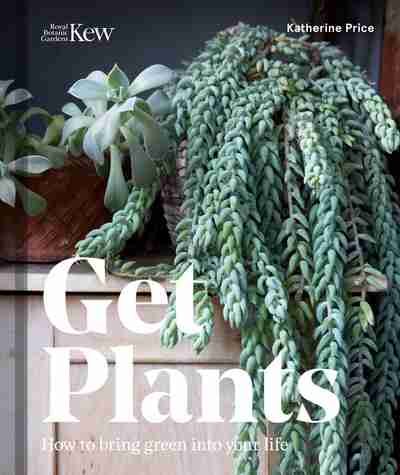
    Get Plants: How to Bring Green into Your Life

    At last, a book designed and created for people who love to, or would love to garden, but have not got a clue. The desire to have something green, something luscious and growing in or around your home is one most people relate to, but so many manage to kill off, one way or the other, the pot of green they have so lovingly installed in their home. So how or what is the best way to become far more familiar with that plant you loving bought, so that it may have a long and happy life with you.

    Katherine Price was fortunate enough to be able to work in the Royal Botanic Gardens at Kew for more than ten years and it is from this basis she offers an insight into plants, their backstory, the best species to choose and best way to keep them happy and healthy.

    Throughout the book many of her former work colleges offer helpful tips, little snippets about what drew them to their love of plants and the plants that are their personal favourites.

    Jammed packed full of practical advice and helpful information, this is the ideal book for the beginner, the lover of plants and those with or without a green finger, as it offers options and solutions which will encourage and underpin your desire to have a wonderful collection of delightful ‘friends’ in your home and surrounds to add pleasure and colour to your days.

    Why you need plants in your life is something that can often be overlooked in today’s mad, fast paced world. Sure you get the chemical thing about oxygen, food also, medicine, textiles and the like, but what about the sheer pleasure of simply looking at a beautiful, living thing and the relaxation, joy and wonderment it can offer. Simply put, plants in all their formats and uses make your life so much richer, so much more pleasurable, and relaxing. They have simply got to be good for you.

    Chapter One: What Plants Need – its elemental, sets the tone for the entire book as it is well presented with the lavish use of glorious colour photography that is a pleasure in itself, but also sets out the basis of elements required such as fire, water, earth air and Lurve, of course, with each topic being presented clearly and simply, even to the point of talking to your plants, which is naturally, a part of the Lurve bit.

    The chapters then move on to plants and effect you are trying to achieve, with the use of these flamboyant and sometime shy individuals, as it is important to decide from the beginning what you want and what plants will be best selected to achieve this purpose.  Edibles come next, which can also be used as decorative, but have a secondary purpose, such as chillies and strawberries.

    Air plants, cacti, and a host of succulents need to be selected carefully to make the best use of their amazing characteristics, as do the plants for the great outdoors of your gardens, in order to offer the best and most stunning effect for your hard work.

    The final chapter deals with Buy, Care and Share which offers the technical details needed now that you are on fire and satisfied that yes, you too can be a gardener, even if you only have a windowsill, a coffee table or flowerbox.

    In a nutshell, or rather a pot plant, Get Plants is a wonderfully down to earth, totally practical, gloriously riotous, book on gardening, gardens and the people who love and tend them every day.  It also offers hope, lurve and encouragement to go ahead and have a go, you will be pleasingly delighted.

    Fabulous.

  • Jack Fortune  And the Search for the Hidden Valley

    Jack Fortune And the Search for the Hidden Valley

    This is an inspiring adventure story involving a teenage boy called Jack. It is set in the eighteenth century. The tale begins in England, where he lives with his aunt, but moves to India. Jack is an orphan. His father and mother were adventurers, and when they travelled to Venice, they fell victim to a fever, and both died. Jack always felt that his father should not have taken his mother overseas, and exposed her to deadly plagues.

    In the first few chapters, Jack appears as a naughty, mischievous young man. He and the blacksmiths son have some great scientific experiments going on, like burying a dead rat with its tail out of the ground, so they can dig it up, and check on its rate of decomposition. But many of the pranks he plays such as going to a girl’s birthday party at a castle, and getting all the children there drunk, can’t be tolerated by his old Aunt.

    She calls her brother Edmund to her home and insists he take care of the lad. Edmund is a Botanist who is about to fund his trip of a lifetime to the Himalayas. Reluctantly Edmund takes Jack in his care and they travel to India together. For the first time Jack has responsibilities, and discovers that, like his father, he is a gifted artist. He begins to see how important plants are to his uncle, and how people like Sir Joseph Banks have influenced the world.

    They have many adventures together, trekking the Himalayas is hard enough, but a deadly enemy who wished Edmund dead, is also at work. Reluctantly Jack helps his uncle by sketching plants, and along the way, he discovers a rare and wonderful new plant. This almost leads to his death by the enemy, who hates the British and wishes for fame himself.

    Many adventure books have been written about explorers, finding new lands, climbing mountains, and sailing seas, but this story reveals the importance of plants for humans, and the adventure in tracking them down. As well, today we realise that many plants have medicinal properties, and can be used to help people in many ways.

  • The Cabaret Of Plants: Botany and the Imagination

    The Cabaret Of Plants: Botany and the Imagination

    Opening this book at the very beginning, you know you are in for a real treat as the introductory artwork on the inside cover is distinctive and glorious, setting the scene for what is to come.

    While this may, in some people minds, be a work of some serious nature, it is and it is not, as on every page there is a touch of the whimsical, the unique and the science which goes into making plants the truly fascinating species they are and have always been.

    Commencing with the Introduction title, The Vegetable Plot, we are introduced to a very different aspect of Botany, when the first paragraph talks about Edward Lear’s Bong-tree of the ‘owl and the pussycat’ fame and then goes on to offer an explanation of how this and many illustration created by Lear such as the Cockatooca and Manypeeplia upsidedownia, came to be created and their eventual scientific explanation.

    Travelling into the Ice age Mabey looks at the ancient traces of Palaeolithic cave artists have left behind on carvings and what was the purpose or significance of these carvings. He also poses the question, were they of any particular significance at all, other than perhaps the idle scratching’s of man whiling away the time. The significance of the works from a botanical perspective is of course somewhat different.

    The Boabs’ of Madagascar are represented in glorious colour along with their very colourful history. The Boab nuts from these trees eventually bobbed across the World’s oceans to finally come to rest in the harsh dry climates of Western Australia.

    William Wordworth’s Daffodils find their way into the chapters as does a glorious fern decked dress worn by Lady Barkly, the wife of the Governor of Victoria in 1860, following a fashion that was all the rage both in Australia and Britain.

    There is so much information and enjoyment encapsulated within each chapter there is almost too much to absorb. Each chapter should be treated as a separate work to ensure maximum enjoyment is had from the journey into the complete fascination that is the plant world.

    These humble, put upon species, are anything but and have provided food, fascination, healing, spiritual reverence, hazardous expeditions, obsessions, clothing, healing, inspiration, murder, mayhem and challenge since man walked on this earth, and deserve to be treated with the respect and reverence.

    With Mabey’s immense knowledge, his way of creating fascination out of what many may view as rather dull subject matter, his quirky take on the serious side of science and his undoubted passion and love of plants this is a work that can be enjoyed by anyone who enjoys a very good read.

    As said, each chapter needs to be treated almost as a separate work; by the time you have reached the final chapter you will have been entertained, have  a far greater knowledge of the plant kingdom and find yourself returning time and time again to re-read that rather fascinating chapter on…………. !