Tag: photography

  • Dog’s Best Friend: A portrait of an unbreakable bond

    Dog’s Best Friend: A portrait of an unbreakable bond

    Sydney Street Photographer Giuseppe Santamaria, a man who loves and dogs and is beloved by dogs took to the streets of the world to discover through the eye of the camera the unique bond between man and dog that occurs, lasting until the final farewell has been undertaken.

    Over a period of months he spent time simply watching, waiting and capturing the funny, tender, quirky and beloved moments anyone who has ever had a dog in their lives completely understands.

    As never before, with many couples opting out of having children and dogs of all shapes, sizes and breeds filling the gap, dogs are being understood, nurtured and enjoyed simply for being themselves, unique and complex creatures who have their own personalities, characteristics and charm.

    Page after delightful page of stunning pictures captures a moment in time, recording in lavish colour beloved canines out and about undertaking their varied and daily routines shopping, taking a walk, charming all who see them in their latest outfits or waiting impatiently for that stick to be thrown.

    Conversations with owners tell of funny, fascinating and charming snippets of their life with their beloved canine which in his relaxed style, Guiseppe Santamaria has captured to create a gift well worth the giving to one’s self, anyone who has a dog, would love a dog or simply wishes to share a moment in time vicariously in the world of dogs and their friends.

    Dog’s Best Friend: A portrait of an unbreakable bond from renown photographer Giuseppe Santamaria is a coffee table book that will be enjoyed time and time again over many years.

  • Photography in Cambodia: 1866 to the Present

    Photography in Cambodia: 1866 to the Present

    What a magnificent coffee table book Photography in Cambodia 1866 to the present is, whether you have been to Cambodia, and recognise many of the subjects, or have never been but have a curiosity about the place, this is fine reading. With over 340 photos from all over the world it documents the journey as the country emerges into the 21st century. This is Cambodia seen through the photographer’s eye.

    1860-1906 saw the reign of King Norodom, which was mainly brought about by the French. There are photos and stories to describe this time. These include Angkor Wat, the throne room of the new Palace commissioned by the French, processions, and photos of the remote and indigenous Cambodians.

    From 1906-1927 we follow the lives of the people, and changes to their country. This was the reign of King Sisowath, and closer ties with France were in place. A new museum was built in Phnom Penh which recognised the wealth of the material culture of Cambodia and the need to display historical artefacts.

    King Monivong’s reign took place during1927-1941. The French were still in control in Cambodia, and motor cars were popular, rubber plantations were in full production and tourism increased. The use of cameras was prolific as they became lighter and more affordable.

    The stories and photos continue to the present day. They serve to give a fully rounded picture of the developing country, its people, its politics, and its history.  As you browse through the book you can sense the cultural awareness and early struggles that are depicted in this wonderful compilation. There is a large list of photographers who have contributed to this volume with an index to complete the scholarly work.

  • Past Life

    Past Life

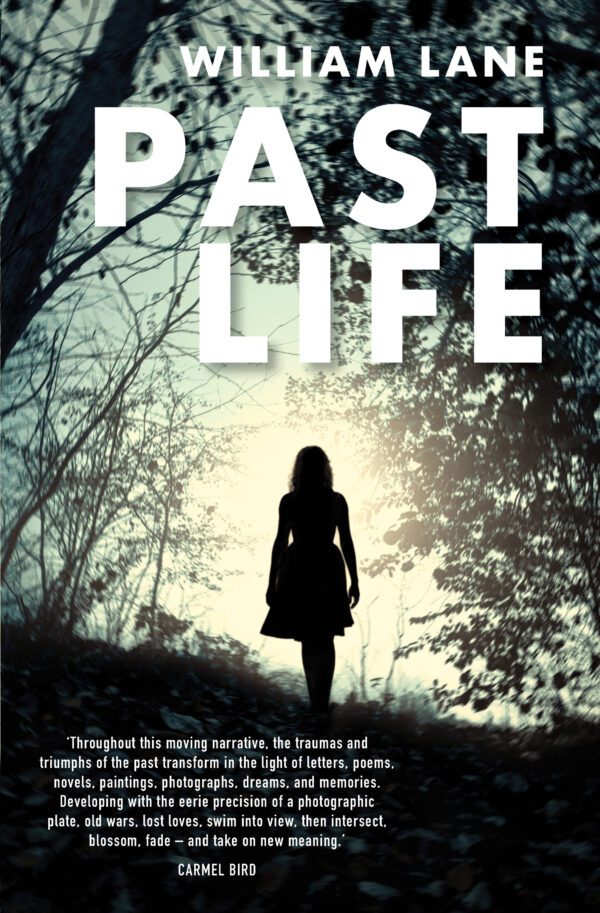
    Past Life is an intriguing journey into family, history and the common bonds that hold together, regardless if how disparate the various members of the group become: life is lived, past becomes present, blending into a mosaic that is ultimately reflective of the time old saying, the sins of the fathers are passed onto the children.

    Anna is met as a young girl beginning high school at a time when she begins to realize the restrictive life she has led with her obsessive mother, Sophia, is a little strange; that there is obviously more to living this new life, in a new country, than she ever imagined.

    The words are crafted to perfection as William Lane begins to paint the picture that will lead to tragedy, understanding with a history that seeps into the time and horror of the second world war, a place that surprisingly Anna has no recollection of, even though she knows she came from another place to live in this new, very different country.

    The supreme irony laced throughout the story is that over time, Anna grows into a talented photographer, obsessed with capturing the essence that is time through an orchard with which she will later discover she has deep ties.  As she matures into a woman who has made her own way through life since Sophia died, within her personal life she is inadvertently repeating the patterns of her parents; a father who was an acclaimed novelist, a mother who was, during the war years a resistance leader, an adoptive mother who had secrets to hide, lost in a world no longer in existence.

    Almost mesmeric the work unfolds slowly, the characters both young and old developing clear personalities, their history laid out for all to see, to share; their growing up, the teen years, the facing of risk and challenge, the slow discovery of who, why and the reflection of what, presents an interesting cameo of ‘family’. The work also shines a light on the emotional and destructive damage caused by war that lasts long past the wars end.

    Presenting lesser known aspects of the German occupation of Europe, the serious displacement of children who became a band of children living wild in the forests, fossicking and begging for food, lives forever altered by chance or circumstance, people changed irrevocably and even though time moves on, countries change and other influences come in to play, sometimes within even the most fragmented of family structures, very little really changes.

    Past Life is a beautiful, delicate and haunting work filled with characters to whom we can all relate.

  • Capturing Nature: Early Scientific Photography at the Australian Museum 1857–1893

    Capturing Nature: Early Scientific Photography at the Australian Museum 1857–1893

    Photography was the science that took the world by storm in the mid-18th century, with the endless scope of possibilities yet unexplored; Its early use as a recording tool in the scientific area, especially in Australia, was quick to be utilised by Australian Museum curator Gerald Kreft and taxidermist Henry Barnes, to record a vast array of specimens between the years of 1850 to 1890’s.

    Their work was ground-breaking, with the first recorded image undertaken when a Mr Glen Wilson was requested to photograph some fossils and ‘some other objects’. Kreft was an assistance curator at the Australian Museum at the time, an experienced field collector and had already discovered a fascination and love of photography. He could also see the future potential for this medium being used in museums.

    Henry Barnes was a very experienced taxidermist and between them they discovered and trialled the best way of staging and recording large and small specimens with their massive cameras and layers of glass plates.

    Kreft had a major impact on the Australian Museum collection with his forward-thinking ideas and drive, going on to build one of the most extensive collections of Australian specimens held by a Museum in the late 1800’s. During the heady years of the 1860’s and with the aid of some government funding he was able to send out his own small team of collectors across Australia to collect thousands of specimens.

    He was just one of many who actively documented contextual data and description throughout what is considered as the golden age of collecting. Others operating in this field were George Masters who was considered responsible for helping to build one of the largest private collections, owned by William John Macleay. Alexander Morton went to New Guinea, Solomon Islands and Lord Howe Island also on a Museum funded collecting expedition.

    These men, amongst so many others built a massive collection that has been archived in the Australian Museum for generations, providing a massive resource of wildlife in the earlier times of Australia and the driving desire to become far more scientific in their practices of recording and displaying specimens.

    While photography became the medium of choice for recording specimen, the black and white toning’s of glass plate photography was limiting and so artists such as Harriett and Helena Scott still played a massive part in recording the fine details, the vivid and subtle hues of the specimens.

    In Capturing Nature, Vanessa Finney presents a fascinating collection of glass plate images seldom viewed, a raft of information which is utterly engrossing and intriguing as history often is, as well as a wonderful peek into an aspect of Australian history often ignored.


  • Glitterati

    Glitterati

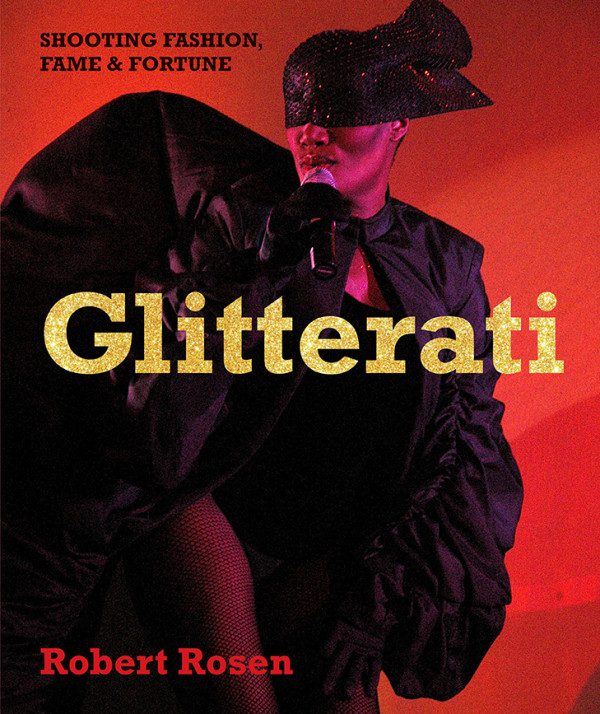
    What happens when you decided you have a talent for art, your teacher tells you, you really don’t have all that much talent as a painter and try taking up photography: you become famous, that’s what!

    Such was the story of Robert Rosen’s journey into becoming one of the top, if not the top photographer of the rich and famous, the people at the top of society from all walks of what is termed these days, as the ‘A’ List.

    Over his lifetime as photographer Rosen has built up an enviable reputation for his non-invasive manner of working, while managing to get the ‘shot’ of moment, but behind the flamboyance, the hyper and the eventual fame, there was years and years of hard work, refining and experimenting with his camera and grabbing any and every opportunity to photograph people. As an unsophisticated boy from Melbourne discovering the magic of photography in 1964, to a sophisticated and renowned photographer, was something he never envisaged when he took his first photograph.

    Never ever giving up on his dreams saw him finding his way about the world, sometimes on an offer of accommodation from a friend, other times simply because he was offered an opportunity to take pictures. Through a wide and diverse network of friends and acquaintances he was introduced to the people who mattered and gave him entre into the world of glitter he craved.

    The paparazzi world was beckoning on the streets of London and he was asked to be the social photographer for the Avant Guarde magazine followed by the Ritz Newspaper and so it began.

    In this absolutely glamourous collection of his work, selected by Rosen, he presents his story through words and pictures of the beautiful people over the past 50 years he has had the privilege to work with and photograph, in some cases many times over.

    From Presidents and Prime Ministers to rock stars, models and movie star, along with, in the early years the people whom he shared digs with, Rosen has capture them for all times, with his remarkable and subtle talent of being able to make them all look beyond beautiful.

    The illusive androgynous Grace Jones, Paul  and Linda McCartney, Joan Collins and hundreds more along with the catwalks of Paris, Rome, London and Australia have all been presented in Glitterati as a representation of a life well lived, by a man who never ever gave up following his dream.

    More than a coffee table book, this could rate as a work that should be considered by followers of fashion, photographers beginning their journey in life and anyone who has a keen eye for all the very little and big beautiful things that do, definitely add that little bit of glamour to what would otherwise be a rather dull and often times, ordinary life.


  • William Yang: Stories of Love and death

    William Yang: Stories of Love and death

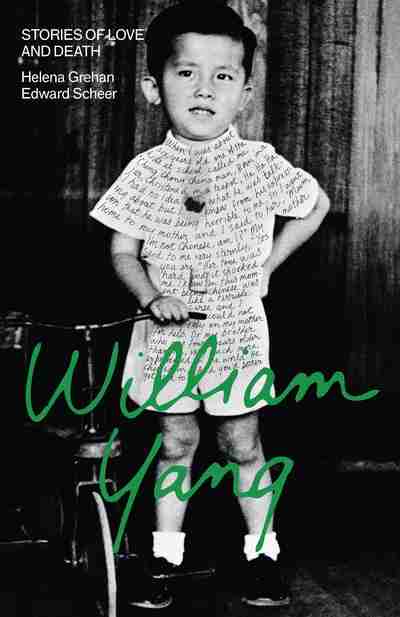
    That William Yang is a complex man is perhaps an understatement for a man who, over his lifetime as photographer has managed in one way or another to capture the essence of life and death, along with all the many facets in between which go to make up the human psyche, the human essence, the quintessential imperfection that contributes to the highs and lows of culture, race and creed.

    That Helene Grehan and Edward Scheer have taken on this ground breaking work is timely as Yang, like many of us who have graced or disgraced this world for so long, has a story that is well worth the telling, the researching of what is billed as his ‘self-portraiture’, something so few ever get to have documented in this style, is also a retrospective view on how the culture of Australia has also changed so dramatically over the past 50 years.

    As a child growing up in Australia in a country still influenced to some degree by the ‘White Australia policy’, his mother strived to have her children grow up as Aussie’s, not Chinese. He was six years old when he discovered he was indeed Chinese. His relationship with the fact that he was Chinese, which is complex, is ironic as he has spent much of his life using his ethnicity in the construction and execution of his many, many works.

    His photographic works are created from life in the raw; his detailing of the first Sydney Mardi Gras through to the social and political upheaval the debate on Marriage has created makes a poignant statement on civil rights and liberties; His film Friends Of Dorothy goes much further in that the myriad of images tells a story of the AIDS pandemic, the effect it had on the social fabric of Australia and the long slow struggle to stem the terrible toll of this insidious disease.  It is also a reflective and informative statement on the emergence of what is now known and accepted as the GLTG (Gay, Lesbian, Trans-gender) community within Australia.

    As he further explored the various dimensions of photography his experimenting with writing onto slides to make a further statement from a photograph gave him his personal trademark; an arena where he could add his personal ‘take’ on the subject portrayed.

    His long and colourful life has created many treasured moments through his performances, once again coupled with his photography, his documentaries always with a strong social commentary to the content, his works often sad, depicting loss, the need to change, the changing of a society from straight laced to exactly the opposite, have created a legacy of understanding as evolution moves relentlessly forward.

    Captured within the 100 photographs throughout the book there are in each instance, moments, events, people that have, and still do, mean something special to Yang. The chapter focusing on his personal life gives a wonderful, rich glimpse into a life that many may view as serious but as with all things has another lighter, fun side.

    For fans and followers of William Yang this is a must have as the richness of the content needs to be able to be absorbed, chapter by chapter, in the manner in which it was created, slowly and gently.

    Each chapter also contains so many gems on and about the life of a man who would have to rate up there in the elite as far as documentation of social and cultural change within Australia, both photographically and within the written word.



  • Retro New York – the way we were

    Retro New York – the way we were

    New York, New York. It is a place that has been sung about, been notorious, produced some of the best stage shows, is and has been a leader in the Fashion industry that is one of the main stables of industry behind the iconic City along with the NY Stock Exchange. Along the way it has created the image that in New York, everything is bigger, louder and better.

    Everything is colossal which goes for the people, the food and the buildings. It has more than earned its place in the world market as one of the greatest cities in the world – the vibe is second to none and when you are there, on the streets, you know you are there!

    In conjunction with the Mary Evans Picture Library, Whiticker has selected 400 incredible images, many of them rare, to compile a look at New York as it was during the times when many of the tales, legends and folkloric were created.

    Divided up into five specific sections you are introduced with a slice of the history that created the City, followed by a look at the iconic images such as the newly completed Brooklyn Bridge in 1908, along with the workers who built the Empire State Building, which at the time was the world’s tallest building.

    New York at War is a subdued look at the hundreds and hundreds of men who left the State to fight in World War II. A misty look at the ceremonial unveiling of the monument to the men lost when the USS Maine was lost in an explosion in 1898 is haunting and symbolic of the cost of war.

    Law and Order portrays a colourful if desperate time in New York in a city that has seen it all. From the organised crime syndicates, race riots, general strikes, drug epidemics and the underworld that was a part of the scene for many, many years. There is a wonderful image of a New York Police officer, 1903, as he calls in at the telephone pillar.

    Art and Entertainment sees a photo of a young Frank Sinatra and first wife Nancy at the Stork Club when he was still a soloist with Harry James and Tommy Dorsey Big Bands. The amazing Barbara Streisand is there in her role as Fanny Brice in Funny Girl, Woody Allen and Diane Keaton also graces the pages.

    And so it goes on presenting  a window  into an era long gone but one that should be treasured for the iconic images which are so representative of a time and place that helped create the magic that is New York today. The time frame ranges from the late 1870’s to about 1970 and encapsulates amongst many other things the growth of not just New York, but also the world, as it slowly became more and more cosmopolitan.