Tag: passion

  • Unraveling

    Unraveling

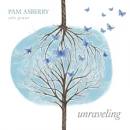
    Eleven tracks, deep, sombre, reflective graced with, in places a touch of lightness, creates the deeply moving and emotional album Unraveling from pianist Pam Asberry, as she spends time at her beloved piano reflecting back over the year that was 2020.

    In many people lives structure is vitally important and when this structure changes, begins to crumble and there appears to be little that can be done to change the flow of life, a dark place is created, where although life does flow on, it is with a different tempo.

    Beginning with the moody Storm Clouds Gather the piece is deep, but has a lighter core which when coupled with the delicately beautiful Uravelling makes a stunning entrance to a work, which without a doubt, would have to be to date Asberry’s finest series of compositions.

    The immense emotion of the fragmented times over the year have been captured in a skilful and almost unconscious manner, offering to all a moment of the soul, a moment in time that will resonate with many.

    Hesitant and gentle Bluebird is a lighter song which lifts spirits and captures in a rare delicacy, the stunning beauty of nature in these small, strong little bird’s that have survived extinction, but only just, their song believed by the Iroquois Indian to ward of the icy power of winter.

    A personal favourite is Tattered Lace, a piece that simply seems to drift, a musician at one with the keyboard, simply allowing the notes to come forth, to form into the emotion felt at the time.

    Saudade captures that feeling of melancholy which aptly describes the longing or yearning for happinessto return once again.  Time Spent With You, a reflective, deeply telling song portraying a grieving which is felt during times of immense loss, before new hope and fresh beginnings are once again presented.

    The passionate Metamorphosis, captures the moment when realisation occurs that out of darkness comes light, out of despair comes happiness and out of sorrow comes love. Previously released as a single this song concludes a work which is beautiful, powerful, rich with emotion and one that will touch the very strings of the heart.

    Unraveling; beautiful, beguiling and considered as Asberry’s best album to date.

  • The Woman from Uruguay

    The Woman from Uruguay

    The longing and yearning and desire that seep out of The Woman from Uruguay are almost palpable.

    Pedro Mairal describes a day in the life of a man who has become obsessed with a woman he met at a dance. Lucas was drinking at a nightclub when he met Guerra. They talked, they laughed they danced, and they drank. Each moment becoming more special than the last. The man suggested they meet the following day and go for a walk, which served to outline their compatibility.

    Later that day, Lucas had to return home by ferry to his wife and son. He plans and plots and fantasizes about meeting this dream woman, so much so that his wife remarks that he is talking in his sleep. Eventually the day comes when he can yet again catch the ferry to Uruguay, he emails Guerra, who lives there, and asks her to meet him.

    He has one day to be as intimate with her as his dreams have unveiled. However, even though her dreaded boyfriend has gone, there are many reasons why their intimacy is not easily fulfilled. Time is passing and although Lucas has many plans, they all seem to go astray.

    The Woman from Uruguay is a short story of 152 pages. Lucas is the narrator and through his eyes we experience the longing and the single mindedness of his actions. It is hard not to become involved and judgemental while riding on the wave of suspense that is created.

  • The Butcherbird Stories

    The Butcherbird Stories

    The beauty of reading a book of short stories is the range and scope of people, places and plots that evolve. We move smoothly from a Bangla Jungle, to the Danube River and then to a winter beach scene in Melbourne. Again, the themes vary widely, but in most stories everyday people are examined for their hopes, fears and dreams. Some of the stories will shock the reader, some will bring comfort, and some a sense of recognition.

    The author has a way of involving the reader and evoking the feeling that you are right there. Swimming in the pool, once in a zen-like state of doing laps, it is not hard to imagine the slow reaction of the swimmer, to seeing a thumb at the bottom of the pool. The swimmer senses the unreality of the situation and disbelieves what he is at first seeing. From this slowly unravelling tale, as many of the stories are, we look at children who have migrated.

    Some of the families came to Australia for the warmer climate, but none forgot or gave up many traditions or customs of their homeland. As bedtime stories are told about the lives and people from the old country, there is a duality of loyalties and dreams that builds up. Some find this comforting, others find it distressing and can’t cope. There are many dark thoughts and feelings explored here. And the loneliness and isolation of aged people of all cultures, is revealed.

    A.S. Patric’s writing is clear, concise and understated. He allows the readers to interpret a situation through their own eyes and experiences. Often this is disturbing and uncomfortable. His stories cover such a wide range of topics that, beginning a new story is similar to beginning a new book.

  • The Midsummer Garden

    The Midsummer Garden

    There are so many fascinating aspects to this story that most people will find something to keep them reading, eager to discover solutions. There is a beautiful weaving of stories between a French woman, Artemisia, in1487, and Pip, a Tasmanian woman, in 2014. Both are fascinated by herbs and plants. Both women are romantically involved, and both women love cooking. The combining of the two stories, and descriptions of each separate setting, is very cleverly done.

     Pip is studying and completing her data collection for a PHD in Marine biology. She is engaged to Jack who wants to marry her, but wants her to put her study on hold. Pip knows that, if she has a break from her studies, it will be difficult to return, and resents Jack pressuring her. Artemisia is a young woman who was left at a chateau as a baby. A kindly Abbot saw to her growing up, and she had lessons in reading and writing with the young heir of the chateau. She was assigned to the kitchen, but was very often in the garden with the Abbot collecting herbs, or planting vegetables.

     Life in France in the 1400s for a kitchen maid or cook was similar to slave labour.   Artemisia was to discover just how bad things could get, when the kindly Abbot, who had cared for her for many years, died. His replacement was an angry and volatile man, who beat the staff and intimidated the monks. It was then very unexpected, that a local spice merchant who supplied the kitchen with fresh herbs, should meet and fall in love with Artemisia, and she with him.

     Both women face great dilemmas. Pip has a desperate need to continue her research, and discover how she can positively affect the sea life she works with, and Artemisia wonders how she can escape from the servitude she works under, and leave to marry. While Pip has a loving and supportive family to back her, Artemisia is alone. However, the cook begins to write her imaginative recipes down and stores them in great metal pots, which hang in the kitchen. It is these pots that come to Pip, being passed down from generation to generation.

     Fascinating facts emerge as Pip finds the recipes, and has them forensically examined. While we have an insight into the cook’s life, Pip can only wonder at the beauty of the herbs, and the way that they are used. Romance is a reality for both women, but both had to make their own way.

     So many interesting facts emerge about the use of herbs, and ways to cook with them that most people will want to try a few of the ideas out. What an interesting story, filled with joy, sorrow and gardens.