Tag: outback

  • BOOTS

    BOOTS

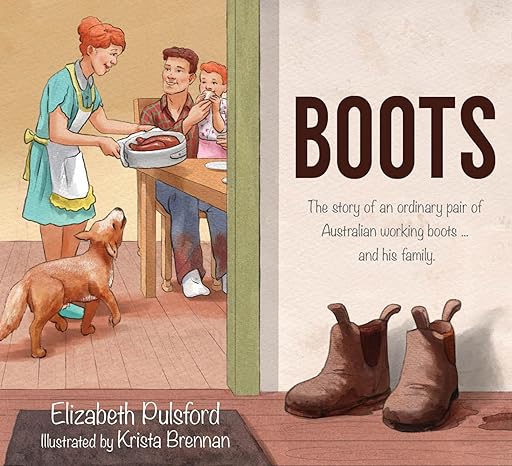
    The Picture Book Boots, tells the story of a pair of boots. The boots are shown looking out of a shop window, waiting to be bought. They dream of living and working in the outback. Many people pass by the window but one day a man pays for the footwear and then the dream becomes reality.

    Set in the Australian outback, the reader is shown the many facets of living on a property through the eyes of the boots. Horse riding and rounding up cattle, helping give water to parched animals, and dancing are some of the activities.

    The time comes when there are fires and drought and boots experiences all of these. When the owner’s children were small they liked to run around in the boots. Eventually the owner and boots become old and tired and boots rests on the grave.

    The illustrations are very appropriate to show the Australian outback and the families who live there. Children could devise their own stories about where their shoes have been.

  • Voices in the Dark

    Voices in the Dark

    Sassie was in a rush to get back home; her brother Abe had called her to come as quickly as she could, as Granny was in hospital and in a bad way. She was stopping every now and then, the music cranked up loud, her puppy Jarrah on the passenger seat; her one thought was to get to Barker in time.

    She comes to consciousness hanging from the seatbelt in her upturned car, the sun, blisteringly hot, pouring in the window, no water close to hand. All she could hear was nothing; an occasional car passed but no one was stopping. Thoughts of her beloved Granny passed through her mind.

    Voices in the Dark begins in a dramatic fashion which becomes the vehicle for Fleur McDonald’s latest novel which delves into families, the secrets kept hidden and the disturbing reality this can create for those involved.

    Pa, a stern man who has had a stroke is now alone; Abe a busy farmer and father of twins can only do so much, Sassie can only stay a short time. Her estranged mother Amber is on her way back from South Africa but will not stay long, as always. It raises the question of who is going to look after Pa?

    With the family coming together Sassie once again begins to wonder who is her father. Was he a local, was he someone Amber met as a young girl at school in Adelaide and why was she left to be bought up by her Granny and Pa? These matters have always haunted her and over the weeks the family is together, she finally makes the decision to ask questions.

    Dave Burrows and his young Constable Mia become involved in the issue from a Police perspective, but are unsure as to how they can help, or even if they can help within the framework of the Law. But when the Law is flagrantly broken, Burrows and Mia find themselves involved and facing a serious dilemma.

    Fleur McDonald’s love of small rural towns shines through once again in a story that is slightly disturbing, but one that highlights the danger of keeping secrets far to close and the emotional devastation caused to those involved.

    Voices in the Dark is another riveting page turner from Fleur McDonald, featuring the beloved Dave Burrows, that has, as always, left more than enough tantalising threads for another Dave Burrows novel.

  • The Pit

    The Pit

    There is a new wave of Australian crime books set in the harsh, unforgiving outback; the “Aussie noir”. Around the world this growing subgenre of crime fiction has been embraced by many talented relatively new authors; Peter Papathanasiou is no exception.   His fourth and latest book, “The Pit” is the third in his outback noir series, which sees Detective Sergeant George Manolis on leave and his off sider Senior Constable Sparrow take charge to ascertain the facts surrounding an unusual murder report.  

    Nearing the end of his life, 65 year old Bob, who is confined to a Perth nursing home, apparently trying to clear his conscience, reports a murder which he committed thirty years ago.  However, he will only reveal the facts of this homicide if Sparrow accompanies him on a road trip to the remote northern Kimberly mining region, where the body is buried; intrigued, Sparrow agrees.

    Luke, a thirty year old paralyzed motor bike accident victim, also a resident of the same nursing home, joins the pair as they embark on their harsh journey north of red dust, endless miles and stifling heat. What is the real reason that Luke is on this demanding road trip?

    If readers can accept that a Detective Sergeant will take his holidays to accompany an unwell, unknown self-declared murderer and his ‘friend’ on a long arduous road trip into the north; mysterious destination, then this book will keep them page turning to the end. 

    Not only does the author create a feeling of remoteness and an atmosphere of mystery, but the characters, who are of unquestionable morals are both interesting and at times amusing.  Each has their own story to tell.

  • The Flying Nurse

    The Flying Nurse

    Inspired by a presentation from a visiting lecturer from Medecins Sans Frontieres, Prudence Wheelwright from the small town of Crookwell in New South Wales, Australia, knew that her destiny was to one-day work for this organisation. Motivated by her Grandma Mardi’s words, “Don’t sell yourself short because you are a woman”, she was determined to not only acquire the necessary skills but also to use them to help people, who were affected by conflicts, disasters, diseases but without access to regular health care.

    In her outstanding debut book, “The Flying Nurse”, she not only recounts her challenging but fulfilling work with this charity but also her fascinating, action packed career in the world’s most remote and inaccessible, far-flung locations as a nurse and midwife. Beginning her career in the isolated area surrounding Alice Springs, Central Australia, later on a contract in Saudi Arabia, then travel, and eventually by completing the necessary training the fulfillment of her dream; Medecins Sans Frontiers’ Paediatric HIV 12 month project in Kulob, Tajikistan.

    Her vivid descriptions of working in refugee camps, on dangerous front lines and in conditions in third world countries, are both confronting and hardly imaginable by readers in more affluent parts of the world.  The reader is left in no doubt that this highly skilled nurse is not only passionate about her patients, as well as improving their healthcare, but also about being the voice ‘amongst thousands of untold stories’; stories of lack of proper, safe, affordable healthcare.

    Prue has certainly packed a great deal into her first 32 years; no doubt her next 32 years will be as fulfilling.

  • The Curlew’s Eye

    The Curlew’s Eye

    This mysterious story The Curlew’s Eye, set in the remote outback near Darwin is very cleverly constructed. In the beginning Greta, her partner Joel and their three boys are driving from the South to Joel’s old homestead near Darwin. They wander from place to place getting work when they can.

    The family is very connected, close, with each of them taking care of the other. It is this gentle beginning which lulls the reader into a sense of adventure, rather than the difficulties the main characters have, dealing with past demons.

    Joel was raised in the homestead with seven brothers and a sister. The newly arrived family stay in a cabin, which Joel and Greta need to renovate as the property is going to be sold. The young woman is stoic, never daunted by a lack of flooring or a nearby poisoned lake. She begins with minor jobs as Joel starts to get the fencing upgraded. The boys are happy playing outside and exploring.

    Gradually as the brooding wet season build up begins, so does the mystery. Joel is a quiet man who has not discussed his past, but an old hut, a strange girl and a nasty neighbour all contribute to Greta’s sense of unease. Parts of stories that Joel has told her about his childhood lead to questions. Greta has her own past to deal with and the pressure builds.

    Karen Manton has a wonderful feel for the outback and describes it so well the reader can smell the dust and feel the heat. She cleverly focusses on details and helps the reader make sense of all the loose ends of the mysteries that besiege the family; loose ends that Greta and Joel must understand and then put to rest.

  • An Alice Girl

    An Alice Girl

    The beauty of An Alice Girl is the passion with which it is told. The story radiates love; love for the family, love for the outback and love for the childhood spent on an outback cattle station. The descriptive writing that Tanya Heaslip uses, brings us into the Australian bush, marveling at the night sky, the wide land, and the commitment by all to succeed.

    Tanya’s story begins with her mother and father. When they married and decided to take up land north of Alice Springs, they had little experience of farming. It is amazing that their commitment was so strong, and their love for each other so understanding. While having babies, Tanya’s mother had to cook for drovers and stockmen. A trip to town took a whole day, so popping to the shop was not an option. She needed to care for the children, prepare the food, tend the chickens and family garden among many other chores. The children felt their childhood to be idyllic, having the freedom to roam far and wide and explore wherever they could. They were each taught to ride at an early age which gave them added freedom.

    Her father, “Boss,” was hard working. He was tough on the children, but with love and good intentions he always persuaded them to do their best. Any cut or injury was treated with kerosene or salt, with a reminder to be more careful next time. Issues with snakes, drought, and broken fences were always current. Because the area of their land was so vast, Dad bought a plane to help him patrol the boundaries and often flew the family, squashed in the tiny plane, to visit neighbours.

    Because Tanya was the oldest child, she needed to care for the younger ones, and did so happily. There are photos in the middle of the book which show a happy and smiling family, with children on horseback, or sitting with their parents. Tanya loved the land so much she felt that she could not live without it, and yet her calling was in the city. Gradually she realised that the land was in her heart and she would carry the feel of it forever.

  • Nurses of Australia : the illustrated story

    Nurses of Australia : the illustrated story

    Everyone has contact with nurses. Whether you have practised nursing, have a nurse in the family or friendship group, or have been in hospital, nurses are well-known to all. They have made a professional career by caring for those of us who are sick. They bring comfort and reassurance to people who can’t look after themselves. Nurses are much loved members of many outback communities. The author has compiled a history of nursing in Australia which gives a glimpse of the way nursing customs have changed over the years.

    There were two women who had some experience with caring for the sick who arrived with the First Fleet. In 1868, Lucy Osburn and five Nightingale nurses arrived in the colony to care for people. The role of these women in Australia became quite varied, as outback communities and the wider community needed their attention. In those days, however, little was known about illness and many people died from lack of simple knowledge. “A good deal of prayer” was relied upon by the families of those suffering. The chapter here discusses the duties of a nurse, and how training developed.

    The Sisters of Charity arrived in the Colony at the request of the Catholic Bishop, who was concerned for the women of the new land. The Sisters were from Ireland, some with formal training who understood medicine better than most.  They opened a convent at Paramatta where they taught and gave work to young women. It was a place of sadness when babies were taken away from their mothers and young women were forced to work in trying conditions.

    In the next chapter, we read about the constant striving for solutions to healing. Florence Nightingale’s reputation for training nurses and teaching her methods saw the Governor of the Colony request that she send some trained nurses to help the floundering system. This was really the beginning of the discipline required to organize and care for patients.

    The chapters continue to show the changes in nursing since that time. There are illustrations of the changes in uniforms, the emergence of tutor sisters in hospitals, and training at colleges and universities was proposed. The role of the nurses in war time is shown, and many women proudly wear their medals from that time. In small country towns, little hospitals were built and many women were in charge of them.

    Gradually times have changed, and we see men entering the nursing profession, a relaxation of uniform code, and an intensely scientific background to most of the training. This is a fascinating slice of Australian history focussed on nursing and the advancement of this profession.

  • Where the River Runs

    Where the River Runs

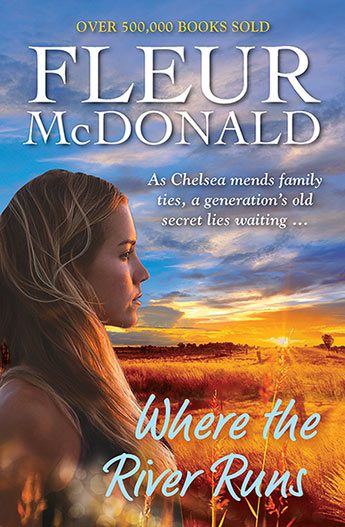
    If you are looking for the perfect excuse to take a lazy day out, the latest outback fiction from Fleur McDonald, Where the River Runs, is the prefect way to have a heart-warming hour or two to simply recharge before a new week begins.

    Family secrets have a way of eventually resurfacing to confront the present-day members of any family. When a skeleton of a male and small baby is discovered on the family property, Shandona, a property that had been farmed by Chelsea’s family for several generations, questions need to be asked about who they are and how they came to be buried there.

    Chelsea has returned to Shandona after a long absence, to spend the Christmas period with her estranged father, in an attempt to find out what went so terribly wrong after the death of her mother. Her daughter Aria is with her, the light of her life, her anchor when times have been difficult, but a child also needing a stable future, something that is causing Chelsea many worried moments.

    Dave Burrow’s, local copper, had been called in to investigate the cause of the death, or to try and discover at the very least, who these people where. He has just been informed his brother in Perth has been badly injured in a farming accident, a situation which brings a up many bitter memories of his past, which he eventually begins to realise will also need to be faced before time old rifts can be healed.

    Farmhand Cal, the man who her father has come to depend upon to run the property, seems to have already judged Chelsea on the small amount of information available to him, is brusque, unhelpful and remote.

    As Chelsea settles into the slower pace of rural life in a drought stricken, blistering hot South Australian summer, the wounds of the past begin to heal, but not without some serious, honest soul searching from Chelsea as to how her career as a world acclaimed concert pianist, could have crumble and failed so spectacularly.

    Several threads of the story come together to form a common theme and provide a pathway forward as truths, no matter how hurtful need to be faced, and the secrets of the past slowly begin to emerge from the diaries of her beloved grandfather.

    It is not until her father Tom fails to return home on Christmas night, after checking the water bores for the stock, clarity finally emerges to draw a line under the past and begin anew.

    Strong women, rural life and the social cohesiveness of small towns are integral components of Fleur McDonalds rural stories. In Where the River Runs people known and loved by her readers are meet again, continuing a connection with old friends and new.

    Once again, a fantastic, entertaining and enjoyable read.
  • Back of Beyond

    Back of Beyond

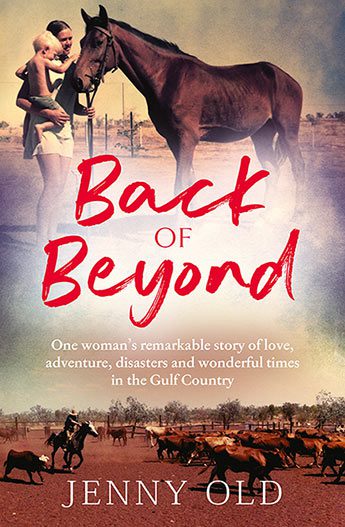
    On the front cover of the book it says “One woman’s remarkable story of love, adventure and disasters….in the Gulf Country.” I think rather, it is the story of one remarkable woman! She adopted a life she knew nothing about, in a region she was a stranger to, and worked alongside the men all day. The Gulf Country refers to the land south of the Gulf of Carpentaria, and just below Normanton.

    Jenny fell in love at first sight. Rick was also smitten with her, and even though she was to travel overseas for a year with her nursing friends, he waited for her return. They always knew they wanted to be together. Rick was to become a manager of McAllister, which was land, completely undeveloped, and so the two of them set off to begin an enormous task. Luckily Jenny had been raised on a farm near Deniliquin, and had experience with horse riding, and country life. Rick and Jen arrived at the property where a small shed was their only shelter. A man called Paul lived in the shed with them while they began the enormous task of fencing the property. From here, they were able to make their first purchase of livestock.

    Jen couldn’t work out why she felt nauseous. Then she realised she was pregnant. Over time she would need to tie her jeans up with string, and getting on with the jobs at hand. With no running water, electricity, or phone coverage, she cooked in a mud oven, and still worked alongside the men. When she did get to Mt Isa to see a doctor, he suggested that she give up horse riding for a week or two, but as it was muster time this just wouldn’t work. All was well for her, and when she did move to Mt Isa for her delivery, she was very healthy.

    The baby had a meat safe for a cot and was thoroughly loved and happy in the house that Rick was now building. Slowly progress was made, although there were always paddocks to fence and mustering to do. Jen was able to start a little garden of her own, and supplement her mainly meat diet. Gradually tanks were built so water didn’t have to be carted, and the house even boasted a washing machine that Ric had salvaged from the dump.

    The many trials, including the weather, (cyclone season was unpredictable), and the insects, and the heat, as well as lack of electricity, cemented Jen and Ric’s love of their patch. As the land flourished, so did they: their family felt the love of the country, and a lifestyle and love, which drew them to such an amazingly remote place.

    Back of Beyond is set in modern day Australia and even thought it reflects some of the struggles the earlier pioneering families must have faced, it also pays tribute to the many women who have faced challenges in their lives, made the most from the experience, going on to prosper even when times were beyond tough and tomorrow was a day to far away.

  • The Flying Optometrist

    The Flying Optometrist

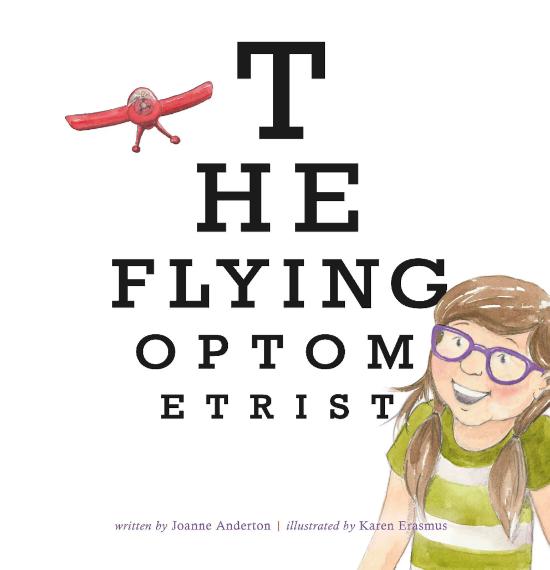
    Written in a celebration of the men and women who take medical assistance to the remote regions of Australia, The Flying Optometrist gives an insight into what is to come, with the cleverly designed front cover showing the wide range of letters similar to the charts used in Optometrists clinics.

    The story focuses on Stephanie, a little girl who lives in a remote part of Australia, on a very large farm, near a very small town. The town is so small they rely on the flying clinics provided by the Royal Flying Doctor Service and the Flying Optometrist to bring in a wide range of medical services and such everyday necessities as health checks and eye checks, as well as organise some much needed new glasses for Stephanie and some of the other people who also live in the town.

    Stephanie has managed to break her one and only pair of glasses and can’t see anything very well through the cracked lenses. She can’t play cricket and no one is interested in letting her play with them at school because she keeps dropping the ball, She is very, very, miserable. There are several other people in town that badly need to visit the optometrist as well.

    The townspeople wait and wait for the arrival of the little red plane, but the weather is closing in, bringing with it a bad storm. They’re all very worried for the safety of the pilot, and his little plane but as a new day arrives, so too does the Flying Optometrist, safe and well.

    He does his work and then fly’s off to go to another town, promising Stephanie and her friends that their new glasses will arrive safely in the post in a few weeks’ time.

    The Flying Optometrist highlights the very real isolation that is a part of everyday life for so many Australians living in the country and the ongoing need to bring medical services to outback and remote towns which is as important today, as it has always been.

    In the back of the book there is a very well-constructed and informative look at the Royal Flying Doctor Service as well as the remote Optometrist Service of which Phil Anderton and his little red plane are an integral component.

    Wonderfully created with bright colourful illustrations used to reach out to children of a wide age range, The Flying Optometrist brings the little known world of remote Australia to life.