Tag: nuclear

  • Tangles

    Tangles

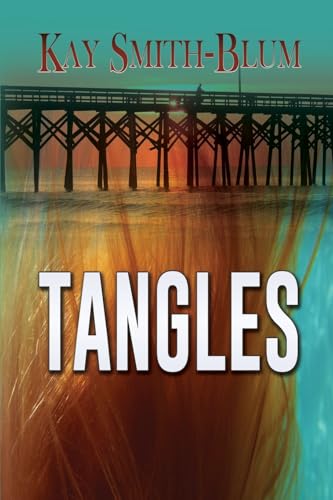
    Set in 1944 and then flowing into the Cold War period, Tangles from Kay Blum –Smith returns to a time when Nuclear research was in full flow and, Governments of the day were in denial as to the effects of the radiation.

    Established in 1943 as part of the Manhattan Project, the Hanford site was home to the Hanford Engineer Works and B Reactor, the first full-scale plutonium production reactor in the world and this is where the story begins.

    Scientists working there are desperately trying to let the world know about the effects of working in a nuclear environment. Many have died, the towns people are suffering from various forms of Cancer. A small group of people are desperate to stop the production of Plutonium.

    Mary Boone is one of the activists, a woman on a mission to make a difference, as well as escape from an abusive and loveless marriage. Luke Hinson is the boy next door who is befriended by Mary. He secretly keeps the small amount of coins and notes Mary manages to retain so she can eventually leave her marriage.

    Their story is the basis of the narrative, that spans several generations and it is not until Luke, now a biochemical doctoral student finds a harpooned dead whale on the beach, a seriously deformed foetus in utero, that he begins to research, for his PhD, the lasting effects of growing up in Hanford.

    This leads him into areas that are still Strictly Classified; a world of deadly deceit and Government cover-ups, as Luke works tirelessly to uncover a tragedy more than 20 years in the making.

    As a debut author Kaye Smith-Blum has picked a very topical subject to use as the historic basis for Tangles, and one which down through the years is still very topical, highlighting the real cost of the birth of the Nuclear Age.

    An unforgettable read with a surprising ending.

    Please note: The links have been left in the narrative for anyone not familiar with this particular period of time whom may wish to understand further the secretive and often deadly nature of those times.
  • Avoiding Apocalypse

    Avoiding Apocalypse

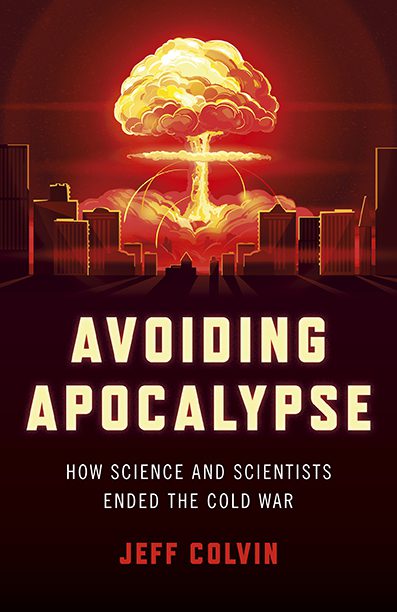
    “Jeff has spent the past 45 years as a research physicist helping to develop the science that has made technically possible a Comprehensive Test Ban Treaty (CTBT), one linchpin of the Cold War stand-down discussed in his new book, Avoiding Apocalypse”

    When a man of Colvin’s outstanding and fascinating background, writes a book about how Science realised that to continue on the pathway it was moving down with rapidity, you take notice. Avoiding Apocalypse revisits the history of the Cold War (1947-1991), a time of which the younger generation have little understanding, but a time when the world changed, due to science.

    Following on from the Second World War, Russia set off on a vastly different pathway, moving into the world of nuclear Science, as it had some of the best scientific brains at its fingertips; these scientists had taken part in the development of the Atomic Bomb and were intrigued to take the splitting of atoms further – the little understood world of nuclear fusion was in its infancy, the future lay waiting.

    Russia saw the potential for world dominance, closed its boarders, and moved rapidly to develop nuclear bombs. America saw this as a direct threat, not just to them but globally and established their own almost identical Scientific program, to go bigger and better than the Russia. The Cold War was born and the world trembled.

    Eventually the scientists from both countries took the long view, realising exactly what would happen should either or both countries ‘push the button’ and interestingly, united in their efforts to stop what was developing. Colvin played a role in what was to become a dedicated boycott of the program by scientists and a ‘rufusenik’ by the Russian scientists.

    Avoiding Apocalypse looks back at a time when Michael Gorbachev rose to power, a man respected by world leaders, his history now submerged in the Russia of today’s world and the Putin era; an era that started out well but is yet again ending in horror.

    Gorbachev’s legacy, along with the scientists who bravely stood up to the “State’, many imprisoned for their stance, saw the end of the Cold War and eventually the dismantling of the Soviet Union.

    Not a long read Avoiding Apocalypse, is an excellent, fascinating and very relevant read for today’s world.

  • Cellnight: A verse novel

    Cellnight: A verse novel

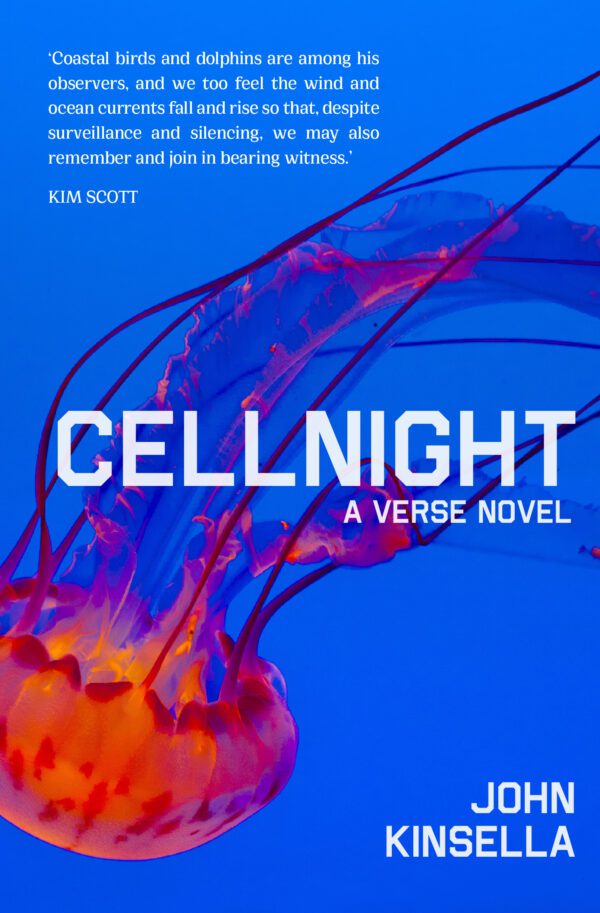
    John Kinsella via Cellnight, A Verse Book returns to the tumultuous past of Fremantle in Western Australia, at the time of the protest rallies against American nuclear warships coming into the Port town. Kinsella jarringly opens the pages with the arrest and bashing in custody of a protestor by the Police at a time when no one cared; no one had heard of Police brutality.

    The prose is lengthy and throughout the discourse there is beauty threaded amongst the anger and deep sadness; the beauty of the dolphins as they swim the waters of the Port into the mouth of the Swan River, the created vision of the red-tailed cockatoos as they sit in the pine trees pondering their future. Beautiful but disadvantaged; destroyed and destructive.  The beauty has within it the bitter sting of the words.

    Kinsella is well known for his environmental stand, his deep and loving concern for the environment which once again becomes very apparent as the pages turn, moving from the early days of Fremantle to modern times, each word precise, painting a picture of a past which showed little concern for the environment or the traditional people of the land.

    For anyone who grew up in Fremantle during the halcyon days of protest marches, environmental rage, and a massive change in societies standards, Cellnight will resonate, will be confrontational and will also return to a past where so very much changed far too fast in the history of Fremantle; and by association, the history of Western Australia.

    Back then nuclear warfare, logging of old forests, ending the Vietnam War, to name just a few issues of the times were considered so important, but looking down the lens of 50 something years, the modern generation have never heard of the Ports history, the deep, all-encompassing desire to protect, to save the land, for future generations. 

    Within Cellnight there is the very real truth which presents the fact that despite the furious cries of the people of the past, so little has in reality changed. The red-tailed black cockatoo no longer visits in flocks, the dolphins still come but not in great numbers and the trees are no longer along the shoreline. The history of the past, the protesting, the ill treatment of prisoners all carefully tucked away, considered of no real consequence.

    History cannot be changed, it must be accepted, to be learned from, understood and used to change the basis of modern thinking, but is it? That is the question and, within that question, are so many of the aspects of the past presented within the multi-layered Cellnight. A Verse Book.

  • When We Are Invisible

    When We Are Invisible

    We are well and truly into 2021 and considering the crappy year that was 2020 you would be forgiven if you thought my book review will be about something nice and happy. But alas it is not. Instead we have When We are Invisible, a post apocalypse drama set in our own backyard.

    When We are Invisible is the second book in a series and takes up where the first book, The Sky so Heavy, finished off. The basic premise of the first book is that while we are living our quiet lives in Australia nuclear war has broken out. And with nuclear war comes a nuclear winter with all the joys that come with it.

    Unlike the first book, When We are Invisible takes the view point of a teenager by the name of Lucy. She is introduced to the reader in the first book as a love interest to that book’s main character Fin, but it is in When We are Invisible that we get her perspective regarding the whole armageddon journey. Having survived the anarchy of Sydney going down the pan she, Fin and Fin’s younger brother Max have escaped to the country.

    However the problem with a nuclear apocalypse is that there is no escaping its effects; both enviromental and social. Instead Lucy and her companions are beset with the issues familiar with characters in fictional post apocalypse settings the world over; food, shelter, warmth and who to trust.

    When We are Invisible is a solid though not revolutionary entry into the post apocalypse genre. The book is told in first person perspective which is neither here nor there. Oddly enough, though not strictly similar, I got Tomorrow when the War began vibes. For those who don’t know, it is a series based on a young female teenager who has to survive with her companions out in regional Australia with the only difference being instead of a post apocalypse nuclear war, Australia has been invaded.

    I admit I found it hard to follow the story initially. However this has more to do with the fact that I didn’t read the first book, The Sky so Heavy, rather than any problem with the story itself.

     In conclusion When We are Invisible is a novel for a teenage audience that is fairly interesting to read. It covers a fictional scenario which, considering the luck humanity has been having recently might end up coming to fruition.

  • Marie Curie and Her Daughters

    Marie Curie and Her Daughters

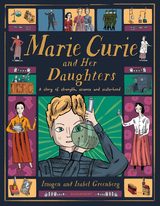
    The story of Marie Curie and her husband Pierre is one that is widely known in the world of Science for their amazing discoveries in the field of Physics and Chemistry. She was the first woman to be awarded the Nobel Prize in Physics in 1903 with husband Pierre. She went on to be awarded a second Nobel Prize in Chemistry in 1911.

    Her work in Science is well documented but her life as a mother, wife and sister is perhaps lesser known, but equally as fascinating in so many ways, as her professional life.  Born in Warsaw, Maria (Marie) Salomea Skłodowska, moved to Paris as a very young woman to study at the University of France. She met Pierre through their mutual interest in Science and he eventually convinced her to marry him.

    They had two daughters Eva and Irene, who also went on to forge stellar careers; Irene also receiving the Nobel Prize for Physics and Eva who became a journalist, biographer and War journalist.  She and her husband eventually were awarded the Nobel Prize for their work with UNICEF in 1965.

    Imogen and Isabel Greenberg have combined their talents to bring to life once again the remarkable journey of these three women whom in their own way, took on their world, refused to give in and by doing so, helped change the world. Their story is one of courage, determination and hard work to forge a pathway through a world that seldom gave women many opportunities to excel and if they did, seldom acknowledged the fact.

    Page after page of the life of Marie and her daughters has been presented in such a way that the work is suitable for a wide range of readers. The illustrations modern, casual and fitting for the style of writing takes a walk through the pages of history via science, war, poverty, challenge and determination.

    Perfect for children of all ages with an interest in Science, or even without an interest in Science the Greenberg sisters have presented the rich tapestry of the Curie women, in Marie Curie and her Daughters in such a way as to entertain, illustrate and offer a nicely balanced perspective on making a difference, following a dream and accepting a challenge.