Tag: night

  • The Night Always Comes

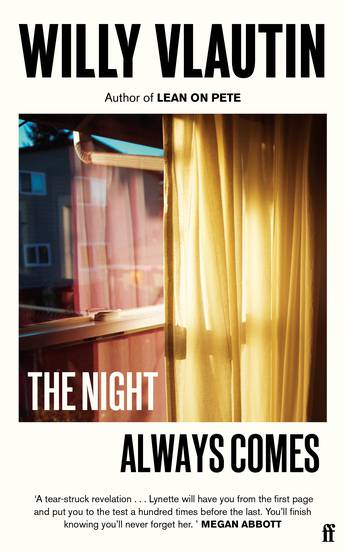
    The Night Always Comes

    To everyone there comes a time when eventually choices have to be made, choices to move on or remain. Willy Vlautin has in The Night Always Comes captures that pivotal moment in time when a decision has to be made to move on, to follow the dream to remain in the mind numbing world of poverty, distress and hopelessness.

    His protagonist Lynette has done it tough. A failed marriage, an abortion, life with her alcoholic mother and the main career for her severely handicapped brother Kenny, has worked hard for a better lifestyle, for not just herself, but her mother and brother. The house they rent is old, in terrible repair and able to be purchased for a reasonable sum of money.

    She makes the decision that no matter what she will save up for the deposit and purchase the property, a decision which looks promising until her mother decides to use some of the hard earned deposit to purchase a car; second hand to be sure, but money that was set aside for the house.

    Two low paid jobs, the occasional night as a call girl to several regulars who pay well, added to the stress of part time study see Lynette at breaking point, her dream so close and yet almost destroyed by her mother’s complete self-absorption. She sets out over the course of two nights to call in all the debt she is owed, but finds this far more challenging and dangerous than she ever imagined.

    Come the morning little has changed and all it takes is the realization that she is the one to move on, no one else.

    Very real, the characters come to life on the page; they could be you or someone you know facing some of life’s most difficult choices which make the essence of the storyline vibrant, challenging, confrontational and yet full of hope.

    Following her dream cost Lynette dearly in the end, but was it all worth it; only you and she will ever know.
  • AS DUSK BECOMES NIGHT

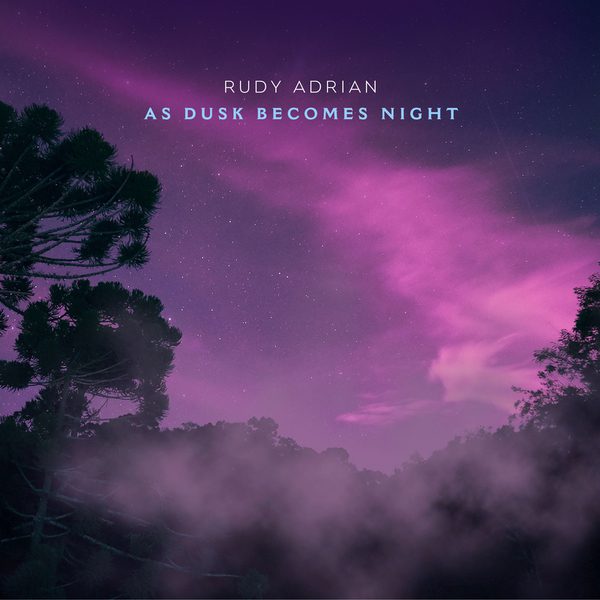
    AS DUSK BECOMES NIGHT

    Dusk is a time of magic, the drawing in of the day, the gentle hint that night is to follow, the softness of a gentle veil falling over the day just past. It is a time for reflection, slowing down and preparing for the nightfall.

    Rudy Adrian has captured this mystical time in As Dusk Becomes Night, a collection begun during the COVID lockdown of 2020, in a desire to offer a soothing, calm, peaceful series of songs to help with the somewhat strange, unusual times experienced by everyone; the stresses that resulted from a rapid change of direction in many lives. The challenge of times changing, but too fast to be easily adjusted to within a familiar structure.

    Dusk flows into the darkness of the night, gently, softly, often without any fanfare, as do the eleven songs that make up an immensely relaxing collection which will do exactly what they were created to do, sooth and relax.

    Perhaps it is best to treat the work as one piece rather than individual songs as they tend to flow effortlessly into one another, the titles directing the flow, offering a perspective behind each one which will hold differing meanings to each person.

    Stars Appear begins the journey, a small tiny glimmer in the skies begins the familiar journey, as Dusk becomes Night. Moa Caves partway through the voyage asks to be investigated, the music changing as the night draws ever inward. The Crepuscular Wildlife is as intriguing as its title and brings to mind the dreamscape of the many strange and wondrous places visited in dream state.

    Eventually, floating along courtesy of Western Wind the night Becomes Dawn, as a soft, fresh new day is beginning to break, bringing with it A Sunny Dawn.

    That Adrian has used this natural progression of night into day as a metaphor for the dark days of the pandemic eventually giving way to fresh new beginnings, is hard to miss, but within As Dusk Becomes Night, he has captured the certain inevitability that after the darkness eventually comes the light and with the light, a fresh new beginning.

  • Growing Pains

    Growing Pains

    This whimsical little story from Alison McLennan and Melissa Johns, Growing Pains uses the analogy of planting a small tree to tell the story of growing up and how the body, just like the tree, changes and sometime jiggles and aches as bones grow longer and stronger.

    Finn wonders do trees get cold and imagines they must because he does, especially when the morning is cold and chilly, even though he is pretending to be a fire breathing dragon. He rummages through his draw until he finds a scarf to wrap around the trunk to help keep the tree warm. Toast also might help feed the tree and sunshine saw him sitting under the tree in case the tree felt lonely.

    He also wondered if trees hurt when they grow, like he does but no matter how many times he asked the tree, there was never an answer, until one dark night his nightlight went out and Finn was very afraid. He lay there wondering what the tree would do, and then peeked out of his window. What was trees answer?

    Melissa Johns has added a few hidden bits and bobs to her gentle illustrations that will add hours of fun to the story as curious little one seek out the hidden gems tucked away amongst the text.

    Charming and fun, the story offers a gentle explanation to the changes that are necessary when people and trees grow up into strong, tall trees and people.

  • Night Blue

    Night Blue

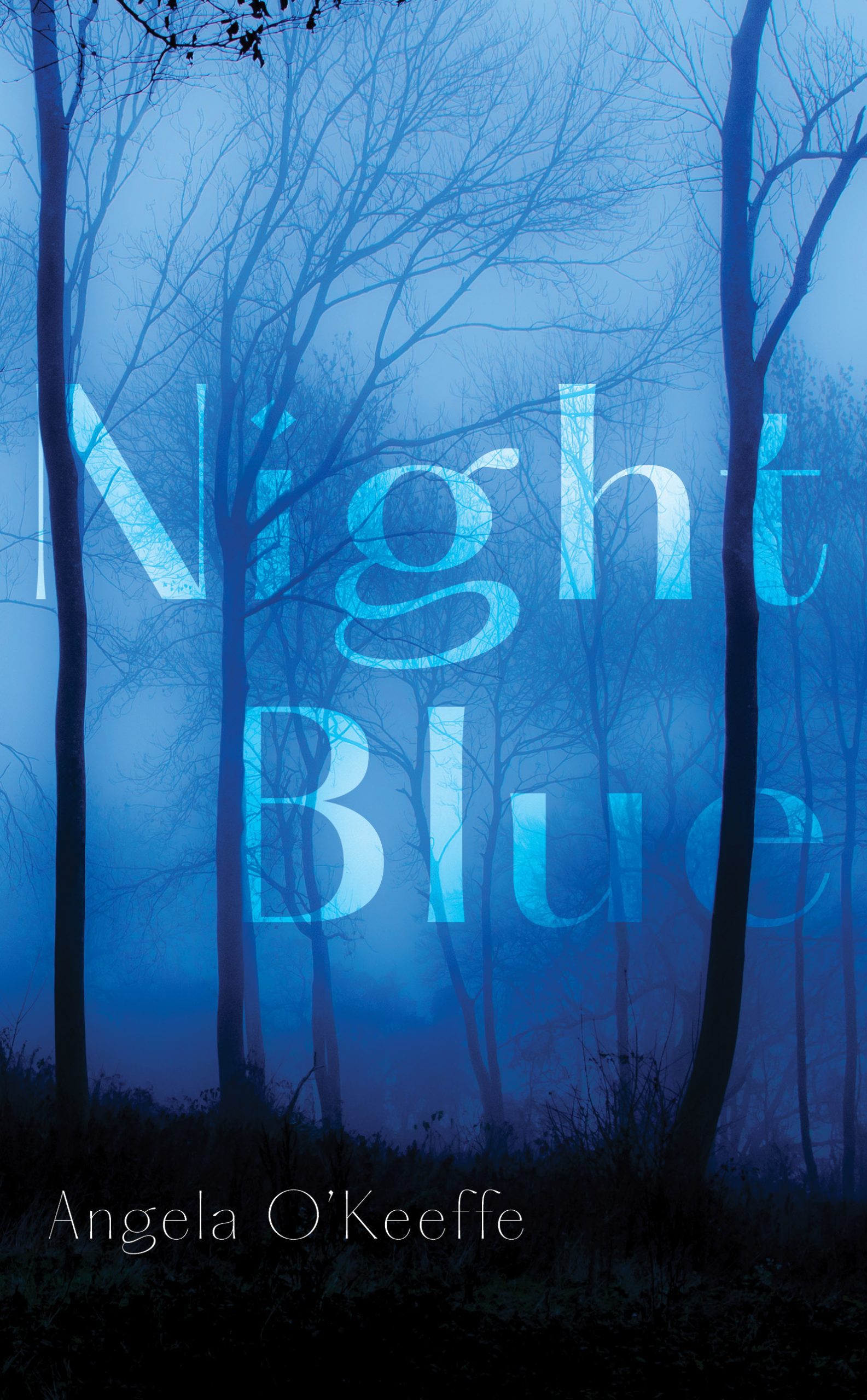
    Every once in a while, you come across a book that is so remarkable it challenges all your previous concepts. Night Blue is such a book and so wonderfully written that you want to begin to read it again when finished, for this is the story of the painting of Blue Poles by Jackson Pollock. He said, “The painting has a life of its own” and this is the story told by that painting.

    A life begins in a barn in New York, in 1952, when the artist unrolls some Belgian linen five metres by three metres onto the floor. He liked to be able to move around the painting and “Feel he was part of it.”  Now the author of this story of the painting takes up the tale. From the smell of the paint to the artists splattered dungarees, a gradual relationship develops. It is a special love story. “His gaze… sought me as one seeks a horizon. To dream into, to orient oneself.”

    At the completion of the creation of this work, it was exhibited in New York. There was not much interest in Blue Poles at the time and the painting remembers being removed from its frame and rolled up. It was reframed and sold to a couple who kept it in a dim room where it felt it could die. It was not in physical danger but that is not how a painting lives.

    Part two of this tale is written by Alyssa, an art critic and writer. She is fascinated with Pollock and through her own experiences and studies begins to learn about his motivations, lifestyle and his art. Her story is revealing as it unfolds in the political setting of the times.

    Whatever your thoughts on the Blue Poles painting this is a story not to be missed. It is the “inside story,” narrated by the painting, and the “Outside story,” narrated by Alyssa. The lyrical writing is a joy to read, and is the crown on a wonderful tale.

  • The Night Letters

    The Night Letters

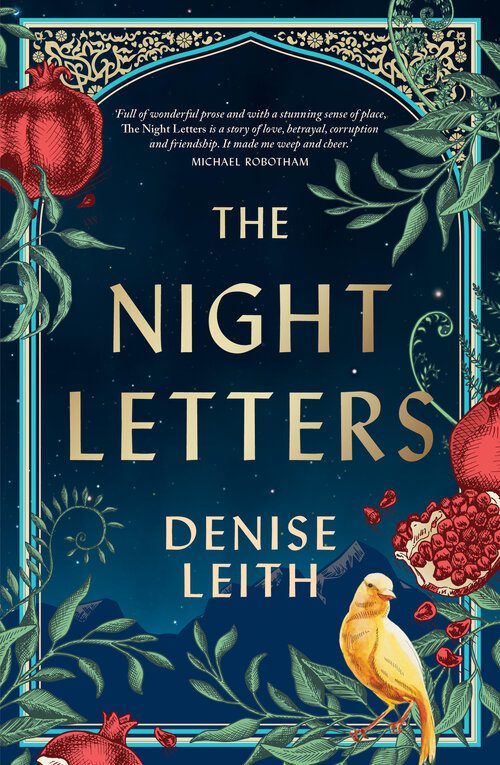
    Set in Afghanistan just as the Americans are leaving the war torn country, Australian doctor Sofia Raso sits in her window in the early morning light, watching as the local residents slowly emerge to attend prayers at the mosque. She knows everyone who lives in square and as the ancient prayers ring out across the city of Kabul, she shivers pulling her shawl closer to her body.

    The Night Letters is an evocative portrait of life in Afghanistan lived very much on a daily basis but steeped in the ancient traditions that go back many, many centuries and pays tribute to the strength and fortitude of the Afghani women as they learn, once again, to take their place in a society that still suffers from the rule of the Taliban and its forever ghostly presence in their lives.

    Sofia has lived in the  Chahaar Rahee Shaahir (Shaahir Square)for the past five years, working with her friend and mentor Dr Jabril Aziz, becoming the much loved Doctor for the women of the Square, as well as working with the women of the slum city Jamal Mina and valleys  of the Hindu Kush; training them as midwifes.

    When she takes up the cause of the disappearance of young four boys from Jamal Mina things begin to change in the Square with what seem to be Night Letters, delivered by the Taliban, or so it is thought by those who have received them. Sofia was told from the first day at Shaahir Square that she was to keep a low profile as she was a foreign woman working in a male dominated society, but the further she becomes embroiled with the missing boys, her time in this country she has loved with a great passion, becomes fraught with danger.

    Then there is Dr Daniel Abiteboul, a man met high in the mountains more than five years ago, a man who shared a night of unforgettable passion only to leave the next morning, returning as the member of the United Nations team arriving in Kabul to assess the medical needs of the Afghani’s in this time of change.

    Unforgettable characters grace the pages in a story that is graceful, powerful and bittersweet as every character forms an identity that touches the heart; Bahnaz, wife of Chief Wasim, head of the local Police, tart, unyielding and full of secrets held dear; Jabril, Sofia’s friend and mentor and the kindest soul in the Square. Inez, young beautiful and railing at life she is still made to live in a world rapidly changing, Iqbal the blind cobbler, Amhad the shopkeeper and Omar the Apothecary, also a man holding secrets dear, reminiscing on a life well lived but still, even in his older years filled with change and challenge.

    The Night Letters looks with acceptance at the lives and traditions of Afghanistan through the lens of yet another change in a country that has seen endless change, portraying the real strength of the women emerging from oppression, the love of the Afghani for their traditions and colourful history, while pressing the point that nothing in this world is new, nothing is old, and life goes on regardless of the external forces at play.

  • The Night Fire A Ballard and Bosch Thriller

    The Night Fire A Ballard and Bosch Thriller

    After the funeral of an old friend John Jack Thompson, a man who was Bosch’s mentor when he was a rookie homicide cop, Harry Bosch, now recently retired, is asked to take care of a Murder Book kept by Thompson, when he left the department many years before. Bosch wonders why Thompson kept the Murder Book and what is in it that he expects Bosch to discover and finish. After all the murder of a young man who was dealing drugs was more than 20 years old!

    And so, begins the latest in the gripping Harry Bosch series from Michael Connelly, with Bosch now mentoring Renee Ballard, an intelligent, first rate detective with that special fire in her belly for ensuring a case is closed, done properly and delivering answers.

    What begins as a somewhat reluctant investigation into a case that was a very cold case, quickly begins to look very much like something else entirely, causing Bosch to rethink his feeling and beliefs of his mentor John Jack, and stretches both Ballard and Bosch’s expertise to new limits.

    Ballard gets sent to a late-night arson case where a homeless man is burned to death. As the details of the case unfold, both Bosch and Ballard begin to suspect that perhaps this latest death has strong links to the past, links to the more than 20-year-old murder in John Jacks’ Murder Book. All Connelly’s novels consist of more than one crime scenario with The Night Fire being no exception.

    Working tirelessly to discover what was behind the unsolved murder all those years ago, digging up secrets from the past, which eventually lead inside a crime syndicate that means business, and are happy to remove whatever is in their way, in order to get what they want, pushes both Bosch and Ballard into terrible danger.

    Yet again they form a formidable team, that of the veteran cop whose seen it all and a ferociously intelligent young woman moving up into the darkly masculine world of crime investigation.

    Well-constructed with the high standard of detail that has come to be an integral component of Connelly’s work, The Night Fire will enthral until the final word, which is as always not what would be expected, and leaves a thread dangling as a tempter for the next Ballard and Bosch novel.


  • In The Dead of the Night

    In The Dead of the Night

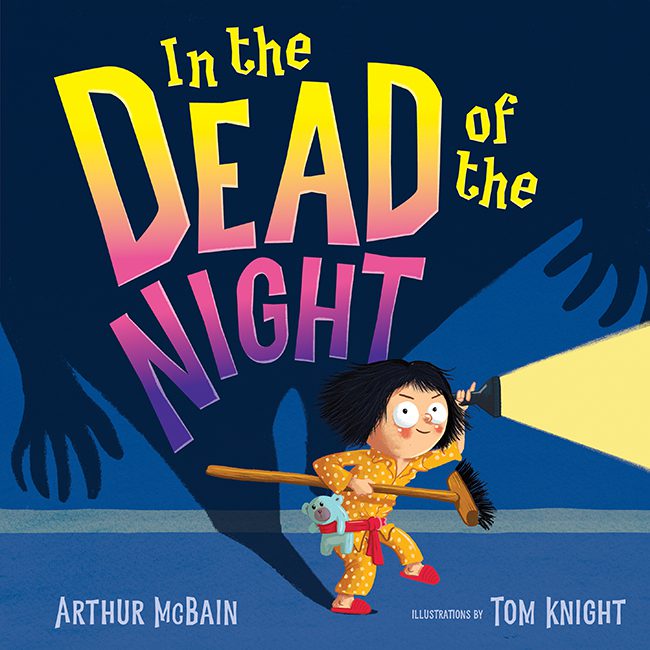
    Lily is scarred of the night. There is a storm raging outside and the noises seem to be far worse than they have ever been before! She does not like the noises that somehow, sound so scary in ‘the dead of the night’.

    With a lovely use of language, Arthur McBain has perfectly captured the fear many children experience, when the noises of the night really do sound like perhaps a sock monster eating all the socks, or maybe a ghost out to gloom about the room, or even a monster with horns, who rather fancies moving in under the bed with all the toys and things.

    But as the noises keep on, Lily is beginning to think that perhaps it is time to do something about them; to be very, very brave. Just perhaps, it is time to sneak out of bed and tackle these very naughty, scary monsters, once and for all. After all, she’s not afraid, not really, is she?

    So, Lily creeps out of bed, arms herself with all sorts of things to fight scary monsters, but ends up scaring her little brother!

    The bold, bright illustrations from Tom Knight add a certain spookiness to the storyline, especially when it comes to Tap, Tap, Tap and when it does eventually work out well, his cheerful illustrations change the mood immediately.

    In the Dead of the Night is also a book that is written to have the most immense fun reading it out loud to a group of little people and asking them to join in with the Tap, Tap, Tap, Step, Step, Step, which simply begs to be used in a loud and noisy manner, as they learn to chase out the ghostly monsters who do delight in arriving In the Dead of Night!

    Anyone who has ever been afraid of the dark will immediately relate to this charming and what could be a very noisy, very funny, tilt at facing your fears.


  • Generous night, redeem

    Generous night, redeem

    Solo pianist Ryan Marvel has collaborated with his mother, poet Betti Bernardi, to create a beautiful album full of soul and reflection, the music woven throughout the poem which is presented on the back cover of the wrap-around.

    The fourteen tracks have names selected from lines of the poetry with the introductory piece Lunar Melody, delivering a light, clear and fanciful song, soft, gentle and yet full of longing, perhaps dreaming of being away from earths mortal coil to become the ‘man in the moon’.

    Crying heart of sleepless dawn visits a place everyone has been at some time in their lives; tired, restless and facing the dawn, a time of refection, introspection and weariness, to begin a new day but both the words and the music encourage taking a stand against life’s issues. Moving on, towards acceptance, eventually leads to Overwhelm, which in the words of the poem is, ‘misery’s companion’, setting the scene for a rather sombre and measured piece, gentle and yet melancholic, but in that same melancholy there is a thing of rare beauty, hidden deep inside.

    The title song Generous night, redeem is once again a measured, gentle song offering understanding, allowing time for a quiet thought, clarity still to arrive, but with acceptance more than a consideration. Evenings benediction brings with it an uplifting moment, lighter, more positive as ‘the windows of time’ are used as a sign and evidence that transformation will and does eventually take place.

    A fresh breeze beckons in Breath of the vagabond as a new beginning is just a little further down the pathway, beckoning, tempting and calling out to be heard. Come join me, it almost seems to say, I am fresh, alive, new, come join me. A delightful little song full of hope and joy.

    The final song Glance the stars says in the simplest of melodies, that even in the midst of despair, there is a fresh new beginning to be discovered, by simply pausing for moment, glancing at the stars, millions of years old, forming in their galaxies once again offering a fresh way forward.

    Both blend of music and poetry make a beautiful journey of enlightenment and at the very least a delightful moment of time out reading inspirational words couched in delicately presented music. Read the poetry, listen to the music then combine the two and a visionary journey is there to be enjoyed.

  • The Night Dragon

    The Night Dragon

    Why did it take over 40 years for the murderers of Barbara McCulkin and her daughters to be convicted? Matthew Condon in his book ‘The Night Dragon’ tracks the events prior to the disappearance of the McCulkins to the final court cases, which sentenced Vincent O’Dempsey and Garry Dubois to life sentences for the kidnapping, rape and finally the slaughter of Barbara and her girls.

    The author, by interviewing people who were ‘players’ in the underworld and police force during 1950s-1970s, has pieced together a terrifying picture of O’Dempsey’s character and his criminal life. By exploring the relationship between Vince O’Dempsey, corrupt police and the Whisky Au Go Go fire, which resulted in the loss of fifteen innocent lives, he unravels the reasons as to why it took over forty years for Barbara’s family to achieve some justice for the events which befell her and her daughters: their bodies have never been recovered.

    True Crime readers will find this a most intriguing book as it explains, why O’Dempsey was considered gangland’s most feared villain; speculation persisted over the years that he is responsible for many more missing (presumed murdered) people. It also highlights the power he had over people, resulting in his ability to deny involvement in the trio’s disappearance for over forty years and his capacity to almost get away with this and many other heinous crimes.

  • Nothing Can Frighten a Bear

    Nothing Can Frighten a Bear

    Night time can be scary for the bravest of bears, but for baby bear all snuggled up warm, a loud noise in the middle of the night, causes him to wake the rest of the family. Baby Bear is sure there must be a monster about, but Father Bear says that if that is so, the whole family will go out looking for that monster. Father Bear takes a lantern, and the family, Mother Bear, Grace and Ben and Baby Bear, all follow along. As they walk along the path, Mother Bear gets caught in a tree, and nobody notices she is not there.

     The adventure continues to unfold, with Daddy laughing and saying, “Nothing can frighten a bear.” The humour of the situation begins to become apparent as the family wends its way through the forest, with the last in line dropping off. Baby Bear is really tired by now and wants to go back to bed. He and Dad notice that the other members of the family are missing, and fear the worst. The resolution is funny and all of the bears are reassured, and satisfied with the logical explanation.

     The gentle colours of the illustrations and the small creatures who peep out at the bears help to soften the anxiety that Baby Bear feels. The lantern casts a soft light over the scene, again soothing any worried feelings. Father Bear is seen sucking his thumb, but quickly regains his composure when the truth is revealed. The text rhymes, and the repeated phrase, “Nothing can frighten a bear,” is on nearly every page.  Small blocks of text are on each page, and words vary in size according to the ROAR.

     The humour in the text and illustrations will ensure that the reader understands that the scariest things are in the mind, not in the real world. As a large paper back picture book, this will be appreciated by members of the family who read, and those who are read to. There are many tiny details to peep at while waiting for the story to unfold.

     A very special bedtime book.