Tag: New Guinea

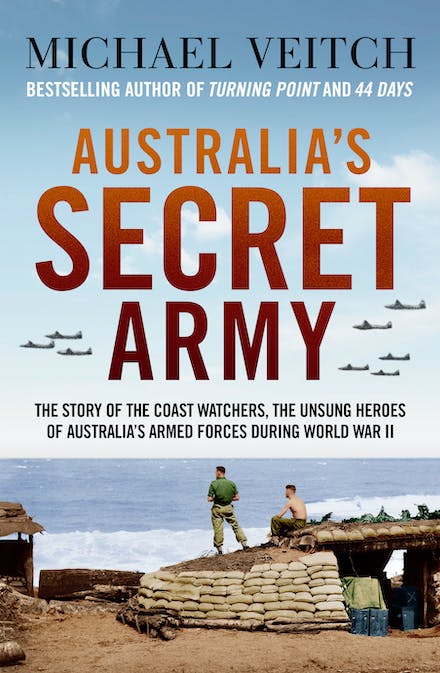
  • Australia’s Secret Army

    Australia’s Secret Army

    In 1922 Eric Feldt reluctantly left the Royal Australian navy (RAN) to go and see the world, in search of the adventure he could not find in the Navy. Little did he know at the time, his adventure was going to last for many years and make a massive difference to the outcome of the Japanese Invasion of the Pacific during World War II.

    In the years after World War I wise men, mainly with ties to the RAN noted the activity taking place in New Guinea and the surrounding areas. They considered this was a serious concern based on Intelligence reports uncovered from WWI, which noted the ease in which hostile forces could very easily land on Australian shores, as the vast stretches of coastline were largely uninhabited.

    A scheme was created by Naval Intelligence to utilise many of the people already living and working in New Guinea, the Solomon Islands and other smaller Islands to report any activity they may notice that was not normal. It was to be a voluntary force drawn from Postmasters, harbour masters, school teachers, plantation owners and many more.

    They would report in on their radio sets or directly to the Post Master Generals Department in their area. They eventually became known as the Coast Watchers. At that time were never meant to be drawn into the theatre of war, but more than ten years after their formation, War came to the Pacific and these men, led by Eric Feldt, their Founder and Mentor, came to be a massive body of intelligence gathering for the Australian and American forces fighting in the Pacific.

    Largely unrecognised by or in Australia, their story has been hidden in the archives gathering the dust of time. Michael Veitch has with great care and attention, researched the history of these brave men and woman, who often gave their lives or sanity, facing serious hardship, depravation and danger to send intelligence on the Japanese invasion of the Pacific region, which enabled so many times, successful missions to be launched by the Australian and American Air forces, downed airman to be rescued and bought to safety, and many  civilians evacuated who had stayed on their plantations or Missions far too.

    That their story is now being told is paying a long overdue tribute to men and women who asked for nothing but gave their all.  Australia’s Secret Army presents in great style a slice of Australian history, like so much, that has long gone unrecognised and is a must read for anyone who has an interest in history, World War II or simply enjoys an excellent non-fiction read.

  • Double Diamonds: Australian commandos in the Pacific War, 1941-45

    Double Diamonds: Australian commandos in the Pacific War, 1941-45

    The faces of the men on the cover of this rendition of the Australian involvement in the jungles of Timor, New Guinea and Bougainville during the Second World War, simply tell a story of their own. Young men chosen because of the undoubted skills to carry out often clandestine, always challenging, missions in inhospitable country, many times spending days, weeks and occasionally months on their own, replying on a haphazard line of supply, growing older than their years, always wondering what, if any future, was there for them; learning to living each day as it was given.

    Portraying life in the armed services in the jungles of the Pacific Theatre of War, this remarkable collection of pictures from the Australian War Memorials celebrated collection, many never published before, shows the reality of what life was like in the jungles of Kokoda, of Bougainville, of Timor and finally at Balikpapan during the final days of the war in the Pacific.

    The words drawn from publications from the same source create a history of which all Australians can be proud; the pictures bring the story to life and hit home as the families and in some cases the men involved, shown so clearly, are still very much alive today.

    This also details the story of the first steps in creating what is today the elite force known as the Special Air Services (SAS); a group of men who are carefully selected for their skills, to form a division of the Armed services respected not only by their fellow servicemen, but throughout the world for their levels of expertise in combat roles.

    Tales of the war in the Pacific against the Japanese are legendary, some gaining stature as the years have rolled along and others seldom discussed, rarely even revisited, but in this day and age, perhaps need to be told more so than ever before.

    Written and compiled by War Historian Karl James, the information gathered with the story is presented in a manner that is informative, entertaining, confrontational, sombre and reflective; bringing into sharp focus the price that was paid, the incredible undertaking required of the men and the mateship that was formed.

    A second thread tells the story of the men in command of the Pacific Theatre, the occasional conflict with Allies, the sometimes puzzling decisions made in regard to the placement of the troops, who was to be trained and who was to be sent where, as well as the decision that was made and undertaken to create a team of elite men to carry out some of the most dangerous and difficult tasks required in this inhospitable terrain, in a deadly, vicious war raging throughout the Pacific region.

    The men that formed the Fledgling ‘Double Diamonds’ did so knowing full well what was required of them; that this should be presented now, some 70 years on is fitting. Time has a habit of dulling the sharp edges of horror but also has the ability to allow the history of the past to be presented in such a way that it can be seen for what it was, what it is, allowing a new generation to understand why New Guinea, in particular Kokoda, is a place in Australian history that is now considered of such significance, many undertake a pilgrimage in reverence and respect for their family members or simply for all who served and gave of their lives, their youth and many, many, times their sanity, to fight a great injustice.

    The most telling, the most poignant words in the entire story are those taken from the diaries of the men who served in the jungles, as they tell it like it was; portraying the stark reality that is war, although Corporal Peter Pinney, 2/8th Commando Squadron, Southern Bougainville, July 1945, definitely had a poetic way of describing the tropics at its worst when he wrote:

     ‘Rain has poured down day and night for a week…sloshing and splashing – hissing through the palms and spraying off high branches… rushing under huts and swirling across gunpits and flooding the latrines. The air is vaporous with fine mist and everything is damp.’


    Lest we forget…………