Tag: Nazi

  • The School That Escaped the Nazis

    The School That Escaped the Nazis

    Anna Essinger had great foresight in 1933, but never did she imagine that anything as inconceivably barbaric and inhumane could come to pass as Hitler and the Nazi party’s reign of terror; horror beyond what imagination could grasp.

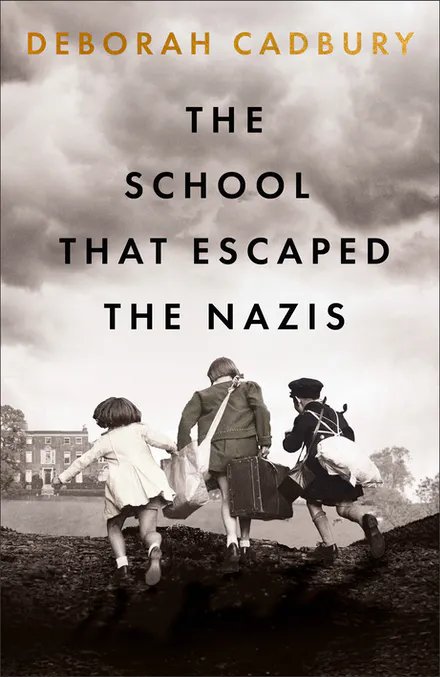
    In her comprehensively researched book ‘The School That Escaped the Nazis’, Deborah Cadbury relates the truly remarkable story of the German Jewish educator Anna Essinger, who not only, over the course of 22 years, cared for and taught over 900 children, but also gave them safety and love.

    After reading Hitler’s book ‘Mein Kamf’, Essinger realized that her progressive school in the south of Germany had no future. Hatching a dangerous and daring plan, Tante Anna, as she became known, quietly and methodically moved her school of 66 children to the safe haven Bunce Court in Kent, south England. Despite issues of illness, a shoestring budget, school inspectors and being enemy aliens in a foreign country, the school and its students thrived.

    By 1938 Kindertransport’s, the organised rescue efforts of children from Nazi-controlled territory, that took place during the nine months prior to the outbreak of the Second World War, began arriving in England. Now nearly 60 years old, Tanta Anna with help set up a reception camp to provide safety and security for 10,000 refugee children; many of whom were deeply disturbed.

    In June 1940, the school with roughly 140 students, again had to evacuate when southern England became a defense area. Given little over a week, the ever resilient Tanta Anna relocated the school to the dilapidated ‘Trench Hall’. With outstanding organizational acumen, resourcefulness and support from several wealthy benefactors, she saved the lives of hundreds of Jewish children in Nazi occupied territories.

     ‘The School That Escaped the Nazis’ is not only the amazing narrative of a little known hero and her enlightened education system, but it is the story of her students, many of whom went onto have distinguished careers.  After the war, her school had taken in numerous traumatised children survivors of the Nazi concentration camps, who no longer knew the meaning of a normal life. With her wisdom and compassion, she gave them a home and hope, and as one of her students asserts, his two years at Bunce Court ‘turned him back into a human being’.

    Although some readers may find the graphic recounting of the atrocities perpetrated during Hitler’s reign of terror, towards not only the Jewish population of much of Europe, confronting, I highly recommend this book to anyone who wants to gain a better understanding of the behaviours of the masses when one group of human beings is criminalized. 
  • Small Acts of Defiance

    Small Acts of Defiance

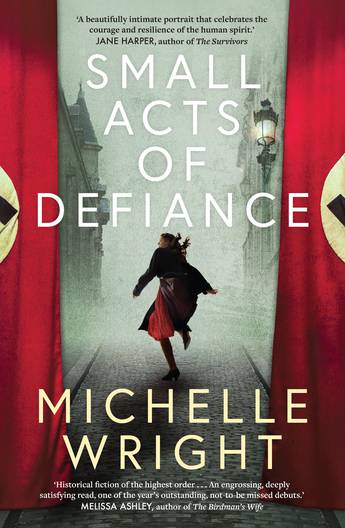
    Small Acts of Defiance from Michelle Wright is without a doubt a brilliant piece of historical fiction that has been meticulously researched, which shows through in the storytelling as the nightmare of occupied Paris during the Second World War is set out as if it was an event occurring today, not more than seventy years ago.

    Having lived in Paris for more than eleven years, Wright adds authenticity to the story with intimate knowledge of the streets of Paris, especially around Notre Dame where a considerable amount of the story is set. During her studies there she began to realise that while the French are very passionate about some of the aspects of their history there is a less than flattering side that is seldom discussed.

    Lucie and her mother Yvonne return to Paris, the birth place of Yvonne, after a shattering family tragedy in Australia only to arrive at a time when the German invasion of Poland was dawning. Parisienne’s carried on living life as normal, refusing to believe that Paris would fall to their old foe the Germans, until there came a time only several months after their return, when this became a fact to be faced.

    As time progressed and it was apparent that Paris was now under the firm and brutal hand of the Nazi regime, Lucie and her mother struggled to adjust to a life so different to the one left behind in Australia. Dependant on her brother for their home and livelihood, Yvonne and Lucie find themselves trapped in a world of fear and distrust.

    Lucie, a talented artist eventually has to make a decision to use her talents to help the resistance movement, which becomes more and more apparent as she be befriends Alina, a girl of Jewish decent. When the Nazi’s begin a crackdown on the French- Jews, Alina’s grandfather Samuel is the first of her family be arrested and sent to one of the camps.

     Faced with brutality, hatred and an ever growing resistance movement, Lucie and eventually Yvonne have to decide how far they will go to create Small Acts of Defiance and defend the lives of those they now call friends.

    It is interesting to note Michelle Wright has used the little known and very dangerous rescuing of new-born babies from the maternity hospitals, to use in the fabric of the story; a campaign that was carried out by women across Paris in the darkest days of the Nazi brutality at enormous risk to those involved.

    It is hard to believe Small Acts of Defiance is a debut novel from Michelle Wright as the work flows, is totally immersive and brilliantly written.

  • Max

    Max

    In 2012, after writing a dozen novels and a collection of essays and stories, Alex Miller award winning author, felt that the time had come to research his best friend, inspiration and mentor, Max Blatt’s life and write his biography. Max, a German, Polish Jew had described his life to his dear friend Alex, as futile; a failure who had achieve nothing. Alex was to prove otherwise.

    Alex met Max when he was a man in his fifties who shared with him his love of literature, music and silence. The author and his wife, Stephanie travelled to Germany, Poland and Israel to uncover the story of Max; to put together the broken pieces of the story Max had given him. Having little knowledge of Max’s life before he arrived in Australia didn’t deter Alex; what he did glean, came from books and letters written about the Nazi takeover in Germany.

    Assisted by researchers, friends and Max’s remaining family (many had died during the Holocaust) and his niece, Liat, Alex was able to uncover and fill in the blanks. Visiting places of significance in Max’s early life, he walked the streets he probably walked as a boy, saw the No21 tram stop which Max took to the centre and viewed the building where the Gestapo tortured him.

    This beautifully written but haunting book, provides the reader with not only the missing pieces of Max’s remarkable life, but also a clearer understanding of Jewish life in Wroclaw, the place of Max’s early years.

    Max is a wonderful work of non-fiction, which transports the reader to the difficult times of Max’s life, his challenges, his ultimate escape to China and final place of exile, Australia. It sensitively explains Max’s reasons for not choosing death but silence and obscurity; a book not to be missed.

  • 16670

    16670

    ‘There is no greater love than to lay down one’s life for one’s friends’, is a well-known quotation from the Bible and the perfect place to begin a review on an album from Matthew Mayer, dedicated to a remarkable man who did indeed lay down his life for a friend in the horror that was Auschwitz in the war years of 1941.

    This man was Rajmund Maximillian Kolbe whose story haunted Mayer to the effect that he eventually travelled, in 2015, to Poland to walk where this man, a Conceptual Franciscan Friar and Polish Catholic Priest, had lived his life.

    16670 was Kolbe’s number, this album is dedicated to his selfless love for mankind. In his notes on the album Mayer says he was drawn to creating the musical version of Kolbe’s story by something bigger than himself, to telling his story through the wonderful medium of music.

    The backstory to the creation of this deeply moving work was unknown until the time came to write the review. On the first, second and third listening, nothing but beauty, elegance and peace coupled with a wonderful sense of comfort, and relaxation was apparent; the perfect end to a busy day. To discover the reason, the meaning behind the compositions is not at all surprising in the light of the words from Mayer, saying he was drawn to create the work by something far bigger than himself.

    Perhaps the parallel can be drawn that in this time of global distress, stories such as Kolbe’s need to be remembered to shine a light of hope for the future into a wold that for many is filled with fear and hopeless confusion. How better to do this than with the healing gift of music.

    16670 is a deep dark piece, simple and yet dramatic, which flows into a more relaxed, and yet somehow more sombre  piece Glasses, as the image of glasses conjures up the famous photograph of a pile of glasses found in the death camps of Germany at the end of the war.

    As the work unfolds the titles capture the journey not just of the music, but of the emotions felt by many, then and in present times, facing the certainty of what was feared most, accepting the final outcome whatever it may be. Kid Rajmund concludes an intimate collection with what could easily be considered as an exquisite requiem.

    16670 tells a poignantly beautiful, emotional story, one into which Mayer has poured his heart and soul; an album of rare delicacy, intimate and graceful to the final note. Not All Hero’s Wear Capes is the final line on the Press Release; we have all been discovering this in our extraordinary year of 2020, to be so very, very true.


  • The Vanishing Sky

    The Vanishing Sky

    Nazi Germany and the Second World War, for writers of both book and screen, seem to be the gift that just keeps on giving. The Boy in Striped Pyjamas, the Book thief, the amount of stories set during this period is endless. The Vanishing Sky, written by L. Annette Binder, stands as another fictional book set during this tumultuous time.

    The story takes place in the last year of the Second World War in Europe. By this time the Soviets were penetrating Germany’s Eastern border, the Americans and British moving in from the West.  Meanwhile city after city was in the process of being razed by the Allied bomber force. In this setting of complete Armageddon, the readers are introduced to the Huber family, a simple German family living in Heidenfeld.

    Etta Huber, the matriarch of the family, the first of the main characters that are introduced is a woman suffering from increasing anxiety which no surprise is considering the circumstances; she runs a household while simultaneously worrying about her three male family members. There is her husband Josef, a former teacher and ex soldier. Most likely a veteran of the First World War Josef suffers from dementia and has become increasingly nationalistic. Though certainly not a main character, the reader is given a glimpse into his perspective, mainly his desire to assert himself and not to feel like a mockery due to his memory loss. Max is the couple’s eldest son.  A veteran of the Second World War, Max has been discharged due to an emotional collapse which manifests itself into PTSD.

    Georg, the younger Huber son is the secondary main character; a member of the Hitler Youth, Georg doesn’t look like a typical Hitler Youth member. With brown eyes and expanding waistline he has very little of the Aryan warrior caricature in him. He is also a homosexual which under Nazi Germany was a criminal offense. The story finds Georg away from his family at an elite training facility. Not keen to give it all up for Fuhrer, Volk und Fatherland, Georg decides to desert and make his way home. For some reason upon reading his story arc I was reminded of what I read about the young Pope Benedict XVI who was also a member of the Hitler Youth and also deserted.

    The Vanishing Sky presents a decent portrayal of what life must have been like for the everyday people in Nazi Germany during the waning months of the war. It captures the confusion of the war and utter hopelessness of the German people. It is a relatively short book and an easy read.


  • The Deceptions

    The Deceptions

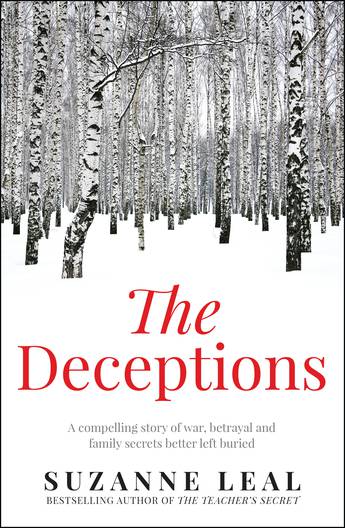
    Captivating, heartbreaking and raw the symmetry that is The Deceptions crafts an unforgettable story that is both fascinating and confrontational at the same time. Secrets buried deep surface seventy years later to create immense shockwaves in a family that while small is fractured, holding together by a single thin thread of hope.

    The year 2009 sees the girl who once was Hana Lederova light a candle for her husband; a symbol of remembrance of loved ones passed, lit on the anniversary of their passing. In honouring the Jewish tradition, memories she felt had been long buried return, pushing at the emotions, almost demanding to be reviewed, rediscovered and finally accepted. Anna is now an old woman, a reinvented woman from the young, beautiful and fractured girl she had once been.

    The Deceptions is her story; one where choices were made, lives were sacrificed and eventually a new life discovered in a faraway land, full once again of challenge, choice, hope and fragmentation.

    It is not until the past merges with the future in a head on collision, that the past has to be reviewed under a very different microscope, in a time when the horror of the Holocaust has all but been forgotten, but the web created by the survivors lingers on.

    Susanne Leal brings the powerful characters of Hana (Anna), Karel, Robert, Tessa and Ruth out of a rich and tragic history, a history that is a comprehensive component still of so many families, forming them into people we have all met in our aging relative and friends, people who have a past, secrets ingrained into their very Dna, a past embedded in the tragedy of World War 2.

    In discovering these secrets the question of morality is raised, with the issue of time healing everything placed in full view, acceptance of things that simply cannot be changed but only recognised for what they are, is offered as a form of healing and closure.

    A stunningly emotional and delicately crafted work of fiction based on a true story of past transgressions, The Deceptions ensures the horror of the German death camps such as Belsen and the eternally lasting legacies are not soon forgotten.

  • The Viennese Girl

    The Viennese Girl

    To endure the German invasion of Jersey, islanders needed resilience, fortitude and ingenuity. However, to survive the five years of occupation, Hedy Bercu, a young Jewish woman needed more; the help of a courageous local woman. To further put her life at risk Hedy embarks on small acts of resistance, while Dorothea alienates her family by marrying an Austrian who later is forced into the enemy army. Added to this complication, while working as a translator for the invading army, Hedy falls in love with a German officer, Kurt.

    Author, Jenny Lecoat in her remarkable book ‘The Viennese Woman’ has created a wonderful fictional narrative based on the true events in the lives of the real heroines, Hedy Bercu and Dorothea Weber. In cramped conditions, with harsh food rations and in constant threat to life, these women developed a greater appreciation of each other and a true friendship. More about Hedy and Dorothea can be found in Dr Gilly Carr’s publication ‘Jews and Jerrybag; The Lives of Hedwig Bercu and Dorothea LeBroq’.

    This well researched book gives readers a real insight into the little known hardship of those enduring German occupation of the Channel Islands and in particular the island of Jersey from June 1940 to May 1945: not only the restrictions and deprivation experienced by the inhabitants, but also the lack of knowledge about their plight by mainland British citizens, who thought life was just proceeding as normal on Jersey.

    Not only readers of historical fiction (particularly those set during the war years), but also those who enjoy books with inspirational characters, will find this a most informative and enjoyable read. Readers will be left reflecting on this story long after they have read the last page.

  • The Electric Hotel

    The Electric Hotel

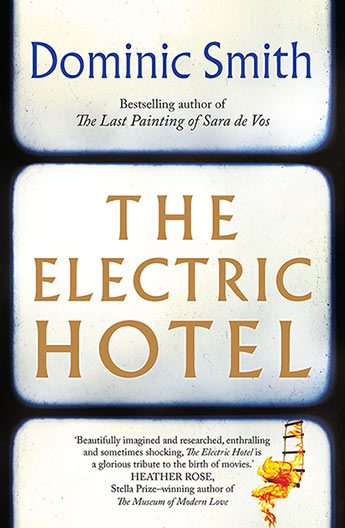
    The beginnings of the film industry have always held a fascination for many people. In this carefully researched book, Dominic Smith has presented the best combination of factual progress and fictional characters who follow the pattern of those times. We see the development of the science of film making, the characters who saw the great potential for entertainment, and the audiences who were unsure of exactly what they would see and hear.

    Claud Ballard (one of the original film makers), begins this story. He lives in a hotel and still carries his camera everywhere. He is retired now and spends his mornings gathering mushrooms and herbs from the local area. One day a young man comes to visit him. Martin is completing his PhD on the life of Claude and is very excited to have found him. They have coffee together, discussing many issues that are little known. Martin offers to take some of the old photographic reels that Claude keeps and restore them.

    As Claude begins to tell his story many interesting details emerge. The Lumiere brothers are desperate to find a way to move a spool of film on sprockets. One night one of them goes to his mother’s sewing machine and looks at the mechanism that pulls the fabric towards the needle. He takes the machine apart, and from here develops the system of moving film automatically.

    Claude is one of the first people invited to show film that he has taken. From here he enters a very different world and travels to many countries as a projectionist. The characters who enter Claude’s world now make a lasting difference to his life.

    The beautiful Sabine becomes his lover, but the war intervenes. The Germans are intent on showing that they were not as wicked as the world perceived, so had Claude make a movie to show their benevolence. Many dignitaries were invited to the premier, however Claude had a reel of his own showing innocent people tortured by the Germans. He was lucky to escape with his life.

    The total immersion into the times and thoughts of these characters makes this book very hard to put down. The language is descriptive and understated which creates quite a powerful atmosphere. The situation is shown as it is, with no judgemental overtones. We follow Claude and his thoughts with a deeper understanding of the early days of film.