Tag: nature

  • Dogs and Us

    Dogs and Us

    Dogs and Us is guaranteed to win the hearts of any animal lovers. Its photographs, helpful texts and professional advice ensure that any dog owner will find it helpful. Anyone thinking of purchasing a dog or puppy will find the information extremely valuable.

    Some of the chapters are; Dogs and Children, Reading to Dogs, Best breeds for snuggles, The naming of Dog Breeds, Dog Shows, and Animal shelters. Each subject includes photographs and tells how the reader can get the best from their dog in the healthiest and happiest way for all.  There are also pages of photographs with quotes from various people regarding a dog’s place in our world.

    One of those quotes is, “Stotting is jumping upwards with all four legs simultaneously. My advice: do not die until you’ve seen a large black poodle stotting in the snow.” I

    It is gentle humour and outright laughter that will guide you through this marvellous little book.

  • Urban Beekeeping

    Urban Beekeeping

    The city as a hive

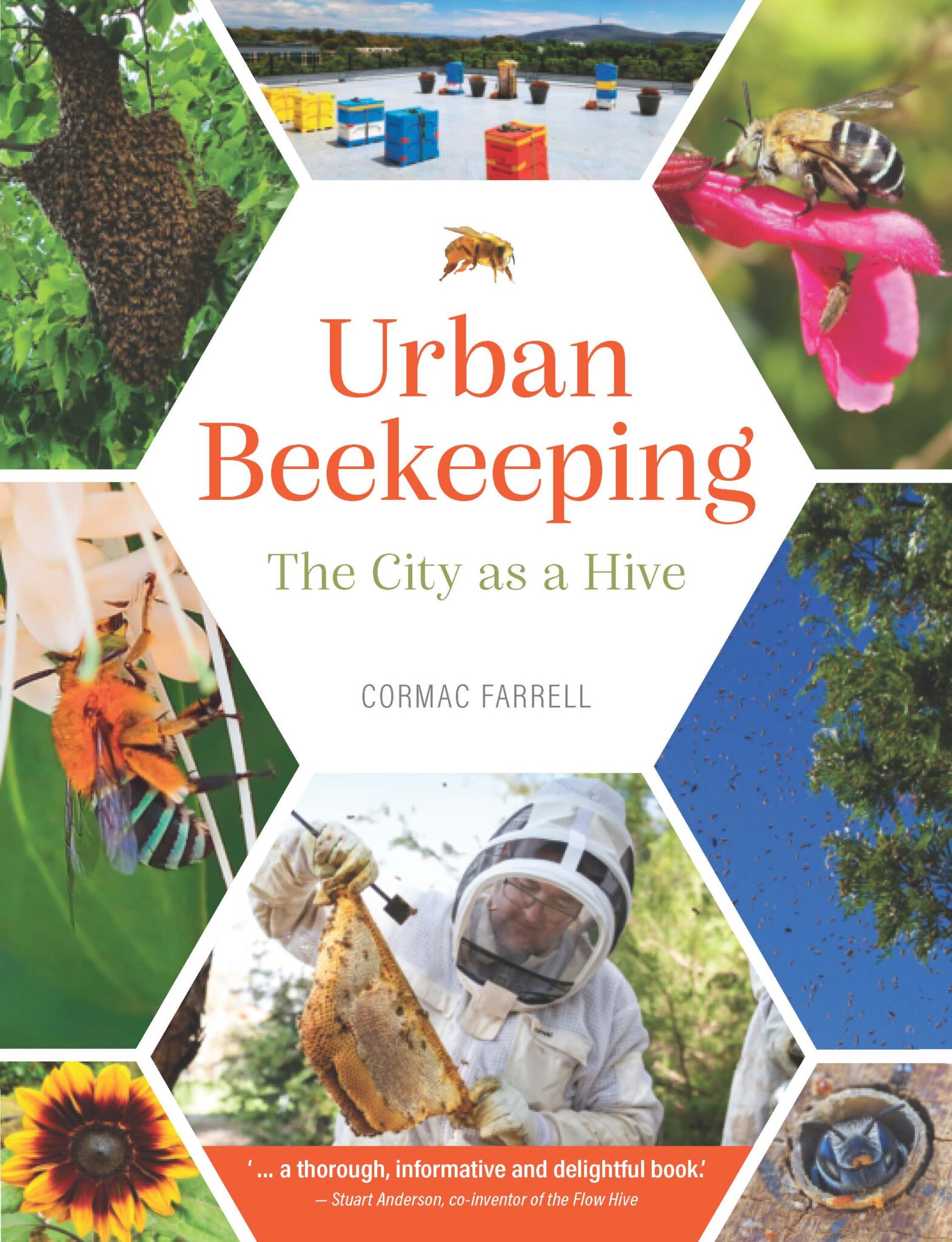
    Urban Beekeeping is a beautiful book in every way. Visually it has colourful and detailed photographs on the front cover as well as on most pages. The idea of bee keeping in a busy city is quite fascinating and hopeful. The written word is delightful, sprinkled with humour and explanations that are informative and fascinating.

    The author begins the book by explaining that he had a phone call from his partner saying that she had been swarmed by bees as she was wearing a yellow dress. While this was good news for Cormac, his partner was less than impressed. For the beekeeper though it meant he could establish a new hive, and this is where his thoughts turned to the building where he worked. It stood in the centre of Canberra. First, to convince his boss that this was a great idea!

    The following chapters teach us about the different varieties of bees, where to keep an apiary, and how to keep it healthy. There is also information about “Swarm catching for fun and profit.” The chapter on how to attract bees to your garden, and how to prepare homes for them is quite explicit, citing the plants, soil and water needed to attract bees.

    There is also detailed information about how to set up a hive and how to sustain and maintain it. For more serious bee keeping, there is also a segment on “Creating a systemic science-based breeding program.” The chapter on the extraction of honey and bottling it has photographs to show the steps.

    Urban Beekeeping is a delight to read because of the sincerity and passion that Cormac has for bees and the planet. His enthusiasm is infectious and hopefully will inspire those who may wish to learn more about bees. An index and references make this a valuable research tool.

  • FOOTPRINT

    FOOTPRINT

    The intention of the author and illustrator was to empower children to look and think about nature. They have certainly achieved that. The illustrations and wonderful winding words in Footprints encourage a sense of outdoors and deep breathing.

    The story follows children who have ventured outdoors and shows just what they can see and do. While in a canoe on the river one might see butterflies, snakes, birds, and trees.

    We are encouraged to BREATHE as we watch a child wander through a field of flowers, with a huge sky overhead. There are rocky climbs, ice water crossings, wild misty shadows in foggy fields. To perpetuate this wonderful environment we can plant seeds, feed animals, and move on and breathe.

    The wonderful minimal, intense, and lyrical language that the author uses compels the reader to slow down and immerse themselves in imagining. Looking at the sky, loosing oneself in nature, and being aware of the beauty around us is portrayed.

    However, we have a job to preserve that very nature and leave few footprints. To plant a tree, to tread lightly and to care for our animals is a way forward which we all can achieve.

  • GRUB

    GRUB

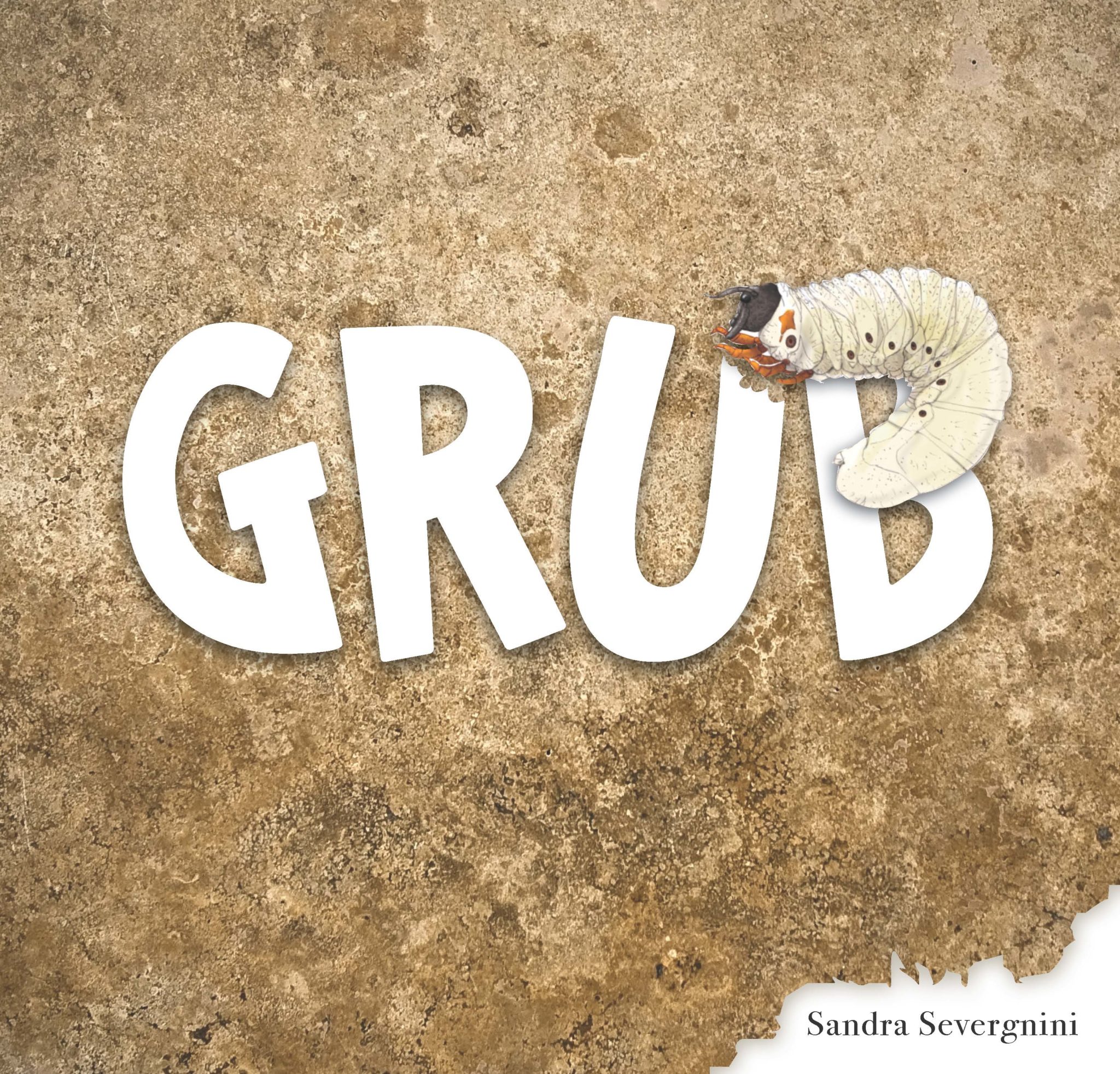
    Whatever you do, read this book! Read it, then read it to your friends, then read it to any child nearby. GRUB is a brilliant picture book, and an excellent work in literature. The illustrations and the text meld beautifully to absorb the reader both visually and aurally.

    The end pages, as with most of the double page spreads, lure your eyes to the wonderfully detailed drawings. When Grub is young, you will have to search for him beneath the tree canopy and in the old rotten log. As he grows, he is more recognisable. He is aware that his body will change, but what will he become? Will he be like his friend the ladybird, or a butterfly, or the singing cicadas? How will growth and age change him? What will maturity mean for him?

    With these questions in mind, we eagerly wait for the revelation. It doesn’t disappoint! The author completes the story by giving the reader some facts about the mature creature. These are fascinating and very relevant for the reader.

    The artwork is immaculate, detailed, and enticing. It enhances the text. The text is a large size for younger readers and is never compromised by the pictures. I am sure we will see this book nominated and short listed for awards. Congratulations Sandra on a fabulous book.

  • Dreams Beyond

    Dreams Beyond

    Haunting beautiful, this delicate work from Sverre Knut Johansen, Dreams Beyond, simply transports to another realm; a realm far beyond the everyday to a place deep in the mysterious mountains of Norway, a place of rebirth, peace and also in some ways a touch of melancholy.

    Beginning the journey with Tatra Mountains (introduction) the gentle journey begins with natures influence in Awakening in the form of birds delicately interspersed within the electronic fields, adding the touch of reality that is often required in electronic music.

    Dreams Beyond takes the vibration far deeper with a sense of almost awe developing that entices, enchants and moves the journey a long a little bit further, but at the same time encourages a slowing of the senses, better to enjoy the moment.

     Tatra Mountains the full version simply helps the thread continue once again with an almost ethereal ambience created that is almost mesmeric in intent. What magic lies in those mountains is still to be discovered!

    The final song Human Connection returns the listener to the world of everyday with immense gentleness and a richness of tone added by the ‘cello played with a delicate precision that winds the notes around the ‘synth’ field with perfection.

    Dreams Beyond is a work which will transport from the everyday world to that of the surreal for a delicate, almost dainty time of peace, relaxation and dreams. The work is a tapestry of delightful pieces interwoven into a journey to create a little magic, a sense of mysteriousness to the dreams to be found within the emotions when they are simply allowed to flow.

    Perfect for relaxation, meditation and simply for focusing when there is a need, Dreams Beyond is a totally immersive journey or ‘dreamscape’ there to be enjoyed.

  • Spirit of the Garden

    Spirit of the Garden

    Heraclites said ‘Nature loves to hide itself’ and never a truer word was spoken or written when it comes to the natural world. Writer and photographer Trisha Dixon, through the lens of her camera, takes a journey into gardens and natural landscape that captures the hidden joys to be discovered when time is taken to sit, look and absorb the landscape.

    From the first a page to the last Spirit of the Garden transports into another world which is unexpected, but upon consideration perfectly appropriate as not just the incredible images, but the poignancy of the words, reaches deep into the emotions we as humans walking this earth, have in many cases shoved off to one side; forgetting that we are the guardians of all that is around us, constructed as beautiful gardens created by what often appears to be the random hands of Mother Nature.

    As Trisha Dixon says the language of gardening starts early in us, especially if we are fortunate enough to be someplace that gardens are prolific, or the world of nature is close to where we live or wander. So many Australians have grown up with the stereotype gardens of suburbia, based around the legacies of the English settlers in Australia. It is only over the past few decades, as the climate has begun to change in a very definitive manner, the landscape of nature has been discovered and is being incorporated to a large degree in landscapes far and wide, as is the art of container gardening for smaller urban space.

    As climate is changing it is becoming more important than ever to understand the emotional impact of gardens and their magic on the psyche, as well as the massive importance of taking care of our environment which is the main impetus behind this immersive book.

    The photography is magnificent, the wording simple but powerful with the very Spirit of the Garden carefully defined. Those who have travelled widely or those who have walked around their neighbourhood enjoy the visions to be discovered that showcase the very epitome of Spirit as they bring joy to the heart and life, filling very soul with something simple called pleasure.

    Immerse yourself in this sumptuous journey of gardens and landscapes, filled with enticing quotes from seriously wise people, who discovered that taking time to sit and discover the hidden beauty within nature creates unforgettable memories that last a life time.

  • Wild Nature: Walking Australia’s South East Forests

    Wild Nature: Walking Australia’s South East Forests

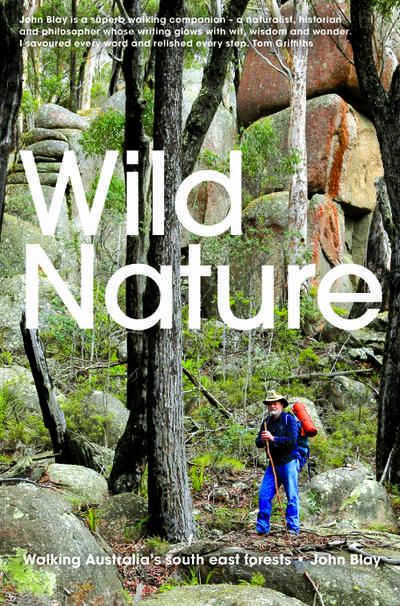
    Wild Nature, Walking Australia’s South East Forests is the third part of a trilogy by John Blay, who has been researching Australian forests and their history for many years. Blay begins the book by saying that he has been privileged to walk the great native forests in South Eastern Australia. These are outstanding on an international scale, and most within a day’s drive of capital cities; their history to be seen in the reminders of fires past and recent, and often reflect nature out of balance.

    After this introduction, we follow John’s journey with the retelling of the notes in his journal. It is an interesting way to tell his story and writing in the present tense makes the reader feel they are on the trail with him. The area John wants to walk has no known trails, his partner, Jacqueline, suggests the area may not matter, but enough people valued the trees to have them protected, reflects John.

    John Blay’s special interest lies with National Parks and the Great Escarpment where the tableland slopes down to the coastal valleys which include Tall trees and a secretive wildlife. Apart from the forest, he keenly notes the many small animals such as potoroos, bandicoots, and the rich birdlife. Jacqueline explores the wildflowers in their amazing colours, and soaks in the wonder of the forest.

    This journey is interspersed with comments from early explorers as well as modern day authorities, and the decisions they make regarding the protection of our precious forest eco systems. Reading this account of John and Jacqueline’s journey is like walking with an artist. You begin to see the contrasting colours, and the individual and collective beauty of your surrounds. The passionate message conveyed in this story is the need for continued protection of our magnificent forests, and the wildlife within them.

  • Working with Nature Saving and Using the World’s Wild Places

    Working with Nature Saving and Using the World’s Wild Places

    Even if you know very little about conservation and the environment, which would be hard to believe in today’s world, Jeremey Purseglove, in his latest book Working with Nature has created a surprisingly interesting and informative book spelling out just what is happening and why some sort of brakes need to be applied to what appears to be reckless devastation of the world’s forests, oceans, rivers and plains, before there is very little left to be concerned about.

    Purseglove has spent his life working as an environmentalist in the water industry and speaks from a platform of firsthand knowledge in regard to the blatant and careless use of natural resources. He now, through his own consultancy, works with other engineers to create practical developments of wetlands, forests and flower rich meadows, to ensure that there is something left for the future.

    Using his travels and work-based knowledge gained from extensive experience worldwide, and although this book tends to focus on the Northern hemisphere, the basics are the same. Regardless of where the situation occurs which requires land to be ‘developed’ for agricultural purposes, that should the careless and destructive practices continue occurring, nature in its inevitability will overpower and when it does, nothing but devastation will result.

    Campaigning with passion, he clearly explains that moderation can be applied to development with better results, and offers solutions that are insightful, workable and environmentally sound. In many ways this is a style of biography, in others a massive shout out to seeking a better, more environmental way forward for agriculture and natural resource usage.

    With the devastation taking place in Australia due to unprecedented fires, Greta Thunberg and the youth of the world campaigning vigorously for better environmental practices, to ensure there is still something left of the natural world for their generation and the generations to come, it is very hard to ignore the destruction of Mother Earth which been taking place openly on a global scale.

    Working With Nature speaks out loud and clear, offering practical solutions to what can now be classed as devastation on a major scale. The solutions offered should be considered as profoundly important.


  • Capturing Nature: Early Scientific Photography at the Australian Museum 1857–1893

    Capturing Nature: Early Scientific Photography at the Australian Museum 1857–1893

    Photography was the science that took the world by storm in the mid-18th century, with the endless scope of possibilities yet unexplored; Its early use as a recording tool in the scientific area, especially in Australia, was quick to be utilised by Australian Museum curator Gerald Kreft and taxidermist Henry Barnes, to record a vast array of specimens between the years of 1850 to 1890’s.

    Their work was ground-breaking, with the first recorded image undertaken when a Mr Glen Wilson was requested to photograph some fossils and ‘some other objects’. Kreft was an assistance curator at the Australian Museum at the time, an experienced field collector and had already discovered a fascination and love of photography. He could also see the future potential for this medium being used in museums.

    Henry Barnes was a very experienced taxidermist and between them they discovered and trialled the best way of staging and recording large and small specimens with their massive cameras and layers of glass plates.

    Kreft had a major impact on the Australian Museum collection with his forward-thinking ideas and drive, going on to build one of the most extensive collections of Australian specimens held by a Museum in the late 1800’s. During the heady years of the 1860’s and with the aid of some government funding he was able to send out his own small team of collectors across Australia to collect thousands of specimens.

    He was just one of many who actively documented contextual data and description throughout what is considered as the golden age of collecting. Others operating in this field were George Masters who was considered responsible for helping to build one of the largest private collections, owned by William John Macleay. Alexander Morton went to New Guinea, Solomon Islands and Lord Howe Island also on a Museum funded collecting expedition.

    These men, amongst so many others built a massive collection that has been archived in the Australian Museum for generations, providing a massive resource of wildlife in the earlier times of Australia and the driving desire to become far more scientific in their practices of recording and displaying specimens.

    While photography became the medium of choice for recording specimen, the black and white toning’s of glass plate photography was limiting and so artists such as Harriett and Helena Scott still played a massive part in recording the fine details, the vivid and subtle hues of the specimens.

    In Capturing Nature, Vanessa Finney presents a fascinating collection of glass plate images seldom viewed, a raft of information which is utterly engrossing and intriguing as history often is, as well as a wonderful peek into an aspect of Australian history often ignored.


  • River

    River

    River by Don Latarski is a Suite of pieces that take a River from creation in the clouds above, delivering life giving rain to its journey across the lands to culmination at the ocean; the completion  of the circle, only to be absorbed once again, returned to the beginning.

    Part I of the River Suite, Into the Clouds is a lovely reflective, gentle piece on acoustic guitar that allows the mind and soul to settle into a peaceful place: to begin the journey of reflection and contemplation, of being soothed as is often the case when spending time by the water. Gravity brings the power of the elements into the piece to create the beginning of the water source.

    And so the journey begins; each of the pieces perfectly painting the journey of the stream, which snakes its way in a Serpentine manner towards a creek, eventually forming into a river full of eddy’s,  with an Undercurrent formed on its March to the Sea.

    A period of calm, as created in Eddify, is required, enticing the journeyman into a false sense of placid, but allowing time for Reflections and contemplation, a mood which changes as the flow increases in momentum, as the river moves ever closer to The Falls, a place where the water cascades down in a rich torrent of awe and power to pick up the pace to journeys end; to come Full Circle.

    The River Suite is something very special as the work has been created for solo acoustic guitar which is absolutely fitting and is perfect medium to capture the many and varied moods of a river, which in turn can be peaceful, refreshing, rough, boisterous, fearsome and layered with texture and sound.

    The final three tracks showcase a wider aspect of Latarskis’ style, with Tough By Nature a cheerful, jaunty piece that brings a lovely element of the outdoors within, whereas Fall From Place, a slower far more methodical, finger picking, composition is almost hypnotic in is singular beauty.

    Bently , the longest track, running for 11:49 secs, encapsulates all that is nature, the beauty and the very freedom to be found, drawing to a conclusion a most peaceful and sensuous journey  which gathers a free ranging collection of pieces, as does a river and ushers them into a vibrant, and glorious ‘gift back to nature.’

    Better known for his Jazz and Blues work, Latarski has combined all of his talents in this, his first venture into New Age music, encouraged by his many journeys into nature as a photographer, kayaker and hiker.

    Magnificent and majestic, River is an album that leaves the gentle ambience of the music wafting around the edges of the senses long after the last note has been played.


    Don Latarski’s work can also be enjoyed as travelogues on You Tube and Facebook, another of the many talents he offers, which promotes and shares his love of nature, of music and the beauty there to be discovered and enjoyed.