Tag: myth

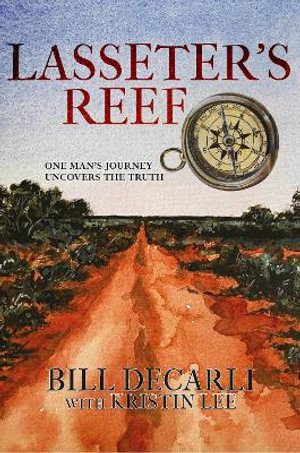
  • Lasseter’s Reef – One Man’s Journey Uncovers The Truth

    Lasseter’s Reef – One Man’s Journey Uncovers The Truth

    Lasseter’s Reef has for almost a century been talked about in so many venues in Australia as many debated whether the story of a huge gold bearing reef in Central Australia was real, or simply the fictitious creation of a man, one Harold Bell Lasseter. Eventually it was believed to be a fable, but what a fable.

    Over the years many had tried to find the illusive site and failed, driven by ‘gold fever’ and others adventurers like Bill Decarli, a Vietnam Vet fascinated with the story and captivated by what he believed was more than likely true. Some forty years later, he did discover Lasseter’s Reef, not where Lasseter believed it was, but in the opposite direction.

    Decarli tells how a series of hunches, coincidences and an absurd desire to keep on searching, led him on a journey he never expected and how on several occasions, a chance encounter with a random piece of information kept his passion alive down through the years.

    Lasseter’s life was a somewhat entrepreneurial one, with his keen mind and gift of the gab he was not one to overlook an opportunity. How he came to be on the Central Australian Gold Expedition (CAGE) between 1931-1933 was somewhat of an accident, but one that eventually cost him his life in the inhospitable region of Australia known as the Central Dessert.

    Believing no man would go out there twice, the second time almost ill-equipped, with very good reason, Decarli believed there was a lot more to the fabled story than folkloric. In 1991 he set out to see for himself if Lasseter really had done what he said, found treasure in the most unlikely of places.

    Nine trips later, much older, wiser and with a healthy respect for the desert lands of Central Australia he found what he had sought, Lasseter’s fabled reef, in completely the opposite direction.  And then there is the man known as Joseph Harding, a cattle ‘duffer’, who although referred to down the years, was never associated with Lasseter’s discovery, but as it turns out was the man who already knew about the quartz gold bearing reef!

    Although the legend may have been presented in a fresh new light, the story is such that it definitely rates up there in Australian history, as the truth is indeed far more astonishing than the fiction ever was; as is nearly always the case.

    Along the way Bill Decarli learned many, many things, about life, people, the dessert regions and acceptance that the journey needed to be as it was, as it not only touched on sacred Indigenous sites and history, but also, had to be done properly as, should he discover the real story, and find the reef, evidence needed to be well documented.

    Fascinating, enjoyable and well written, Lasseter’s Reef is an absorbing story, based firmly in Australian history and folkloric, coupled with and faith and determination to try to discover the truth one way or the other.
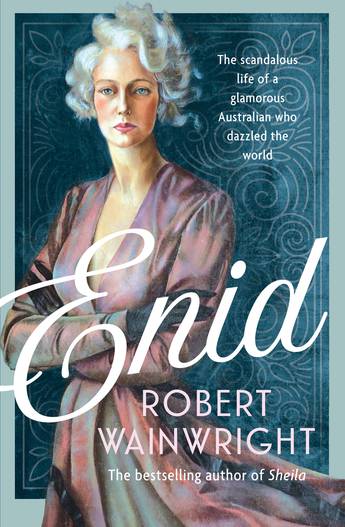
  • Enid: The scandalous life of a glamorous Australian who dazzled the world

    Enid: The scandalous life of a glamorous Australian who dazzled the world

    Her beauty made her life but also ruined her life at the same time. Having out lived four husbands, Edith Kenmare, the subject of Robert Wainright’s latest extensively researched book, was a woman with incandescent beauty, who commanded the attention of men, but also courted controversy throughout her life; there was an insatiable media appetite for upper-class scandal. However, Enid was more than glamour and lovers; often in the media for all the wrong reasons.

    Born in 1892 into the renowned Hunter Valley (New South Wales, Australia) Lindeman vintner family, Enid married the first of her four husbands in 1913, American shipping tycoon Roderick Cameron, and soon became a society darling. Within two years she was not only a mother but a very wealthy widow and soon to be a merry widow.

    Counted among her friends were influential people from all field; royalty, society and celebrated members of the arts fraternity. In the following six decades she proved herself to be a formidable hostess; half the minor royalty of Europe were to be found among her guests. Even in her later life there was never a shortage of admirers. It has been claimed that she changed men as casually as she might switch handbags or nightwear!

    But this is only a part of the story. This exotic woman often seen with a hyrax on her shoulder, drove an ambulance in World War I and refusing to bow to oppression, aided Jews who fled south to escape the Germany army during World War II. As part of the war effort in World War II, she had a job in an armaments factory and she milked her goats to produced cheese, cream and milk for struggling villagers. She had an incredibly adventurous life of riches and adventure. However, it was not without its hardship and tragedy.

    Although there are many myths surrounding the life of Lady Kenmare making it impossible to distinguish fact from fiction, the author has written a fascinating biography of this Australian socialite, who captured the imagination of the world.  I highly recommend this enthralling account of this exceptional woman to all readers who enjoy history as well as an insight into the lives of the rich and famous.

  • The Longevity List

    The Longevity List

    The list of what is good and what is not, marketed to encourage the modern person to live a long and productive life, is one that is continuously growing; but what is truth, fiction or good marketing is often difficult to discover and so we travel along, believing exactly what!

    Professor Merlin Thomas takes a number of the wonderful myths and realities of the longevity quest and places them firmly under the spotlight of common sense, exploding many, concurring on some and laughing at others, but all the while delivering a good dose of reality on how we choose to live, exercise and eat.

    Chocolate, beloved of pretty much everyone, is the first food item to be investigated with the myth of cutting down your consumption of chocolate will do wonders, under the microscope. Oh, dear!

    Each of the 17 items to come under scrutiny has its own chapter beginning with a number of the most common beliefs, such as, in the case of the hallowed Chocolate: Why is chocolate a bad thing? Answer – It isn’t (except for dogs) where it rates as a poison! Another common belief to be shattered is, ‘Can chocolate improve my sex life?’ Check out the answer.

    #4 Do I really have to….. Lose the Waist, answers so many questions we have never liked to ask, but always wonder about, such as beer bellies, man-boobs and why being overweight can be a killer.

    Cut of the Starch rates in at #8 and deals with carbs, GI, fibre and will eating the crust make the hair curl, which is an oldie but a goodie.

    Each of the chapters answers various regularly posed questions with humour and solid fact. In the case of Chicken Soup being used to cure a wide range of ailments from the common cold to the blues, sadly it has been proven it simply relates to eating something warm and wonderful, which is often better than anything else on those days when all you really want is a little bit of comfort food – warm, hot and delicious. Great for the mental health and comfort of the sufferer!

    Dipping into the various chapters as required will bring with it a serious and yet light hearted education encouraging you into taking a good look at you – the person who overeats chocolate, does not do enough exercise, is looking for a quick heath fix, loves Chicken Soup and concludes with the very real benefit of Finding Love, the perfect partner and finally answering the time old question, ‘Is there an elixir of love?’

    Professor Thomas suggests, should we really want to make changes in our life, changes which will aid a long and happy lifetime in good health, begin with a simple list of things needed to be done. With list there is a beginning and end which, as you strike out your latest successful achievement offers encouragement that you are one step closer to THE END of the list and a huge step closer to longevity.

  • Pomegranate: A Global History

    Pomegranate: A Global History

    The Pomegranate you may say is little more than a fruit, strange though it may be, that plays a prominent role in Middle Eastern cookery. A fruit that had almost disappeared into obscurity, at least in Western diets, over the past decades, until more recent times when cuisine of the finest, most unusual and from all corners of the earth, became something that was written about, created and slaved over by chefs and presented in many forms directly into your living room via modern media.

    But there is more to this strange fruit, a fruit which should be treated as royalty in the world of  fruits, as it has been revered by all major religions of the world at some point in their history; it has been found as far back as Neolithic times, when it was deliberately cultivated from the wild. Pomegranate seeds have been found in carbonised form at the Middle Eastern sites of Jericho, Arad and Nimrud and dated archeologically to the start of the third millennium BC.

    It has had poetry written to it, been a temptress of the Gods and Goddesses, used in rituals and been placed into history inscribed on wall paintings and wall hangings, silver and pottery vessels are adorned with its likeness, with ornaments worn by Kings and Queens throughout history crafted in its form.

    Great masters of their art such as Picasso, Matisse, William Morris and Dali have created woks about and around this glorious fruit, while the Buddha gets offered a single pomegranate by an old beggar woman then uses this gift, freely given, to illustrate the true meaning of sacrifice to a wealthy Maharaja.

    So no matter where you look, be it in Buddhism, Islam, Judaism, Catholicism or Christianity the pomegranate is there for all to see.

    Fertility is another area where the pomegranate features prominently, used by the Gods to tempt and also to illustrate the nature of life and death. The links to fertility are and were extremely strong. It was used as a medicine by the ancient Greeks to help with menstrual problems and considered as a symbol of great sexual ability. Each of the ancient civilisations has a considerable mythology woven around this remarkable fruit.

    In today world it is still used in certain cultural celebrations, still considered a god amongst the fruits and is becoming more and more popular for its health benefits and wonderful flavours when added to foods.

    As you reach the end of the book you may wonder why someone would have taken the time to research and present a wonderful work, with magnificent illustrations about a fruit, and if so you have completely missed the point.

    The pomegranate, as it has meandered down the corridors of history, brings with it a language of its own, telling a tale or two about who we as a civilisation are, where our roots return to, or if you like where all the folkloric, myth and legend that is very much a component of our world came to be created around one simple, in its original form bitter, little fruit with its royal looks and colour.

    As one final thought on a subject that is as fascinating as it is remarkable, it is considered by historians that the forbidden fruit referred to in the Garden of Eden, may have been the seductress of all fruits, the Pomegranate, not an apple!

  • Witches and Wizards

    Witches and Wizards

    Witches and Wizards are bought into the modern world with a series of tales, not tall but true, about mysterious and magickal beings who were once considered a normal, it not very necessary component of everyday life.

    They were considered essential to wellbeing of the community and also feared as their powers could also bring hardship and destruction.

    This so named Pagan way of life, changed with the slow but insidious introduction of a formalised religion into many communities which was eventually to bring with it some of the worst, and horrific incidents of brutality the world had ever seen. The introduction to chapter 1 encapsulates in a few lines what was before and what was to follow, when the Old Gods and the New had a truce.

    But in the first instance Lucy Cavendish has introduced us to a number of stories of these most magickal and mystical people who lived, and in some cases loved, on this earth.

    Rituals, overseen by wizards or witches, were a standard component of village life if the crop was to succeed and give a plentiful harvest. The preparation for this commenced some time before the crop was planted and once in, thanks in the form of another ritual, was offered for the earth to have given forth in bountiful measures.

    The point here is the cunning people were respected and accepted – cunning meaning wise and knowledgeable – with their words also respected and acknowledge by Kings and commoners alike.

    Merlin was a very real person and although there has been much debate out where he was from originally and where his final resting place is, he was alive, did have great and powerful knowledge and did influence history during his time.

    And then things began to go totally and horribly wrong during the 1400’s with a series of pestilences, plagues befalling Briton and Europe. Along with death, starvation and disease came fear, a very powerful demon, and one which needed something on which to blame the horror of what was happening.

    And so the Burning Times or the Witch Craze, began in Wurzburg, Germany where they feared the healers and wise men and women. They decreed they were all Witches and deserved to be burned. The Church pointed its finger at these people who still practiced the ‘old ways’, convincing the people of the towns and cities they were the Devil, or at the very least followers of the Devil.

    Thousands of men, women, children, and animals met their deaths in horrible circumstances, throughout Europe and Britain, a situation which continued on through to the Salem Witch trials in Massachusetts in 1692.

    Although you may think this has all happened in times past and is no more account that history, it is as recently as 2001 when, more than 100 years after the last of the Salem executions, five of the victims of this horrific event were exonerated.

    Each of the chapters deals with a different time in history, each one as fascinating as the next. Stories have been told and retold, to try and help understand just what did happen and promote the deep and long held philosophies that underpin that of the craftsmanship that goes into being a Witch or Wizard, otherwise known as ‘cunning’ folk; the folk who acknowledge the ways of the earth, the seasons of the year, and the fundamental beliefs that there is a time for everything and for everything, a time.

    At the end of the book there are a series of celebrations you can undertake for the various seasons of the year. Dotted throughout the book in various chapters are also simple spells you may like to use and excerpts from various manuscripts used in the compilation of this book, which make fascinating reading.

    This is a first book in the Supernatural Series, with the content being as intriguing as they are informative and enjoyable. Whatever subject or topic Lucy Cavendish chooses for her next book, it will be well worth the wait.