Tag: motivation

  • Career Unstuck

    Career Unstuck

    How to Play to Your Strengths to Find Freedom and Purpose in Your Work Again

    The world of post pandemic COVID, now more than two years on, is a world that is changing, has changed and will keep on changing in regard to how we earn a living, what we are prepared to tolerate in our Career pathways, with so many people choosing to opt out of what was once seen as the standard work day world of a 9-5 job.

    According to Gallap* research the average person spends 81,396 hours of their life working. Fifty-nine percent of these people are emotionally detached at work and eighteen percent are plain miserable. If this is the case it then reflects on output, quality and company/workplace culture.

    What to do about making a change is something that is seen as very challenging, if not downright terrifying, but when Charlotte Blair sets out the pathway which is there to be travelled, somehow the unachievable becomes achievable and your career becomes unstuck.

    Career Unstuck is more of a chat with a good friend than a manual on how to do it, filled with hard earned life experience, helpful hints, facts, figures, worksheets, and questions deliberately structured to make you think about the road ahead.

    Part One asks you to choose a number as to your ratings with how you feel about your career/job, then unpick why you feel like this, what damage is it causing not just to your work performance but to your personal life and mental health. The most important aspect of this first section is facing up to what is keeping you stuck: a most interesting question that only you can answer.

    Part Two looks at moving onto the new pathway, what your new life could be like, discovering your strengths and weaknesses, trying and failing, nothing to be ashamed of there, just life learning, discovering a Mentor and eventually more than one Mentor to help you along the way, before you ‘dip your toe’ or ‘jump right in’ to what comes next: Job satisfaction and success.

    Charlotte Blair reaches out with humility, knowledge and understanding as well as a good sense of humour to enlighten you on your journey, and when it is time for you to ‘jump’ she is happy to either metaphorically or otherwise hold your hand.

    Career Unstuck is a book that is long overdue to be written and is one that anyone looking at how they earn their living, how they feel about what they are doing and how maybe they need to change directions or jobs should most definitely read: particularly if you have what is often referred to by Charlotte Blair as a ‘shitty’ boss and toxic workplace culture.

  • One Foot Beyond The Podium

    One Foot Beyond The Podium

    Following on from his first book One Foot On The Podium where Don has finally reached a long held dream, a goal,  to compete at the Sydney Paralympic Games in 2000 winning a Bronze medal for Pentathlon. His journey was long, hard, challenging and emotional, but to finally achieve what he set out to do with his family watching, cheering him on was the ultimate sensation; it was the absolute moment when everything he and his team had worked for finally came together.

    But what comes next for an élite athlete once the fanfare dies down, the rest and relaxation is over and real life, once again, is there to be resumed: as he discovered to his immense horror, a strong relationship with Post Games Blues  came next. All of a sudden the urge to compete was not the same, the workload of intense training had slowed to a normal everyday pace, and life was one well provisioned function after another. Drifting along was the option of the moment followed by serious weight gain.

    A time trial at the Sandringham Athletics Track saw him in despair as he realised he had lost his competitive edge, his fitness and that in this state, competition, serious competition, was not an option. On the brink of debilitating despair his friend, mentor and Coach Roy Boyd stopped off for a chat.

    The results of that chat saw him begin to believe that he could, if he worked hard, rose to the challenge and set goals, see him seriously compete at the 2004 Paralympic Games in Athens. After all there was three and a half years left to get to peak condition.

    And so begins the next years in the Elgin family, as not only did he have to work hard as an élite athlete he also had to support his young and growing family, but how best to do this was the next challenge to be undertaken.

    A series of events saw him continuing on the speaker’s circuit along with invitations to present as a motivational speaker to sporting groups, clubs and businesses. Some paid well, some came with additional benefits but were still not consistent enough to leave his employment with Australia Post; a company that had not only sponsored him as an athlete but also provided him with work for many years.

    A meeting with a young amputee who was determined to succeed at sport was the first step on the journey to mentoring other athletes, moving into becoming team manager for disabled elite athletes travelling away overseas to the Commonwealth Games in London and beginning to realise that there was a new pathway opening up; one where he could use his skills, his experience, his natural ability to enjoy life, and his love of motivational speaking, which as the years have moved along, has bought him much joy, happiness, many new challenges and fun.

    His last challenge, walking the Kokoda Trail in New Guinea was a real learning curve in more ways that he expected, proving to be one off the greatest challenges, both emotionally and physically, that he had ever faced.

    Inspiring, entertaining, absolutely totally enjoyable, by the end of this chapter in Don Elgin’s life we  renewed our friendship with the Elgin family, laughed, cried and empathised with Don as he has once again hurtled towards and through life’s challenges, coming out at the other end feeling so much better for the experience.


  • Useful Belief: Because It’s Better Than Positive Thinking

    Useful Belief: Because It’s Better Than Positive Thinking

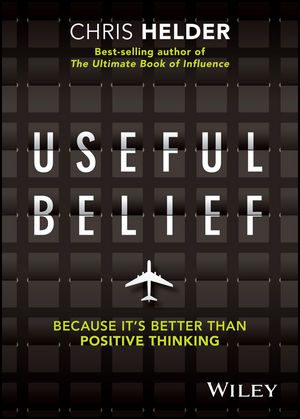
    Chris Helder has put together a very useful little book, in size, not content , offering up the philosophy of ‘Useful Belief’ as verses Positive Thinking, because as he says and rightly so, if all you get  is lemons, making lemonade will not always solve the issue. There is a definite need to have another aspect to consider.

    Positivity in all of its usefulness does not always cut it, whereas Useful Belief more often than not can and will, end up making sense out of an issue or event that defies understanding. Written in the first instance as a traveller’s tale, he takes the journey of a businessman, Simon, travelling to Barcelona to present to a conference.

    While Simon is delighted to be heading to Barcelona, a place he as always wanted to go, he is challenged by a variety of issues both personal and professional. He makes a series of three chance encounters; the first meeting up with a school friend also travelling, but to Singapore with her assistant, to present at a conference of health professionals.

    The second is the young man sitting next to him on the flight to Singapore who, once he finishes his work, spends time talking with Simon about the ‘Red Toyota Theory’ and the ‘Reticular Activating System’, and how both affect the way we view and live our lives.

    The third is one of the guest speakers at the Barcelona Conference who talks about the manner in which we view what we do and how, and by applying ‘Useful Belief’, amazing changes can be created.

    Over the course of a few days Simon is given a new perspective, a fresh approach, a new framework and motivation to make the changes he so desperately needs to be able to undertake.

    Chris Helder offers up challenging material to all who undertake to read this book as it challenges the way we view life, go about reacting to situations and also helps redefine the manner in which we choose to live our lives.

    Powerful, positive, intriguing, informative and interesting the chapters are clearly set out with ‘Checklists’ at the end of each section which highlight the points presented and definitely offer up food for thought.

    Deliberately kept as a small book, so that it will easily fit into a bag or briefcase, can be taken on a plane or read in one sitting, the words are simple, the effect powerful, the philosophy, life changing.

  • Leading Mindfully

    Leading Mindfully

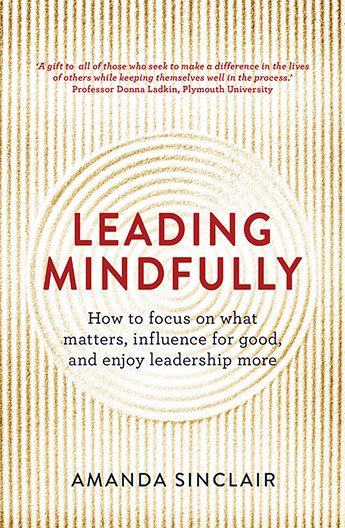
    Amanda Sinclair is like many of us in this fast paced world – too much to do and too little time. So much so that when she was forced into taking time out due to a series health issues, she realized it was time to take a look at how she lived her life and how best to be able to continue doing what she enjoyed in her working life, that of teaching and researching ‘Leadership’.

    Over the course of the following year she did two major things, completed training as a yoga teacher and read widely in both Yoga and the Buddhist philosophies, both of which form the basis for understanding more about ‘Mindfulness’ and how best to use it in all aspects of our lives.

    The next step was to build this philosophy into Leadership and how to better understand the effect  Leaders have on their staff or the people they integrate with and how to be able to get the best from each of these people using ‘Mindfulness’ as the underpinning strategy.

    Leadership, as Sinclair points out does not begin and end within the Corporate world, it is something that is carried out by people in all walks of life; from the Mum who is managing the local junior footy team to the volunteer heading up a group of like-minded people: leadership is there and carried out by so many people over a wide section of the community on a daily basis.

    The book is divided into three specific segments which deal with Leadership, Leading and Life/Living which is a simplistic way of breaking down what is enormous content, covering all aspects of Management and Leadership. In many areas Leadership is pitched at executive levels, but in reality relates overall to living life, understanding the role you play and how it effects those you work with on a daily basis, as well as how it affects you, how well you manage and the results you gain from using a different, more relaxed, mindful and integrated style of managing.

    There is so much to absorb, to encourage you to look at a different style of management which will produce good results, flow on to having a happy preforming team and still allow you to cope well with the stress of modern Leadership requirements.

    Overall Sinclair encourages us, which means everyone, to look further than right now, experiment with the twenty mindful practises outlined in the chapters, which are based in a variety of teaching and neuro-scientific research, as well as her many years of working, learning, teaching and living. She encourages you to discover that change, positive change, can be made and by making this change life and career can be happy, enjoyable and positive.

    Although titled Leading Mindfully this is a book about managing the increasing demands of modern life. Regardless of what you do for a job or career you will find her words inspirational and enjoyable.