Tag: Migration

  • Giovanni

    Giovanni

    Giovani is a delightful Picture Book that tells more than a story. It weaves a tale of true history which I suspect is little known by many people. Giovanni is an Italian lad who lives in Veneto, Italy. His family like many at that time are struggling to make a living. The boy is the main character, and the story is told from his perspective.

    In the 1880’s the whole family responded to a bulletin posted by the Marquis de Ray, telling them that a wonderful new land was being settled. They would have a house, land, and a new town to call home.

    After a difficult crossing on a ship which was crude and basic, the families were deposited in Noumea, where there were none of the promised basics to begin a new life. Eventually Sir Henry Parkes took pity on the migrants and sent a ship to bring them to Australia where they worked on farms and re-established themselves.

    The gentle illustrations make this an interesting read rather than a tale of disaster, and the text comforts with a happy family. Underneath the English text is a translation in Italian, which would make this a great book to share with a Nonna. Giovanni’s great granddaughter has written this story and very cleverly entertained and informed the readers of a little known snippet in history.
  • Anita and the Dragons

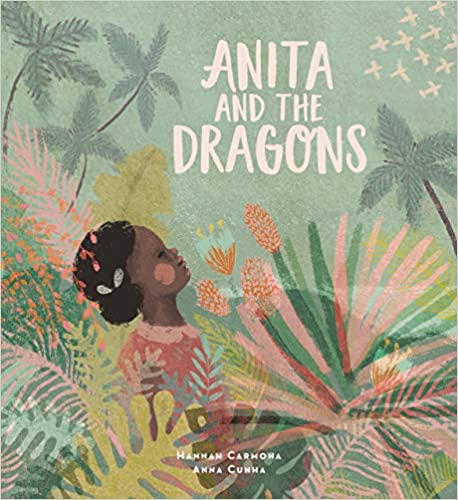
    Anita and the Dragons

    Anita lives in the Dominican Republic and loves her life very much. She often watches the silver dragons that fly overhead as she plays on the roof tiles of her village home.  She imagines she is a ‘princessa’ and the Dragon will not scare her; never ever.

    But there comes a day when ‘princessa’ Anita has to face up to the silver dragons and no matter how much she tries not to be fearful, she wonders what her new home a in a country far away will be like. There won’t be an ocean close by nor will they be able to have arroz con leche, let alone the fact that all her loyal subjects will be a sad without her to brighten their day.

    Abuela is not coming with them to the new land which makes Anita very sad and no matter how hard she tries to be excited, she is still sad and worried.  Anita puts on her brave face, says a silent goodbye to her beautiful Island and promises to return one day, as she steps resolutely into the belly of the Dragon with her family, to begin her new life full of new adventures.

    Anita and The Dragons draws a gentle, emotional picture in words to explain and comfort while the darker tones of the illustrations underscore the sadness that is felt when anyone, not just children, are facing change in a new country. A country that has electric lights, hot water, washing a machines and so much more that life had in the Dominican Republic.

    Anita and the Dragons is full of wisdom that could very easily be used for classroom discussion in areas that have migrant intake within their schools, as well as for children who are facing changing schools, States or lifestyles.

  • A New History of the Irish in Australia

    A New History of the Irish in Australia

    The New History of the Irish in Australia is a well-researched and in-depth examination of the lives of Irish immigrants and their offspring in Australia. It illustrates the intolerance shown to these immigrants across a broad range of society and offers a much-needed perspective from a viewpoint other than the past primarily Anglocentric works.

    The authors provide an interesting aspect in the way the Irish may have considered themselves and their place in the developing country of Australia compared with Chinese immigrants and Indigenous Australians. Malcolm and Hall suggest the Irish regarded themselves above these groups yet they also related to their lot in life under English colonial rule.

    The prejudice and ingrained bias against the Irish by the British hierarchy is demonstrated through popular culture and employment, with stereotypes of simian caricatures common in print media of the time and Irish being specifically rejected by signs such as ‘No Irish need apply’ in job advertisements. The low opinion of Irish people persisted into the 20th century, and despite the barriers faced their tenacity to settle and progress in their new country is exemplified.

    The inclusion of chapters regarding crime as well as asylum admissions lack strong analysis of the statistics provided, and possible reasons behind the higher representation of Irish in these areas. Hopefully, future analysis may provide a clearer indication of the reasons behind such numbers.

    It is disappointing, however, that the content of statistics as well as anecdotes concentrates on Australia’s east coast, particularly NSW and Victoria. While these colonies/states had the highest number of Irish migrants, the other parts of the continent really required more than a token mention. The inclusion of Irish stories and experiences in these places would certainly benefit the overall picture of Irish in Australia.

    With a broader geographical base of information, an even more refreshing and compelling story of pioneering Irish immigrants and their progeny could emerge.

  • The Last Of The Bonegilla Girls

    The Last Of The Bonegilla Girls

    The Last Of The Bonegilla Girls is a touching and compelling story of female friendship and celebration of what it means to call Australia home, no matter where the journey began.

    The story begins in 1954 in the Bonegilla Reception and Training Centre in Victoria on the banks of the Murray River and follows the lives of four girls, even after Bonegilla. The first to be introduced is sixteen-year-old Hungarian Elizabeta Schmidt who arrives at Bonegilla with her family, hoping to escape life as a refugee in post-war Germany. Then Iliana from Italy and Vasiliki from Greece who are also escaping from the effects of the war. And finally Frances Burley, daughter of the Camp Director who dreams of becoming a teacher after helping her new friends learn to speak the language of their new home. The story follows the ups and downs of the girls’ lives and their families, detailing their experiences before Bonegilla and their years after.

    The book is an easy read with a style of writing that compels you to continue reading. The book swaps points of view throughout as each chapter is told from a different character’s perspective, giving the reader an interesting change in the reading experience. The immigration experiences of the characters detailed in the book are well researched and feel authentic as you read the story. Throughout there are moments of happiness, sadness, mystery and frustration as you read and become acquainted with each of the characters.

    The book is a rollercoaster of emotion as you follow the individual experiences of the girls. With every chapter you become more and more invested in the characters. The experiences of new Australians and their journey to becoming Australians is beautifully told within this book.  With an ending that will leave you dewy eyed and a renewed sense of hope.